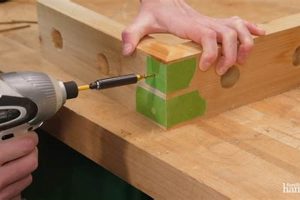
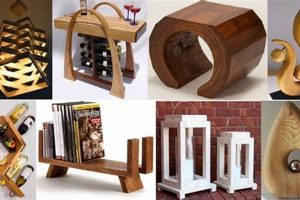
The construction of miniature, handcrafted items from wood, specifically intended for presentation as tokens of appreciation, represents a distinct category within the broader field of woodworking. Examples range from personalized keychains and intricately carved boxes to decorative coasters and small furniture pieces.
The practice offers several advantages, including the provision of unique, personalized presents, the development of woodworking skills, and the relatively low investment in materials and time. Historically, the creation of such items has served as a means of expressing personal sentiments and demonstrating craftsmanship abilities.
The subsequent sections will explore various design options, material considerations, tool requirements, and techniques applicable to the creation of these wooden presents. Detailed instructions and project ideas will also be presented, providing a foundation for novice and experienced woodworkers alike.
Guidance for Executing Miniature Wooden Gift Creations
The following directives are designed to optimize the construction and presentation of handcrafted wooden tokens.
Tip 1: Material Selection. Employ hardwoods such as walnut, cherry, or maple for increased durability and aesthetic appeal. Softwoods may be suitable for practice or projects requiring a painted finish.
Tip 2: Precise Measurement. Accurate dimensional control is paramount in small-scale projects. Utilize precision measuring instruments and double-check all cuts prior to assembly.
Tip 3: Joint Integrity. Employ robust joinery techniques such as dovetails, mortise and tenon, or dowel joints to ensure structural stability, particularly in frequently handled items.
Tip 4: Surface Preparation. Thorough sanding with progressively finer grits is essential for achieving a smooth, professional finish. Begin with 120-grit sandpaper and progress to 220-grit or finer.
Tip 5: Finish Application. Select a finish appropriate for the intended use of the item. Options include oil-based finishes, varnishes, lacquers, or water-based polyurethane, each offering varying levels of protection and sheen.
Tip 6: Personalization. Incorporate personalized elements such as engravings, inlays, or custom hardware to enhance the sentimental value of the item.
Tip 7: Design Simplicity. Especially for novice woodworkers, designs of lower complexity are preferable, offering a greater chance of success. Intricate detail may be introduced in later iterations.
Adhering to these recommendations will contribute to the creation of high-quality, enduring wooden gifts that reflect both craftsmanship and thoughtfulness.
The subsequent section will address safety considerations and best practices for utilizing woodworking tools and equipment.
1. Design

Design, in the context of creating miniature wooden presents, serves as the foundational blueprint dictating the project’s form, function, and aesthetic appeal. A well-conceived design directly influences material selection, construction techniques, and the overall perceived value of the finished piece. For example, a design calling for intricate carving necessitates a stable, fine-grained wood, whereas a simple geometric design might allow for the use of more readily available and less expensive materials. Furthermore, a carefully considered design minimizes material waste and optimizes structural integrity.
The design phase also encompasses considerations for intended use and personalization. A design for a wooden jewelry box, for instance, must incorporate features like compartments, hinges, and a secure closure. The incorporation of personalized elements, such as engraved initials or custom inlays, should be integrated into the initial design rather than treated as an afterthought. Successful designs prioritize user experience, ensuring that the finished product is not only visually appealing but also practical and durable. Consider the design of a wooden phone stand; the angle of the stand, the size of the phone slot, and the overall stability all directly contribute to its usability and perceived value.
In summary, design is an indispensable element in the creation of quality wooden gifts. Thoughtful design considerations, encompassing material selection, construction methods, and personalization, contribute directly to the final product’s functionality, aesthetic appeal, and perceived value. A deficient design inevitably results in a substandard product, regardless of the quality of materials or craftsmanship employed. The iterative design process, involving sketching, prototyping, and refinement, is crucial for achieving optimal results and ensuring the creation of memorable and appreciated tokens of affection.
2. Materials

The selection of appropriate materials is paramount to the success of miniature wooden gift creations. The inherent properties of the chosen wood, such as its hardness, grain pattern, and color, directly impact the final product’s aesthetic appeal, structural integrity, and longevity. For instance, hardwoods like cherry or walnut offer superior durability and a refined appearance suitable for items intended for frequent use or display. Conversely, softwoods, while more readily available and less expensive, may be more appropriate for projects that require painting or staining, masking their inherent grain structure.
Material choice also dictates the selection of appropriate woodworking tools and techniques. Hardwoods necessitate sharper cutting tools and more precise joinery methods to prevent splitting or splintering. The size and shape of the wooden piece influence material yield and potential waste. For example, a project involving intricate carving may require a larger initial piece of wood to accommodate the design, whereas a simple geometric shape can be efficiently cut from smaller stock. Consider the practical application: a small wooden box intended as a gift benefits from using a hardwood like maple for its durability and fine grain, which allows for precise joinery and a smooth finish. The selection of hardware, such as hinges and latches, must also complement the chosen wood in terms of both aesthetics and functionality.
In conclusion, the effective use of materials is integral to the creation of enduring and visually appealing miniature wooden gifts. A comprehensive understanding of wood properties, coupled with careful consideration of design requirements and intended use, ensures a successful outcome. The challenge lies in balancing cost-effectiveness with quality, selecting materials that not only meet the project’s functional requirements but also enhance its aesthetic value and contribute to its overall perceived worth as a thoughtful and crafted gift.
3. Tools

The selection and proper utilization of woodworking implements are fundamental to the successful execution of small-scale wooden gift projects. The tools employed directly influence the precision, efficiency, and overall quality of the finished article.
- Hand Tools vs. Power Tools
Hand tools, such as chisels, hand planes, and saws, offer a high degree of control and are often preferred for intricate work and fine detailing. Power tools, including sanders, drills, and small saws, expedite material removal and shaping, suitable for repetitive tasks or larger projects. The choice between hand and power tools depends on the complexity of the project, the desired level of precision, and the woodworker’s skill level.
- Measuring and Marking Instruments
Accurate measurement and precise marking are critical for achieving dimensional accuracy. Essential tools include rulers, measuring tapes, squares, marking gauges, and knives. These instruments enable the woodworker to establish precise lines and dimensions, ensuring that the final product meets the intended specifications.
- Cutting and Shaping Tools
Cutting tools, such as saws, chisels, and carving knives, are employed to remove material and shape the wood. The selection of the appropriate cutting tool depends on the type of cut required (e.g., straight cut, curved cut, joinery cut) and the type of wood being worked. Sharpening and maintaining these tools are paramount for achieving clean, precise cuts.
- Fastening and Assembly Tools
Fastening and assembly tools, including clamps, vises, and adhesives, are used to join wooden components together. Clamps provide pressure to hold pieces in place while adhesive cures, ensuring strong and durable joints. The selection of appropriate clamps depends on the size and shape of the pieces being joined.
The effective application of these tools, combined with a solid understanding of woodworking techniques, directly contributes to the creation of high-quality, handcrafted wooden gifts. The mastery of both hand tools and power tools, along with the ability to select the appropriate tool for a given task, is essential for achieving professional results in small-scale woodworking projects.
4. Techniques

The successful realization of diminutive wooden artifacts intended as gifts hinges upon the application of suitable woodworking techniques. Specific methods dictate the structural integrity, aesthetic refinement, and overall utility of the final product. For instance, the selection of joinery techniques significantly impacts the durability of an assembled item; a dovetail joint, known for its strength, would be more appropriate for a small keepsake box than a simple butt joint secured with fasteners. Carving and shaping techniques determine the intricacy and visual appeal of decorative elements, while surface finishing techniques protect the wood and enhance its inherent beauty.
Consider the creation of a wooden pen. The precision required for drilling the pen barrel and shaping the wood necessitates the use of specialized turning techniques. Similarly, the construction of a small wooden puzzle demands precise cutting and fitting to ensure proper interlocking of the pieces. The application of appropriate sanding and finishing techniques is crucial to achieve a smooth, tactile surface. These examples illustrate how specific techniques directly influence the quality and functional attributes of the completed item. Furthermore, mastery of these techniques allows for efficient material usage and reduces the likelihood of errors, contributing to cost-effectiveness.
In essence, the selection and execution of proper woodworking techniques constitute a critical element in the production of quality wooden gifts. The understanding and skillful application of these techniques directly translate to enhanced durability, aesthetic appeal, and functional performance. The challenges lie in adapting techniques to the scale of the project and maintaining precision throughout the fabrication process. Proper technique also ensures safety in the shop, reducing the risk of injury. Ultimately, the thoughtful application of learned methods enables the creation of meaningful and enduring tokens of appreciation.
5. Finishing

The concluding phase in the creation of handcrafted wooden tokens, termed “finishing,” significantly influences the aesthetic appeal, tactile properties, and protective characteristics of the final item. This stage is not merely cosmetic; it directly impacts the longevity and perceived value of the wooden piece intended as a gift.
- Protective Function
Finishes provide a barrier against moisture, ultraviolet radiation, and physical abrasion. This protection is particularly crucial for smaller items that may be frequently handled or exposed to environmental elements. For instance, a wooden coaster requires a water-resistant finish to prevent damage from condensation, while a wooden toy benefits from a non-toxic finish to ensure safety.
- Enhancement of Aesthetic Qualities
Finishes accentuate the natural grain and color of the wood, enhancing its visual appeal. Options range from clear finishes that allow the wood’s inherent characteristics to shine through, to pigmented finishes that add color and depth. A carefully chosen finish can transform a plain piece of wood into a visually striking object, increasing its perceived value as a gift. A clear finish on a walnut box, for example, highlights the wood’s rich grain, while a stain can add warmth to a lighter wood like pine.
- Tactile Considerations
The texture of the finished surface contributes to the overall sensory experience. A smooth, polished finish enhances the tactile pleasure of handling the item, making it more enjoyable to use and hold. Rough or uneven finishes can detract from the experience, making the item feel unfinished or unrefined. Consider a wooden pen; a smooth, polished finish is essential for a comfortable writing experience.
- Application Techniques
The method of applying the finish significantly impacts its final appearance and performance. Techniques range from brushing and spraying to wiping and dipping. Each technique requires specific skills and equipment, and the choice depends on the type of finish and the desired outcome. A sprayed finish, for example, can provide a smooth, even coating on intricate carvings, while a wiped finish is well-suited for applying oils and waxes.
The multifaceted nature of finishing underscores its importance in elevating the quality and value of diminutive wooden gifts. By carefully selecting and applying appropriate finishes, the woodworker not only protects the item from damage but also enhances its aesthetic appeal and tactile qualities, resulting in a more treasured and enduring token of affection.
6. Personalization
The incorporation of individualistic elements into miniature wooden objects designated as presents significantly elevates their sentimental value and perceived uniqueness. The act transforms a generic item into a bespoke token of appreciation, tailored to the recipient’s preferences and personality.
- Engraving and Inscription
The addition of names, dates, quotes, or meaningful symbols through engraving or inscription serves to commemorate events or relationships. A small wooden box bearing an engraved anniversary date exemplifies this approach. The precise execution of these details requires skill and appropriate tools, enhancing the item’s overall sophistication.
- Custom Design Modifications
Altering the inherent design of a wooden object to reflect the recipient’s interests or hobbies represents another avenue for personalization. A key holder shaped like a musical instrument for a musician is a pertinent illustration. Such modifications necessitate careful planning and craftsmanship to maintain structural integrity and aesthetic coherence.
- Material Selection Tailoring
Choosing specific wood types or finishes that resonate with the recipient’s aesthetic preferences constitutes a subtle form of personalization. A preference for dark woods, such as walnut or mahogany, might inform the material selection process. This approach requires knowledge of wood characteristics and an understanding of the recipient’s tastes.
- Incorporation of Sentimental Items
Embedding small personal artifacts, such as photographs or mementos, within or onto the wooden object further enhances its sentimental significance. A picture frame crafted from wood, designed to display a cherished photograph, serves as a relevant example. This method requires careful integration of the artifact to ensure its preservation and aesthetic harmony.
These facets of personalization, when skillfully implemented, transform commonplace wooden creations into deeply meaningful and cherished gifts. The careful consideration and execution of these individualized elements demonstrate a level of thoughtfulness that far exceeds the value of a mass-produced item, establishing a lasting connection between giver and receiver.
7. Functionality
The practical utility of miniature wooden creations, especially when intended as gifts, dictates their lasting value and appreciation. The cause-and-effect relationship between design, construction, and usability directly influences the recipient’s perception of the gift’s worth. A finely crafted wooden box, for example, loses its appeal if the lid does not close securely or the interior is poorly finished. Functionality, therefore, is a crucial component, ensuring the item serves a purpose beyond mere aesthetics.
Consider a wooden phone stand. Its functionality depends on the angle of the support, the stability of the base, and the presence of features preventing slippage. A poorly designed stand, despite its visual appeal, will fail to perform its intended task, rendering it impractical and less appreciated. Another example is a wooden cutting board; the type of wood, the smoothness of the surface, and the inclusion of features like juice grooves directly impact its functionality as a kitchen tool. Therefore, any design and manufacturing decisions must consider functionality at its core.
Prioritizing practicality ensures the gift remains useful and relevant over time. A balance between aesthetic appeal and functional design enhances the perceived value and promotes continued use, thereby increasing the item’s sentimental worth. Neglecting the functional aspect risks producing a visually pleasing but ultimately impractical object, undermining its purpose as a meaningful gift. The challenge lies in seamlessly integrating aesthetic elements with functional requirements, resulting in a gift that is both beautiful and useful.
Frequently Asked Questions
The following addresses common inquiries regarding the conception, fabrication, and presentation of small-scale wooden artifacts intended for gifting purposes.
Question 1: What wood types are optimally suited for small woodworking projects intended as gifts?
Hardwoods, such as maple, cherry, and walnut, generally offer superior durability and aesthetic appeal, making them suitable for items intended for frequent use or display. Softwoods, like pine, may be appropriate for projects where painting or staining is planned.
Question 2: Is specialized equipment necessary for undertaking small woodworking projects for gifts?
While sophisticated machinery can expedite certain processes, numerous projects can be completed with a minimal set of hand tools, including saws, chisels, measuring instruments, and clamps. The selection of tools depends on the project’s complexity and the desired level of precision.
Question 3: How can one ensure the longevity of small woodworking projects created for gifting purposes?
The application of appropriate finishes, such as varnish, lacquer, or oil, provides a protective barrier against moisture, ultraviolet radiation, and physical abrasion. Additionally, utilizing robust joinery techniques enhances structural integrity and extends the lifespan of the item.
Question 4: What are ethical considerations when sourcing materials for small woodworking projects intended as gifts?
Sustainable forestry practices should be prioritized. Opting for wood sourced from certified sustainable forests or reclaimed materials ensures minimal environmental impact. Local sourcing reduces transportation costs and supports regional economies.
Question 5: How does one determine an appropriate price point for small woodworking projects offered as gifts, should one wish to sell them?
Pricing should reflect material costs, labor hours, and skill level required. Market research of comparable items provides a benchmark. Consider incorporating a markup to account for overhead expenses and desired profit margin. Uniqueness and personalization can justify a higher price.
Question 6: What safety measures should be observed while undertaking small woodworking projects for gifting purposes?
Eye protection, hearing protection, and dust masks are essential. Secure workpieces with clamps or vises. Utilize sharp tools to minimize force and prevent slippage. Maintain a clean and organized workspace to reduce the risk of accidents.
The diligent consideration of these points contributes to the successful and safe creation of enduring, appreciated wooden gifts.
The subsequent section will examine practical project ideas suitable for various skill levels.
Conclusion
The preceding discourse has illuminated key considerations pertaining to miniature wooden items crafted for presentation as gifts. Material selection, design principles, tool utilization, construction techniques, surface finishing, personalization strategies, and functional parameters each exert a significant influence on the quality and perceived value of the final product. Attention to these factors is paramount for successful project execution.
The intersection of craftsmanship and thoughtfulness, embodied by these wooden creations, offers a unique opportunity to express personal sentiments and deliver enduring tokens of appreciation. The pursuit of proficiency in this domain warrants continued exploration and refinement of skills.