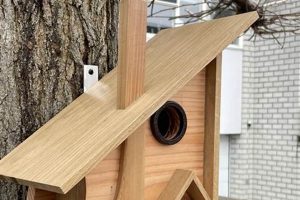
Creations fashioned from timber, employing artistic techniques, result in aesthetically pleasing and often functional objects. These endeavors span a wide range, from small, decorative pieces to large-scale installations. A carved wooden bowl, a meticulously assembled marquetry panel, or a sculpted figure exemplify this craft.
The significance of crafting with wood extends beyond mere aesthetics. It fosters creativity, develops fine motor skills, and provides tangible results, enhancing problem-solving capabilities. Historically, such skilled activities have been integral to societal development, contributing to both practical tools and expressions of cultural identity.
Further examination will explore the diverse range of techniques employed, the materials utilized, and the inspirational sources that drive the creation of these artistic expressions. Consideration will also be given to the tools required and safety protocols necessary for successful execution.
Guidance for Timber-Based Artistic Endeavors
Achieving quality results in artistic creations involving wood requires careful planning, precise execution, and a thorough understanding of materials and techniques. The following guidelines aim to improve the outcome of these endeavors.
Tip 1: Material Selection: Appropriate wood selection is paramount. Different species exhibit varying grain patterns, hardness, and workability. Softwoods, like pine, are easier to shape but less durable. Hardwoods, such as oak or maple, offer greater strength and aesthetic appeal but demand more demanding shaping techniques.
Tip 2: Precise Measurement and Marking: Accuracy is essential. Employ sharp pencils, accurate measuring tools, and appropriate marking techniques to ensure components fit together correctly. Inaccurate measurements will compound throughout the project, leading to structural weakness or aesthetic flaws.
Tip 3: Tool Maintenance: Sharp tools are safer and more efficient. Regularly sharpen chisels, planes, and saws. Dull tools require more force, increasing the risk of slippage and injury. Consistent maintenance improves the quality of the cut and extends the life of the tool.
Tip 4: Grain Direction Awareness: Understand the wood grain’s orientation. Cutting against the grain can result in splintering and tear-out. Work with the grain to achieve clean, smooth cuts. This is especially crucial when carving or shaping intricate details.
Tip 5: Secure Clamping Techniques: Proper clamping is vital for strong joints. Use appropriate clamps to hold components securely while glue dries or fasteners are applied. Uneven clamping pressure can result in weak bonds or misaligned assemblies.
Tip 6: Progressive Sanding: Achieve a smooth finish through progressive sanding. Start with a coarse grit to remove imperfections and gradually transition to finer grits. Consistent sanding ensures a uniform surface for finishing.
Tip 7: Finish Application: Select an appropriate finish for the intended use. Consider factors such as durability, moisture resistance, and desired aesthetic. Apply the finish evenly, following the manufacturer’s instructions for optimal results.
These guidelines, when rigorously applied, will contribute significantly to the successful completion of aesthetically pleasing and structurally sound artistic creations employing wood. Diligence in these areas will elevate the quality and longevity of the finished product.
The subsequent sections will delve into specific techniques and advanced considerations within this field, offering further opportunities for refinement and mastery.
1. Design Complexity

Design complexity, within the realm of artistic creations in wood, directly influences the scope, resources, and expertise required for successful execution. Intricate designs necessitate advanced skills and meticulous planning.
- Number of Components
A design’s complexity is often determined by the number of individual pieces. Elaborate pieces featuring numerous components demand greater precision in cutting, shaping, and assembling. A simple wooden box, requiring only a few pieces, represents low complexity. Conversely, a complex marquetry scene featuring hundreds of individually cut veneers represents high complexity. The management and integration of these numerous parts significantly increase the project’s difficulty.
- Intricacy of Joinery
The joinery method employed has a direct bearing on design complexity. Basic butt joints are simple to execute, whereas intricate dovetail, mortise and tenon, or mitered joints with splines require a higher level of skill and precision. Complex joinery is not only more challenging to execute but also necessitates more time and specialized tools. Accurate fitting of complex joints is crucial for structural integrity and aesthetic appeal.
- Curvature and Shaping
Designs incorporating curved elements and complex shaping techniques increase the level of difficulty. Straight lines and flat surfaces are relatively easy to achieve compared to flowing curves or intricate carvings. Techniques such as steam bending, lamination, and freeform carving demand specialized knowledge and tools. The creation of organic forms and non-Euclidean shapes adds considerably to the artistic and technical challenge.
- Level of Detail
The degree of detail incorporated into the design affects complexity. Projects featuring fine carvings, intricate inlays, or detailed surface embellishments necessitate meticulous work and specialized tools. A simple, unadorned piece of furniture exhibits low detail, while a highly ornamented Baroque-style cabinet showcases high detail. Achieving a consistent and aesthetically pleasing level of detail requires significant artistic skill and patience.
The interplay of component count, joinery intricacy, curvature, and level of detail collectively defines the design’s complexity and, consequently, the demands placed on the craftsman. Successful execution of intricate designs represents a higher degree of mastery within the field of artistic woodworking, requiring a synthesis of technical skill, artistic vision, and meticulous attention to detail.
2. Material properties
The inherent characteristics of wood exert a profound influence on the feasibility, aesthetics, and longevity of timber-based artistic creations. Wood’s properties, encompassing hardness, grain pattern, density, and stability, dictate the techniques that can be effectively employed and the structural integrity of the final piece. For instance, a highly detailed carving might necessitate a fine-grained, stable wood like basswood to prevent splintering and maintain crisp edges. Conversely, a load-bearing sculpture might require a dense and strong hardwood like oak or maple to withstand stress and resist deformation. Incorrect material selection invariably leads to structural weakness, compromised aesthetics, or increased difficulty during the crafting process.
Consider, for example, the construction of a complex marquetry panel. The selection of various wood veneers is directly influenced by their color, grain pattern, and ability to accept adhesive. A contrasting palette of ebony, maple, and cherry might be chosen for visual impact. However, each veneer’s expansion and contraction rate must be considered to prevent warping or delamination over time. Similarly, the creation of bentwood furniture relies on the pliability of specific species like ash or hickory when subjected to steam. An understanding of wood’s moisture content and its response to environmental changes is crucial to prevent cracking or joint failure in these projects.
In summary, a thorough comprehension of wood’s material properties is paramount for successful artistic expression in this medium. The careful selection of species, accounting for their individual strengths and limitations, is a foundational element in the design and execution of durable, aesthetically pleasing, and structurally sound creations. This understanding mitigates the risk of material failure, optimizes the crafting process, and elevates the overall quality of the finished piece, linking directly to the success of artistic woodworking endeavors.
3. Tool proficiency

Tool proficiency constitutes a foundational element in the successful realization of artistic endeavors involving wood. The mastery of hand tools and power tools directly influences the precision, efficiency, and safety of the crafting process. Inadequate skill levels can compromise the quality of the final piece and elevate the risk of injury. Therefore, a comprehensive understanding and practical application of various tools are paramount.
- Precision Cutting and Shaping
Proficient use of saws, chisels, and planes enables the accurate cutting and shaping of wood components. Sharp, well-tuned tools, coupled with proper technique, ensure clean lines, smooth surfaces, and tight-fitting joints. For example, the creation of intricate dovetail joints relies heavily on the precise use of chisels to remove waste material and achieve a seamless fit. Similarly, shaping complex curves requires skilled manipulation of spokeshaves and rasps to achieve the desired form. Inadequate tool skills result in imprecise cuts, misaligned joints, and a reduction in the overall quality of the artwork.
- Efficient Material Removal
Skillful operation of power tools, such as routers, sanders, and planers, facilitates the efficient removal of material and the preparation of surfaces. Routers, for example, can be used to create decorative edges, inlays, and complex profiles. Sanders enable the smoothing of rough surfaces and the preparation for finishing. Proficient use of these tools reduces the time and effort required to achieve a desired result. Conversely, improper technique can lead to uneven surfaces, tear-out, and irreversible damage to the workpiece.
- Safe Operation and Maintenance
Tool proficiency encompasses a thorough understanding of safety protocols and proper maintenance procedures. Safe operation of power tools requires knowledge of machine guarding, personal protective equipment, and appropriate handling techniques. Regular maintenance, including sharpening blades, lubricating moving parts, and inspecting for damage, ensures optimal performance and reduces the risk of accidents. Neglecting safety protocols or failing to maintain tools increases the potential for serious injury and compromised project outcomes.
- Versatility and Adaptability
True tool proficiency extends beyond rote application to encompass versatility and adaptability. The ability to select the appropriate tool for a given task, adapt techniques to overcome challenges, and improvise solutions when necessary are hallmarks of a skilled craftsman. A proficient woodworker can utilize a variety of tools and techniques to achieve the desired result, even when faced with unexpected obstacles or unconventional materials. This adaptability is particularly valuable when executing complex designs or working with reclaimed lumber.
In conclusion, tool proficiency serves as a critical enabler for the successful creation of artistic woodwork. It directly influences the precision, efficiency, safety, and versatility of the crafting process. Mastery of tools, coupled with a deep understanding of wood properties and design principles, empowers the craftsman to translate artistic visions into tangible reality and ultimately elevates the quality and impact of the artwork.
4. Joinery methods
The selection and execution of appropriate joinery techniques are paramount to the structural integrity and aesthetic success of artistic creations in wood. The chosen method directly influences the durability, stability, and visual appeal of the finished piece. A poorly executed joint can compromise the entire structure, while a well-crafted joint enhances both its strength and beauty.
- Structural Integrity and Longevity
Joinery methods directly affect the load-bearing capacity and long-term stability of wooden art. Dovetail joints, for instance, offer superior resistance to tensile forces compared to simple butt joints, making them suitable for structural elements requiring high strength. Mortise and tenon joints, particularly effective in resisting shear forces, are commonly used in chair and table construction. The choice of joinery must align with the anticipated stresses and environmental conditions to ensure the artwork’s enduring stability and prevent premature failure.
- Aesthetic Integration and Design Harmony
Joinery can be intentionally exposed to contribute to the artwork’s aesthetic. In Shaker furniture, for example, exposed dovetails and tenons are celebrated as hallmarks of craftsmanship and design simplicity. Conversely, concealed joinery, such as mitered joints with hidden splines, creates a seamless appearance, emphasizing the form and material of the artwork. The decision to showcase or conceal joinery should be deliberate, complementing the overall design intent and visual language of the piece.
- Complexity and Skill Requirements
Different joinery methods demand varying levels of skill and precision. Simple butt joints require minimal tools and expertise, while intricate dovetail or compound miter joints necessitate advanced woodworking skills and specialized equipment. The selection of a particular joinery method should be based on the craftsman’s skill level and the available resources. Attempting complex joinery without adequate training and tools can lead to frustration, wasted materials, and compromised structural integrity.
- Material Compatibility and Expansion Considerations
The chosen joinery must accommodate the natural expansion and contraction of wood due to changes in humidity. Rigid joints, if improperly designed, can restrict wood movement, leading to cracking or warping. Traditional frame-and-panel construction, for instance, allows the panel to float within the frame, accommodating expansion and contraction without compromising the joint’s integrity. Understanding wood’s behavior and incorporating appropriate design allowances are crucial for preventing structural failures in wooden artwork.
In conclusion, the careful selection and skillful execution of joinery techniques are integral to the success of artistic creations in wood. The chosen method must address both structural requirements and aesthetic considerations, aligning with the artwork’s intended function, design style, and environmental context. Mastery of joinery is a fundamental aspect of artistic woodworking, enabling the creation of durable, visually compelling, and enduring works of art.
5. Finishing techniques

Finishing techniques represent a crucial stage in the creation of wooden artistic expressions, directly influencing the aesthetic appeal, durability, and longevity of the finished piece. The application of a finish serves not merely as a protective layer, but also as a means to enhance the wood’s natural characteristics, accentuate its grain pattern, and provide a desired level of sheen. Improper finishing can detract from the artistic merit of the underlying woodwork, while a skillfully applied finish elevates the piece, transforming it from a raw construction into a refined work of art. For example, a meticulously carved wooden sculpture left unfinished may appear dull and lifeless; however, the application of a carefully chosen oil or wax finish can reveal the wood’s depth and warmth, highlighting the sculptor’s intricate details and providing tactile satisfaction.
The selection of an appropriate finishing technique hinges upon several factors, including the type of wood used, the intended function of the piece, and the desired aesthetic outcome. Oil finishes, such as linseed or tung oil, penetrate the wood, providing a natural look and enhancing the grain’s character. Varnish and lacquer finishes create a durable, protective layer on the surface, offering resistance to scratches, moisture, and UV damage. Milk paint, known for its matte finish and historical authenticity, is often used in rustic or period-style pieces. Each finishing technique demands specific application methods and tools. For instance, a flawless lacquer finish requires meticulous surface preparation, precise spraying techniques, and dust-free conditions. The application of a wax finish necessitates buffing and polishing to achieve a smooth, lustrous surface. Consequently, proficiency in various finishing techniques is essential for achieving optimal results.
In summary, finishing techniques are inextricably linked to the success of wooden artistic creations. They serve not only to protect the wood but also to enhance its inherent beauty and provide a desired aesthetic effect. The careful selection and skillful application of a finish are critical steps in transforming a piece of woodwork into a refined work of art. Challenges in this area often stem from a lack of knowledge about different finishing options, improper surface preparation, or inadequate application techniques. Addressing these challenges through education and practice allows artisans to fully realize their creative vision and produce lasting works of art.
6. Surface embellishment
Within timber-based artistic endeavors, surface embellishment serves as a critical factor in defining the aesthetic character and communicative power of a piece. This process, encompassing a diverse range of techniques applied to the wood’s exterior, transforms a functional object or sculptural form into a work of art. The impact of embellishment is direct: it dictates the visual texture, tactile qualities, and overall impression conveyed. For example, consider a simple wooden box. Without embellishment, it remains utilitarian. However, the addition of intricate carvings, inlaid materials, or painted designs elevates the object to a decorative art form. The choice of embellishment technique, therefore, directly shapes the artistic intent and final outcome.
Specific embellishment techniques include carving, marquetry, wood burning (pyrography), painting, staining, gilding, and inlay. Carving, for instance, removes material to create three-dimensional patterns or relief sculptures. The complexity can range from simple chip carving to elaborate, high-relief figurative work. Marquetry involves the assembly of thin veneers to create pictorial or geometric designs, often employing contrasting wood species for visual impact. Wood burning utilizes heated tools to create darkened lines and shading, lending a rustic or illustrative quality. Painting allows for the introduction of color and graphic elements, while staining alters the wood’s tone and enhances the grain. Gilding applies thin layers of metal leaf, adding a luxurious or ornate touch. Inlay incorporates materials like stone, metal, or shell into recessed areas of the wood surface, creating intricate patterns and textures. The careful integration of these techniques allows for sophisticated and visually compelling outcomes.
In conclusion, surface embellishment is not merely an optional addition but an integral component of many successful artistic woodworking projects. It serves as the primary means of expressing artistic intent, enhancing visual appeal, and transforming raw materials into objects of beauty and cultural significance. Understanding and mastering various embellishment techniques is essential for any artist seeking to elevate their work and achieve impactful results. While technical skill is crucial, the effective application of surface embellishment hinges on a clear artistic vision and a nuanced understanding of the materials and techniques involved.
Frequently Asked Questions
The following addresses common inquiries pertaining to artistic creations fashioned from wood, providing clarity and guidance for both novice and experienced practitioners.
Question 1: What safety precautions are essential when undertaking projects of this nature?
Eye protection, respiratory masks, and hearing protection are mandatory when operating power tools. Secure workpieces to prevent movement, and ensure adequate ventilation when applying finishes. Familiarize oneself with the operational guidelines of each tool before use.
Question 2: How does one determine the appropriate type of wood for a specific project?
Consider the intended use, desired aesthetic, and structural requirements. Hardwoods offer greater durability and strength, while softwoods are easier to shape. Evaluate grain patterns, density, and stability before making a selection.
Question 3: What are common challenges encountered during the execution of intricate designs?
Maintaining precision, preventing splintering, and achieving seamless joinery are frequent obstacles. Sharp tools, meticulous planning, and consistent practice are essential for overcoming these challenges.
Question 4: What are the primary factors contributing to the longevity of a finished piece?
Proper material selection, sound joinery techniques, and the application of a suitable finish are crucial. Regular maintenance, including cleaning and re-application of finish, will further extend the lifespan of the artwork.
Question 5: How does one address warping or cracking in wood-based creations?
Prevention is paramount. Ensure wood is properly seasoned and acclimated to the environment before use. Employ joinery techniques that accommodate wood movement, and apply finishes that regulate moisture absorption. In instances of warping, controlled re-humidification may offer a solution.
Question 6: What are ethical considerations regarding sourcing materials for artistic projects?
Prioritize sustainably harvested wood from reputable suppliers. Avoid using endangered species and consider reclaimed or recycled lumber whenever feasible. Support forestry practices that promote biodiversity and environmental stewardship.
Adherence to these principles enhances both the quality and ethical standing of artistic timber creations.
The subsequent section delves into resources and opportunities for further exploration within this artistic discipline.
Conclusion
This exploration has underscored that artistic creations in wood represent a convergence of technical skill, aesthetic vision, and material understanding. The process necessitates careful consideration of design complexity, material properties, tool proficiency, joinery methods, finishing techniques, and surface embellishment. Mastery in these areas elevates the outcome from mere construction to expressive artistry.
The future of this practice lies in continued innovation, exploration of sustainable resources, and commitment to ethical sourcing. A deeper engagement with these principles will ensure the enduring value and cultural significance of this timeless art form. The responsibility rests on practitioners to uphold the integrity of the craft and foster its continued evolution.