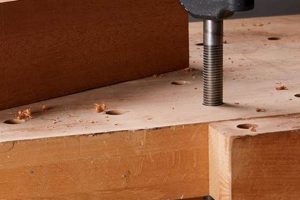
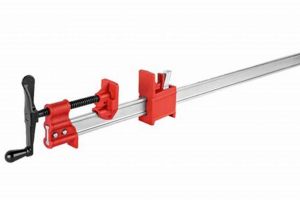
Workholding solutions employing bench dogs alongside clamping mechanisms secure materials on work surfaces. These systems utilize pegs, typically metal or plastic, that fit into precisely drilled holes on a workbench. When combined with a clamping force, these create a stable platform for various woodworking tasks.
The effectiveness of this approach stems from its ability to provide consistent and reliable hold, minimizing material movement during cutting, shaping, and joining operations. The method has roots in traditional woodworking practices, evolving over time with advancements in materials and clamping technology. The stability afforded by these systems contributes directly to accuracy and efficiency in woodworking projects.
The following sections will delve into the different types of bench dog configurations, considerations for workbench compatibility, and techniques for maximizing their performance in diverse woodworking applications. Variations in clamping mechanisms, material considerations, and maintenance best practices will also be explored.
Optimizing Bench Dog Clamping Techniques
Effective implementation of bench dog clamping systems enhances precision and safety in woodworking. The following recommendations provide guidance for maximizing the performance and longevity of these workholding solutions.
Tip 1: Hole Precision: Ensure consistent diameter and depth in dog holes. Deviations compromise clamping force and material stability. Utilize a dedicated drilling jig for accuracy.
Tip 2: Dog Material Selection: Match dog material to workpiece characteristics. Hardwoods benefit from steel dogs, while softer materials require non-marring alternatives like brass or plastic.
Tip 3: Clamping Pressure Management: Apply appropriate clamping force relative to the workpiece thickness and material. Over-tightening can damage the work or deform the clamping dog. Invest in a quality woodworking clamp to measure tension.
Tip 4: Bench Dog Placement: Strategically position dogs to counteract anticipated forces during cutting or shaping. Place dogs symmetrically to distribute clamping pressure evenly.
Tip 5: Dog Maintenance: Regularly inspect dogs for wear or damage. Clean dogs to remove debris that could impede clamping action. Apply a rust inhibitor to steel dogs to prevent corrosion.
Tip 6: Workpiece Support: For larger workpieces, supplement dog clamping with additional support structures, such as outfeed tables or roller stands, to prevent sagging or tilting.
Tip 7: Dog Hole Protection: Utilize dog hole bushings or sleeves to prevent wear and tear on the workbench surface. These inserts prolong the life of the dog holes and maintain dimensional accuracy.
Adhering to these principles ensures the reliable and safe operation of bench dog clamping systems, leading to improved woodworking outcomes. The principles focus on precision, compatibility, and maintenance to optimize woodworking experience. A quality dog hole clamp can be enhanced by an understanding of the underlying physical process of the technology.
The subsequent section will address common troubleshooting scenarios and solutions associated with bench dog clamping systems.
1. Material Compatibility

Material compatibility within the context of dog clamping systems in woodworking is a critical determinant of project success. The interaction between the clamping dog material and the workpiece material directly impacts surface integrity, clamping force distribution, and overall stability. Mismatched materials can lead to undesirable outcomes, such as surface marring on softer woods when using hardened steel dogs, or insufficient clamping force when using excessively compliant materials for high-stress applications. For example, clamping a delicate figured maple panel with unpadded steel dogs can result in visible indentations, compromising the aesthetic quality of the finished piece. Conversely, using soft plastic dogs to secure a large, heavy oak tabletop during edge jointing may lead to slippage due to inadequate frictional resistance.
The selection of appropriate dog material should be guided by the hardness, density, and surface sensitivity of the workpiece. Hardwoods, such as maple and oak, generally tolerate the use of steel or hardened aluminum dogs, provided that clamping pressure is carefully regulated. Softer woods, including pine, fir, and cedar, necessitate the use of gentler materials, such as brass, nylon, or polyurethane. Furthermore, the presence of intricate detailing or delicate edges on the workpiece necessitates the implementation of protective measures, such as padded dog faces or sacrificial shims, to prevent localized stress concentrations and potential damage. In applications involving chemically reactive materials, such as certain exotic hardwoods or composite materials, compatibility considerations must extend to potential chemical interactions. Inert materials like UHMW (Ultra High Molecular Weight) polyethylene may be preferable in such instances to avoid discoloration or degradation of the workpiece.
In conclusion, material compatibility is an indispensable aspect of effective dog clamping. Neglecting this parameter can lead to compromised surface finishes, inaccurate machining operations, and ultimately, project failure. A thorough understanding of the material properties of both the dog and the workpiece, coupled with the implementation of appropriate mitigation strategies, is essential for achieving consistent and high-quality woodworking results. The economic implications of material incompatibility, leading to rework or material waste, further underscore the importance of meticulous material selection in these systems.
2. Clamping Force Distribution

Clamping force distribution constitutes a fundamental principle governing the effectiveness and precision of workholding systems employing bench dogs. The manner in which force is applied across the workpiece surface directly influences its stability, resistance to deformation, and ultimately, the accuracy of machining operations. Uneven force distribution, a common pitfall in poorly designed or implemented systems, can induce localized stress concentrations, leading to warping, bending, or even cracking of the material. For instance, when edge-joining two boards using bench dogs and a single clamp positioned centrally, the force tends to concentrate at the clamp location, while the ends of the boards may experience significantly reduced pressure. This disparity can result in a joint that is not perfectly aligned or exhibits gaps along its length. Thus, clamping force distribution is an important component of bench dog systems.
Optimal force distribution is achieved by strategically positioning bench dogs and clamps to create a network of evenly spaced pressure points across the workpiece. In the edge-joining example cited above, the use of multiple clamps, distributed along the length of the boards, ensures consistent pressure along the entire joint line. Similarly, when securing a large panel for planing or sanding, a grid of bench dogs, coupled with strategically placed holdfasts or cam clamps, prevents the panel from flexing or vibrating under the applied forces. The selection of appropriate clamping mechanisms also plays a crucial role. Toggle clamps, for example, provide a more uniform and predictable force application compared to traditional screw clamps, which may be prone to over-tightening or uneven pressure.
In summary, clamping force distribution is integral to the successful application of bench dog systems in woodworking. Achieving uniform force distribution requires careful consideration of dog placement, clamping mechanism selection, and the geometric properties of the workpiece. Failure to address this critical factor can compromise the accuracy, stability, and structural integrity of the finished project. Understanding these principles empowers the woodworker to mitigate risks, optimize workholding strategies, and achieve consistently high-quality results. Challenges related to complex geometries or unconventional material properties necessitate innovative solutions such as custom-designed clamping jigs or vacuum-based workholding systems.
3. Hole Diameter Precision

The accuracy of the dog hole diameter is fundamentally linked to the functionality and reliability of workholding systems using bench dogs. Dimensional consistency within dog holes directly influences the stability and clamping force achievable when securing a workpiece. If the hole diameter deviates significantly from the specified dimensions of the bench dog, the resulting fit may be either too loose, leading to slippage and instability, or too tight, potentially damaging the dog or the surrounding workbench material. For instance, a dog hole that is excessively large allows the dog to wobble, reducing the effective clamping pressure and increasing the likelihood of workpiece movement during machining operations. Conversely, a hole that is too small may require excessive force to insert the dog, causing unnecessary stress on both the dog and the workbench. This compromises overall precision.
The consequences of inaccurate hole diameters extend beyond mere clamping force limitations. Variability in hole size across the workbench surface introduces inconsistencies in dog positioning, making it challenging to establish repeatable setups for complex joinery or assembly tasks. Consider a scenario where a woodworker is attempting to create a series of mortise-and-tenon joints using a bench dog system as a reference. Inconsistent hole diameters across the workbench surface could lead to slight variations in the positioning of each joint, resulting in cumulative errors that compromise the overall fit and alignment of the finished piece. Moreover, using a drill press with the incorrect sized bit can cause tearout on the exit hole.
Maintaining consistent hole diameter requires employing precise drilling techniques and appropriate tooling. Specialized dog hole drilling jigs, typically constructed from hardened steel or aluminum, provide a stable and accurate guide for drilling each hole. These jigs ensure that each hole is drilled to the same diameter and depth, minimizing variability across the workbench surface. Furthermore, the use of high-quality drill bits, specifically sized for the intended dog diameter, is essential for achieving clean and accurate holes. Addressing challenges in dog-and-hole diameter relationships is a key component of efficient dog clamp-based woodworking.
4. Dog Hole Placement
Dog hole placement is a determinant factor in the functionality of workbenches designed for use with bench dogs and associated clamping mechanisms. Strategic arrangement of these holes optimizes workholding capabilities, accommodating diverse workpiece geometries and machining operations.
- Grid Density and Versatility
The density of the dog hole grid influences the range of clamping configurations achievable. A closely spaced grid allows for finer adjustments and greater adaptability to irregular workpiece shapes. Conversely, a sparse grid may limit clamping options, necessitating auxiliary clamping devices or improvised solutions. The trade-off between grid density and workbench surface integrity should be carefully considered during workbench construction. For example, a grid with 2-inch spacing offers high versatility, while a 4-inch spacing may provide greater structural stability.
- Proximity to Edges
The distance between dog holes and the edges of the workbench dictates the ability to secure workpieces flush with the surface. Holes positioned too far from the edges may prevent effective clamping of thin or narrow materials. Conversely, holes located too close to the edges may compromise the structural integrity of the workbench, particularly under heavy clamping pressure. A balanced approach, incorporating multiple rows of dog holes at varying distances from the edges, maximizes workholding flexibility. In some applications, specialized edge clamping accessories may be used to supplement traditional bench dog configurations.
- Orientation and Alignment
The alignment and orientation of dog holes directly impact the precision and repeatability of clamping setups. Dog holes that are not perfectly aligned or perpendicular to the workbench surface can introduce inaccuracies, leading to skewed joints or misaligned components. This is particularly critical for joinery operations requiring precise registration, such as mortise-and-tenon or dovetail joints. Laser alignment tools and precision drilling jigs are frequently employed to ensure accurate dog hole placement and orientation.
- Integration with Clamping Accessories
The placement of dog holes should complement the use of various clamping accessories, such as holdfasts, bench vises, and commercially available clamping systems. Strategic placement of dog holes in proximity to these accessories allows for synergistic workholding strategies, enhancing stability and efficiency. For example, dog holes positioned near the jaws of a bench vise enable the secure clamping of long or awkwardly shaped workpieces. Compatibility with standardized clamping systems simplifies the integration of prefabricated components into the workbench setup.
Effective dog hole placement is essential for maximizing the functionality and versatility of a woodworking bench. Thoughtful consideration of grid density, edge proximity, alignment, and integration with clamping accessories optimizes workholding capabilities, enhancing precision and efficiency in diverse woodworking operations. Addressing challenges associated with clamping irregular shapes or large panels may require innovative solutions such as custom-built jigs or vacuum clamping systems.
5. Workpiece Stabilization

Workpiece stabilization is a critical aspect of woodworking, directly influencing the precision and safety of operations. The securement of material during machining, shaping, and assembly relies heavily on the efficacy of workholding apparatus, with bench dogs and clamping mechanisms playing a fundamental role in achieving stable configurations.
- Mitigation of Vibration
Dog clamp systems, when properly implemented, dampen vibrations that occur during cutting, routing, or sanding operations. Vibration can compromise accuracy, leading to imperfections in the finished workpiece. A stable workpiece, achieved through the correct placement and tensioning of clamps in conjunction with bench dogs, minimizes these vibrations, leading to cleaner cuts and more precise shaping. Insufficient dampening can also contribute to operator fatigue and increase the risk of errors.
- Prevention of Material Movement
The primary function of these systems is to prevent unwanted movement of the workpiece during machining. Movement, even on a microscopic scale, can have detrimental effects on the final product. For example, when cutting dovetails, any shifting of the material will result in gaps and misalignment, rendering the joint structurally unsound and aesthetically unappealing. Proper clamping, with dogs strategically positioned to resist anticipated forces, is essential for maintaining dimensional accuracy.
- Enhancement of Safety
Secure workholding directly contributes to operator safety. A workpiece that is not properly stabilized poses a significant hazard, as it can unexpectedly shift or kick back during machining, potentially causing injury. Systems of clamps and dogs reduce the risk of such incidents by providing a reliable and predictable holding force. The use of appropriate safety equipment, such as eye protection and hearing protection, should always be combined with effective workholding practices.
- Support of Complex Geometries
Dog clamp configurations facilitate the securement of workpieces with complex or irregular shapes. Standard clamping methods may prove inadequate for such materials, requiring specialized workholding solutions. The versatility of dog clamp setups allows for customization and adaptation to diverse geometric challenges, ensuring that even the most intricate workpieces can be securely held for machining. This adaptability is particularly valuable in custom woodworking or furniture making.
The effectiveness of stabilizing the workpiece is a combined outcome of the bench dog placement, clamping device, and overall workholding plan. Each component acts synergistically to establish a rigid and stable work platform. Through carefully and methodically securing a work piece and selecting dog hole diameter and material, projects can come to life while reducing harm to self and others.
6. Clamping Mechanism Varieties

The diversity of clamping mechanisms available significantly impacts the versatility and efficiency of workholding systems that incorporate bench dogs. Selecting the appropriate clamp type for a given application is critical for achieving secure and stable workpiece retention during woodworking operations. Different clamping designs offer varying levels of force, adjustability, and ease of use, influencing the overall productivity and precision of the woodworking process.
- Cam Clamps
Cam clamps provide rapid clamping and unclamping action, making them suitable for repetitive tasks. The clamping force is generated by the rotation of an eccentric cam lever, which applies pressure against the workpiece. These clamps are often used in conjunction with bench dogs to secure workpieces quickly and efficiently. However, their clamping force may be less consistent compared to screw clamps, requiring careful adjustment to prevent overtightening or slippage.
- Screw Clamps
Screw clamps offer precise control over clamping pressure, allowing for fine-tuning to prevent damage to delicate materials. The clamping force is generated by tightening a screw, which applies pressure against the workpiece. These clamps are commonly used in conjunction with bench dogs to secure workpieces that require a consistent and controlled clamping force. The process is slower than cam clamps.
- Holdfasts
Holdfasts are traditional clamping devices that utilize friction to secure workpieces to the workbench. A tapered shaft is inserted into a dog hole and struck with a mallet, causing it to grip the workpiece. Holdfasts are valued for their simplicity and speed, but their clamping force may be less predictable compared to other clamping mechanisms. The effectiveness of a holdfast depends on the fit of the shaft within the dog hole and the applied striking force.
- Toggle Clamps
Toggle clamps provide a secure and repeatable clamping force through a mechanical linkage system. The clamping force is generated by moving a handle, which engages a toggle mechanism that applies pressure against the workpiece. These clamps are often used in conjunction with bench dogs in jigs and fixtures, where consistent clamping force and rapid operation are required.
The choice of clamping mechanism depends on factors such as the type of woodworking operation, the material being worked, and the desired level of clamping force and adjustability. Selecting the appropriate clamp type enhances the utility of systems that employ bench dogs, contributing to improved precision and productivity in woodworking tasks. Considerations relating to long-term durability and ease of maintenance also influence the choice of a particular type.
7. Longevity and Maintenance

The operational lifespan of bench dog systems, integral to efficient woodworking, is directly contingent upon consistent maintenance protocols and material durability. Without proper care, the constituent elements dogs, clamping mechanisms, and workbench surfaces degrade, compromising clamping force, precision, and overall system effectiveness. The accumulation of debris within dog holes, corrosion on metal dogs, or wear on clamping surfaces reduces the system’s ability to securely hold workpieces. Such degradation inevitably results in inaccurate cuts, increased material waste, and potential safety hazards. Consider a scenario in which a woodworker routinely clamps oily hardwoods. Residue buildup within the dog holes and on the dogs themselves will reduce friction, creating a slippage risk that undermines project precision. Frequent cleaning and lubrication are preventative measures against this issue.
The selection of robust materials initially influences the system’s capacity to withstand prolonged use. High-carbon steel dogs resist deformation under high clamping pressures, extending their lifespan compared to softer alloys. Similarly, workbenches constructed from durable hardwoods, such as maple or beech, are less susceptible to wear and tear around the dog holes. Regularly inspecting dogs for signs of wear, such as bending or cracking, allows for timely replacement, preventing catastrophic failure during critical operations. Protective coatings applied to metal components mitigate corrosion, particularly in humid environments. Furthermore, addressing minor damage to dog holes, such as chipped edges, with epoxy fillers prevents further deterioration and maintains dimensional accuracy.
In summary, integrating preventative maintenance into woodworking practices is paramount for maximizing the long-term utility of bench dog systems. Consistent cleaning, appropriate lubrication, diligent inspection, and prompt repair of damaged components safeguard the system’s integrity, ensuring reliable and accurate workholding for years. Neglecting these practices inevitably leads to diminished performance, increased repair costs, and a shortened operational lifespan. Prioritizing longevity through maintenance translates to sustained efficiency and reduced material waste within woodworking endeavors. A well-maintained system ensures consistently superior outcomes.
Frequently Asked Questions
The following section addresses common inquiries and misconceptions regarding the use of bench dogs and clamping mechanisms in woodworking. The information presented aims to clarify fundamental principles and best practices.
Question 1: What is the optimal dog hole diameter for general woodworking applications?
While variations exist, a -inch (19mm) diameter is widely accepted as a standard for dog holes. This dimension provides sufficient clearance for most commercially available bench dogs and clamping accessories while maintaining structural integrity in the workbench top.
Question 2: What materials are best suited for constructing bench dogs?
High-carbon steel, hardened aluminum, and brass are commonly used materials. Steel offers exceptional durability, aluminum provides a lightweight alternative, and brass minimizes the risk of marring softer wood surfaces.
Question 3: How should clamping pressure be regulated to prevent damage to the workpiece?
Clamping pressure should be proportional to the workpiece thickness and material density. Excessive force can cause deformation or cracking, while insufficient force may result in slippage. Gradual tightening and careful monitoring are crucial.
Question 4: What is the recommended spacing between dog holes for optimal workholding versatility?
A grid pattern with spacing between 3 and 4 inches (75-100mm) provides a balance between clamping flexibility and workbench stability. Closer spacing allows for finer adjustments, while wider spacing preserves the structural integrity of the bench.
Question 5: How can dog holes be protected from wear and tear?
The insertion of metal or plastic bushings into dog holes minimizes abrasion and prevents enlargement over time. These bushings provide a sacrificial wear surface, extending the lifespan of the workbench top.
Question 6: What are the advantages of using cam clamps versus screw clamps in conjunction with bench dogs?
Cam clamps offer rapid clamping and unclamping action, enhancing efficiency in repetitive tasks. Screw clamps provide more precise control over clamping pressure, allowing for finer adjustments and reduced risk of workpiece damage.
These frequently asked questions highlight the key considerations when employing dog clamps within woodworking contexts. The information serves as a foundation for proper implementation of dog clamping systems in workshop environments.
The subsequent section will explore advanced workholding techniques and specialized applications utilizing bench dogs.
Dog Clamps for Woodworking
This exploration of dog clamps for woodworking has underscored the importance of precise workholding in achieving accurate and efficient results. The efficacy of these systems hinges on a confluence of factors: material compatibility, clamping force distribution, dog hole precision and strategic placement, and the implementation of consistent maintenance procedures. Selecting the appropriate clamping mechanism and adhering to best practices optimizes performance. This is imperative for the success of any woodworking project.
Dog clamps represent a foundational element within the contemporary woodworking landscape. A comprehensive understanding of their nuances empowers woodworkers to elevate their craft, enhance safety within their workspaces, and ensure the longevity of their tools and equipment. Continued research and refinement of techniques related to the implementation of clamping systems are vital to the progression of woodworking, fostering innovation and promoting excellence across the field.