



These tools are indispensable in woodworking, specifically designed to apply even pressure across wide surfaces during assembly and glue-up operations. Constructed with long bars and adjustable clamping heads, they ensure that workpieces are held firmly in alignment while adhesives cure. A common application involves constructing frames, panels, and casework where maintaining squareness and preventing warping are paramount.
Their significance lies in their ability to provide consistent and substantial clamping force, leading to stronger and more accurate joinery. Historically, these devices evolved from simpler clamping mechanisms to meet the increasing demands of furniture making and construction. They are crucial for achieving professional-quality results, minimizing defects and ensuring the longevity of the finished piece.
The following sections will delve into the various types available, considerations for selecting the appropriate model for a given project, and techniques for their effective utilization to maximize accuracy and minimize potential damage to the workpiece.
Essential Usage Considerations
Optimizing the effectiveness and longevity of these tools necessitates adherence to specific best practices. Proper technique prevents damage to both the tool and the workpiece, while ensuring consistent and reliable clamping force.
Tip 1: Distribution is Key: Employ an adequate number to evenly distribute pressure across the entire workpiece. Insufficient distribution can lead to localized stress, causing warping or joint failure.
Tip 2: Protective Measures: Always utilize wooden cauls or padding between the clamping faces and the material. This prevents indentation and marring of the surface, particularly on softer woods.
Tip 3: Parallel Alignment: Ensure the bars remain parallel throughout the tightening process. Misalignment can induce twisting forces that compromise the integrity of the joint.
Tip 4: Gradual Tightening: Tighten in small increments, alternating between clamps. This prevents uneven pressure build-up and allows for adjustments as necessary.
Tip 5: Thread Maintenance: Regularly clean and lubricate the threads of the screw mechanism. This ensures smooth operation and prevents premature wear.
Tip 6: Storage Considerations: Store in a dry environment to prevent rust and corrosion. Proper storage will extend the lifespan and maintain the functionality of the equipment.
Tip 7: Squareness Verification: Confirm the assembly is square before applying full clamping pressure. Slight adjustments can be made before the glue sets to ensure accurate dimensions.
Following these guidelines will maximize the potential benefits and minimize potential pitfalls when utilizing these essential tools in woodworking projects. Consistent application of these techniques will contribute to higher-quality results and increased project longevity.
The subsequent section will provide a detailed discussion on selecting the appropriate type for specific applications and project requirements, thereby further refining the user’s ability to achieve optimal outcomes.
1. Clamping Pressure

Clamping pressure, when using devices for woodworking, is a critical factor directly influencing the strength and stability of glued joints. Insufficient force fails to properly consolidate the bond between surfaces, resulting in weak connections prone to failure under stress. Conversely, excessive force can damage the wood fibers, creating indentations or even crushing the material, thereby weakening the joint and compromising the aesthetic quality. The appropriate level of pressure, therefore, must be carefully calibrated based on wood species, adhesive type, and joint configuration.
The sash clamp’s design facilitates the application of controlled, even pressure across wide surfaces. This is particularly essential for assembling large panels or frames, where localized variations in clamping force can lead to warping or misalignment. For instance, when constructing a large tabletop, variations in clamping pressure can create unevenness, leading to an unstable surface. Properly adjusted, the clamps ensure uniform pressure distribution, resulting in a flat, stable, and structurally sound finished product. The choice of clamp quality directly relates to the accuracy with which pressure can be applied and maintained over the curing period.
Understanding the relationship between clamping pressure and the overall quality of glued joints is fundamental to effective woodworking. While achieving optimal clamping pressure involves a degree of experience and intuition, it ultimately relies on the consistent application of sound techniques and the use of reliable equipment. Failure to recognize the importance of properly calibrated pressure can negate the benefits of high-quality materials and skilled craftsmanship, leading to compromised results and project failure. Appropriate clamping pressure is not just a step in the woodworking process but a critical parameter for ensuring the structural integrity and longevity of the finished piece.
2. Bar Length
Bar length represents a critical specification in sash clamps for woodworking, directly dictating the maximum dimensions of workpieces that can be effectively clamped. Insufficient bar length renders the clamp unusable for a given project, necessitating the acquisition of longer clamps or the implementation of alternative, potentially less effective, clamping strategies. The length determines the capacity for assembling large frames, panels, or casework, where extensive clamping surfaces are required. Consider, for example, the construction of a large dining table; if the clamp bar is shorter than the table’s width, achieving proper alignment and applying adequate clamping pressure becomes impossible.
The selection of bar length should proactively consider the scope of projects typically undertaken. Purchasing multiple sets of varying lengths allows for greater versatility, accommodating both smaller and larger assemblies. While longer bars offer greater adaptability, they can also introduce increased flexibility and potential for deflection under load, especially in lower-quality clamps. The material and construction of the bar itself contribute to its rigidity and resistance to bending. Practical experience demonstrates that investing in higher-quality clamps with robust bars minimizes the risk of deflection, ensuring consistent pressure distribution across the entire clamping surface.
In summary, bar length is not merely a dimension but a fundamental parameter defining the capabilities of clamps for woodworking. Proper consideration of bar length in relation to project size ensures efficient and effective clamping, minimizing the risk of misalignment, warping, or joint failure. The investment in a range of bar lengths and high-quality clamp construction ultimately contributes to superior woodworking outcomes. Furthermore, inappropriate application of clamping tools introduces unnecessary challenges, highlighting its crucial importance.
3. Jaw Design
The configuration of the clamping jaws significantly impacts the performance and versatility of sash clamps used in woodworking. The jaw design dictates the ability of the clamp to effectively grip the workpiece, distribute pressure, and prevent damage to the material’s surface. Therefore, understanding the nuances of various designs is essential for selecting appropriate clamps for specific woodworking applications.
- Jaw Width and Surface Area
Wider jaws distribute clamping force over a larger surface area, reducing the risk of indentation or crushing, particularly on softer wood species. A smaller jaw focuses the force, which can be useful for firmer materials or when the workpiece is very narrow. For example, clamping delicate trim work benefits from wider jaws to avoid leaving marks, while denser hardwoods used in furniture making may tolerate more focused pressure.
- Jaw Profile and Angle
The angle and shape of the jaw profile affect the clamp’s ability to accommodate various workpiece shapes and sizes. A flat jaw is suitable for clamping surfaces that are parallel, while angled jaws allow for clamping at slight inclines. Some jaws are designed with a slightly convex profile to compensate for potential bar deflection. The profile chosen depends on the anticipated range of project geometries.
- Jaw Material and Padding
Jaw material influences the potential for marking or staining the workpiece. Metal jaws, if unprotected, can leave indentations, while wooden or plastic jaws offer a softer interface. Many manufacturers incorporate replaceable pads made of cork, felt, or rubber to further protect the material’s surface. The selection of jaw material should be made in accordance with the surface finish of the workpiece.
- Quick-Release Mechanisms and Adjustability
Certain incorporate quick-release mechanisms or adjustable features that allow for rapid setup and clamping. These mechanisms enhance efficiency when working on projects that require frequent adjustments or multiple clamping operations. Adjustable jaw position allows a user to quickly change the opening capacity of the clamp, making it suitable for different size materials.
In conclusion, jaw design is a critical determinant of the overall effectiveness and utility of sash clamps in woodworking. Careful consideration of jaw width, profile, material, and adjustability enables woodworkers to select clamps that are optimally suited to their specific needs and project requirements. Selecting the right jaw design for the material and desired clamping method, enhances the overall productivity and outcome of the woodworking operation.
4. Material Compatibility
The interaction between sash clamps and the workpiece material is a crucial consideration in woodworking. Incompatibility can manifest in several detrimental ways, ranging from surface damage and staining to corrosion and compromised joint integrity. Metal components, particularly those made of steel, can react with certain wood species containing acidic compounds, leading to discoloration or even localized corrosion of the metal clamp itself. Direct contact with bare metal can also leave indentations on softer woods under pressure. Therefore, understanding material properties and potential interactions is essential for preserving the integrity of both the workpiece and the clamping equipment. For instance, using unprotected steel sash clamps on oak, which contains tannic acid, can result in black staining of the wood around the clamp points.
The selection of appropriate sash clamp materials, or the implementation of protective barriers, mitigates these risks. Clamps with wooden jaws or those coated in protective polymers minimize direct contact between metal and wood, preventing staining and reducing the potential for indentations. When working with sensitive materials or fine finishes, the use of cauls intermediary pieces of wood placed between the clamp jaws and the workpiece provides an additional layer of protection. Furthermore, the type of adhesive used in conjunction with sash clamps should also be considered. Some adhesives can react with certain metals, causing corrosion or weakening the clamp structure. Therefore, ensuring compatibility between the adhesive, wood species, and clamp material is a critical step in the assembly process.
In summary, material compatibility is an indispensable aspect of effective clamp usage. Failure to account for potential interactions between sash clamps, the workpiece, and adhesives can lead to aesthetic defects, structural weaknesses, and premature clamp degradation. Careful consideration of material properties, the use of protective measures, and the selection of compatible components ensures that clamping operations contribute to a high-quality, durable, and visually appealing finished product. Ignoring material compatibility has ramifications that extend beyond immediate surface defects, potentially impacting the long-term stability and value of the woodworking project.
5. Thread Mechanism

The thread mechanism constitutes a critical element in sash clamps for woodworking, directly influencing clamping force application, stability, and overall tool lifespan. Its design and material composition determine the clamp’s ability to efficiently convert rotational force into linear clamping pressure while maintaining that pressure over extended periods.
- Thread Pitch and Clamping Force
Thread pitch, defined as the distance between threads, significantly impacts the mechanical advantage provided by the screw mechanism. A finer thread pitch necessitates more rotations to achieve a given clamping force but offers greater precision and reduces the risk of over-tightening. Coarser threads, conversely, allow for faster application of pressure but may compromise control. The optimal pitch is determined by the trade-off between speed, precision, and the desired clamping force for specific woodworking applications.
- Thread Material and Durability
The materials used in the screw and nut components of the thread mechanism dictate its durability and resistance to wear. High-carbon steel or hardened alloys withstand greater loads and exhibit superior resistance to deformation compared to softer metals. Regular lubrication is essential to minimize friction and prevent galling, thereby extending the lifespan of the thread mechanism. The selection of materials influences the clamp’s ability to maintain consistent pressure over numerous clamping cycles.
- Thread Form and Efficiency
The shape of the thread, whether Acme, square, or V-thread, impacts the efficiency of force transmission and the susceptibility to backlash. Acme threads, characterized by their trapezoidal shape, offer a balance between strength, efficiency, and ease of manufacturing. Square threads provide maximum efficiency but are more complex to produce. The thread form directly affects the amount of energy required to apply and maintain clamping pressure and the likelihood of slippage under load.
- Handle Design and Torque Application
The handle design, including its length, material, and ergonomic features, influences the amount of torque that can be effectively applied to the screw mechanism. Longer handles provide greater leverage, allowing for higher clamping forces to be achieved with less effort. Ergonomic handles reduce fatigue and improve control, enabling more consistent application of pressure. The handle must be robust enough to withstand the forces generated during clamping without bending or breaking, ensuring reliable operation.
In summary, the thread mechanism is an integral component of clamps for woodworking, dictating its ability to deliver consistent, controlled, and reliable clamping force. Careful consideration of thread pitch, material, form, and handle design enables woodworkers to select clamps that are optimally suited to their specific needs, ensuring effective and durable performance across a wide range of woodworking applications. This mechanism, if overlooked or improperly maintained, can significantly reduce the lifespan and effectiveness of clamping operations.
Frequently Asked Questions Regarding Sash Clamps for Woodworking
The following questions address common inquiries and misconceptions surrounding the selection, usage, and maintenance of these woodworking tools.
Question 1: What distinguishes sash clamps from pipe clamps, and when is one preferable over the other?
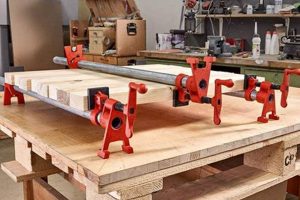
Pipe clamps utilize standard pipe as the bar, allowing for customizable lengths, while sash clamps feature a fixed-length, often more rigid bar. Sash clamps generally offer greater precision and resistance to deflection, making them preferable for projects demanding high accuracy and minimal warping. Pipe clamps are advantageous when exceptionally long clamping surfaces are required.
Question 2: How many are typically required for a given woodworking project?
The quantity needed depends on the size and complexity of the workpiece. As a general guideline, distribute clamps every 6 to 12 inches along the glue line. Larger or more intricate assemblies necessitate a greater number to ensure uniform pressure distribution and prevent warping.
Question 3: Is it necessary to use cauls when employing these tools?
Cauls are recommended, particularly when working with softwoods or when a pristine surface finish is desired. Cauls distribute clamping pressure evenly and prevent indentations or marring of the workpiece caused by direct contact with the clamp jaws.
Question 4: What is the optimal clamping pressure for various wood species?
Optimal clamping pressure varies depending on wood density and adhesive type. As a general rule, apply sufficient pressure to close the joint tightly without crushing the wood fibers. Softer woods require less force than hardwoods. Follow the adhesive manufacturer’s recommendations for specific pressure guidelines.
Question 5: How should sash clamps be properly maintained to ensure longevity?
Regular maintenance includes cleaning the threads of the screw mechanism, lubricating moving parts with a light oil, and storing the clamps in a dry environment to prevent rust and corrosion. Periodically inspect the bars for any signs of bending or damage and replace worn components as needed.
Question 6: Are there alternative clamping methods that can substitute for them?
While alternative clamping methods exist, such as bar clamps, parallel clamps, or band clamps, sash clamps offer a unique combination of length, rigidity, and pressure distribution that makes them particularly well-suited for assembling large panels, frames, and casework. The suitability of alternative methods depends on the specific requirements of the project.
Careful consideration of these factors, along with proper technique, will maximize the effectiveness and lifespan of these essential woodworking tools.
The subsequent section will present case studies illustrating the practical application and benefits of using these tools in diverse woodworking scenarios.
Conclusion
The preceding examination underscores the paramount role “sash clamps for woodworking” play in achieving precision and structural integrity across a wide spectrum of woodworking projects. From ensuring accurate alignment to applying consistent pressure during glue-up, their judicious use is inextricably linked to the quality and longevity of the finished piece. The considerations outlined herein, encompassing bar length, jaw design, material compatibility, and thread mechanism, represent essential factors in selecting and utilizing these tools effectively.
The consistent application of sound techniques and a thorough understanding of these principles will not only enhance the craftsman’s capabilities but also contribute to the enduring value of their work. Continued refinement of clamping methods and a commitment to utilizing appropriate equipment remain vital for maintaining standards of excellence within the woodworking field. The diligent application of knowledge regarding “sash clamps for woodworking” remains a cornerstone of professional woodworking practices.
![Top-Rated: Best Quick Clamps for Woodworking Projects [2024] | Step-by-Step Guides, Tools & Inspiration to Build Beautiful Wooden Decor on a Budget](https://woodfromhome.com/wp-content/uploads/2026/04/th-264-300x200.jpg "Top-Rated: Best Quick Clamps for Woodworking Projects [2024] Step-by-Step Guides, Tools & Inspiration to Build Beautiful Wooden Decor on a Budget")