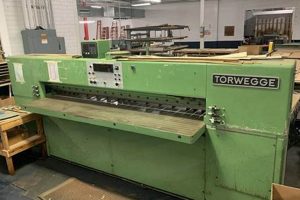
A computer numerical control (CNC) device utilized in woodworking represents a significant technological advancement in the crafting and shaping of wooden materials. These machines employ precise automated control to execute intricate designs and cuts, enabling the production of highly detailed and consistent wooden components. Examples of items produced using this technology range from custom cabinetry and furniture to complex architectural models and artistic creations.
The significance of employing this type of technology lies in its capacity to enhance efficiency, accuracy, and repeatability in woodworking operations. Historically, complex woodworking tasks demanded considerable manual skill and time. The advent of automated systems has dramatically reduced the labor required while simultaneously elevating the precision and consistency of the finished product. Businesses and individuals alike benefit from increased throughput, reduced material waste, and the ability to create designs that would be exceedingly difficult or impossible to achieve manually.
The subsequent sections will delve into crucial considerations for selecting the most appropriate automated woodworking system for specific needs, exploring factors such as machine size and capabilities, software compatibility, material handling considerations, and common applications across diverse woodworking disciplines.
Essential Guidance for Optimizing Automated Woodworking Systems
Effective utilization of automated woodworking systems necessitates careful planning and execution. The following guidelines aim to maximize efficiency and minimize errors when operating computer-controlled woodworking equipment.
Tip 1: Material Selection is Paramount: Not all wood types are equally suited to automated machining. Denser hardwoods may require more robust equipment and specialized cutting tools, while softer woods might be prone to splintering or tear-out. Thoroughly research the machinability of the chosen wood species before initiating the cutting process.
Tip 2: Prioritize Precise Fixturing: Secure and stable fixturing is crucial for preventing material movement during machining. Inadequate fixturing can lead to inaccurate cuts, tool breakage, and potential damage to the equipment. Employ vacuum hold-down systems, mechanical clamps, or a combination thereof to ensure workpiece stability.
Tip 3: Optimize Cutting Tool Selection: Employing the correct cutting tool for the specific woodworking task is essential for achieving clean cuts and prolonging tool life. Consider factors such as the type of wood being cut, the complexity of the design, and the desired surface finish when selecting cutting tools. Regularly inspect and sharpen cutting tools to maintain optimal performance.
Tip 4: Master Software Proficiency: Proficiency in the software used to program the automated system is vital for creating accurate toolpaths and optimizing cutting parameters. Invest time in learning the software’s features and capabilities, including nesting, toolpath generation, and simulation. Regularly update the software to benefit from bug fixes and new features.
Tip 5: Implement a Systematic Maintenance Schedule: Regular maintenance is essential for ensuring the longevity and reliable operation of the automated woodworking equipment. Adhere to the manufacturer’s recommended maintenance schedule, which typically includes tasks such as cleaning, lubrication, and inspection of critical components.
Tip 6: Consider Dust Extraction and Safety: Woodworking processes generate significant amounts of dust, which can pose health hazards and interfere with machine operation. Implement an effective dust extraction system to maintain a clean and safe working environment. Always wear appropriate personal protective equipment, such as safety glasses and dust masks, when operating automated woodworking equipment.
Tip 7: Verify Toolpaths Through Simulation: Prior to executing a cutting program, thoroughly simulate the toolpath to identify potential collisions, errors, or inefficiencies. Simulation software allows for a visual representation of the cutting process, enabling users to detect and correct any issues before they manifest in the physical world.
Implementing these strategies can significantly improve the precision, efficiency, and safety of woodworking operations utilizing automated systems, ultimately leading to higher quality products and reduced costs.
The following section will explore some common challenges encountered when using automated woodworking equipment and strategies for mitigating those challenges.
1. Precision

Precision is a foundational attribute of any automated woodworking system, and a critical determinant of what constitutes a superior or desirable machine. It defines the degree to which the machine can consistently and accurately execute programmed toolpaths. In woodworking, precision translates directly to the dimensional accuracy and surface finish of the produced components. Inaccurate machining can lead to ill-fitting joints, misaligned features, and an overall reduction in the quality and value of the final product. The relationship between precision and quality is particularly evident in applications such as cabinet making, where tight tolerances are essential for proper door and drawer alignment, or in musical instrument making, where even slight deviations from specified dimensions can significantly affect the instrument’s sound and playability.
The ability to hold tight tolerances is not solely a function of the machine itself but also dependent on several interrelated factors. These include the rigidity of the machine frame, the quality of the linear motion components (e.g., ball screws, linear guides), the accuracy of the servo motors and control system, and the calibration of the machine. Furthermore, environmental factors such as temperature fluctuations can influence the precision of the machine, necessitating appropriate climate control measures in some applications. Failure to address any of these factors can compromise the overall precision of the woodworking process, even with a high-end machine.
In summary, precision is not merely a desirable feature; it is a fundamental requirement for any woodworking system intended to produce high-quality, accurate, and repeatable results. Understanding the factors that contribute to precision, and implementing strategies to maintain and optimize it, is essential for maximizing the value and performance of woodworking equipment. Challenges related to maintaining precision often arise from wear and tear on machine components over time, necessitating regular maintenance and recalibration. Ultimately, the choice of machine should reflect a careful consideration of the required precision level for the intended applications, balancing performance with cost considerations.
2. Material Compatibility

Material compatibility represents a critical factor in the selection and categorization of an automated woodworking system. The system’s capacity to efficiently and accurately process diverse wood types directly impacts its versatility and potential applications. The term “best woodworking CNC machine” is rendered significantly less meaningful if the system cannot accommodate the range of materials required for a specific woodworking enterprise. For example, a system optimized solely for softwoods like pine would be unsuitable for crafting durable hardwood furniture from oak or maple. Conversely, a system designed exclusively for dense hardwoods may prove inefficient when processing delicate materials like balsa. Therefore, material compatibility is not merely a desirable feature but a fundamental determinant of the system’s overall utility.
The design and construction of automated woodworking systems directly influence their material compatibility. Factors such as motor power, spindle speed range, cutting tool selection, and workholding mechanisms play crucial roles. More powerful motors and rigid machine frames are typically required for machining dense hardwoods, whereas higher spindle speeds and specialized cutting tools may be necessary for achieving clean cuts in brittle materials. The ability to adjust cutting parameters to suit different wood types is also essential for minimizing tear-out, splintering, and other defects. Practical applications that highlight the importance of material compatibility include architectural millwork, where a single project may involve a variety of wood species, and custom cabinetry, where the system must be capable of handling both solid wood and composite materials like plywood and MDF.
In conclusion, the practical significance of understanding material compatibility cannot be overstated when assessing automated woodworking systems. This understanding ensures that the selected system aligns with the specific material requirements of the intended applications. Considering this aspect mitigates the risk of purchasing a system that is underpowered, ill-equipped, or simply unsuitable for the desired woodworking tasks. Therefore, a thorough evaluation of material compatibility is an indispensable step in the process of identifying a superior woodworking automation solution, effectively contributing to the identification of what could be considered a “best woodworking CNC machine” for a given user or application.
3. Software Integration

Software integration is a critical determinant of the effectiveness and utility of an automated woodworking system. The seamless interaction between design software, machine control software, and other related applications directly influences workflow efficiency, design complexity, and overall productivity. An evaluation of software integration capabilities is, therefore, essential when assessing what constitutes a suitable or superior automated woodworking solution.
- CAD/CAM Compatibility
Computer-Aided Design (CAD) and Computer-Aided Manufacturing (CAM) software are fundamental to the creation and execution of woodworking projects. The system must support industry-standard file formats (e.g., DXF, DWG, STEP) and provide seamless translation of designs into machine-readable toolpaths. Incompatibility or limited support can necessitate time-consuming manual adjustments and introduce errors, negating the benefits of automation. A cabinet maker using CAD to design a custom kitchen requires that the CAM software accurately interprets the design, generating precise toolpaths for cutting cabinet components. Otherwise, the precision of the woodworking system is compromised.
- Machine Control Software Proficiency
The machine control software dictates how the automated system interprets and executes toolpaths. The software should offer intuitive controls, real-time feedback, and advanced features such as toolpath optimization, collision detection, and material simulation. A system with a poorly designed or unreliable control interface can lead to errors, delays, and potential damage to the machine or workpiece. Proper machine control software allows an operator to efficiently monitor and adjust cutting parameters, maximizing efficiency and minimizing waste.
- Nesting and Optimization Algorithms
Nesting algorithms optimize the layout of parts on a sheet of material to minimize waste. Efficient nesting is particularly important for woodworking operations that involve large quantities of parts or expensive materials. Software that lacks advanced nesting capabilities can result in significant material waste and increased production costs. A furniture manufacturer utilizing automated equipment to cut chair components from plywood would benefit greatly from a nesting algorithm that minimizes scrap, thereby reducing material expenses. The effectiveness of these algorithms is a key feature of a “best woodworking CNC machine” from an efficiency perspective.
- Integration with Production Management Systems
For larger woodworking operations, integration with production management systems (e.g., ERP, MRP) can streamline workflow and improve overall efficiency. This integration allows for real-time tracking of jobs, inventory management, and automated reporting. An automated system that is isolated from the rest of the business’s operations may not realize its full potential. A large-scale woodworking facility that manufactures windows, doors, and stairs can gain greater operational effectiveness by integrating this automation system into the production system. This is how companies can fully consider what is the “best woodworking CNC machine” in operation.
The degree to which an automated woodworking system integrates effectively with other software applications is a critical factor in determining its overall value and suitability for specific woodworking applications. A system with poor software integration will likely be more difficult to use, less efficient, and ultimately less productive than a system with seamless software integration. The software should be as adaptable as the woodworking automation system it runs.
4. Machine Rigidity

Machine rigidity is a paramount attribute in determining the effectiveness and precision of any automated woodworking system. Its influence on accuracy, surface finish, and tool life necessitates a comprehensive understanding of its role in achieving optimal results. A direct correlation exists between machine rigidity and the quality of output from any automated system.
- Frame Stability and Vibration Damping
The primary function of the machine frame is to provide a stable and rigid platform for all other components. Insufficient frame rigidity results in excessive vibration during the cutting process, leading to inaccurate cuts, poor surface finishes, and accelerated tool wear. For instance, a poorly constructed frame might flex under the load of a heavy cut, causing the tool to deviate from the intended path. Vibration damping, often achieved through the use of specialized materials or frame designs, further reduces the effects of unwanted oscillations. The presence of these qualities is often a good indicator of a “best woodworking CNC machine.”
- Spindle Mounting and Support
The spindle, which holds and rotates the cutting tool, must be rigidly mounted to the machine frame to prevent deflection or vibration. A weak spindle mounting can cause the tool to chatter or wander, resulting in inaccurate cuts and a reduced surface finish. Adequate spindle support, often achieved through the use of robust bearings and a solid mounting structure, ensures that the tool remains stable and aligned throughout the cutting process. Deflection is a main culprit of a machine not considered a “best woodworking CNC machine.”
- Linear Motion System Stiffness
The linear motion system, which controls the movement of the cutting tool along the X, Y, and Z axes, must be stiff and responsive to ensure accurate tool positioning. Excessive play or backlash in the linear motion components can lead to inaccuracies, particularly when cutting complex curves or intricate details. High-quality linear guides, ball screws, and servo motors contribute to the overall stiffness and responsiveness of the linear motion system, resulting in more precise and consistent cuts. When any of the components lack these key features, they won’t be considered a “best woodworking CNC machine.”
- Workholding System Rigidity
The workholding system, which secures the workpiece to the machine table, must provide sufficient rigidity to prevent movement during machining. Inadequate workholding can lead to inaccurate cuts, tool breakage, and potential damage to the machine or workpiece. Vacuum hold-down systems, mechanical clamps, and specialized fixtures are commonly used to ensure that the workpiece remains securely in place throughout the cutting process. Without proper rigidity, the machine is not considered a “best woodworking CNC machine.”
In conclusion, machine rigidity is a fundamental factor in determining the overall performance and accuracy of an automated woodworking system. By prioritizing rigidity in the design and construction of all critical components, manufacturers can ensure that their machines are capable of producing high-quality, consistent results. Any deficiency in machine rigidity is a serious barrier to being called a “best woodworking CNC machine.”
5. User Friendliness
User friendliness, or the ease with which an individual can interact with and operate a complex system, is a critical, though sometimes understated, component of a superior automated woodworking device. The correlation between this characteristic and the perceived value of a woodworking system is direct: increased user friendliness reduces the learning curve, minimizes operational errors, and ultimately enhances productivity. This, in turn, significantly influences the determination of whether a device can be accurately characterized as a premier solution. An intuitive interface, clear documentation, and accessible training resources contribute substantially to the operator’s ability to effectively utilize the equipment’s capabilities, thereby maximizing the return on investment. For example, a system with a complex and poorly documented interface may require extensive training and lead to frequent errors, even among experienced woodworkers, hindering its overall value and potentially disqualifying it from consideration as a top-tier device.
The practical ramifications of user friendliness extend beyond the initial setup and training phases. During day-to-day operations, an intuitive interface allows operators to quickly adjust parameters, troubleshoot problems, and optimize cutting strategies. Features such as visual toolpath simulation, real-time monitoring of machine status, and integrated error diagnostics streamline the workflow and minimize downtime. Furthermore, user-friendly software often includes pre-programmed cutting templates and customizable macros, enabling operators to quickly execute common tasks and create complex designs without extensive programming knowledge. In contrast, a system with a cumbersome and unintuitive interface can lead to frustration, increased cycle times, and a higher risk of errors, ultimately diminishing its productivity and profitability. Machine complexity need not sacrifice user experience.
In summary, the association between user friendliness and the perceived quality of an automated woodworking system is undeniable. A device that is easy to learn, easy to operate, and easy to maintain will invariably offer greater value and contribute more effectively to the overall success of a woodworking business. While factors such as precision, rigidity, and material compatibility are undoubtedly important, user friendliness should not be overlooked as a critical determinant of what constitutes a superior device. The goal is to ensure accessible operability in woodworking automation, not simply machine capabilities. Therefore, a thorough evaluation of user interface design, documentation, and training resources is essential when assessing automated woodworking systems.
6. Automation Integration

Automation integration represents a critical facet in defining a superior woodworking CNC system. The capacity to seamlessly integrate automated woodworking equipment with existing workflows and complementary technologies directly influences productivity, efficiency, and overall operational effectiveness. Therefore, the presence and extent of automation integration are significant factors in determining whether a particular machine can be accurately categorized as a top-tier solution. The lack of such integration effectively limits the potential benefits derived from the equipment, regardless of its individual capabilities. For instance, a CNC system lacking connectivity to a centralized design database necessitates manual data entry, increasing the likelihood of errors and negating the advantages of automated machining.
Practical examples underscore the importance of this integration. Consider a large-scale cabinet manufacturing facility where the automated system is integrated with inventory management software. As designs are finalized, the system automatically generates material requirements lists and updates inventory levels, streamlining the procurement process and minimizing waste. Similarly, integration with robotic material handling systems allows for automated loading and unloading of workpieces, reducing manual labor and increasing throughput. In contrast, a system that operates in isolation requires manual data transfer, increasing the risk of errors and inefficiencies. Another example lies in integrating quality control systems: automated inspection processes can feed data directly back to the CNC system, enabling real-time adjustments and ensuring consistent product quality. The absence of this feedback loop can lead to undetected defects and increased rework.
In summary, the degree to which an automated woodworking system facilitates integration with other business processes and technologies is a key determinant of its overall value. A system that seamlessly connects with design software, inventory management systems, robotic material handling equipment, and quality control systems offers significant advantages in terms of efficiency, productivity, and accuracy. By prioritizing automation integration, businesses can maximize the return on investment in their automated woodworking equipment and achieve a higher level of operational excellence. Systems lacking these capabilities will invariably fall short of the potential defined by those accurately deemed top-tier woodworking solutions.
Frequently Asked Questions Regarding High-Performance Woodworking Automation
The following questions address common inquiries and misconceptions surrounding advanced computer-controlled woodworking equipment, providing concise, objective answers.
Question 1: What constitutes a woodworking CNC machine’s “best” designation?
The designation stems from a confluence of factors, encompassing precision, material compatibility, software integration, machine rigidity, user friendliness, and automation integration capabilities. A superior machine excels in all these areas, delivering high-quality results consistently and efficiently.
Question 2: How is precision quantitatively measured in woodworking automation?
Precision is typically measured in terms of positional accuracy and repeatability. Positional accuracy refers to the machine’s ability to move to a specified location within a defined tolerance, often expressed in thousandths of an inch or micrometers. Repeatability refers to the machine’s ability to return to the same location consistently over multiple cycles.
Question 3: What types of software are essential for effective woodworking CNC machine operation?
Essential software includes Computer-Aided Design (CAD) software for creating designs, Computer-Aided Manufacturing (CAM) software for generating toolpaths, and machine control software for executing the cutting program. Nesting software is also valuable for optimizing material usage.
Question 4: What maintenance procedures are critical for prolonging the lifespan of computer-controlled woodworking equipment?
Critical maintenance procedures include regular cleaning, lubrication of moving parts, inspection of cutting tools, and calibration of the machine. Adherence to the manufacturer’s recommended maintenance schedule is essential.
Question 5: How does machine rigidity affect the quality of finished woodworking components?
Insufficient machine rigidity leads to vibration, which results in inaccurate cuts, poor surface finishes, and accelerated tool wear. A rigid machine frame ensures stability and minimizes deflection during the cutting process.
Question 6: What safety precautions should be observed when operating woodworking automation equipment?
Safety precautions include wearing appropriate personal protective equipment (e.g., safety glasses, hearing protection, dust mask), ensuring proper dust extraction, and adhering to all safety guidelines outlined in the machine’s operating manual.
These answers provide a foundational understanding of key considerations related to automated woodworking systems. A thorough evaluation of these factors is necessary for making informed decisions about equipment selection and operation.
The subsequent section will discuss the future trends in woodworking automation, exploring emerging technologies and their potential impact on the industry.
Concluding Remarks on Automated Woodworking Solutions
The preceding exploration of automated woodworking systems has highlighted several critical factors that define a superior machine. Precision, material compatibility, software integration, machine rigidity, user-friendliness, and automation integration each play a crucial role in determining the overall effectiveness and value of the investment. Understanding these elements allows for a more informed assessment of what constitutes a solution best suited for individual needs and applications. This knowledge ensures a higher probability of selecting equipment that delivers consistent, high-quality results and optimizes operational efficiency.
The future of woodworking undoubtedly involves an increasing reliance on automated technologies. As these systems continue to evolve, it is imperative to remain abreast of emerging trends and advancements to maximize their potential. Careful consideration of the factors outlined in this discussion will empower individuals and businesses to make strategic decisions regarding the adoption and utilization of advanced woodworking equipment, driving innovation and excellence within the industry. The ongoing pursuit of optimized automated woodworking solutions remains a critical endeavor for continued success.