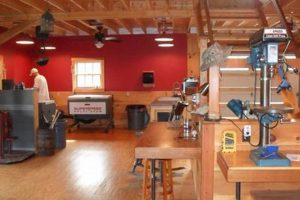
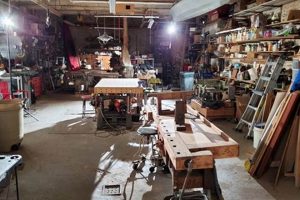
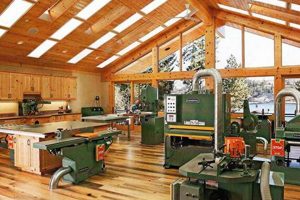
The organization and arrangement of tools, equipment, and workspaces within a standard-sized two-car garage to facilitate woodworking activities is a critical design consideration. This involves optimizing space utilization, ensuring efficient workflow, and promoting safety within a confined environment. For example, a carefully considered structure might incorporate designated areas for material storage, machine operation, assembly, and finishing, each strategically positioned to minimize movement and maximize productivity.
Effective space planning yields numerous advantages. A well-designed arrangement enhances workflow, reduces clutter, and minimizes the risk of accidents. Historically, woodworkers have adapted their practices to fit available spaces, leading to diverse approaches in shop configurations. Contemporary layouts often integrate modern tools and ergonomic principles to improve efficiency and user comfort. Proper planning transforms a simple garage into a functional and enjoyable workspace.
Key elements to consider when developing such a space include: power distribution, dust collection strategies, lighting solutions, and the optimal placement of benches and machinery. These factors substantially influence the functionality and safety of the woodworking environment.
Essential Considerations for a Functional Workspace
Creating an efficient and safe woodworking environment within a standard two-car garage requires careful planning and execution. The following guidelines provide essential considerations for optimizing the workspace.
Tip 1: Prioritize Space Allocation. Define distinct zones for specific activities, such as cutting, assembly, and finishing. Allocate space based on the size and frequency of projects undertaken.
Tip 2: Implement a Vertical Storage System. Utilize wall-mounted shelving, pegboards, and cabinets to maximize floor space. Store frequently used tools within easy reach and reserve upper shelves for less frequently accessed items.
Tip 3: Optimize Lighting Conditions. Adequate illumination is crucial for precision and safety. Supplement overhead lighting with task-specific lighting, such as adjustable lamps, over workbenches and machinery.
Tip 4: Establish a Dust Collection System. Wood dust poses significant health hazards. Install a central dust collector or utilize portable dust extractors for individual machines. Ensure proper ventilation to minimize airborne particles.
Tip 5: Ensure Adequate Power Supply. Determine the power requirements of all tools and equipment. Install sufficient electrical outlets and dedicated circuits to prevent overloading. Consider a subpanel if necessary.
Tip 6: Invest in a Sturdy Workbench. A well-constructed workbench is the cornerstone of any woodworking space. Choose a workbench that is appropriately sized for the projects undertaken and features a robust clamping system.
Tip 7: Implement Safety Protocols. Develop and adhere to strict safety guidelines. Ensure readily accessible safety equipment, such as eye protection, hearing protection, and a first-aid kit.
Adhering to these guidelines will significantly enhance the functionality, safety, and overall efficiency of the woodworking area. Strategic planning and careful execution are paramount for creating a productive and enjoyable workspace.
The next section will explore specific tool selection and placement strategies within the defined area.
1. Spatial Optimization

Spatial optimization represents a foundational element in the effective development of a woodworking area within the confines of a two-car garage. The limited footprint necessitates a strategic approach to arranging equipment, tools, and materials. Inadequate space planning can lead to workflow inefficiencies, increased risk of accidents, and compromised productivity. Conversely, effective spatial organization maximizes usable area, streamlining movement and enhancing overall functionality. For instance, utilizing wall-mounted storage solutions frees up valuable floor space, allowing for more efficient tool placement and project assembly.
The cause-and-effect relationship between spatial organization and workshop productivity is demonstrably clear. A poorly planned area may result in wasted time searching for tools, navigating obstacles, and setting up workspaces. Conversely, a well-organized arrangement promotes a smooth, uninterrupted workflow. Consider the placement of a miter saw station relative to the lumber storage rack; minimizing the distance between these two points reduces handling time and physical strain. Another example is the strategic positioning of a workbench near a power outlet and ample lighting, ensuring a comfortable and efficient workspace.
In summary, spatial optimization is not merely an aesthetic consideration, but a fundamental factor in maximizing the utility and safety of a woodworking shop within a two-car garage. The deliberate arrangement of tools, equipment, and materials directly impacts workflow, productivity, and the overall woodworking experience. Overcoming the challenges presented by limited space requires careful planning and a commitment to efficient organization, ensuring a functional and productive woodworking environment.
2. Workflow Efficiency

Workflow efficiency, within the context of a woodworking area in a standard two-car garage, refers to the smooth and logical progression of tasks from initial material preparation to final product completion. The physical arrangement directly impacts this efficiency. A poorly planned area results in wasted time, duplicated effort, and potential bottlenecks. Conversely, a well-organized space allows for a streamlined process, minimizing unnecessary movement and maximizing productivity. For instance, locating a lumber storage area adjacent to a cutting station allows for immediate processing of raw materials, reducing handling time and clutter. The proper placement of assembly tables relative to finishing stations further optimizes the sequence of operations. The core principle centers on minimizing interruptions and promoting a continuous flow of activity.
The causes of workflow inefficiencies in these spaces are often multifaceted, stemming from inadequate space allocation, suboptimal tool placement, or a lack of foresight in anticipating project needs. For example, storing frequently used tools in remote or difficult-to-access locations introduces delays and frustrations. Similarly, insufficient lighting in key work areas hinders precision and slows progress. Practical applications of workflow optimization involve analyzing existing processes, identifying bottlenecks, and reconfiguring the area to eliminate these impediments. This may entail relocating machinery, implementing mobile work surfaces, or installing additional storage solutions. One effective approach is to create dedicated zones for specific operations, such as cutting, assembly, and finishing, each strategically positioned to minimize travel distances and promote a logical sequence of events.
In conclusion, the correlation between spatial arrangement and workflow efficiency is a crucial aspect of woodworking environments housed within standard two-car garages. By prioritizing logical tool placement, streamlined material handling, and clearly defined work zones, woodworkers can significantly enhance their productivity and minimize wasted time. The challenges of limited space necessitate a proactive approach to organization and workflow design. While individual solutions will vary based on specific needs and preferences, the overarching goal remains the same: to create a functional, safe, and efficient workspace that supports the seamless execution of woodworking projects.
3. Tool Accessibility

Tool accessibility is a critical component of any woodworking area, particularly within the constrained confines of a two-car garage. The efficient organization and arrangement of tools directly impacts workflow, safety, and overall productivity. The relationship between the physical arrangement and the ease of accessing tools is a direct cause-and-effect one: poorly organized tool storage leads to wasted time and increased frustration, while a well-planned system enhances efficiency and reduces the risk of accidents. Within a space where every square foot matters, the effective location and storage of tools is not simply a matter of convenience but an integral aspect of the design.
Effective tool accessibility entails implementing storage solutions that prioritize frequently used items. This can include utilizing wall-mounted tool racks, pegboards, or drawer organizers. Consider the placement of power tools relative to the workbench or assembly area; these should be readily accessible without requiring extensive movement or searching. Conversely, less frequently used tools can be stored in more remote locations, such as upper shelves or designated storage cabinets. One practical application involves categorizing tools based on their function and creating distinct zones for each category. For instance, all measuring and marking tools could be consolidated in a single drawer or on a dedicated rack, while cutting tools could be grouped near the miter saw or table saw. Another is to have a shadow board, for example, will provide tool accessibility because it can have a clear view and can know if the tools are there.
In summary, tool accessibility represents a fundamental element in the design and organization of a woodworking shop situated within a two-car garage. A well-conceived storage system minimizes wasted time, reduces the risk of accidents, and maximizes overall efficiency. Strategic planning and implementation are essential to ensure that tools are readily available when needed, contributing to a smoother and more productive woodworking experience. Overcoming the challenges of limited space requires a proactive approach to storage design and a commitment to maintaining a well-organized and accessible workspace.
4. Dust Management

Effective dust management is a critical component of a woodworking space, particularly within the enclosed environment of a two-car garage. Wood dust, a byproduct of sawing, sanding, and routing operations, presents significant health hazards, including respiratory irritation, allergic reactions, and potential long-term respiratory illnesses. Therefore, the spatial arrangement and infrastructural design must prioritize dust mitigation strategies. Neglecting dust management leads directly to compromised air quality, posing risks to the woodworker’s health and potentially impacting the longevity of tools and equipment. The inclusion of an adequate dust collection system becomes an indispensable element, not merely an optional add-on, of this design.
The integration of dust collection systems involves several practical considerations. A central dust collector, connected to stationary machines via ductwork, represents a comprehensive solution. Alternatively, portable dust extractors attached to individual tools offer localized dust capture. Regardless of the chosen approach, airflow calculations are essential to ensure effective dust removal. The location of machinery relative to the dust collection unit impacts efficiency, with shorter duct runs generally resulting in better suction. Furthermore, supplemental measures, such as air filtration systems and proper ventilation, contribute to maintaining a healthy air quality. Consider a small garage where, without dust collection, visibility quickly diminishes, and surfaces become coated in dust, necessitating frequent cleaning and posing a constant respiratory irritant. In contrast, a similarly sized area equipped with a well-designed dust management system maintains a cleaner environment and significantly reduces airborne particulate matter.
In summary, dust management constitutes a fundamental design principle for a woodworking area housed within a two-car garage. Its effective implementation transcends mere convenience, serving as a vital safeguard for the woodworker’s health and a key factor in preserving a functional and productive workspace. Overcoming the challenges posed by limited space and budget necessitates careful planning and a commitment to prioritizing dust mitigation strategies. Prioritizing dust management ensures a safer, healthier, and more enjoyable woodworking environment.
5. Electrical Capacity

Electrical capacity constitutes a fundamental, often underestimated, aspect of designing a woodworking area within a standard two-car garage. The demands of power tools, lighting, and dust collection systems necessitate careful consideration of the existing electrical infrastructure and potential upgrades. Insufficient electrical capacity can lead to tripped circuits, damaged equipment, and potential fire hazards. Therefore, evaluating and potentially enhancing the electrical system forms an integral part of the design process.
- Circuit Load Calculation
Determining the total amperage draw of all tools and equipment to be used simultaneously is essential. This calculation must account for the starting amperage, which is often higher than the running amperage, particularly for motors. Exceeding the capacity of existing circuits leads to overloads and potential safety hazards. For example, a standard 15-amp circuit may be insufficient to power a table saw, dust collector, and lighting simultaneously. Understanding the load calculation informs decisions regarding circuit upgrades or the implementation of load management strategies.
- Dedicated Circuits
Installing dedicated circuits for high-demand tools, such as table saws, jointers, and planers, minimizes the risk of overloading existing circuits. Dedicated circuits provide a stable and reliable power supply, enhancing the performance and longevity of the equipment. Each dedicated circuit should be sized appropriately for the tool it will serve, accounting for its maximum amperage draw. For instance, a large cabinet saw might require a 20-amp or even a 30-amp dedicated circuit, depending on its motor specifications. This isolation of power prevents brown outs during heavy usage.
- Outlet Placement and Quantity
Strategic placement and an adequate number of electrical outlets are crucial for a functional and safe workshop. Outlets should be positioned near workbenches, machinery, and assembly areas to minimize the need for extension cords, which can create tripping hazards and voltage drops. Multiple outlets on separate circuits provide flexibility and allow for the simultaneous operation of multiple tools without overloading a single circuit. The placement should consider future expansion and potential equipment additions.
- Wiring and Safety Considerations
All electrical work must comply with local building codes and be performed by a qualified electrician. Upgrading wiring to handle increased loads may be necessary, particularly in older garages. Ground fault circuit interrupters (GFCIs) are essential in wet or damp locations to protect against electrical shock. Proper grounding of all equipment and the use of surge protectors safeguard against power surges and voltage spikes, protecting valuable tools and equipment. Furthermore, ensuring readily accessible shut-off switches provides a critical safety measure in case of emergencies.
The considerations detailed above are pivotal in aligning the electrical capabilities with the spatial arrangement and operational demands of a woodworking shop housed within a two-car garage. A comprehensive assessment, followed by strategic upgrades and safety measures, ensures a safe, efficient, and reliable power supply, supporting productive woodworking activities for years to come.
6. Safety Provisions

The integration of safety provisions represents a non-negotiable aspect of establishing a woodworking area within a standard two-car garage. The confined space and inherent risks associated with woodworking machinery necessitate a meticulous approach to hazard mitigation. An inadequate implementation of safety protocols directly correlates with an elevated risk of accidents and injuries. Therefore, the spatial arrangement and infrastructural design must prioritize the well-being of the woodworker.
- Emergency Egress and Fire Safety
Ensuring unobstructed pathways for rapid evacuation constitutes a primary safety consideration. The area must be designed to allow for quick and easy exit in the event of a fire or other emergency. Fire extinguishers, specifically rated for Class A, B, and C fires, must be readily accessible and regularly inspected. Smoke detectors should be installed and maintained to provide early warning of fire hazards. Material storage should be organized to minimize fire risks, with flammable liquids stored in approved containers and away from potential ignition sources. The layout should allow for efficient movement, avoiding narrow passages or cluttered walkways that could impede egress.
- Machine Guarding and Personal Protective Equipment (PPE)
All woodworking machinery must be equipped with functioning safety guards to prevent accidental contact with moving parts. These guards must be properly installed and maintained according to manufacturer specifications. The layout must provide sufficient clearance around machinery to allow for safe operation and movement. Furthermore, the consistent use of appropriate PPE, including eye protection, hearing protection, and respiratory protection, is essential. The placement of PPE should be readily accessible, serving as a visible reminder to use them. For example, locating safety glasses and a dust mask near the entrance serves as a prompt for the woodworker to don them before commencing work. The garage layout should incorporate dedicated storage for PPE, ensuring they are kept clean and organized.
- Dust and Ventilation Control
As previously mentioned, wood dust poses significant health hazards, necessitating effective dust collection and ventilation strategies. The spatial arrangement should facilitate the efficient capture and removal of airborne particulate matter. This includes strategically positioning dust collection ports and ensuring adequate airflow. Ventilation systems should provide a constant supply of fresh air to dilute and remove dust and fumes. The location of windows and doors can be leveraged to promote natural ventilation, supplemented by mechanical ventilation systems as needed. The design should minimize dead air spaces where dust can accumulate, promoting a healthy and safe working environment.
- Electrical Safety and Grounding
A properly grounded electrical system is crucial for preventing electrical shocks and ensuring the safe operation of power tools. All electrical outlets must be grounded, and ground fault circuit interrupters (GFCIs) should be installed in areas where water or dampness may be present. Electrical cords should be inspected regularly for damage and replaced as needed. The layout should minimize the use of extension cords, which can create tripping hazards and increase the risk of electrical shock. Furthermore, power tools should be inspected regularly for frayed cords, loose connections, and other potential electrical hazards. The location of a main electrical shut-off switch should be clearly marked and easily accessible in case of emergencies.
These safety provisions, when holistically integrated into the woodworking area design, collectively contribute to a safer and more productive environment. A well-designed layout that prioritizes emergency egress, machine guarding, dust control, and electrical safety minimizes the risk of accidents and injuries, allowing the woodworker to focus on their craft with greater confidence and peace of mind. The successful implementation of these measures transforms the two-car garage from a potential hazard zone into a functional and safe workspace.
Frequently Asked Questions
The following questions address common concerns and considerations regarding the design and implementation of a woodworking area within the confines of a standard two-car garage.
Question 1: What is the minimal square footage required to operate a functional woodworking shop in a two-car garage?
While the dimensions of two-car garages vary, a shop can function adequately with approximately 400 square feet, but organization becomes paramount. Optimizing vertical storage and prioritizing essential machinery are key to maximizing usable area.
Question 2: Is dust collection truly necessary, or can it be considered an optional upgrade?
Dust collection is not optional; it is a critical safety and health requirement. Wood dust poses significant respiratory hazards, and a dust collection system is essential for maintaining a safe working environment. Long-term exposure can lead to chronic respiratory illness.
Question 3: How does one effectively mitigate noise pollution generated by woodworking machinery within a residential setting?
Noise reduction strategies involve implementing soundproofing measures such as insulating walls, ceilings, and doors. Utilizing noise-dampening machinery mounts and strategically placing machinery away from shared walls can also minimize noise transmission.
Question 4: What are the essential power requirements to operate standard woodworking machinery in a two-car garage workshop?
A minimum of 220-volt service with dedicated circuits for high-demand equipment is generally required. A qualified electrician should assess the specific power requirements of all machinery and ensure the electrical system is adequate and up to code.
Question 5: Are there specific building code requirements to consider when setting up a woodworking shop in a residential garage?
Local building codes vary, but common requirements often pertain to electrical wiring, fire safety, and structural modifications. Consulting with the local building department is imperative to ensure compliance with all applicable regulations.
Question 6: How can one effectively manage material storage within the limited confines of a two-car garage woodworking space?
Vertical storage solutions, such as lumber racks and shelving systems, are essential. Optimizing storage space under workbenches and utilizing wall-mounted cabinets can also maximize available area. Efficient inventory management and minimizing excess material storage are key to maintaining a functional space.
Effective planning, prioritization of safety measures, and a commitment to organization are essential for creating a functional and enjoyable woodworking environment within the constraints of a two-car garage.
The following section will summarize the key elements discussed, reiterating the considerations for a successfully designed woodworking area.
Conclusion
The effective design of a woodworking shop 2 car garage workshop layout requires a holistic approach, integrating spatial optimization, workflow efficiency, tool accessibility, comprehensive dust management, adequate electrical capacity, and rigorous safety provisions. Each element is interdependent, and neglecting one aspect compromises the overall functionality and safety of the workspace. Careful planning, diligent execution, and adherence to safety guidelines are essential for creating a productive and safe environment.
A well-designed woodworking area within a two-car garage is an achievable goal, but it demands foresight, attention to detail, and a commitment to continuous improvement. Prioritizing these core elements will transform a standard garage into a highly functional and rewarding space. Individuals undertaking such a project are encouraged to consult with experienced woodworkers and qualified professionals to tailor the layout to their specific needs and ensure compliance with local building codes.