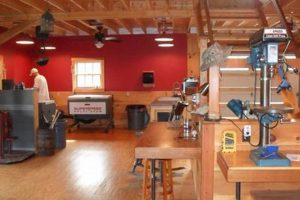
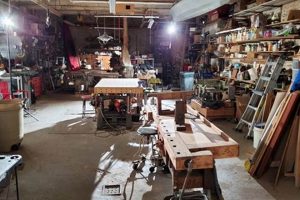
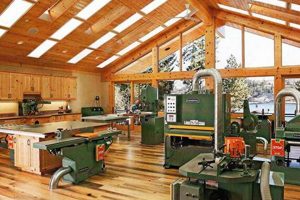
The process of removing airborne particulate matter generated during woodworking activities, such as sawing, sanding, and routing, is critical for maintaining a safe and healthy workspace. Effective removal of dust, shavings, and volatile organic compounds (VOCs) produced by adhesives and finishes is essential. An example is the use of a ceiling-mounted unit in a cabinet-making facility to capture fine dust particles before they circulate throughout the shop.
Proper management of airborne contaminants in a woodworking environment yields several benefits, including improved respiratory health for workers, reduced fire hazards due to accumulated dust, and enhanced visibility, leading to increased accuracy and efficiency in woodworking tasks. Historically, simple dust collection systems were sufficient, but evolving regulations and increased awareness of health risks have driven the development of sophisticated systems incorporating advanced filtration technologies.
The subsequent sections will delve into the various types of equipment available, including dust collectors, air cleaners, and respirators; discuss strategies for system design and placement; and outline best practices for maintenance and operation to ensure optimal performance and a cleaner, safer woodworking environment.
Tips for Effective Woodworking Shop Air Filtration
Optimizing the air quality within a woodworking shop requires a multifaceted approach. The following tips offer guidance on selecting, implementing, and maintaining effective filtration systems.
Tip 1: Source Capture is Paramount: Prioritize capturing dust and debris at the source of generation. Attach dust collection hoods directly to power tools such as sanders, saws, and routers. This minimizes the dispersal of particulate matter into the ambient air.
Tip 2: Implement a Two-Stage Filtration System: Utilize a system with a cyclone separator to remove larger particles before they reach the filter. This extends the filter’s lifespan and enhances the overall efficiency of the filtration process.
Tip 3: Select Filters with Appropriate MERV Ratings: Minimum Efficiency Reporting Value (MERV) indicates a filter’s ability to capture particles of varying sizes. Choose filters with MERV ratings appropriate for the types of dust generated in the shop. For fine sanding dust, a MERV rating of 13 or higher is recommended.
Tip 4: Ensure Adequate Air Changes Per Hour (ACH): Calculate the cubic footage of the workshop and select a filtration system capable of providing sufficient air changes per hour. A minimum of six ACH is generally recommended for woodworking shops to maintain acceptable air quality.
Tip 5: Regular Filter Maintenance is Critical: Inspect and clean or replace filters regularly according to the manufacturer’s instructions. Clogged filters reduce airflow and diminish the system’s effectiveness. A pressure gauge can be installed to monitor filter performance.
Tip 6: Consider an Ambient Air Cleaner: Supplement source capture systems with a ceiling-mounted or portable air cleaner to capture airborne dust that escapes the primary collection system. These units help to further reduce overall dust levels.
Tip 7: Address VOCs with Activated Carbon Filtration: If working with finishes or adhesives that emit volatile organic compounds, incorporate activated carbon filters into the filtration system. Activated carbon effectively adsorbs VOCs, reducing their concentration in the air.
Implementing these strategies will contribute significantly to maintaining a cleaner, healthier, and safer woodworking environment. Consistent adherence to these practices enhances worker well-being and minimizes potential health risks associated with airborne contaminants.
The subsequent sections will build upon these tips by examining specific equipment options and delving into advanced filtration techniques for demanding woodworking applications.
1. Particulate Size

The size of airborne particles generated during woodworking directly influences the selection and effectiveness of air filtration systems. Understanding particle size distributions is essential for implementing appropriate dust collection strategies.
- Respirable Dust
Respirable dust, typically less than 10 micrometers in diameter, poses the greatest health risk as it can penetrate deep into the lungs. Sanding operations, in particular, generate substantial amounts of respirable dust. Effective systems require high-efficiency filters capable of capturing these fine particles to prevent respiratory illness.
- Coarse Dust and Shavings
Larger particles, such as sawdust and shavings produced during sawing or routing, are less likely to be inhaled deeply but can still cause irritation and pose a fire hazard. Pre-separation devices, like cyclone separators, are often used to remove these larger particles before they reach the filters, extending filter life and maintaining airflow.
- Particle Size Distribution and Filtration Efficiency
The distribution of particle sizes generated in a workshop will vary depending on the woodworking activities performed. Filtration systems must be selected based on their ability to capture the range of particle sizes present. A filter with high efficiency for larger particles may be ineffective against respirable dust, and vice versa. MERV ratings provide a standardized measure of a filter’s efficiency across different particle sizes.
- Impact on System Design
The anticipated particle size distribution influences the overall design of filtration systems. For workshops focused on fine woodworking or sanding, systems should prioritize high-efficiency filtration and source capture at the point of dust generation. For larger shops handling rough lumber, pre-separation and high-volume airflow may be more critical.
In conclusion, a thorough understanding of particulate size and its distribution within a woodworking environment is fundamental to selecting and implementing air filtration systems that effectively protect worker health and maintain a safe workspace. Prioritizing filtration based on particle size distribution is crucial for effective control.
2. Filter Efficiency

In the context of woodworking shop air filtration, filter efficiency directly determines the system’s capacity to remove airborne contaminants. Efficiency, often quantified using MERV (Minimum Efficiency Reporting Value) or HEPA (High-Efficiency Particulate Air) ratings, signifies the percentage of particles of a specific size that the filter can capture in a single pass. Lower efficiency equates to a greater percentage of dust and other harmful particulates recirculating within the workshop, potentially compromising air quality and impacting worker health. For example, a filter with a low MERV rating may capture larger sawdust particles, but allow hazardous, respirable dust to pass through.
The selection of filters with appropriate efficiency ratings is therefore crucial. Woodworking generates a spectrum of particulate sizes, from coarse shavings to extremely fine dust produced during sanding. Effective filtration strategies often incorporate multiple stages, with pre-filters removing larger debris to extend the life of more efficient downstream filters designed to capture smaller, more dangerous particles. This cascaded approach maximizes overall system performance and reduces the frequency of filter replacements. Furthermore, the design of the air filtration system, including factors such as airflow rate and ductwork, must be appropriately matched to the filter’s specifications to ensure optimal efficiency. An undersized system may not generate sufficient airflow to effectively draw contaminants to the filter, regardless of its efficiency rating.
Ultimately, the interplay between filter efficiency and woodworking shop air filtration underscores the critical role of informed equipment selection and diligent maintenance. Ignoring filter efficiency can render an otherwise well-designed system ineffective, leading to compromised air quality and potential health risks for woodworkers. Conversely, selecting appropriate filters and adhering to recommended maintenance schedules ensures a safer and healthier working environment.
3. Airflow Rate

Airflow rate, measured in cubic feet per minute (CFM), is a critical determinant of effectiveness in systems designed for removal of airborne contaminants. Insufficient airflow compromises the system’s capacity to capture dust, shavings, and volatile organic compounds (VOCs) generated during woodworking activities. Inadequate airflow leads to increased concentration of hazardous substances in the breathing zone, elevating potential health risks for workers. For example, a dust collector with a filter capable of capturing fine particles will be ineffective if the airflow rate is too low to draw dust from the tool’s point of operation. Conversely, excessive airflow can create uncomfortable drafts and increase energy consumption without a corresponding improvement in air quality.
The required airflow rate is dictated by factors such as the size of the workshop, the type and frequency of woodworking operations, and the design of the dust collection hoods and ductwork. Source capture systems, where dust is collected directly at the point of generation, demand higher airflow rates than ambient air cleaners that rely on dilution. Ductwork design plays a significant role; long, convoluted duct runs and undersized ducts create resistance, reducing airflow at the point of collection. Properly sized ductwork and strategic placement of collection points are essential for maximizing system efficiency. An example is a shop using a central dust collection system; if the ductwork is too small for the connected tools, the airflow will be insufficient at the tools furthest from the collector, rendering them ineffective at dust removal.
Effective air management necessitates careful calculation of airflow requirements and proper system design. Balancing airflow rates with filter efficiency and ductwork design is vital for achieving a safe and healthy woodworking environment. Compromising airflow rate can lead to system underperformance, increased exposure to hazardous substances, and ultimately, diminished worker safety. Therefore, prioritizing appropriate airflow as a central component of the filtration strategy is essential for successful contamination control.
4. Source Capture

Source capture represents a fundamental strategy within woodworking shop air filtration. This technique entails capturing dust, shavings, and other airborne contaminants directly at their point of origin, before they disperse into the general workshop environment. Effective source capture minimizes worker exposure and reduces the overall burden on the air filtration system. The connection between source capture and overall air quality is causal; implementing efficient source capture methods directly results in a cleaner and healthier workspace.
The importance of source capture stems from its ability to control contaminants at their most concentrated state. For example, attaching a dust collection hood to a sander allows for immediate removal of fine dust particles as they are generated, preventing them from becoming airborne and circulating throughout the shop. Similarly, using a downdraft table during sanding operations captures dust as it falls, further reducing the likelihood of inhalation. Without source capture, the air filtration system must process a much larger volume of contaminated air, potentially leading to reduced efficiency and increased filter loading. A practical implication of understanding source capture is the informed selection of tools and equipment that facilitate effective dust collection. Choosing tools with integrated dust ports and investing in well-designed collection hoods are crucial steps in optimizing air quality.
Challenges in implementing source capture often involve adapting existing equipment or designing custom collection systems for specialized tools. Ensuring adequate airflow at the source requires careful consideration of ductwork design and fan capacity. Despite these challenges, the benefits of source capture, including improved worker health and reduced fire hazards, outweigh the costs. Source capture represents a cornerstone of comprehensive woodworking shop air filtration, directly influencing the effectiveness and efficiency of the entire system. Therefore, it demands prioritization in any woodworking environment seeking to minimize airborne contaminants and promote a safe and healthy workspace.
5. System Design

System design is a critical determinant of the effectiveness of woodworking shop air filtration. A well-designed system proactively mitigates airborne contaminants, while a poorly designed one may fail to adequately protect worker health and safety. The following facets are essential considerations.
- Airflow Dynamics and Ductwork
The configuration of ductwork and the calculation of airflow dynamics are paramount. Duct size, material, and layout directly influence the system’s ability to effectively capture and transport contaminants. Sharp bends and undersized ducts create resistance, reducing airflow and diminishing the efficiency of dust collection at the source. Proper design ensures balanced airflow across all connected tools, preventing some areas from being starved of suction while others are over-served. An effective system design includes smooth transitions, appropriately sized branches, and optimized duct lengths to minimize pressure loss.
- Equipment Selection and Integration
The choice of dust collectors, air cleaners, and filtration units must be carefully considered and integrated to meet the specific needs of the workshop. Factors such as the size of the shop, the types of woodworking activities performed, and the volume of dust generated influence equipment selection. The system should be designed to accommodate both source capture and ambient air cleaning. For example, a large shop may benefit from a central dust collection system coupled with supplemental air cleaners to address localized dust issues. Integrating equipment effectively ensures seamless operation and optimized air quality.
- Filtration Stages and Media
Incorporating multiple filtration stages is critical for capturing a wide range of particulate sizes. A typical system includes a pre-filter to remove larger debris, extending the life of the primary filter. The primary filter, selected based on its MERV (Minimum Efficiency Reporting Value) rating, captures finer dust particles. High-efficiency particulate air (HEPA) filters may be used in specialized applications requiring the removal of extremely fine dust. Appropriate selection and sequencing of filter media are essential for maximizing filtration efficiency and minimizing pressure drop across the system.
- Maintenance Accessibility and Monitoring
System design must prioritize ease of maintenance and monitoring. Strategically placed access points allow for convenient filter changes and ductwork cleaning. Integrating pressure gauges or airflow sensors provides real-time monitoring of system performance, enabling prompt identification of potential problems such as clogged filters or reduced airflow. Accessibility and monitoring features are crucial for ensuring consistent and reliable operation over the system’s lifespan.
In conclusion, effective woodworking shop air filtration relies on a comprehensive system design that addresses airflow dynamics, equipment integration, filtration stages, and maintenance accessibility. A holistic approach to design ensures optimal performance, protecting worker health and safety while maintaining a clean and productive work environment.
6. VOC Control

Volatile organic compound (VOC) control represents a critical, yet often overlooked, aspect of comprehensive woodworking shop air filtration. While particulate matter poses a significant health hazard, the gaseous emissions from adhesives, finishes, and cleaning solvents also warrant careful consideration. Integrating VOC control measures into air filtration strategies is essential for maintaining a truly safe and healthy woodworking environment.
- Activated Carbon Filtration
Activated carbon filters are the primary means of capturing VOCs in woodworking shops. This filtration method relies on adsorption, where VOC molecules adhere to the porous surface of the activated carbon material. The effectiveness of activated carbon depends on factors such as the type of carbon used, its surface area, and the specific VOCs present in the air. For instance, a shop using primarily water-based finishes may require a different type of activated carbon than one using solvent-based lacquers. Regular replacement of activated carbon filters is essential, as they become saturated over time and lose their ability to adsorb VOCs. The frequency of replacement depends on the VOC concentration and the filter’s capacity.
- Ventilation Strategies
While filtration is crucial, proper ventilation also plays a vital role in VOC control. Increasing the rate of air exchange within the shop helps to dilute the concentration of VOCs, reducing worker exposure. Ventilation can be achieved through natural means, such as opening windows and doors, or through mechanical systems, such as exhaust fans. Exhaust fans should be strategically positioned to draw contaminated air away from workers’ breathing zones and expel it outside the building. Combining local exhaust ventilation at the point of VOC generation with general dilution ventilation is often the most effective approach. An example is using a spray booth with dedicated exhaust to remove VOCs produced during finishing operations.
- Material Selection and Substitution
Proactive material selection can significantly reduce VOC emissions. Choosing low-VOC or zero-VOC alternatives for adhesives, finishes, and cleaning solvents minimizes the amount of VOCs released into the air. For example, substituting water-based finishes for solvent-based lacquers can substantially reduce VOC emissions. Similarly, using formaldehyde-free adhesives reduces the release of this hazardous VOC. Evaluating material safety data sheets (MSDS) and choosing products with lower VOC content is a key step in minimizing VOC exposure.
- Storage and Handling Practices
Proper storage and handling of VOC-containing materials are essential for preventing unnecessary emissions. Solvents and finishes should be stored in tightly sealed containers to prevent evaporation. Spills should be cleaned up promptly to minimize VOC release. Designated storage areas with enhanced ventilation can further reduce the risk of VOC exposure. Training workers on proper handling procedures is crucial for ensuring that these practices are consistently followed. An example is storing flammable finishes in a fire-resistant cabinet with dedicated ventilation to prevent the buildup of explosive vapors.
Integrating these VOC control measures with comprehensive woodworking shop air filtration strategies is paramount. While particulate filters address dust and shavings, activated carbon filtration, ventilation strategies, material selection, and proper storage practices are necessary for effectively managing VOCs. A holistic approach, considering both particulate and gaseous contaminants, is essential for creating a truly safe and healthy environment for woodworking professionals.
7. Regular Maintenance
The effectiveness of woodworking shop air filtration is inextricably linked to diligent regular maintenance. A filtration system, regardless of its initial design and capabilities, will degrade in performance without consistent upkeep. This degradation manifests as reduced airflow, diminished filter efficiency, and potential equipment failure, ultimately compromising the air quality within the workshop. For instance, a dust collector with a clogged filter will struggle to remove airborne particulate matter, leading to increased dust concentrations and a heightened risk of respiratory problems for workers. Regular maintenance, therefore, is not merely a supplementary task but an integral component of a functional air filtration strategy.
The scope of regular maintenance encompasses several key areas. Filter replacement or cleaning, as dictated by the filter type and usage patterns, is paramount. Failing to replace saturated filters results in diminished capture efficiency and increased pressure drop, potentially damaging the filtration unit’s motor. Ductwork should be periodically inspected and cleaned to remove accumulated dust and debris, which can impede airflow and create fire hazards. Motors and other mechanical components require lubrication and inspection to ensure optimal operation and prevent premature failure. The frequency of these maintenance tasks depends on the intensity of woodworking activities and the specific design of the filtration system. Shops with high production volumes and fine dust generation will necessitate more frequent maintenance than smaller, less intensive operations.
In conclusion, consistent regular maintenance is indispensable for sustaining the efficacy of woodworking shop air filtration. Neglecting maintenance undermines the initial investment in air quality control, leading to reduced worker safety and increased health risks. Prioritizing a proactive maintenance schedule, encompassing filter management, ductwork inspection, and equipment servicing, is essential for ensuring a clean, safe, and productive woodworking environment. This proactive approach transforms filtration from a one-time installation into a reliable, long-term air quality solution.
Frequently Asked Questions
The following section addresses common inquiries regarding the implementation and maintenance of systems designed to mitigate airborne contaminants in woodworking environments.
Question 1: What is the primary difference between a dust collector and an air cleaner in the context of woodworking shop air filtration?
A dust collector’s primary function is source capture, removing dust and debris directly from power tools via ductwork and hoses. An air cleaner, conversely, operates as an ambient air filtration device, circulating and filtering the air within the shop to remove airborne particles that have already escaped source capture.
Question 2: How does the MERV rating of a filter impact woodworking shop air filtration effectiveness?
The Minimum Efficiency Reporting Value (MERV) indicates a filter’s ability to capture particles of varying sizes. Higher MERV ratings signify a greater capacity to capture smaller, more hazardous particles, such as fine sanding dust. Selection of an appropriate MERV rating is critical for effective particulate removal.
Question 3: What are the key considerations when designing ductwork for a woodworking shop air filtration system?
Ductwork design requires careful attention to duct size, material, and layout. Undersized ducts and sharp bends create resistance, reducing airflow. Smooth transitions, appropriately sized branches, and optimized duct lengths are essential for minimizing pressure loss and ensuring balanced suction across all connected tools.
Question 4: How often should filters be replaced in a woodworking shop air filtration system?
Filter replacement frequency depends on factors such as the intensity of woodworking activities, the type of materials processed, and the filter’s capacity. Regular inspection and monitoring of filter pressure are crucial. Filters should be replaced when they become visibly clogged or when pressure readings indicate reduced airflow.
Question 5: What role does VOC control play in comprehensive woodworking shop air filtration?
Volatile organic compounds (VOCs) released from adhesives, finishes, and cleaning solvents pose a separate health risk from particulate matter. Effective VOC control requires the use of activated carbon filters, proper ventilation, and the selection of low-VOC or zero-VOC materials.
Question 6: What are the potential consequences of neglecting regular maintenance of a woodworking shop air filtration system?
Neglecting regular maintenance, such as filter replacement and ductwork cleaning, leads to reduced airflow, diminished filter efficiency, and potential equipment failure. This compromises air quality, increasing worker exposure to hazardous substances and potentially leading to respiratory problems and fire hazards.
Effective woodworking shop air filtration relies on a comprehensive approach encompassing appropriate equipment selection, system design, and diligent maintenance. Ignoring any of these elements can compromise the system’s effectiveness and potentially jeopardize worker health.
The subsequent sections will explore advanced topics in woodworking shop air filtration, including specialized equipment and techniques for demanding applications.
Woodworking Shop Air Filtration
This exploration has underscored the multifaceted nature of woodworking shop air filtration. Effective management of airborne contaminants necessitates a holistic approach, encompassing source capture, appropriate filter selection, optimized airflow, VOC control, and diligent system maintenance. Neglecting any of these aspects compromises the overall effectiveness, exposing workers to potential health hazards and increasing the risk of fire. The implementation of properly designed and maintained systems represents a tangible investment in worker well-being and a reduction in long-term health-related costs.
Adherence to best practices in this area is not merely a matter of regulatory compliance but a fundamental responsibility to protect the health and safety of individuals engaged in woodworking activities. Continuous monitoring and adaptation to evolving technologies are essential for ensuring sustained air quality and promoting a safe, productive work environment for years to come.