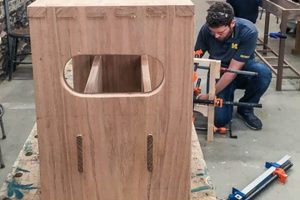
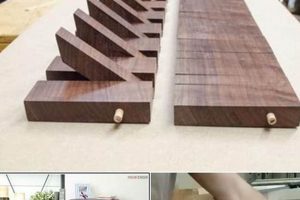
An individual new to the craft of shaping wood using tools represents an entry point into a rewarding and practical hobby. This nascent stage often involves learning fundamental techniques such as sawing, joining, and finishing, typically with a focus on safety and basic project completion. For instance, constructing a simple birdhouse or a small wooden box serves as a common introductory experience.
Embarking on this journey provides numerous advantages, including the development of fine motor skills, spatial reasoning, and problem-solving abilities. Historically, the skills associated with shaping wood have been essential for building structures, crafting tools, and creating artistic objects, providing both functional necessities and aesthetic enrichment. The pursuit fosters patience, precision, and a tangible sense of accomplishment.
Subsequent exploration of this craft may involve acquiring knowledge of various wood types, tool maintenance, and advanced joinery techniques. These initial steps pave the way for more complex projects and a deeper appreciation for the beauty and versatility of wood as a medium.
Essential Guidance for New Woodworkers
Starting the craft of shaping wood requires careful consideration and a structured approach. The following recommendations are intended to provide direction and enhance the learning experience.
Tip 1: Prioritize Safety: Protective eyewear and dust masks are essential. Understand the safe operation of each tool before use. Maintaining a clean and organized workspace minimizes hazards.
Tip 2: Start with Softwoods: Pine and poplar are more forgiving materials for initial projects. These woods are typically easier to cut, shape, and sand compared to hardwoods, allowing for a smoother learning curve.
Tip 3: Master Basic Joinery: Focus on learning simple joints such as butt joints, lap joints, and rabbet joints. These form the foundation for more complex construction techniques.
Tip 4: Sharpen Tools Regularly: Dull tools require more force, increasing the risk of injury and producing less accurate results. Learn to sharpen chisels, planes, and saws properly.
Tip 5: Practice Finishing Techniques: Experiment with different stains, varnishes, and sealants on scrap wood. Proper finishing enhances the appearance and protects the wood from moisture and damage.
Tip 6: Take Accurate Measurements: Precise measurements are crucial for project success. Utilize a quality measuring tape and double-check dimensions before cutting any material.
Tip 7: Invest in Quality Tools Gradually: While a comprehensive set of tools is desirable, focus on acquiring essential tools initially and upgrading as skills progress. Prioritize quality over quantity.
Adhering to these guidelines will facilitate skill development, promote safety, and foster a rewarding introduction to the realm of shaping wood. Consistent practice and a focus on fundamental techniques are key to long-term success.
Further exploration of advanced techniques and specialized tools will naturally follow, building upon this solid foundation.
1. Safety Fundamentals

For the individual new to shaping wood, Safety Fundamentals are not merely a set of guidelines but rather a non-negotiable foundation upon which all subsequent skills and projects are built. A lapse in safety can result in serious injury, prematurely halting learning and instilling a lasting aversion to the craft. The following facets highlight the critical components.
- Eye Protection Protocol
The use of safety glasses or a face shield is paramount. Woodworking activities generate airborne particles, including splinters and sawdust, that pose a significant risk of eye damage. Impact from projectiles can cause immediate and lasting visual impairment. Consistent adherence to eye protection protocol mitigates this risk.
- Respiratory Protection Measures
Sanding and cutting wood releases fine dust particles that, when inhaled, can lead to respiratory irritation and long-term health problems. A properly fitted dust mask or respirator, particularly when working with treated lumber or hardwoods, is essential to protect the respiratory system. Regular mask replacement ensures continued effectiveness.
- Tool Operation Proficiency
Each woodworking tool possesses inherent risks. Prior to operation, a thorough understanding of the tool’s functionality, safety features, and proper usage is imperative. This includes reading the manufacturer’s instructions, watching instructional videos, and, if possible, receiving hands-on guidance from an experienced woodworker. Misuse can result in severe cuts, lacerations, or other serious injuries.
- Workspace Organization and Awareness
Maintaining a clean and organized workspace reduces the risk of accidents. Clutter, loose tools, and improperly stored materials create tripping hazards and impede movement. Adequate lighting ensures clear visibility, and awareness of surroundings prevents inadvertent contact with moving machinery or sharp objects. A dedicated and well-maintained workspace promotes a safer woodworking environment.
These facets collectively represent the Safety Fundamentals crucial for an individual starting out. Prioritizing these aspects, from initial tool selection to the consistent application of safe practices, is not merely a suggestion but a requirement for a sustainable and enjoyable introduction to woodworking. Ignoring these fundamentals places the nascent woodworker at undue risk, undermining the potential for skill development and creative expression.
2. Basic Tool Acquisition

For an individual embarking on woodworking, initial tool procurement directly impacts the trajectory of skill development and project feasibility. Inadequate tool selection or deferred acquisition can impede progress, leading to frustration and diminished learning outcomes. The cause-and-effect relationship is evident: possession of essential tools enables the execution of fundamental woodworking tasks, fostering confidence and motivating continued learning. Conversely, attempting projects with insufficient or inappropriate tools results in substandard outcomes, potentially discouraging further engagement. The importance of procuring a minimal but functional set of tools cannot be overstated. For example, an inability to accurately measure and cut wood due to the absence of a reliable measuring tape and saw renders even the simplest projects unachievable.
The acquisition of basic tools also facilitates the development of fundamental woodworking techniques. The act of sawing a straight line with a hand saw, planing a board flat with a hand plane, or driving a nail securely with a hammer are all skills honed through the use of these tools. These initial experiences lay the groundwork for more complex techniques and projects. Further, the process of selecting, purchasing, and maintaining tools provides practical knowledge of materials, construction methods, and tool care. This knowledge is integral to the holistic understanding of the craft.
In summary, the acquisition of basic woodworking tools is inextricably linked to successful entry into the craft. Thoughtful selection of a starter kit, encompassing measuring instruments, cutting tools, and fastening devices, empowers the individual to engage in practical skill-building exercises and achieve tangible results. While a comprehensive tool collection is a long-term aspiration, prioritizing essential tools at the outset fosters a positive and productive learning environment, mitigating potential setbacks and laying the foundation for future mastery.
3. Wood Selection Guidance

For the individual new to shaping wood, informed material choices represent a critical determinant of project success and skill development. The selection of wood directly influences the ease of workability, the aesthetic outcome, and the structural integrity of the finished piece. Inadequate understanding of wood characteristics can lead to difficulties in cutting, shaping, and finishing, resulting in frustration and potentially discouraging further engagement. For example, attempting to carve intricate details into a dense hardwood, such as maple, without prior experience or appropriate tools is likely to prove challenging for someone new to the craft. Conversely, utilizing a softwood such as pine or basswood allows for easier shaping and a more forgiving learning experience.
Effective wood selection guidance provides the nascent craftsman with the knowledge necessary to choose materials that align with their skill level and project requirements. This guidance encompasses understanding the distinctions between hardwoods and softwoods, recognizing the grain patterns and inherent stability of various species, and appreciating the impact of moisture content on workability and dimensional stability. For instance, a beginner might choose pine for a simple box project due to its relative softness, availability, and lower cost. Understanding that pine accepts stain unevenly, however, would inform the selection of appropriate finishing techniques or the alternative consideration of a more consistent wood like poplar, despite its slightly higher cost and increased hardness.
In summation, wood selection guidance is a fundamental component of the shaping-wood learning process. It enables the individual new to the craft to make informed decisions that optimize workability, minimize frustration, and promote successful project outcomes. By understanding the characteristics of different wood species and their suitability for specific tasks, beginners can foster confidence, accelerate skill development, and establish a solid foundation for more advanced woodworking endeavors. Neglecting this aspect can lead to unnecessary challenges and potentially hinder long-term engagement with the craft.
4. Simple Project Focus

The emphasis on manageable woodworking tasks is crucial for individuals new to the craft. This strategic approach directly influences the initial learning experience and long-term engagement. Focusing on less complex projects mitigates frustration, fosters skill development, and cultivates a sense of accomplishment.
- Reduced Complexity of Technique
Simple projects inherently involve fewer intricate techniques and require less specialized knowledge. A basic birdhouse, for example, primarily involves straight cuts, basic joinery (such as butt joints), and minimal finishing. This allows individuals to concentrate on mastering fundamental skills without being overwhelmed by advanced procedures. Avoidance of dovetail joints or complex curves, for instance, reduces the cognitive load and promotes a more gradual learning curve.
- Minimized Material Waste
Smaller projects typically require less lumber, reducing both the financial investment and the potential for wasted material. Mistakes are inevitable during the initial learning phase, and limiting the amount of material at risk reduces the consequences of errors. This is particularly relevant for beginners working with more expensive hardwoods, where minimizing waste is a significant consideration. The lower risk encourages experimentation and exploration without the anxiety of significant material costs.
- Accelerated Project Completion
Simpler tasks naturally require less time to complete, providing a faster feedback loop and a more immediate sense of achievement. A beginner who successfully completes a small cutting board or a simple shelf gains tangible evidence of their progress, which motivates continued learning and experimentation. Prolonged, complex projects, on the other hand, can lead to discouragement and abandonment if progress is slow or setbacks are frequent.
- Enhanced Skill Consolidation
Repeated execution of simple projects allows individuals to reinforce fundamental skills through practice. Cutting multiple boards to the same length, assembling basic joinery, and applying consistent finishes are all skills that are honed through repetition. This consolidation of basic skills forms a solid foundation for tackling more challenging projects in the future. It is preferable to master the fundamentals through repetition than to attempt advanced techniques before acquiring the necessary foundational skills.
The prioritization of manageable woodworking tasks, therefore, offers a strategic advantage to individuals new to the craft. By focusing on projects with reduced complexity, minimized material waste, accelerated completion times, and enhanced skill consolidation, woodworking learners can cultivate confidence, accelerate skill development, and establish a solid foundation for long-term engagement and advancement.
5. Skill-Building Exercises
Focused exercises represent a cornerstone in the development of proficiency for individuals new to shaping wood. These structured activities provide targeted opportunities to acquire and refine essential skills, laying a solid foundation for more complex woodworking projects. The selection and execution of appropriate exercises directly correlate with the speed and effectiveness of skill acquisition.
- Straight Line Cutting Practice
The ability to accurately cut along a straight line is fundamental. An exercise involving repetitive cutting of lines on softwood boards with a handsaw develops muscle memory and precision. Variations include cutting along drawn lines and following the grain of the wood. This skill is a prerequisite for accurately dimensioning stock and creating precise joinery.
- Joint Construction Repetition
Creating basic woodworking joints, such as butt joints, lap joints, and rabbet joints, through repeated practice solidifies understanding of joint geometry and assembly techniques. Exercises might involve constructing multiple identical joints using different adhesives or fasteners. Consistent execution of these fundamental joints is essential for creating structurally sound woodworking projects.
- Surface Preparation and Sanding Drills
Proper surface preparation is crucial for achieving a quality finish. Exercises involving progressive sanding with different grit sandpaper on various wood types develop tactile sensitivity and an understanding of wood grain. The goal is to create a smooth, even surface free of scratches or imperfections. This skill is essential for achieving professional-looking results.
- Finishing Application Techniques
Applying finishes evenly and consistently requires practice. Exercises involving applying different types of finishes, such as stains, varnishes, and sealants, on scrap wood allow individuals to experiment with application techniques and understand the properties of each finish. Variations include applying multiple coats, sanding between coats, and buffing to achieve desired sheen levels. This skill is essential for protecting and enhancing the appearance of completed woodworking projects.
These skill-building exercises, while seemingly basic, are essential stepping stones for the individual embarking on their woodworking journey. Consistent practice and focused attention to detail during these exercises translate into improved accuracy, efficiency, and confidence when tackling more ambitious projects. The mastery of these fundamental skills lays the groundwork for creative expression and the successful realization of woodworking endeavors.
6. Patience and Persistence
Shaping wood, especially during the initial stages of learning, demands significant levels of both forbearance and determination. The acquisition of woodworking skills is not instantaneous; rather, it is a gradual process characterized by trial, error, and iterative refinement. A nascent woodworker invariably encounters challenges such as imperfect cuts, misaligned joints, and flawed finishes. The ability to persevere through these setbacks, learn from mistakes, and continue practicing is paramount to long-term success. For instance, attempting to create a mortise and tenon joint for the first time often results in imprecise cuts and a poorly fitting joint. An individual lacking in either forbearance or determination might become discouraged and abandon the project, whereas someone possessing these qualities would analyze the errors, adjust their technique, and attempt the joint again, ultimately leading to improved skill.
The correlation between these qualities and successful project completion manifests practically. A beginner tackling a small table project may encounter difficulty in achieving a level tabletop or creating symmetrical legs. The temptation to rush the process or accept imperfections can compromise the final result. However, the application of forbearance allows for careful assessment of discrepancies, meticulous adjustments, and iterative sanding or planing until the desired outcome is achieved. Likewise, determination fuels the commitment to see the project through to completion, even when faced with unexpected challenges such as wood splitting or tool malfunctions. This combination of qualities transforms potential setbacks into opportunities for learning and skill refinement.
In conclusion, the development of shaping-wood skill is inextricably linked to the cultivation of both forbearance and determination. These qualities mitigate the frustration inherent in the learning process, encourage iterative improvement, and foster a commitment to achieving quality results. While technical skill is undeniably important, the presence of these qualities serves as a critical catalyst for translating knowledge into tangible accomplishment and ensuring sustained engagement with the craft. The individual who cultivates these character traits possesses a significant advantage in navigating the inevitable challenges and ultimately mastering the intricacies of shaping wood.
7. Continuous Learning
For individuals initiating woodworking, ongoing acquisition of knowledge and refinement of skills are essential components of long-term growth and mastery. This commitment to continuous learning directly impacts the trajectory of skill development, project complexity, and overall satisfaction derived from the craft. Stagnation in learning leads to repetitive projects, limited technique, and potential discouragement, whereas a proactive approach to expanding knowledge fosters innovation, problem-solving abilities, and the capacity to tackle increasingly challenging tasks. For example, a beginner who learns only one method of creating a mortise and tenon joint will be limited in their ability to adapt to different project requirements or wood types. Conversely, someone who actively seeks out and experiments with various mortise and tenon techniques gains versatility and a deeper understanding of joint construction.
This principle of ongoing development manifests practically through various avenues. These include attending workshops and seminars, reading woodworking books and magazines, watching instructional videos, and engaging with online communities. Each of these avenues provides access to new techniques, innovative tool usage, and valuable insights from experienced craftsmen. Moreover, continuous learning extends beyond formal instruction to encompass self-directed experimentation and critical analysis of one’s own work. A beginner might deliberately attempt a project using an unfamiliar wood species or a new finishing technique, carefully documenting the process and evaluating the results to identify areas for improvement. This process of experimentation and reflection is critical for fostering independent learning and developing a personal style.
In summary, continuous learning is not merely an optional addendum but a fundamental requirement for successful navigation and sustained enjoyment of shaping wood. By embracing a proactive approach to acquiring new knowledge, experimenting with different techniques, and critically analyzing their own work, individuals starting their journey can overcome initial challenges, expand their skillset, and ultimately transform from novice into skilled artisans. Neglecting this principle can result in limited growth and diminished satisfaction, whereas a commitment to continuous learning unlocks the full potential of woodworking as a rewarding and enduring craft.
Frequently Asked Questions for Woodworking Beginners
The following questions address common inquiries and misconceptions encountered by individuals new to the craft of shaping wood. The answers provided aim to offer clarity and guidance for a successful introduction.
Question 1: What is the most crucial safety precaution to observe?
Eye protection is paramount. Airborne particles generated during woodworking activities pose a significant risk of ocular injury. Consistent use of safety glasses or a face shield is essential.
Question 2: Which type of wood is most suitable for initial projects?
Softwoods, such as pine or poplar, are generally recommended. Their relative softness facilitates ease of cutting, shaping, and sanding, allowing for a smoother learning curve.
Question 3: What is the minimum set of tools required to begin?
A basic set should include a measuring tape, a hand saw or circular saw, a hammer, a chisel, sandpaper, and appropriate safety gear.
Question 4: How can one ensure accurate measurements for project components?
Employ a quality measuring tape and double-check all dimensions prior to cutting any material. Precision in measurement is crucial for project success.
Question 5: What are the signs of a dull cutting tool?
A dull tool requires more force to operate, resulting in ragged cuts, increased risk of kickback, and overall inefficiency. Regular sharpening is essential.
Question 6: How important is proper surface preparation prior to finishing?
Surface preparation is critical. Proper sanding techniques create a smooth, even surface that allows finishes to adhere correctly and achieve the desired appearance. Failure to adequately prepare the surface will result in a substandard finish.
The preceding questions and answers provide a foundational understanding of key considerations for nascent woodworkers. Adherence to these principles will contribute to a safer, more efficient, and ultimately more rewarding introduction to the craft.
The following section will explore various project ideas suitable for individuals beginning their journey.
In Summary
The preceding discourse has elucidated essential considerations for a woodworking beginner. It has addressed safety protocols, tool selection, material choices, project focus, and the cultivation of crucial character traits such as patience and a commitment to continuous learning. These elements, when holistically integrated, establish a solid foundation for individuals commencing their exploration of the shaping-wood arts.
The transformative power of woodworking extends beyond the creation of tangible objects. It fosters problem-solving capabilities, cultivates patience, and instills a profound appreciation for the inherent beauty and versatility of wood. The pursuit warrants diligent effort and a dedication to continuous refinement, ultimately yielding both functional utility and artistic fulfillment.