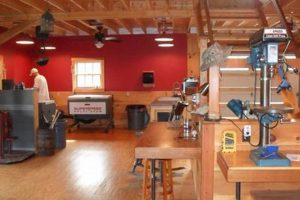
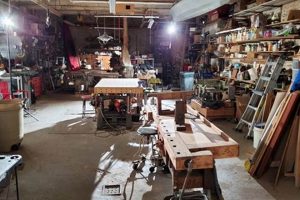
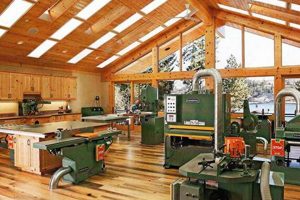
A detailed schematic representation outlining the layout, organization, and equipment placement within a designated woodworking space. Such representations typically incorporate dimensions, electrical considerations, and workflow optimization strategies to facilitate efficient and safe operation. As an illustration, consider a document specifying the location of a table saw, dust collection system, and workbench, complete with notations regarding power outlet placement and material storage solutions.
These designs are instrumental in maximizing spatial utilization, enhancing safety protocols, and streamlining project execution. Historically, craftspeople relied on experience and intuition; however, formalized planning has emerged as a crucial element in contemporary woodworking, offering increased precision, reduced error margins, and improved overall productivity. Their value lies in proactively addressing potential workflow impediments and resource allocation challenges.
The subsequent sections will delve into the various types of designs available, crucial elements for successful implementation, and resources for acquisition or creation. This includes discussions on software tools, ergonomic considerations, and adaptations for varying workshop sizes and woodworking specializations.
Optimizing a Workshop Using Prepared Schematics
Effective employment of pre-existing layouts is crucial for establishing a functional and productive woodworking environment. The following points offer guidance for maximizing the utility derived from such resources.
Tip 1: Prioritize Workflow: Evaluate the sequential steps involved in typical woodworking projects. The layout should minimize unnecessary movement between stations and ensure a logical progression from raw material to finished product.
Tip 2: Optimize Safety Zones: Allocate sufficient clearance around stationary power tools, such as table saws and jointers. Adherence to recommended safety distances mitigates the risk of accidents and injuries.
Tip 3: Manage Dust Collection: Integrate a comprehensive dust extraction system into the planned configuration. Effective dust management enhances air quality, prolongs equipment lifespan, and promotes a healthier working environment.
Tip 4: Exploit Vertical Space: Utilize wall-mounted storage and shelving units to maximize floor space. This strategic approach helps to organize tools and materials while maintaining a clear and unobstructed work area.
Tip 5: Consider Electrical Load: Accurately calculate the electrical demands of all power tools and equipment. Ensure that the electrical system can accommodate the anticipated load, preventing overloads and potential hazards. Consult a qualified electrician if necessary.
Tip 6: Plan for Material Storage: Designate specific areas for the storage of lumber, sheet goods, and hardware. Efficient material storage not only saves time but also protects materials from damage and deterioration.
Tip 7: Adapt to Specific Needs: Tailor the blueprint to the specific types of woodworking projects undertaken. A woodturner’s shop will differ significantly from one dedicated to cabinetmaking or furniture construction.
Adherence to these guidelines will result in a more organized, efficient, and safer woodworking workspace. Proactive planning, based on well-conceived layouts, is an investment that yields substantial long-term benefits.
The subsequent section will address the integration of advanced technologies and emerging trends in workshop design.
1. Layout Optimization

Layout optimization, within the context of woodworking shop designs, directly influences operational efficiency and safety. An effectively optimized layout minimizes unnecessary movement, reducing worker fatigue and the potential for accidents. For example, a design that positions the lumber storage area near the initial cutting station streamlines material flow, decreasing handling time and the risk of injury associated with transporting heavy materials. Conversely, a poorly designed layout can result in convoluted workflows, increased material handling, and a higher probability of accidents due to obstructions and confined spaces. A real-life application is the modular workshop design implemented by furniture manufacturers; this facilitates easy modification, catering to diverse projects and production scales.
The significance of layout optimization is further exemplified in workshops with multiple users. A well-defined layout mitigates congestion, delineating individual work zones and minimizing interference. This may involve strategically positioning noise-generating equipment away from quieter assembly areas or establishing clear pathways for material transport. Advanced software simulations can assist in optimizing layouts by modelling worker movement, material flow, and tool utilization. These simulations enable woodworkers to identify potential bottlenecks and refine their designs before committing to physical construction, thus preventing costly rework.
In summary, layout optimization is an indispensable component of effective woodworking shop designs. Its careful consideration directly affects productivity, safety, and overall workflow efficiency. Understanding the principles of layout optimization is critical for creating a woodworking space that meets the specific needs of its users and supports efficient and safe project execution. Failing to address this element can result in a workshop that hinders rather than facilitates the woodworking process.
2. Tool Placement

Tool placement is a critical determinant of a woodworking shop’s overall functionality, directly influenced by, and meticulously documented within, comprehensive woodworking shop blueprints. Its significance stems from its impact on workflow efficiency, safety protocols, and spatial utilization. Ineffectual tool placement can lead to unnecessary movements, increased risk of accidents, and suboptimal use of available space, thereby hindering project execution. An illustrative example is the strategic positioning of a miter saw near the lumber storage area, facilitating quick and efficient cross-cutting operations, reducing the distance required to transport raw materials. Conversely, a poorly planned arrangement might locate the same saw in a congested area, increasing the likelihood of collisions or requiring circuitous material routes.
Furthermore, tool placement influences adherence to safety standards. Adequate clearance around stationary power tools, such as table saws and jointers, is paramount in mitigating the risk of injuries. The allocation of dedicated space for each tool, as specified within woodworking shop layouts, ensures operators can maneuver safely and maintain proper control. Examples of this include establishing clear zones around lathes for safe turning operations and positioning dust collection systems proximal to sanding stations to minimize airborne particulate matter. The arrangement must also accommodate the use of push sticks, feather boards, and other safety devices, allowing for their unencumbered application during tool operation. This spatial planning is typically addressed during the blueprints of the woodworking shop.
In conclusion, tool placement is an inseparable element of effective woodworking shop designs. Optimizing tool positioning enhances workflow, reduces safety risks, and maximizes spatial efficiency. A carefully planned shop, guided by a comprehensive blueprint, promotes a productive and secure woodworking environment, while neglecting this facet compromises both performance and well-being. Therefore, it is imperative to prioritize tool placement during the planning and construction phases of any woodworking space.
3. Safety Standards

The integration of safety standards within woodworking shop blueprints is paramount. These standards dictate the physical layout, equipment placement, and operational protocols designed to mitigate inherent risks associated with woodworking activities. Strict adherence to these standards minimizes the potential for accidents, injuries, and long-term health hazards.
- Electrical Safety Compliance
Electrical safety compliance necessitates adherence to national and local electrical codes within the workshop. Woodworking shop layouts must incorporate appropriately grounded outlets, circuit breakers, and dedicated circuits to accommodate the power demands of various tools. For example, the National Electrical Code (NEC) specifies requirements for receptacle spacing, wiring methods, and grounding techniques in workshops to prevent electrical shock and fire hazards. Proper planning, documented in the blueprint, is crucial to avoid overloading circuits and potential electrical fires.
- Dust Collection Systems Integration
Effective dust collection systems are essential for maintaining air quality and reducing respiratory hazards. Woodworking shop designs must incorporate strategically placed dust collection ports connected to powerful extraction units. For instance, a plan may detail the installation of a cyclone separator to remove large debris before it reaches the filter, extending the filter’s lifespan and maintaining optimal airflow. Compliance with Occupational Safety and Health Administration (OSHA) regulations regarding permissible exposure limits (PELs) for wood dust is crucial for worker health and safety.
- Emergency Egress and Fire Safety
Emergency egress and fire safety considerations mandate the inclusion of clear and unobstructed pathways for rapid evacuation. Blueprints must specify the location of fire extinguishers, first-aid kits, and emergency exits that comply with building codes and fire safety regulations. For example, a layout might designate two separate exits located at opposite ends of the shop to ensure occupants can escape in the event of a fire. Fire-resistant building materials and compartmentalization strategies, detailed in the blueprint, can further enhance fire safety.
- Machine Guarding and Clearances
Machine guarding and clearance requirements necessitate the provision of adequate space around stationary power tools and the implementation of appropriate guards and safety devices. Woodworking shop designs must adhere to manufacturer specifications and relevant safety standards for each tool. As an example, a table saw station may include a blade guard, anti-kickback pawls, and a designated outfeed support area to prevent injuries. Clear walkways and workspaces around machinery, as specified in the blueprint, reduce the risk of collisions and improve overall safety.
The integration of these safety standards within woodworking shop blueprints is not merely a matter of regulatory compliance, but rather a fundamental aspect of creating a safe and productive working environment. Comprehensive planning, guided by relevant codes and best practices, is essential for minimizing risks and safeguarding the well-being of woodworkers.
4. Material Storage

The efficient allocation and organization of resources, particularly material storage, is a foundational element embedded within comprehensive woodworking shop blueprints. Its effective integration directly impacts workflow efficiency, safety protocols, and long-term material preservation. Suboptimal material storage can lead to increased material handling time, potential damage to stock, and elevated risks of accidents within the workspace. Designs that thoughtfully incorporate storage considerations represent a significant investment in operational productivity.
- Lumber Rack Systems
Lumber rack systems are a crucial component of material storage, designed to accommodate varying dimensions and quantities of lumber stock. Woodworking shop layouts must strategically position lumber racks to facilitate easy access and prevent warping or damage to the wood. For instance, vertical lumber racks conserve floor space while providing support along the entire length of the boards. Proper implementation, as depicted in woodworking blueprints, ensures lumber is readily accessible for projects while maintaining its structural integrity.
- Sheet Good Storage
Sheet goods, such as plywood and MDF, require specialized storage solutions to prevent bending, sagging, or damage during handling. Woodworking shop layouts often incorporate horizontal or vertical sheet good storage racks, designed to support the full surface area of the materials. An effective sheet good storage design optimizes space utilization, facilitates easy retrieval, and safeguards against potential material degradation, contributing to reduced waste and improved project outcomes.
- Hardware Organization
Efficient hardware organization is essential for minimizing project delays and maintaining a well-ordered woodworking shop. Woodworking shop designs typically integrate small parts storage solutions, such as bins, drawers, and pegboards, to accommodate screws, nails, bolts, and other fasteners. A clearly labeled and easily accessible hardware storage system reduces the time spent searching for necessary components, enhances workflow efficiency, and minimizes the likelihood of misplacing critical hardware items.
- Offcut Management
Strategic offcut management is an important aspect of material storage, aimed at minimizing waste and maximizing material utilization. Woodworking shop layouts may designate specific areas for storing usable offcuts, categorized by material type and dimensions. Effective offcut management reduces the need to purchase new materials for small projects, contributes to cost savings, and promotes sustainable woodworking practices.
The foregoing elements demonstrate the inextricable link between material storage and comprehensive woodworking shop layouts. Thoughtful consideration of these facets leads to a more organized, efficient, and cost-effective woodworking environment. Integration within the blueprints ensures optimal spatial utilization, enhanced safety, and streamlined workflow, all of which contribute to improved project outcomes and reduced operational costs.
5. Workflow Efficiency
Workflow efficiency, within the context of woodworking, is directly and demonstrably improved by well-conceived workshop layouts. Shop blueprints, therefore, serve as instrumental tools in optimizing the sequential steps involved in project completion. The arrangement of equipment, material storage, and assembly areas dictates the flow of work, with inefficient layouts resulting in wasted time and increased physical strain on the woodworker. For example, a cabinetmaking shop featuring a linear workflow, progressing from lumber storage to milling, assembly, and finishing stations, inherently reduces redundant movement compared to a haphazardly arranged space. The practical significance of this understanding is evidenced by reduced project completion times and increased output volume within professional woodworking environments. A shop blueprint acts as the catalyst for a more streamlined and less stressful work experience.
Furthermore, workflow efficiency is significantly affected by the accessibility of tools and materials. Woodworking blueprints facilitate the pre-emptive placement of frequently used items within easy reach, minimizing disruptions and maximizing concentration. For instance, a small-scale furniture maker may position a dedicated assembly table between a clamping station and a finishing area, thereby reducing material handling and expediting the completion of each piece. Conversely, poorly designed spaces necessitate constant interruptions to retrieve tools or materials, fragmenting the workflow and decreasing overall productivity. These improvements allow an improvement in their work and a smoother process by reducing idle time.
In conclusion, the integration of workflow efficiency principles within shop blueprints yields tangible benefits in productivity, safety, and overall satisfaction within the woodworking profession. Strategic spatial planning, guided by a clear understanding of workflow optimization, addresses potential bottlenecks and facilitates seamless project execution. The challenges of space constraints or budgetary limitations can be overcome with thoughtful design considerations, resulting in a woodworking environment that promotes both efficiency and creative expression. The woodworking plans must be optimized to the individual requirements to improve efficiency.
6. Electrical Considerations

Effective woodworking shop blueprints necessitate meticulous attention to electrical considerations due to the inherent power demands of woodworking equipment and the potential safety hazards associated with electricity. The design must comprehensively address power supply adequacy, wiring specifications, outlet placement, and grounding protocols to ensure safe and efficient operation. A layout failing to account for these factors risks overloading circuits, causing equipment malfunction, and increasing the likelihood of electrical fires or electrocution incidents. An illustrative example is the specification of dedicated circuits for high-amperage tools like table saws and dust collectors to prevent breaker tripping and ensure consistent power delivery. The integration of these electrical specifications directly influences the shop’s usability and safety profile.
Furthermore, practical application of electrical blueprints involves strategic outlet placement to minimize extension cord usage, thereby reducing trip hazards and potential cord damage. The incorporation of ground fault circuit interrupters (GFCIs) in wet or damp locations, such as near sinks or exterior doors, provides an additional layer of protection against electrical shock. Additionally, blueprint annotations should clearly identify the location of the main electrical panel and emergency shut-off switches to facilitate rapid response in the event of an electrical malfunction or fire. These detailed planning elements are critical for adherence to electrical codes and best practices, promoting a safer work environment.
In summary, electrical considerations are an indispensable component of any comprehensive woodworking shop blueprint. The adherence to electrical codes, thoughtful outlet placement, and the integration of safety devices are critical for preventing accidents, ensuring reliable power delivery, and creating a productive woodworking environment. Neglecting these considerations not only increases safety risks but also compromises the overall functionality and efficiency of the workshop. The cost of proper electrical planning pales in comparison to the potential financial and human costs associated with electrical accidents or equipment damage.
7. Ventilation Systems
Ventilation systems constitute an indispensable component of woodworking shop blueprints, directly influencing air quality, worker health, and compliance with occupational safety regulations. The generation of airborne particulate matter during woodworking operations necessitates effective ventilation strategies to mitigate respiratory hazards and maintain a safe working environment. The absence of a properly designed ventilation system within shop blueprints can lead to the accumulation of wood dust, volatile organic compounds (VOCs) from finishes, and other airborne contaminants, posing significant health risks to woodworkers. The cause-and-effect relationship between ventilation and air quality underscores the critical importance of its integration into shop designs. An illustrative example is the inclusion of dust collection ports positioned near dust-generating machinery, connected to a central dust collection system, as specified within a woodworking blueprint. This proactive approach minimizes airborne dust levels, contributing to a healthier and more productive workspace.
The practical application of ventilation systems within woodworking shop blueprints extends beyond dust collection to encompass overall air exchange and temperature regulation. Designs may incorporate exhaust fans, intake vents, and air filtration systems to promote continuous airflow, remove stale air, and control humidity levels. Temperature control is particularly important in regions with extreme climates, as fluctuations in temperature and humidity can affect wood stability and finish quality. Real-world examples include cross-ventilation designs that utilize strategically placed windows and doors to facilitate natural airflow, supplemented by mechanical ventilation systems for enhanced air circulation. Proper planning, documented in the blueprint, ensures the ventilation system is appropriately sized and configured to meet the specific needs of the workshop, accounting for factors such as shop size, machinery usage, and local climate conditions.
In summary, ventilation systems are integral to comprehensive woodworking shop blueprints, serving as a critical safeguard for worker health and a facilitator of optimal woodworking practices. Integrating these systems into the early stages of design minimizes the risk of airborne contaminants, promoting a safer and more efficient workspace. The challenges associated with implementing effective ventilation often revolve around balancing cost considerations with performance requirements, necessitating careful planning and adherence to industry best practices. The understanding is important in creating an optimized environment.
Frequently Asked Questions
The subsequent questions and answers address prevalent concerns and misunderstandings regarding woodworking shop blueprints.
Question 1: What constitutes an essential element of woodworking shop blueprints?
Comprehensive blueprints must incorporate accurate dimensions, electrical layouts, dust collection systems, and material storage solutions. Absence of any of these elements can compromise functionality and safety.
Question 2: Why is workflow optimization important?
Optimized workflow minimizes unnecessary movement, reduces project completion time, and enhances overall productivity. A poorly designed layout impedes efficiency and increases the risk of accidents.
Question 3: What role does electrical planning play in woodworking shop blueprints?
Electrical planning ensures adequate power supply, proper wiring, and strategic outlet placement. Failure to address electrical requirements can result in circuit overloads, equipment malfunction, and potential fire hazards.
Question 4: How does dust collection impact shop safety?
Effective dust collection removes airborne particulate matter, mitigating respiratory hazards and maintaining a healthy working environment. Inadequate dust control can lead to long-term health complications.
Question 5: What strategies optimize material storage within limited spaces?
Vertical storage solutions, such as lumber racks and wall-mounted shelving, maximize spatial utilization. Efficient storage minimizes clutter and reduces the risk of material damage.
Question 6: Are there specific code requirements?
Compliance with national and local building codes, electrical codes, and fire safety regulations is mandatory. Code adherence ensures the structural integrity and safety of the woodworking shop. Consult with local authorities to clarify and check the codes.
Effective implementation of woodworking shop blueprints requires attention to detail and adherence to best practices. Thorough planning minimizes risks and maximizes the potential for a safe, efficient, and productive workspace.
The next section will focus on resources available for acquiring or creating woodworking shop blueprints.
Conclusion
Woodworking shop plans represent a foundational element in the establishment of safe, efficient, and productive woodworking environments. As demonstrated throughout this exposition, meticulous attention to layout optimization, tool placement, safety standards, material storage, workflow efficiency, electrical considerations, and ventilation systems directly impacts the success and sustainability of woodworking endeavors. The absence of thorough planning can lead to increased risks, decreased productivity, and compromised project outcomes.
Therefore, investment in comprehensive blueprints is not merely an expenditure, but a strategic imperative. The diligent application of these plans, whether acquired through professional services or developed independently, offers a clear pathway to a woodworking space that prioritizes safety, maximizes efficiency, and facilitates creative expression. The significance of woodworking shop plans extends beyond spatial arrangement, encompassing the holistic well-being of the woodworker and the longevity of the craft. Their adoption should be viewed as a non-negotiable element in the pursuit of woodworking excellence.