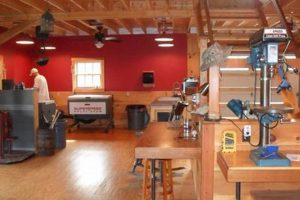
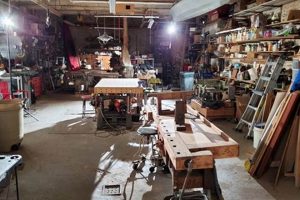
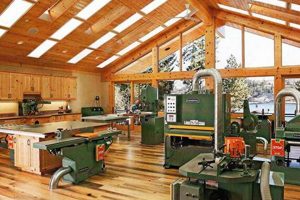
The arrangement of tools, equipment, and workspace within a designated area for woodworking activities is a critical factor influencing productivity and safety. This process includes determining the optimal layout for machinery, storage solutions for materials, and ensuring efficient workflow to minimize movement and potential hazards. For example, a well-considered arrangement might place frequently used tools within easy reach of the primary workbench and locate larger machines along the perimeter of the workspace to maximize central floor space.
An effective organizational structure enhances efficiency, reduces the risk of accidents, and contributes to the overall quality of finished projects. Historically, woodworking spaces were often ad hoc and adapted to available areas; however, modern approaches emphasize planned layouts based on ergonomic principles and specific project requirements. This forethought not only improves the user experience but also protects valuable equipment and minimizes material waste.
Therefore, a systematic approach to the establishment of a dedicated woodworking area is essential. Subsequent sections will address crucial aspects, including space planning, equipment selection, safety protocols, dust collection systems, and strategies for maintaining an organized and productive environment.
Woodwork Shop Set Up
The following recommendations offer guidance on optimizing a designated area for woodworking. Implementing these strategies can significantly improve both workflow and safety.
Tip 1: Space Assessment. Before acquiring tools or machinery, a thorough assessment of the available square footage is essential. This determines the maximum size of equipment that can be accommodated and influences the overall layout of the area. Accurate measurements should be taken to avoid spatial constraints.
Tip 2: Workflow Optimization. Arrange equipment in a logical sequence that mirrors the typical woodworking process, from raw material to finished product. This minimizes unnecessary movement and reduces the potential for errors. A linear or U-shaped configuration is often advantageous.
Tip 3: Dust Collection Integration. Implement a comprehensive dust collection system from the outset. This includes strategically positioned collection ports at each machine and a central collector with sufficient capacity. Proper dust management is crucial for respiratory health and maintaining a clean environment.
Tip 4: Adequate Lighting. Ensure ample illumination throughout the space. Overhead lighting should be supplemented with task-specific lighting at each workstation. Natural light is beneficial, but its availability is not always reliable.
Tip 5: Secure Storage Solutions. Invest in durable and organized storage solutions for tools, materials, and hardware. Wall-mounted cabinets, rolling carts, and labeled bins contribute to efficient retrieval and prevent clutter. A dedicated area for lumber storage is also necessary.
Tip 6: Electrical Infrastructure Planning. Evaluate the electrical requirements of all equipment and ensure sufficient outlets and amperage are available. Dedicated circuits for high-power machinery are recommended to prevent overloading. A qualified electrician should be consulted.
Tip 7: Safety Equipment Placement. Ensure that essential safety equipment, such as fire extinguishers, first-aid kits, and eye protection, is readily accessible. Clearly marked locations for each item are crucial for rapid response in emergency situations.
Adhering to these principles enhances the efficiency and safety of the woodworking environment, contributing to higher-quality results and a more productive working experience.
The subsequent section will delve into specific equipment considerations, outlining essential tools and machinery for various woodworking applications.
1. Space Optimization

In the context of establishing a woodworking area, meticulous planning and effective space utilization are paramount for achieving both functionality and safety. Space optimization directly influences the ease of movement, accessibility of tools and materials, and the overall efficiency of woodworking operations. It involves a strategic approach to allocating and arranging resources within the designated area to maximize productivity.
- Layout Design for Workflow Efficiency
An efficient layout minimizes unnecessary movement and streamlines the woodworking process. Consideration must be given to the sequence of operations, from raw material storage to finishing. For instance, placing the lumber rack near the initial processing station (e.g., jointer, planer) reduces handling and optimizes workflow. A well-designed layout considers the spatial requirements of each machine and the operator’s movements.
- Vertical Storage Solutions
Vertical storage solutions maximize available floor space by utilizing wall-mounted cabinets, shelves, and racks. This is especially beneficial in smaller areas where floor space is limited. Lumber racks, tool chests, and hardware organizers can be mounted on walls, freeing up valuable floor space for machinery and work areas. Such arrangements contribute to a clutter-free and safer environment.
- Multi-Functional Workstations
Workstations that serve multiple purposes can significantly enhance space optimization. A workbench with integrated storage drawers and a vise can function as both a work surface and a tool storage unit. Similarly, a table saw with an outfeed table that folds down can conserve space when not in use. Designing workstations with adaptability in mind allows for efficient utilization of available area.
- Strategic Machine Placement
The placement of machinery within a woodworking shop significantly impacts both workflow and safety. Large stationary machines, such as table saws and jointers, require adequate clearance for safe operation and material handling. Positioning these machines along the perimeter of the workspace maximizes central floor space for assembly and finishing. Additionally, consider the dust collection requirements of each machine and position them accordingly to facilitate efficient dust removal.
By implementing these space optimization strategies, a woodworking area can be transformed into a functional and efficient workspace. Careful consideration of layout, storage, and machine placement not only maximizes available area but also enhances safety, reduces clutter, and improves the overall woodworking experience. These principles are fundamental for both professional woodworkers and hobbyists alike.
2. Tool Accessibility

The configuration of a woodworking area directly influences the ease and speed with which tools can be accessed. Optimized accessibility minimizes wasted time, reduces the risk of accidents, and contributes to overall efficiency and project quality. Careful consideration of tool storage and placement is, therefore, a critical element of effective workshop layout.
- Immediate Proximity for Frequently Used Tools
Tools used most frequently during standard operations should be located within arm’s reach of the primary work surface. This reduces the need to move around the shop, saving time and minimizing potential distractions. Examples include hand planes, chisels, measuring devices, and frequently used fasteners. Immediate proximity can be achieved through tool belts, bench-top organizers, and shadow boards.
- Categorized and Organized Storage Systems
Implementing a systematic approach to tool storage ensures that tools are readily identifiable and retrievable. Tools should be grouped according to type or function, with clear labeling and consistent placement. Examples include dedicated drawers for hand tools, racks for power tools, and bins for fasteners. Organized storage systems prevent clutter and reduce the time spent searching for specific items.
- Mobile Tool Carts for Enhanced Flexibility
Mobile tool carts provide a flexible storage solution that allows tools to be moved to the point of use. This is particularly useful for larger projects or when working in different areas of the shop. Carts can be customized with specific tool sets for particular tasks, further enhancing efficiency. Examples include carts equipped with sanding supplies, joinery tools, or finishing materials.
- Ergonomic Considerations in Tool Placement
Tool placement should consider ergonomic principles to minimize strain and fatigue. Heavy or frequently used tools should be positioned at a comfortable height to avoid excessive bending or reaching. Overhead storage should be avoided for heavy items. Proper tool placement reduces the risk of musculoskeletal injuries and improves overall comfort and productivity.
The integration of these tool accessibility strategies into the woodworking area design significantly contributes to a more efficient and safer work environment. The arrangement of tools directly impacts workflow, reduces wasted time, and enhances the overall quality of woodworking projects. A well-organized shop not only improves productivity but also fosters a more enjoyable and sustainable woodworking practice.
3. Safety Measures
The incorporation of safety measures within woodworking area configuration is not merely an addendum, but a fundamental and inseparable component. A meticulously planned workspace inherently reduces the potential for accidents and injuries. The integration of appropriate safeguards is essential for creating an environment conducive to both productivity and well-being.
- Machine Guarding and Operational Clearances
The installation and maintenance of machine guards are paramount. These physical barriers prevent accidental contact with moving parts on equipment such as table saws, jointers, and planers. Adequate operational clearances around machinery are also critical. Sufficient space allows for safe material handling and prevents operators from being crowded or obstructed. For example, a table saw should have ample space around it for feeding and receiving stock, minimizing the risk of kickback-related injuries.
- Emergency Stop Systems and Power Disconnection
Readily accessible emergency stop systems are crucial for quickly halting machinery in the event of an accident or malfunction. These systems should be clearly labeled and strategically located near each machine. Furthermore, a master power disconnect switch should be available to cut off all electrical power to the shop in case of a major emergency, such as a fire or electrical fault. These systems must be regularly tested to ensure proper functionality.
- Ventilation and Respiratory Protection
Woodworking generates significant amounts of dust, which can pose a serious respiratory hazard. A well-designed ventilation system, including dust collectors and air filtration units, is essential for maintaining air quality. In addition to ventilation, respiratory protection, such as dust masks or respirators, should be used when operating machinery or performing tasks that generate dust. Regular cleaning of the shop and equipment also minimizes dust accumulation.
- Fire Prevention and Suppression
Woodworking areas are inherently prone to fire hazards due to the presence of combustible materials such as wood dust, sawdust, and flammable finishes. A comprehensive fire prevention plan should include measures such as proper storage of flammable liquids, regular cleaning of dust collection systems, and the elimination of potential ignition sources. Fire extinguishers should be strategically located throughout the shop and readily accessible. Employees or users of the shop should be trained in their proper use.
The effectiveness of safety measures is inextricably linked to the overall design and setup of the woodworking area. A proactive approach to safety, incorporating these elements from the outset, is essential for creating a secure and productive environment. Such a plan ensures adherence to regulations and promotes a culture of safety awareness. Prioritizing these aspects safeguards the health and well-being of individuals working within the woodworking space, while also protecting valuable equipment and materials.
4. Dust Management

Effective dust management is an indispensable component of any well-conceived woodworking area configuration. The creation of wood dust is an inherent byproduct of many woodworking processes, including sawing, sanding, routing, and shaping. Uncontrolled accumulation of this dust presents significant hazards to both health and equipment. Therefore, a comprehensive dust management system is not simply an optional addition but a critical element of a functional and safe workspace. The inadequate mitigation of airborne particulate matter can result in respiratory ailments for the woodworker, including allergic reactions, asthma exacerbation, and long-term lung damage. Moreover, the settling of dust on machinery can impede performance, leading to premature wear and tear and potential malfunctions. For instance, dust accumulating within a table saw motor can cause overheating and reduced efficiency, necessitating costly repairs or replacements.
The integration of dust management systems should be considered from the initial stages of woodworking area layout. This includes strategic placement of dust collection ports, selection of appropriate dust collectors with sufficient airflow capacity, and utilization of enclosed sanding stations. Implementing localized dust collection at each machine is paramount. This can be achieved through the use of dust hoods, collection shrouds, and specialized attachments designed to capture dust at the source. In addition, the overall layout should facilitate efficient sweeping and cleaning to prevent dust accumulation on floors and other surfaces. Air filtration units, strategically positioned within the shop, further improve air quality by capturing fine particulate matter that may escape localized collection systems. An example of successful implementation would be a dedicated sanding booth with integrated downdraft ventilation to capture sanding dust before it becomes airborne, protecting the worker’s respiratory system.
In conclusion, effective dust management is not merely a housekeeping concern but a fundamental aspect of woodworking shop planning and operation. Neglecting this critical element can lead to significant health risks, equipment damage, and reduced productivity. A well-designed system, incorporating both localized collection and ambient air filtration, is essential for maintaining a safe, healthy, and efficient woodworking environment. Prioritizing dust management from the outset of workshop establishment ensures a sustainable and productive woodworking practice.
5. Equipment Placement

The strategic arrangement of machinery within a woodworking area is a foundational element of its successful establishment. Equipment placement dictates workflow efficiency, safety protocols, and the overall productivity of the workspace. Its influence permeates all aspects of woodworking activities, from initial material processing to final assembly. Improper equipment positioning can lead to constricted movement, increased risk of accidents, and reduced output. For example, situating a jointer and planer with insufficient infeed and outfeed space can impede the processing of long boards, compromising both accuracy and operator safety. The physical layout must reflect the sequence of woodworking operations, minimizing unnecessary material handling and optimizing the utilization of available square footage.
Practical implications of equipment placement extend to dust collection effectiveness. Positioning machines in close proximity facilitates the efficient integration of a centralized dust collection system. Conversely, dispersed equipment necessitates individual dust collection units, increasing both capital expenditure and maintenance requirements. Furthermore, consideration must be given to ergonomic factors. The height and orientation of each machine should align with the operator’s physical capabilities, reducing strain and fatigue. Integrating mobile bases for select equipment, such as drill presses or bandsaws, allows for flexible reconfiguration of the workspace to accommodate specific project needs. Proper electrical planning is also contingent upon equipment placement, ensuring adequate power supply and minimizing the risk of overloaded circuits.
In summation, equipment placement is not merely a logistical consideration but a pivotal factor in woodworking area establishment. Its strategic execution directly affects efficiency, safety, and long-term sustainability. A well-conceived layout, prioritizing workflow, dust collection, ergonomics, and electrical considerations, is essential for realizing a productive and hazard-free woodworking environment. Failure to address equipment placement comprehensively can result in operational inefficiencies, increased risk of accidents, and diminished overall output.
6. Workflow Design

The efficient arrangement of a woodworking area is intrinsically linked to workflow design, a systematic approach to optimizing the sequence of operations from raw material to finished product. A well-considered layout minimizes unnecessary movement, reduces material handling, and promotes a seamless progression through the various stages of woodworking projects.
- Spatial Arrangement for Process Flow
The physical placement of equipment and work surfaces directly influences the flow of materials and the efficiency of tasks. A linear workflow, where materials progress sequentially through different stations (e.g., cutting, shaping, assembly, finishing), minimizes backtracking and reduces congestion. For example, locating the lumber storage area near the initial cutting station and positioning assembly tables adjacent to the finishing area creates a logical progression that streamlines the woodworking process.
- Ergonomic Considerations in Workstation Design
Workstations should be designed to minimize physical strain and fatigue, promoting worker comfort and productivity. Bench heights, tool placement, and material storage should be optimized to reduce bending, reaching, and lifting. An example would be a workbench with adjustable height, allowing workers to customize the surface to their preferred working level. Proper ergonomic design not only enhances worker well-being but also reduces the risk of injuries and improves overall efficiency.
- Tool and Material Accessibility
The accessibility of tools and materials is a critical factor in workflow design. Frequently used items should be readily available and within easy reach of the workstation. This can be achieved through the use of tool organizers, mobile carts, and strategically positioned storage units. For instance, a well-organized tool cabinet with clearly labeled drawers allows workers to quickly locate the necessary tools, minimizing downtime and maximizing productivity.
- Adaptability and Flexibility
A well-designed workflow should be adaptable to accommodate different project types and scales. The layout should allow for easy reconfiguration to suit the specific requirements of each task. This can be achieved through the use of modular workstations, mobile equipment, and flexible storage solutions. For example, a shop with rolling workbenches and adjustable shelving can be easily adapted to accommodate both small-scale projects and larger, more complex builds.
In conclusion, workflow design is an integral component of woodworking area arrangement. By strategically optimizing the spatial arrangement, ergonomic considerations, tool accessibility, and adaptability, it is possible to create a workspace that promotes efficiency, safety, and productivity. A well-designed workflow not only streamlines the woodworking process but also enhances the overall experience and fosters a more enjoyable and sustainable practice.
7. Storage Solutions
Effective woodworking area establishment hinges significantly on the implementation of appropriate organizational structures. Storage solutions, therefore, form an integral component of shop layout, influencing accessibility, safety, and overall efficiency.
- Optimizing Vertical Space
The efficient utilization of vertical space is paramount, particularly in areas with limited square footage. Wall-mounted cabinets, shelves, and lumber racks capitalize on available vertical surfaces, freeing up valuable floor space for machinery and workflow. Examples include tiered lumber storage systems and tool cabinets extending to the ceiling. Vertical storage systems ensure materials and tools are readily accessible while minimizing clutter on horizontal work surfaces.
- Mobile Storage Units
Flexibility in a woodworking area is enhanced through the integration of mobile storage solutions. Rolling tool chests, carts, and material racks allow for easy repositioning of resources based on project needs. These units facilitate efficient workflow by bringing tools and materials directly to the point of use. An example is a mobile sharpening station that can be moved to different areas of the shop as required, minimizing travel time and maximizing productivity.
- Specialized Tool Storage
Categorized and organized tool storage is critical for maintaining efficiency and preventing damage. Custom-built tool chests with designated compartments for each item, French cleat systems for wall-mounted tools, and magnetic tool holders all contribute to a more organized and accessible workspace. Specialized storage solutions minimize the time spent searching for tools and reduce the risk of misplacement or damage. The application of drawer dividers and labeled compartments further enhances organization.
- Material Storage Strategies
Proper material storage not only protects valuable resources but also enhances workflow and safety. Lumber racks that accommodate different board lengths and thicknesses, plywood storage systems that prevent warping, and dedicated bins for hardware and fasteners all contribute to a more organized and efficient shop. Efficient material storage reduces the risk of damage, simplifies inventory management, and improves overall shop aesthetics. Consideration should be given to environmental factors such as humidity and temperature when designing material storage solutions.
In conclusion, the thoughtful implementation of tailored storage solutions is vital for a functional and efficient woodworking area. These strategies optimize space utilization, enhance tool accessibility, and promote overall shop organization, contributing to a safer and more productive woodworking experience.
Frequently Asked Questions
The following section addresses common inquiries regarding the establishment of a functional and safe woodworking area. These questions and answers aim to provide clarity on crucial aspects of the set-up process.
Question 1: What is the minimum space requirement for an adequately functional woodworking area?
The minimum space is contingent upon the scale of projects undertaken and the machinery utilized. A small area, approximately 100 square feet, may suffice for basic hand tool work. However, accommodating stationary power tools necessitates a space of at least 200 square feet to ensure safe operation and material handling.
Question 2: How critical is dust collection in the woodworking area, and what are the essential components of such a system?
Dust collection is paramount for mitigating respiratory hazards and maintaining a clean working environment. Essential components comprise a dust collector with adequate CFM (cubic feet per minute) capacity, appropriate ductwork sized to match the equipment, blast gates for airflow control, and a filtration system to capture fine particulate matter.
Question 3: What are the fundamental safety protocols that must be adhered to within a woodworking shop environment?
Fundamental safety protocols include wearing appropriate personal protective equipment (PPE) such as safety glasses, hearing protection, and dust masks; ensuring all machinery is equipped with functional safety guards; maintaining a clean and uncluttered workspace; implementing proper ventilation; and receiving thorough training on the safe operation of all equipment.
Question 4: How should power tools be arranged to optimize workflow and minimize safety risks?
Power tools should be arranged in a logical sequence that mirrors the typical woodworking process, from rough milling to final assembly. Adequate infeed and outfeed space should be provided around each machine to prevent overcrowding and facilitate safe material handling. Consider the natural flow of work and minimize unnecessary movement between stations.
Question 5: What are the key considerations when selecting a workbench for a woodworking area?
Key considerations include the bench’s stability, work surface area, material composition, and integrated storage options. A sturdy bench with a robust vise is essential for secure workpiece clamping. Bench height should be ergonomically suited to the individual user to minimize strain and maximize comfort.
Question 6: How can a woodworking area be effectively organized to maximize space utilization and minimize clutter?
Effective organization strategies encompass utilizing vertical storage solutions, implementing mobile tool carts, designating specific storage locations for all tools and materials, and maintaining a regular cleaning schedule. Clear labeling and efficient layout planning further contribute to space optimization and clutter reduction.
Prioritizing these frequently asked questions will lay the groundwork for establishing a safe and efficient woodworking space. A well-designed layout not only enhances productivity but also reduces the potential for accidents.
The next section will explore the topic of maintenance, focusing on strategies to maintain the shop.
Woodwork Shop Set Up
This exploration has underscored the critical role of “woodwork shop set up” in fostering a productive and safe environment. Key considerations include strategic space optimization, ensuring tool accessibility, prioritizing stringent safety measures, implementing comprehensive dust management, and meticulous equipment placement. These elements collectively contribute to an efficient workflow, enhanced user experience, and mitigation of potential hazards.
Effective configuration is not merely an aesthetic endeavor; it represents a fundamental investment in operational efficiency and long-term sustainability. Adherence to these principles safeguards both the individual practitioner and the integrity of their craft, ensuring a space conducive to both innovation and enduring productivity. A well-designed space represents a cornerstone for woodworking endeavors, contributing to the creation of quality end results in safety.