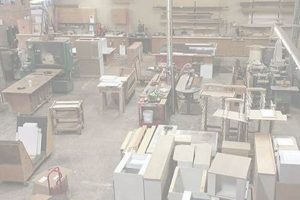
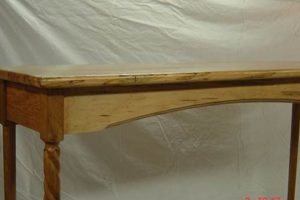
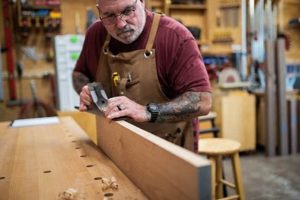
The creation of bespoke wooden objects, tailored precisely to individual specifications, represents a specialized sector within woodworking. This involves the design and fabrication of items ranging from furniture and cabinetry to architectural elements and artistic pieces, each distinguished by its singular character. An example would be the crafting of a dining table from reclaimed timber, shaped and finished to complement a specific room’s aesthetic and the client’s personal preferences.
This practice offers distinct advantages, including the ability to precisely meet dimensional requirements, incorporate specialized features, and express individual artistic vision. Historically, this type of craftsmanship has been highly valued, reflecting a commitment to quality and enduring design principles. It allows for the creation of objects that are not only functional but also serve as lasting expressions of artistry and personal style, often becoming treasured heirlooms.
The following sections will delve deeper into the various aspects involved in commissioning these specialized projects, encompassing the design process, material selection, construction techniques, and the importance of skilled artisans in achieving exceptional results. We will also explore the value proposition of choosing this bespoke approach over mass-produced alternatives.
Guidance on Commissioning Bespoke Wooden Creations
The following insights are intended to provide practical guidance for individuals considering the commissioning of specialized wooden projects. These points aim to ensure clarity, efficiency, and satisfaction throughout the design and fabrication process.
Tip 1: Define Project Scope Thoroughly: Prior to contacting a woodworking professional, a comprehensive understanding of the project’s goals is essential. This includes precise dimensions, desired functionality, aesthetic preferences, and budgetary constraints. Detailed documentation in the form of sketches, photographs, or written specifications will facilitate clear communication.
Tip 2: Research and Vet Potential Woodworkers: Evaluate the qualifications, experience, and reputation of potential collaborators. Review portfolios of past work to assess the quality of craftsmanship and alignment with the desired aesthetic. Request references and contact former clients to gather feedback on their experience.
Tip 3: Establish a Clear Contractual Agreement: A comprehensive contract should outline all aspects of the project, including the scope of work, materials to be used, timelines, payment schedules, and dispute resolution mechanisms. This document serves as a legally binding agreement that protects the interests of both parties.
Tip 4: Insist on Detailed Design Proposals: The design process should involve iterative collaboration between the client and the woodworker. Request detailed design proposals that include drawings, renderings, and material samples. This allows for thorough review and approval before fabrication begins, minimizing the potential for misunderstandings or errors.
Tip 5: Understand Material Properties and Selection: Different wood species possess unique characteristics in terms of strength, durability, grain patterns, and finishing properties. Consult with the woodworker to select materials that are appropriate for the intended application and aesthetic goals. Consider factors such as environmental sustainability and long-term maintenance requirements.
Tip 6: Establish a Communication Protocol: Regular communication is critical throughout the project lifecycle. Establish a clear communication protocol with the woodworker, including preferred methods of contact, frequency of updates, and procedures for addressing unforeseen issues or modifications to the original design.
Tip 7: Inspect Workmanship at Key Milestones: Schedule inspections at key milestones during the fabrication process to ensure that the work is progressing according to the agreed-upon specifications and quality standards. This allows for early detection and correction of any deficiencies.
These guidelines emphasize the importance of careful planning, diligent research, and open communication in achieving successful outcomes when commissioning specialized wooden creations. By adhering to these principles, clients can maximize the likelihood of realizing their vision and ensuring lasting satisfaction with the final product.
The subsequent sections will delve into specific considerations related to design, material selection, and finishing techniques.
1. Bespoke design.

Bespoke design forms the bedrock of individualized woodworking. It transcends mere customization, representing a holistic approach where the client’s specific needs, preferences, and spatial considerations directly dictate the form and function of the wooden creation. This contrasts with mass-produced items, which adhere to standardized dimensions and aesthetic conventions. In this context, individualized woodworking is the manifestation of bespoke design principles, resulting in pieces that are both functional and deeply personal.
The importance of bespoke design within individualized woodworking lies in its ability to solve unique spatial or functional challenges. Consider, for instance, a homeowner with an irregularly shaped living room requiring a custom shelving unit to maximize storage while complementing the room’s architectural features. A pre-fabricated shelving unit would likely prove inadequate, whereas a bespoke design addresses these specific constraints. Another example is a professional chef requiring a specialized cutting board crafted from specific wood types known for their hygienic properties and resistance to knife marks. This level of tailoring is impossible to achieve with mass-produced alternatives.
Ultimately, the integration of bespoke design into individualized woodworking represents a commitment to precision, personalization, and enduring quality. It addresses the limitations of mass production and enables the creation of unique, functional art pieces tailored to the individual. This union ensures that the final product not only meets the client’s practical needs but also reflects their personal style and aesthetic sensibilities, contributing to lasting satisfaction and value.
2. Material selection.

Material selection is paramount within the realm of individualized woodworking, directly impacting the aesthetic appeal, structural integrity, longevity, and overall value of the final product. The choice of wood species, finishes, and hardware components requires careful consideration, informed by the project’s specific requirements and intended use.
- Wood Species Characteristics
The selection of a specific wood species dictates inherent qualities such as grain pattern, color, density, and resistance to decay. For instance, hardwoods like oak or maple are often preferred for high-traffic furniture due to their durability, while softer woods like pine or cedar may be chosen for decorative elements or applications where weight is a concern. The inherent properties of the selected species significantly impact the finished product’s performance and lifespan.
- Finish Application and Protection
The application of appropriate finishes serves to protect the wood from environmental factors such as moisture, UV radiation, and physical wear. Different finishes, including varnishes, lacquers, oils, and waxes, offer varying degrees of protection and aesthetic effects. The selection of a suitable finish is crucial for maintaining the wood’s integrity and enhancing its natural beauty over time. Consider a bespoke table to require a food-safe finish to protect the wood.
- Hardware Integration and Durability
Hardware components, such as hinges, handles, and drawer slides, play a critical role in the functionality and longevity of wooden creations. Selecting high-quality hardware made from durable materials like brass or stainless steel ensures smooth operation and resistance to corrosion. The integration of appropriate hardware complements the overall design and contributes to the product’s overall lifespan.
- Sustainability and Ethical Sourcing
Increasingly, responsible material selection encompasses considerations of sustainability and ethical sourcing. Choosing wood from sustainably managed forests or utilizing reclaimed timber reduces environmental impact and supports responsible forestry practices. Prioritizing materials that are ethically sourced contributes to the long-term viability of the woodworking industry and aligns with environmentally conscious consumer values.
The integration of these facets in material selection is integral to achieving truly individualized woodworking outcomes. By carefully considering the characteristics of wood species, the protective properties of finishes, the durability of hardware, and the ethical implications of sourcing, artisans can create unique, high-quality pieces that are both aesthetically pleasing and environmentally responsible.
3. Artisan craftsmanship.
Artisan craftsmanship is the cornerstone of individualized woodworking. It elevates the process beyond mere fabrication, imbuing each piece with a level of skill, attention to detail, and artistic sensibility unattainable through automated or mass-production methods. The quality of this craftsmanship directly determines the aesthetic appeal, structural integrity, and lasting value of these bespoke creations.
- Mastery of Traditional Techniques
Artisan craftsmanship necessitates proficiency in traditional woodworking techniques, including joinery, carving, and finishing. These techniques, often honed through years of practice, enable the creation of intricate details and robust structures that are hallmarks of high-quality woodworking. The meticulous hand-fitting of dovetail joints, for example, ensures exceptional strength and visual appeal, surpassing the capabilities of machine-made alternatives.
- Personalized Attention to Detail
Each piece benefits from individualized attention throughout the design and construction process. Artisans meticulously select materials, refine designs, and execute each step with precision. This level of scrutiny ensures that every detail, from the grain pattern of the wood to the smoothness of the finish, contributes to the overall aesthetic harmony and functional excellence of the piece. A custom-designed cabinet might feature hand-carved accents that reflect the client’s personal interests, transforming a utilitarian object into a work of art.
- Adaptability and Problem-Solving
Artisan woodworkers possess the ability to adapt to unforeseen challenges and develop innovative solutions during the fabrication process. This adaptability is crucial when working with unique materials or complex designs. For instance, an artisan might encounter unexpected variations in the grain or density of a piece of reclaimed wood and must adjust their techniques accordingly to ensure a seamless and aesthetically pleasing result. These problem-solving skills ensures a quality finished product.
- Commitment to Quality and Durability
Artisan craftsmanship is characterized by a commitment to producing pieces that are not only visually appealing but also built to last. Artisans prioritize the use of high-quality materials and construction techniques that ensure the longevity and structural integrity of their creations. This commitment results in pieces that can withstand the test of time and become treasured heirlooms, embodying a lasting investment in quality and craftsmanship.
The essence of individualized woodworking lies in the integration of artisan craftsmanship. It ensures a quality finished product and longevity that cannot be matched by machine-made alternatives. By combining traditional skills, personalized attention, adaptability, and a commitment to quality, artisans transform raw materials into unique, functional works of art that reflect the client’s individual style and preferences, offering enduring value and satisfaction.
4. Functional integration.

Functional integration, in the context of individualized woodworking, signifies the seamless merging of utility and design within a bespoke wooden object. It moves beyond mere aesthetics, prioritizing the practical application and usability of the piece, ensuring it fulfills its intended purpose efficiently and effectively. This integration is crucial for realizing the full potential of specialized woodworking projects, transforming them from decorative items into valuable assets.
- Ergonomic Design for User Comfort
Ergonomic design considers the interaction between the user and the object, optimizing for comfort and efficiency. For instance, a custom-built desk tailored to the user’s height and reach reduces strain and promotes better posture. Such considerations elevate a simple desk to a functional workstation designed for sustained productivity.
- Space Optimization through Integrated Storage
Integrated storage solutions maximize space utilization, especially in compact environments. A custom-designed cabinet might incorporate pull-out shelves, hidden compartments, and adjustable dividers to accommodate specific storage needs. These solutions transform underutilized spaces into functional storage areas.
- Adaptable Components for Evolving Needs
Adaptable components enhance the long-term usability of a piece by allowing it to evolve with changing needs. A modular shelving system, for example, can be reconfigured to accommodate different sizes and shapes of items. This adaptability extends the lifespan of the piece and ensures its continued relevance.
- Seamless Integration with Technology
Modern functional integration often involves incorporating technology into wooden creations. A custom media console might include hidden cable management systems, integrated charging stations, and ventilation for electronic devices. This ensures that technology is seamlessly integrated into the design, enhancing both functionality and aesthetics.
The significance of these components lies in their collective contribution to the overall value of individualized woodworking. By prioritizing ergonomic design, optimizing space, incorporating adaptable components, and integrating technology, artisans can create pieces that are not only visually appealing but also exceptionally functional and tailored to the unique needs of the client. These integrations transform woodworking from a craft into a functional art form, enriching daily life with pieces that are both beautiful and practical.
5. Dimensional precision.

Dimensional precision is a non-negotiable prerequisite for successful individualized woodworking. It represents the degree to which the finished product adheres to specified measurements and tolerances, impacting not only its aesthetic appeal but also its structural integrity and functional performance. The attainment of dimensional precision requires a combination of meticulous planning, skilled craftsmanship, and the utilization of appropriate tools and techniques.
- Accurate Design and Planning
Achieving dimensional precision begins with accurate design documentation. Drawings, renderings, and detailed specifications must precisely define the dimensions, angles, and tolerances for each component of the project. Computer-aided design (CAD) software is often employed to ensure accuracy and facilitate the visualization of complex geometries. Precise design documentation provides a roadmap for the woodworker, minimizing the potential for errors during the fabrication process. A 3D-printed model to check for design flaws is a good practice.
- Precise Material Preparation
Material preparation is a critical step in achieving dimensional precision. Lumber must be accurately milled and dimensioned to the specified dimensions before assembly. This often involves the use of precision power tools such as planers, jointers, and table saws, as well as hand tools for fine-tuning. Accurate material preparation ensures that components fit together seamlessly, minimizing gaps and irregularities in the finished product. Proper material preparation also ensures a more structural integrity for the final product.
- Meticulous Assembly and Joinery
Assembly and joinery techniques play a crucial role in maintaining dimensional precision. Joints must be precisely cut and fitted to ensure a strong and seamless connection between components. Traditional joinery methods, such as dovetails, mortise-and-tenon joints, and rabbets, require meticulous handwork and precise measurement to achieve optimal results. Proper clamping and fastening techniques are also essential to prevent misalignment and distortion during the assembly process. The use of power tools might compromise certain structural integrities so hand tools might be preferred instead.
- Quality Control and Verification
Ongoing quality control and verification are essential for ensuring dimensional precision throughout the fabrication process. Measurements should be regularly checked against the design specifications using precision measuring tools such as calipers, levels, and squares. Any deviations from the specified dimensions must be identified and corrected promptly. A final inspection of the finished product is crucial to verify that it meets all dimensional requirements and tolerances before delivery to the client. A final inspection should be done on the client side as well.
The convergence of these components underscores the criticality of dimensional precision in individualized woodworking. By prioritizing accurate design, precise material preparation, meticulous assembly, and rigorous quality control, artisans can ensure that their creations not only meet the client’s aesthetic expectations but also provide lasting value and functionality. This commitment to precision elevates individualized woodworking from a craft to a precision art form, yielding pieces that stand as testaments to both skill and attention to detail. This level of precision is unachievable in any machine made products.
6. Aesthetic expression.

Aesthetic expression, in the context of bespoke woodworking, represents the deliberate application of artistic principles to imbue functional objects with visual appeal and emotional resonance. It extends beyond mere utility, transforming wooden creations into statements of personal style and artistic vision. The incorporation of aesthetic considerations is a defining characteristic, distinguishing it from standardized, mass-produced items.
- Artistic Wood Carving and Sculpting
Wood carving and sculpting techniques allow artisans to create intricate decorative elements that enhance the visual appeal. These techniques can range from subtle embellishments to elaborate three-dimensional forms, adding depth and texture. A custom headboard might feature hand-carved floral motifs, reflecting the client’s appreciation for natural forms. The integration of carving and sculpting transforms a functional piece into a unique work of art.
- Choice of Wood Grain and Figuration
The inherent grain patterns and figuration of different wood species offer a wide range of aesthetic possibilities. Artisans carefully select wood based on its visual characteristics, such as the swirling patterns of burl wood or the straight grain of quarter-sawn oak. The strategic placement of these patterns can enhance the visual interest and contribute to the overall design aesthetic. Using various wood types to produce different aesthetics to express themselves.
- Surface Finishing and Texturing Techniques
Surface finishing techniques, such as staining, painting, and texturing, allow artisans to manipulate the color, sheen, and tactile qualities of the wood. These techniques can be used to create a variety of effects, from rustic and weathered to sleek and contemporary. The application of a textured finish to a table top, for example, can add visual interest and create a unique tactile experience. Using different texture finishing can also emphasize different design features.
- Integration of Inlays and Decorative Elements
Inlays and other decorative elements, such as metal accents or stone insets, can be incorporated to enhance the visual appeal and create points of interest. These elements add contrast and complexity to the design, drawing the eye and creating a sense of luxury and refinement. The use of mother-of-pearl inlays on a jewelry box can elevate it from a simple storage container to a cherished heirloom. These features must seamlessly integrated to highlight the artwork as a whole.
These aesthetic components collectively enrich it. By skillfully manipulating form, texture, color, and decorative elements, artisans can transform ordinary wooden objects into expressions of individual style and artistic vision. This commitment to aesthetic expression is a hallmark, enhancing the value and desirability of these pieces and transforming them into lasting works of art. This enhances the potential values to the final product.
Frequently Asked Questions About Specialized Woodworking
The following section addresses common inquiries regarding commissioning specialized woodworking projects. These answers aim to provide clarity and informed decision-making.
Question 1: What distinguishes specialized woodworking from standard carpentry?
Specialized woodworking encompasses a narrower focus on crafting bespoke pieces tailored to individual specifications, often involving complex joinery, artistic elements, and unique material combinations. Standard carpentry typically concentrates on broader construction tasks, such as framing, installing doors and windows, and general building repairs. The former emphasizes artistry and personalization, while the latter prioritizes functionality and standardized processes.
Question 2: How is the cost of specialized woodworking determined?
The cost of a specialized woodworking project is influenced by various factors, including material costs, the complexity of the design, the time required for fabrication, and the skill level of the artisan. Intricate designs, rare materials, and extensive handcrafting will generally result in higher costs. A detailed estimate, outlining all expenses, should be obtained prior to commencing the project.
Question 3: What types of wood are best suited for specialized projects?
The selection of wood depends on the intended application and aesthetic preferences. Hardwoods like oak, maple, and cherry are favored for their durability and aesthetic appeal in furniture and cabinetry. Softwoods like pine and cedar are often used for decorative elements or outdoor applications. Exotic woods offer unique grain patterns and colors, but may require specialized handling. Proper assessment and preparation for wood selection is crucial.
Question 4: How long does a typical specialized woodworking project take to complete?
Project timelines vary depending on the complexity of the design, the size of the piece, and the woodworker’s availability. Simple projects may take a few weeks, while more intricate commissions can require several months. Establishing a realistic timeline and maintaining open communication with the woodworker are essential for managing expectations.
Question 5: How can one ensure the longevity of a specialized woodworking piece?
Proper care and maintenance are crucial for preserving the quality and appearance of specialized woodworking pieces. This includes regular cleaning with appropriate products, protecting the wood from excessive moisture and sunlight, and addressing any signs of damage promptly. Applying protective finishes and following the woodworker’s recommendations will contribute to long-term durability.
Question 6: What recourse is available if a specialized woodworking project does not meet expectations?
A clearly defined contract, outlining specifications, timelines, and dispute resolution mechanisms, is essential. In the event that the finished product does not meet agreed-upon standards, communication with the woodworker to address concerns and explore potential remedies is the initial step. If a resolution cannot be reached, legal options may be considered, depending on the terms of the contract and applicable consumer protection laws.
These FAQs emphasize the importance of informed decision-making, clear communication, and careful planning when engaging in specialized woodworking projects. By understanding these key aspects, clients can maximize their satisfaction and ensure the creation of lasting, high-quality pieces.
The subsequent section will explore case studies of successful specialized woodworking projects.
Conclusion
This exploration of unique custom woodworks has illuminated the multifaceted nature of this specialized craft. From bespoke design and careful material selection to artisan craftsmanship, functional integration, dimensional precision, and aesthetic expression, each element plays a critical role in the creation of exceptional pieces. The benefits of commissioning such projects, including tailored solutions, enduring quality, and personalized artistry, are substantial.
The enduring appeal of unique custom woodworks lies in its capacity to transcend mass-produced alternatives, offering lasting value and individual expression. Clients are encouraged to engage with qualified artisans, prioritize clear communication, and appreciate the inherent complexities involved in transforming raw materials into functional works of art. This approach ensures both satisfaction and the preservation of a time-honored craft.