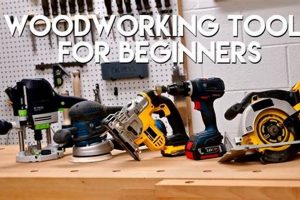
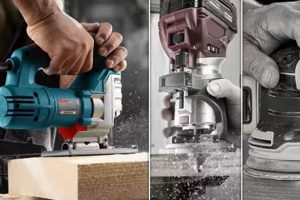
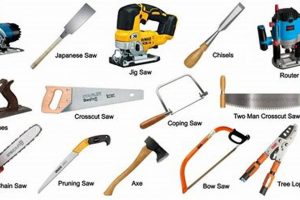
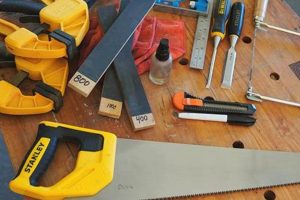
A compilation of indispensable implements for shaping and joining wood constitutes a foundational resource for any woodworking endeavor. This inventory typically encompasses instruments designed for measuring, cutting, shaping, joining, and finishing wood components. For example, a starting collection might include a measuring tape, hand saw, chisels, a hammer, and sandpaper.
Possessing a well-defined set of fundamental woodworking equipment is crucial for efficient project execution and attainment of high-quality results. Such a selection enables accurate material preparation, precise joinery, and aesthetically pleasing surface treatments. Historically, these tools have evolved from simple hand-powered devices to sophisticated power-driven machinery, reflecting advancements in materials science and manufacturing techniques. The availability of appropriate equipment significantly impacts the speed, accuracy, and complexity of woodworking projects.
The subsequent discussion will detail specific categories of implements considered fundamental for both novice and experienced woodworkers, outlining their functions and relevant selection criteria. These categories include measuring and marking tools, cutting tools, shaping tools, joinery tools, and finishing tools.
Guidance on Selecting Fundamental Woodworking Equipment
The proper selection and utilization of basic woodworking instruments are paramount to successful project completion. The following guidelines offer valuable insights into building a functional and efficient toolkit.
Tip 1: Prioritize Quality Over Quantity: Investing in a smaller number of higher-quality tools generally yields better long-term results than acquiring numerous inferior items. Higher-grade steel and more precise manufacturing contribute to improved performance and durability.
Tip 2: Begin With Measurement and Marking Instruments: Accurate measurements and precise markings are essential for ensuring accuracy in every stage of a woodworking project. Focus on acquiring a reliable measuring tape, a combination square, marking gauges, and pencils.
Tip 3: Choose Versatile Cutting Implements: A selection of cutting implements that can handle a variety of wood types and thicknesses is crucial. Consider a hand saw for general use, a coping saw for intricate curves, and chisels for precise shaping and joinery.
Tip 4: Invest in Ergonomic Hand Tools: Woodworking frequently involves prolonged periods of manual labor. Ergonomically designed hand tools, such as those with comfortable grips, can reduce fatigue and the risk of repetitive strain injuries.
Tip 5: Develop Proficiency in Sharpening Techniques: Sharp tools are safer and more efficient than dull ones. Learning how to sharpen blades and edges is a vital skill for maintaining performance and extending the lifespan of woodworking equipment.
Tip 6: Consider Power Tools Strategically: While hand tools are fundamental, certain power tools, such as a drill and a sander, can significantly increase efficiency and expand project capabilities. Carefully assess project needs before investing in power equipment.
Tip 7: Maintain and Store Tools Properly: Regular cleaning, lubrication, and proper storage will prevent rust, corrosion, and damage, ensuring that woodworking equipment remains in optimal working condition for an extended period.
Acquiring and maintaining a carefully chosen selection of essential implements are key to the successful pursuit of woodworking projects. By prioritizing quality, versatility, ergonomics, and maintenance, individuals can establish a functional and reliable toolkit for a wide range of woodworking applications.
The subsequent section will explore the application of these tools within specific woodworking projects, illustrating their practical use and importance.
1. Measurement Accuracy

Measurement accuracy forms a cornerstone within the assembly of indispensable woodworking implements. Its presence directly influences the precision and structural integrity of any crafted piece. The absence of accurate measurement tools, or a disregard for their proper use, invariably leads to dimensional discrepancies and compromised joinery. The effect is evident in misaligned components, weakened structures, and overall aesthetic deficiencies. For example, attempting to construct a cabinet without precise measurements can result in uneven door gaps and a lack of structural soundness.
Within the framework of essential woodworking tools, instruments like measuring tapes, combination squares, and marking gauges play a critical role in establishing dimensional control. The accuracy of these implements directly translates into the quality of the finished product. When crafting a table, precise measurements ensure that all legs are of equal length, resulting in a level surface. Similarly, accurate markings facilitate the creation of tight-fitting joints, crucial for the structural stability of the piece.
In summation, measurement accuracy is not merely a desirable attribute; it is an indispensable prerequisite for woodworking success. Utilizing appropriate measuring devices within a collection of essential tools directly affects the precision, structural integrity, and aesthetic quality of woodworking projects. Neglecting the importance of dimensional control invariably results in compromised outcomes and necessitates costly rework. The challenge lies in not only acquiring accurate measuring instruments but also developing the skill to employ them effectively.
2. Cutting Precision

Cutting precision is inextricably linked to the compilation of essential woodworking implements. The capability to execute accurate and clean cuts directly influences the quality, efficiency, and structural soundness of woodworking projects. Inadequate cutting precision results in material waste, compromised joinery, and aesthetically displeasing results. As a core function within woodworking, suitable tools for accurate cutting are inherently essential.
The absence of appropriate cutting implements, or a lack of proficiency in their use, negatively affects the precision of woodworking operations. For instance, using a dull saw to cut a mortise results in ragged edges, requiring extensive cleanup and potentially compromising the strength of the joint. Conversely, employing a sharp chisel and precise hand techniques enables the creation of clean, well-defined mortises, ensuring a strong and aesthetically pleasing joint. The use of precision saws, such as Japanese pull saws, or power tools like table saws with appropriate blades and setups, dramatically improves cutting accuracy for specific tasks. The direct effect of cutting precision is most apparent when assembling multiple components; accurate cuts ensure proper alignment and fit, minimizing gaps and the need for corrective measures.
In conclusion, cutting precision is an indispensable attribute of essential woodworking tools. The ability to make clean, accurate cuts is fundamental to achieving high-quality results, minimizing material waste, and ensuring the structural integrity of woodworking projects. Challenges arise in selecting the appropriate tools for specific tasks and developing the skills necessary to utilize them effectively. Investment in quality cutting implements and the acquisition of proper cutting techniques directly correlate with the success of woodworking endeavors.
3. Shaping Capabilities

Shaping capabilities represent a critical dimension within a compilation of essential woodworking tools. These capabilities encompass the ability to refine and contour wood, transforming raw material into components possessing specific forms and dimensions. The presence, or absence, of appropriate shaping tools directly impacts the complexity and aesthetic quality of woodworking projects. A limited shaping toolkit restricts design possibilities and may necessitate inefficient or improvised techniques. Conversely, a comprehensive selection of shaping tools facilitates the creation of intricate details and refined surface finishes.
The shaping capabilities inherent in implements such as planes, rasps, and files are essential for achieving desired surface textures, contours, and joinery preparations. For instance, a hand plane allows for the creation of perfectly flat and smooth surfaces, crucial for constructing tabletops or cabinet doors. A rasp, in contrast, is employed to remove material rapidly and shape curves, such as those found in chair legs or decorative moldings. The absence of these implements from a list of fundamental woodworking tools would significantly limit the ability to create projects requiring refined forms or complex joinery. Consider the creation of a dovetail joint, where precise shaping of the mating surfaces is paramount to achieving a strong and visually appealing connection. This capability directly relates to both the existence of appropriate shaping instruments within a toolkit and proficiency in their use.
In summary, shaping capabilities form a fundamental aspect of any essential compilation of woodworking tools. The capacity to refine and contour wood dictates the range of achievable designs and the quality of surface finishes. While the specific array of tools may vary depending on project focus and skill level, the underlying principle remains consistent: effective shaping capabilities are indispensable for successful and aesthetically pleasing woodworking outcomes. The ability to select and utilize these implements effectively contributes directly to the value and longevity of crafted pieces.
4. Joinery Strength

Joinery strength, the capacity of a wood joint to withstand applied forces without failure, represents a crucial performance parameter that is directly influenced by the composition of essential woodworking tools. A collection of inadequate implements invariably leads to compromised joints, diminishing the structural integrity and longevity of woodworking projects. Conversely, the appropriate selection and utilization of essential tools facilitate the creation of robust and durable joinery.
- Precision in Joint Preparation
Accurate and consistent joint preparation is paramount for maximizing joinery strength. Implements such as chisels, saws, and planes must be capable of producing precise mating surfaces. For example, in creating a mortise and tenon joint, accurately sized and square mortises and tenons are necessary for a tight, gap-free fit. Discrepancies in these dimensions reduce the glue surface area and introduce stress concentrations, ultimately weakening the joint. The presence of these tools is thus essential.
- Effective Clamping Mechanisms
Adequate clamping force during glue-up is critical for ensuring proper adhesion and joint consolidation. Clamps, vises, and cauls must be capable of applying uniform pressure across the joint surfaces. Insufficient clamping pressure can result in starved glue lines and weakened bonds, while excessive pressure can distort the wood or damage the joint. The provision of clamps within a set of essential tools contributes to joint integrity.
- Proper Fastening Devices
In certain joint configurations, mechanical fasteners supplement the adhesive bond and enhance overall joint strength. Screws, nails, and dowels must be appropriately sized and positioned to provide adequate reinforcement. Improper selection or placement of fasteners can lead to splitting, weakened bonds, or structural failure. The correct selection of fasteners should follow a list of woodworking essentials.
- Adhesive Selection and Application
The choice of adhesive, alongside its correct application, represents a crucial aspect of obtaining robust joints. Varied woodworking glues provide varied properties in terms of final hardness, water resistance, and gap-filling capabilities. The nature of wood, and its intended use, must be carefully considered. The application of these adhesives is also necessary, with many joints requiring full surface contact for maximum strength. Applicators, such as brushes and rollers, are included in necessary tools.
The facets outlined highlight the direct influence of a collection of essential woodworking tools on joinery strength. These elements, from precision preparation to effective clamping, fastening, and adhesive use, interact to determine the robustness and lifespan of woodworking creations. Acknowledging these interactions during the compilation of necessary instruments, and developing proper techniques, is crucial for accomplishing joinery strength and long-lasting projects.
5. Finishing Quality

Finishing quality, the ultimate visual and tactile outcome of woodworking endeavors, is intrinsically linked to the selection and application of essential implements. The appearance, durability, and protective properties of a finished surface are directly contingent upon the tools and materials employed. Therefore, the provision of appropriate finishing tools within the toolkit is vital for achieving desired results.
- Surface Preparation Implements
Achieving a high-quality finish requires meticulous surface preparation, and this, in turn, relies on specialized tools. Sandpaper, scrapers, and abrasive pads serve to smooth imperfections, remove machining marks, and create a uniform substrate for subsequent coatings. The selection of appropriate grits and abrasive materials is crucial for avoiding damage to the wood fibers and achieving the desired level of smoothness. The absence of proper surface preparation tools results in uneven finishes, visible imperfections, and compromised adhesion of coatings. Sanding blocks, for example, help to provide uniform pressure across the surface and assist in achieving a flat finish.
- Application Equipment
The application of coatings, such as paints, varnishes, and oils, necessitates specific application tools to ensure uniform coverage and minimize imperfections. Brushes, rollers, and spray equipment each offer distinct advantages and disadvantages depending on the type of coating and the size and complexity of the surface. High-quality brushes, constructed with natural or synthetic bristles, are essential for achieving smooth, even coats with minimal brush marks. Spray equipment, such as airless or HVLP (high volume, low pressure) systems, allows for rapid and uniform application of coatings to large or intricate surfaces. The type of applicator chosen directly influences the quality and efficiency of the finishing process.
- Buffing and Polishing Tools
Achieving a high-gloss or satin finish often requires buffing and polishing to further refine the surface and enhance its luster. Buffing wheels, polishing compounds, and microfiber cloths are employed to remove fine scratches, level surface imperfections, and create a smooth, reflective surface. The selection of appropriate polishing compounds and buffing wheels depends on the type of finish and the desired level of gloss. Gentle pressure and controlled techniques are essential to avoid damaging the underlying finish. The omission of buffing and polishing steps can result in a dull or uneven surface, detracting from the overall aesthetic appeal.
- Safety and Protection Devices
Many finishing materials contain volatile organic compounds (VOCs) or other hazardous substances that require appropriate safety precautions during application. Respirators, gloves, and eye protection are essential for minimizing exposure to these chemicals and preventing adverse health effects. Adequate ventilation is also crucial for preventing the accumulation of hazardous fumes. The inclusion of safety and protection devices in the list of essential woodworking tools underscores the importance of prioritizing worker safety throughout the finishing process.
The foregoing outlines how the range of tools and supplies are instrumental in reaching desired finishing quality. These aspects, from appropriate surface preparation to the application of finishing coats and personal protection, must be considered to accomplish long-lasting, quality surface finishes. Acknowledging these considerations in the compilation of necessary instruments, and developing proper techniques, ensures that projects attain longevity and aesthetic appeal.
6. Maintenance Requirements

The prolonged operational lifespan and consistent performance of essential woodworking tools are directly contingent upon adherence to specified maintenance requirements. A comprehensive collection of implements necessitates corresponding routines designed to preserve functionality and mitigate deterioration. Neglecting this imperative can lead to diminished cutting efficiency, increased safety hazards, and premature tool failure, ultimately compromising the quality and efficiency of woodworking projects. For example, a dull saw blade, resulting from a lack of sharpening, requires increased physical exertion, produces rough cuts, and elevates the risk of kickback.
The scope of maintenance requirements varies depending on the type of tool. Hand tools, such as chisels and planes, necessitate regular sharpening to maintain keen cutting edges. Power tools, including table saws and routers, demand periodic lubrication, blade alignment checks, and replacement of worn components. Furthermore, all tools require cleaning to remove sawdust, pitch, and other debris that can impede functionality and accelerate corrosion. A failure to address these maintenance needs can result in reduced precision, increased friction, and accelerated wear, ultimately diminishing the tool’s effectiveness and increasing the likelihood of requiring costly repairs or replacements. A practical example is the application of oil to wooden handles of hand tools to prevent them from drying out and cracking, thereby ensuring a secure and comfortable grip.
In conclusion, recognition of maintenance requirements is an indispensable component of a comprehensive understanding of essential woodworking tools. The sustained effectiveness and safety of these implements depend on consistent adherence to maintenance protocols. While the specific maintenance procedures may vary depending on the tool type, the underlying principle remains constant: diligent maintenance practices are paramount for preserving the operational integrity and extending the lifespan of essential woodworking tools. Therefore, integrating maintenance considerations into the selection and utilization of these implements is critical for ensuring successful and sustainable woodworking practices.
7. Safety Features

The presence of appropriate safety mechanisms and procedures is fundamentally intertwined with a compilation of essential woodworking tools. The potential for injury inherent in woodworking activities necessitates an emphasis on safety features that mitigate risk and protect the user. Safety features are not mere accessories; they are integral design elements that dictate the safe and effective operation of each instrument. Thus, a consideration for safety is an indispensable element of the tool selection process.
- Blade Guards and Shields
Blade guards and shields serve as physical barriers, preventing accidental contact with rotating saw blades or cutter heads. Table saws, circular saws, and routers routinely incorporate such guards. Their design should allow for unobstructed workpiece visibility while maximizing operator protection. For example, a riving knife on a table saw prevents the workpiece from pinching the blade, reducing the risk of kickback, a potentially dangerous event. The efficacy of these guards relies on their proper installation, adjustment, and consistent use.
- Dust Collection Systems
Woodworking operations generate airborne particulate matter, posing respiratory health risks. Dust collection systems, including shop vacuums and dust collectors, are essential for capturing and removing these particles at the source. These systems connect to power tools, such as sanders and saws, drawing dust and chips away from the operator. Regular filter maintenance is crucial for maintaining optimal airflow and filtration efficiency. The absence of effective dust collection can lead to respiratory irritation, allergic reactions, and long-term health problems.
- Emergency Stop Mechanisms
Emergency stop mechanisms provide a means of rapidly halting the operation of power tools in the event of an accident or malfunction. These mechanisms typically consist of large, easily accessible buttons or switches that cut off power to the tool. The placement and functionality of emergency stops should be intuitive and readily available in the immediate vicinity of the operator. Routine testing of emergency stop mechanisms ensures their proper function and reliability.
- Personal Protective Equipment (PPE) Integration
Personal protective equipment (PPE), including safety glasses, hearing protection, and respirators, forms a critical layer of defense against woodworking hazards. Safety glasses shield the eyes from flying debris, while hearing protection mitigates noise-induced hearing loss. Respirators prevent the inhalation of harmful dust and fumes. The selection and proper use of PPE are essential components of a comprehensive safety program. The specifications of PPE should conform to relevant safety standards and be appropriate for the specific tasks being performed.
The inclusion of these safety features within essential woodworking tools directly influences the well-being of the user. Their proper application is non-negotiable for the safe execution of woodworking tasks. It is therefore imperative to acknowledge these factors when selecting appropriate tools for the task at hand.
Frequently Asked Questions about Essential Woodworking Tools
The following elucidates common inquiries regarding the selection, utilization, and maintenance of fundamental woodworking equipment.
Question 1: What constitutes the bare minimum of woodworking tools required for basic projects?
A functional starting collection includes a measuring tape, combination square, hand saw, set of chisels, a hammer, a block plane, and assorted sandpaper grits. These implements provide the capability for measuring, cutting, shaping, and finishing rudimentary woodworking projects.
Question 2: Is it preferable to purchase individual tools or a pre-assembled woodworking tool set?
The optimal approach depends on individual needs and budget constraints. Pre-assembled sets may offer cost savings initially but frequently contain lower-quality tools. Selecting individual tools allows for prioritizing quality within budgetary limitations, assembling a bespoke kit tailored to specific project requirements.
Question 3: How frequently should woodworking tools be sharpened to maintain optimal performance?
Sharpening frequency is contingent upon tool usage and the type of wood being worked. As a general guideline, cutting edges should be sharpened whenever a noticeable decline in cutting efficiency is observed. Regular honing, between sharpenings, helps to maintain edge sharpness and extend the intervals between more aggressive sharpening procedures.
Question 4: What safety precautions are essential when using woodworking tools?
Mandatory safety precautions include wearing safety glasses to protect against flying debris, using hearing protection to mitigate noise exposure, and employing a respirator to avoid inhaling sawdust and finishing fumes. Additionally, it is imperative to familiarize oneself with the operating instructions for each tool and to maintain a clean and well-lit workspace.
Question 5: How should woodworking tools be stored to prevent damage and corrosion?
Tools should be stored in a dry, well-ventilated environment to prevent rust and corrosion. Cutting edges should be protected with sheaths or edge guards. Hand tools can be organized in tool chests, cabinets, or on wall-mounted racks. Power tools should be stored in their original cases or on shelves, ensuring that cords are neatly coiled and secured.
Question 6: What are the fundamental differences between hand tools and power tools, and when is each appropriate?
Hand tools rely on manual power and offer greater control and precision for intricate tasks. Power tools, conversely, employ electric motors or other power sources to increase efficiency and speed for larger-scale projects. Hand tools are well-suited for delicate work and situations where noise or dust is a concern. Power tools are advantageous for rapid material removal, repetitive tasks, and projects requiring significant force.
In summary, informed decision-making regarding the selection, maintenance, and safe utilization of fundamental woodworking equipment is crucial for achieving successful project outcomes.
The subsequent section will address advanced woodworking techniques and specialized equipment.
Conclusion
The preceding discourse has examined the composition, utilization, maintenance, and safety implications associated with a collection of fundamental woodworking implements. The constituents of such a compilation directly influence project precision, structural integrity, finishing quality, and operator safety. A comprehensive understanding of the parameters governing the selection and application of these instruments is therefore crucial for woodworking success.
Proficiency in woodworking necessitates a commitment to continuous learning and refinement of skills. The diligent application of acquired knowledge, coupled with adherence to established safety protocols, promotes responsible and rewarding craftsmanship. The ongoing evolution of materials, techniques, and technological advancements warrants continued engagement with the field to maintain competence and adapt to emerging best practices.