This powered hand tool, frequently employed in woodworking, utilizes a reciprocating blade to cut curves and intricate shapes in various materials. Characterized by its fine blade and maneuverability, it excels at creating non-linear cuts that would be difficult or impossible to achieve with other saws. An example includes cutting a circular hole in a piece of plywood or shaping decorative edges on a wooden board.
Its significance lies in its versatility and ability to perform detailed work. Benefits include ease of use, portability, and relatively low cost compared to larger, more specialized machinery. Historically, it evolved from earlier coping saws and scroll saws, offering a powered alternative that significantly increased efficiency and reduced manual effort in intricate cutting tasks.
The following sections will delve into specific aspects of this tool, including blade selection, cutting techniques, maintenance procedures, and safety considerations. Understanding these elements is crucial for maximizing its effectiveness and ensuring safe operation in woodworking projects.
Jigsaw Woodworking Tool
This section provides actionable recommendations for optimizing the use of the tool and ensuring accurate, safe results. These tips are intended to enhance both the quality of work and the longevity of the equipment.
Tip 1: Select the Appropriate Blade. The blade’s TPI (teeth per inch) and material composition directly influence the cut quality and speed. Higher TPI blades are suited for finer, slower cuts in hardwoods, while lower TPI blades are more efficient for softer woods and rapid material removal. A metal-cutting blade should never be used on wood, and vice versa.
Tip 2: Utilize a Variable Speed Setting. Employing variable speed control allows for optimized cutting performance across diverse wood types and thicknesses. Lower speeds reduce splintering in brittle materials like plywood or MDF, while higher speeds are suitable for thicker, more robust wood species.
Tip 3: Implement a Sharp, Clean Blade. A dull blade can cause tear-out, inaccurate cuts, and increased strain on the motor. Regularly inspect and replace blades as needed. Clean blade after each use to remove resin and debris build-up.
Tip 4: Employ a Guide or Fence. For straight cuts, utilize a guide or fence attached to the base plate. This will maintain accuracy and prevent the blade from wandering, particularly over longer distances.
Tip 5: Control Feed Rate Consistently. Applying excessive force can lead to blade bending or breakage. Maintain a consistent feed rate that allows the blade to cut smoothly through the material without bogging down the motor.
Tip 6: Manage Dust and Debris. Use a dust extraction system or shop vacuum to remove sawdust and debris from the cutting area. This enhances visibility, reduces the risk of respiratory irritation, and prevents interference with the cut.
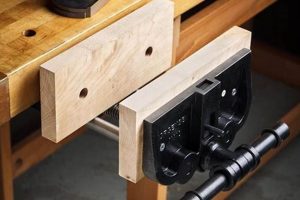
Tip 7: Secure the Workpiece Firmly. Secure the workpiece with clamps or a vise to prevent movement during cutting. This ensures accuracy and minimizes the risk of accidents.
The implementation of these suggestions will contribute to enhanced operational efficiency, improved cut quality, and a safer woodworking environment. Consistent adherence to these principles will prolong the lifespan of the tool and optimize its performance.
The following sections will explore maintenance and safety in greater detail, providing a comprehensive understanding of how to properly care for and operate the tool.
1. Blade selection

Blade selection represents a critical determinant in the operational efficacy and final output quality when utilizing a powered jigsaw. Incompatibility between blade specifications and the intended workpiece material can result in tear-out, splintering, inaccurate cuts, or premature blade failure. The selection process should prioritize factors such as teeth-per-inch (TPI), blade material, and tooth geometry. For instance, a high TPI blade, often constructed of high-speed steel, is appropriate for creating smooth, precise cuts in hardwoods, while a lower TPI blade, perhaps bi-metal, is better suited for rapid material removal in softer woods or non-ferrous metals. Incorrect blade selection introduces unnecessary strain on the tool’s motor, potentially shortening its lifespan, and compromises the precision essential for detailed woodworking projects.
Consider the task of cutting intricate curves in a piece of oak. Utilizing a blade with insufficient flexibility or an inappropriate tooth pattern could lead to the blade binding within the cut, resulting in either a jagged edge or a complete deviation from the intended line. Conversely, employing a narrow, fine-toothed blade specifically designed for curved cuts would enable the operator to maneuver the tool with greater control, producing a cleaner, more accurate result. Similarly, attempting to cut through thick lumber with a blade intended for thin stock can cause excessive vibration and a compromised cutting speed, necessitating a specialized blade with a more aggressive tooth design and a thicker gauge.
Therefore, a thorough understanding of blade characteristics and their corresponding applications is indispensable for maximizing the potential of a jigsaw. The careful consideration of material type, cut requirements, and blade specifications ensures efficient operation, minimizes material waste, and ultimately contributes to a superior woodworking outcome. In essence, blade selection isn’t merely a preliminary step, but a fundamental element of the jigsaw’s overall functionality, directly impacting its performance and the quality of the finished product.
2. Speed control

Speed control is an integral function influencing the performance and versatility of a jigsaw woodworking tool. It regulates the number of strokes per minute (SPM) the blade executes, directly impacting the cutting speed and quality across diverse materials. Higher speeds are typically suitable for softer woods, facilitating faster material removal. Conversely, lower speeds are often necessary for hardwoods, plastics, or metals to prevent overheating, blade damage, or material splintering. Absent proper speed regulation, achieving clean, accurate cuts becomes significantly more challenging, potentially compromising the final product. For example, attempting to cut acrylic at high speed can melt the material, creating a rough, uneven edge. Proper speed control is, therefore, not merely a convenience but a necessity for achieving optimal results with a jigsaw.
The practical implications of understanding speed control extend beyond simple material selection. Intricate cuts and curves frequently demand reduced speeds to maintain control and precision, minimizing the risk of the blade wandering from the intended line. Certain materials, like thin veneers or delicate composites, are highly susceptible to tear-out at higher speeds, necessitating a more cautious approach. Furthermore, blade longevity is directly correlated with appropriate speed settings; excessive speed can accelerate blade wear and increase the likelihood of breakage, particularly when encountering knots or denser grain patterns within the wood. By adapting the cutting speed to the material’s properties and the cut’s complexity, the operator can maximize both efficiency and the tool’s lifespan.
In summary, speed control represents a critical component of jigsaw operation, impacting cut quality, material integrity, and tool longevity. While seemingly straightforward, its effective utilization requires a nuanced understanding of material characteristics and cutting requirements. Mastering speed control is essential for any woodworker seeking to achieve professional-grade results with a jigsaw. The ability to adjust the speed allows for wider material variety and reduces the risk of injury.
3. Cut precision

Cut precision, in the context of a jigsaw woodworking tool, refers to the accuracy and smoothness of a cut relative to the intended line or shape. It is a critical determinant of the final product’s quality and reflects the operator’s skill in manipulating the tool and selecting appropriate blades. A direct correlation exists between the tool’s capabilities and the achievable precision. A high-quality tool, coupled with a skilled operator, allows for intricate cuts with minimal deviation, while a less precise tool may yield rougher, less accurate results. Consider, for example, cutting a complex curve in a piece of hardwood for furniture detailing. A lack of precision could lead to visible imperfections, requiring additional sanding and potentially compromising the design’s integrity. Thus, cut precision is an essential component of the jigsaw’s overall functionality.
Several factors contribute to achieving optimal cut precision. Blade selection, as previously noted, is paramount. A fine-toothed blade is generally preferable for intricate cuts, while a thicker blade provides greater stability for straight lines. Speed control also plays a crucial role. Lower speeds allow for greater control and reduce the risk of tear-out, particularly in delicate materials. Proper technique, including maintaining a steady hand and avoiding excessive pressure, is equally important. The use of guides or fences can further enhance precision, particularly when cutting straight lines or repeating a pattern. For instance, creating a series of identical fretwork panels for a cabinet door relies heavily on the ability to consistently replicate accurate cuts.
In conclusion, cut precision is not merely a desirable attribute of a jigsaw woodworking tool; it is a fundamental requirement for many woodworking applications. Achieving this precision necessitates a combination of appropriate equipment, skilled technique, and a thorough understanding of the factors that influence the cut. Challenges remain in achieving consistently high precision, particularly with complex curves or challenging materials. However, by focusing on blade selection, speed control, and proper technique, woodworkers can significantly enhance the accuracy and quality of their work. The final results are a proof of the precision.
4. Material compatibility

Material compatibility, in the context of jigsaw operation, is a critical consideration for achieving optimal performance and preventing tool damage. It addresses the suitability of the tool and its accessories, specifically the blade, for use with various materials encountered in woodworking. Selecting the appropriate blade type and adjusting tool settings based on the material’s properties are essential for achieving clean cuts, extending blade life, and ensuring operator safety.
- Wood Density and Hardness
The density and hardness of wood species directly impact blade selection and cutting speed. Softer woods, such as pine, require blades with fewer teeth per inch (TPI) and can be cut at higher speeds. Harder woods, like oak or maple, necessitate blades with more TPI and lower cutting speeds to prevent blade overheating and tear-out. Ignoring wood density can lead to blade breakage or splintered edges.
- Sheet Goods: Plywood and MDF
Sheet goods present unique challenges due to their layered construction. Plywood, with alternating grain directions, can cause splintering if cut with an inappropriate blade or at excessive speed. Medium-density fiberboard (MDF) produces significant dust and requires a blade designed for fine cuts to minimize chipping. A specialized “downcut” blade can be used to reduce top-surface splintering on these materials.
- Non-Ferrous Metals and Plastics
While primarily designed for wood, jigsaws can cut certain non-ferrous metals and plastics with the correct blade. Metal-cutting blades, typically high-speed steel, are necessary for aluminum or thin steel sheets. Plastics, such as acrylic or PVC, require blades with fine teeth and slow cutting speeds to prevent melting or cracking. The use of lubricants can aid in cutting metals and plastics.
- Material Thickness
Material thickness influences blade selection and cutting technique. Thicker materials demand longer blades with sufficient reach and rigidity to prevent blade bending or breakage. Multiple passes may be necessary for extremely thick stock. Proper support of the workpiece is crucial to prevent vibration and ensure a clean, perpendicular cut.
The principles of material compatibility are fundamental to safe and efficient jigsaw operation. Incorrect material selection not only compromises the quality of the cut but also poses a potential risk to the operator and the tool. Adherence to recommended blade types, speed settings, and cutting techniques based on the material’s properties is paramount for maximizing the jigsaw’s capabilities and ensuring successful woodworking outcomes.
5. Safety protocols
Adherence to established safety protocols is paramount when operating a jigsaw. The inherent risk associated with a high-speed, reciprocating blade necessitates strict adherence to guidelines designed to minimize the potential for injury. Failure to follow these protocols can result in severe lacerations, eye injuries, or other serious accidents.
- Eye Protection
The use of safety glasses or a face shield is mandatory to protect against flying debris, such as wood chips or blade fragments. The reciprocating action of the blade generates considerable particulate matter, which can easily enter the eyes, causing irritation or, in severe cases, permanent damage. Furthermore, blade breakage can occur, projecting sharp fragments at high velocity.
- Hearing Protection
Prolonged exposure to the noise generated by a jigsaw can lead to hearing loss. The consistent high-pitched whine of the motor and the repetitive impact of the blade against the workpiece can cause gradual and irreversible damage to the auditory system. Earplugs or earmuffs with a noise reduction rating (NRR) appropriate for the work environment are essential.
- Workpiece Securing
Properly securing the workpiece is crucial to prevent movement during cutting. Instability can lead to inaccurate cuts, blade binding, or loss of control, increasing the risk of injury. Clamps, vises, or other appropriate securing devices should be used to ensure the workpiece remains firmly in place throughout the cutting process. Furthermore, it prevents the user from needing to hold it, keeping both hands free.
- Blade Inspection and Selection
Prior to operation, the blade must be inspected for any signs of damage, such as cracks or bent teeth. A damaged blade is more likely to break during use, posing a significant hazard. Selecting the correct blade type for the material being cut is also essential. Using an inappropriate blade can lead to inefficient cutting, increased vibration, and a higher risk of blade failure.
These protocols are not exhaustive, but represent fundamental safety measures that must be observed when using a jigsaw. Consistent adherence to these guidelines, combined with proper training and a thorough understanding of the tool’s operation, is critical for minimizing the potential for injury and ensuring a safe working environment. Prioritizing safety is paramount, given the potential hazard.
Frequently Asked Questions
This section addresses common inquiries and misconceptions regarding the selection, operation, and maintenance of this tool, providing objective information for informed decision-making.
Question 1: What distinguishes a jigsaw from other types of saws used in woodworking?
The primary distinction lies in its ability to execute curved and intricate cuts, a task for which many other saws are ill-suited. Its reciprocating blade and maneuverable baseplate enable the creation of non-linear shapes with relative ease, whereas circular saws or miter saws are primarily designed for straight cuts.
Question 2: How does blade selection impact the quality of cuts made with a jigsaw?
Blade selection exerts a significant influence on cut quality. Factors such as teeth-per-inch (TPI), blade material (e.g., high-speed steel, bi-metal), and tooth geometry dictate the smoothness, speed, and precision of the cut. Using an inappropriate blade can result in tear-out, splintering, or inaccurate cuts.
Question 3: What safety precautions are essential when operating this tool?
Mandatory safety measures include wearing eye protection to guard against flying debris, using hearing protection to mitigate noise exposure, securing the workpiece to prevent movement, and inspecting the blade for damage prior to operation. Failure to adhere to these precautions increases the risk of injury.
Question 4: How frequently should the blade be replaced on a jigsaw?
Blade replacement frequency depends on usage intensity, material being cut, and blade quality. Dull or damaged blades should be replaced immediately to maintain cut quality and prevent motor strain. Regular inspection is recommended to identify signs of wear.
Question 5: What role does speed control play in jigsaw operation?
Speed control allows for optimized cutting performance across diverse materials. Lower speeds are typically employed for hardwoods or brittle materials to reduce splintering, while higher speeds are suitable for softer woods. Adjusting the speed to match the material’s properties is crucial for achieving clean cuts and preventing damage.
Question 6: Is a jigsaw suitable for cutting materials other than wood?
While primarily designed for wood, jigsaws can cut certain non-ferrous metals and plastics with the correct blade. The use of metal-cutting blades is necessary for aluminum or thin steel sheets, while specialized blades with fine teeth and slow speeds are required for plastics to prevent melting or cracking.
These FAQs provide a concise overview of key considerations related to jigsaw operation. Further research and training are recommended for advanced applications and specialized cutting techniques.
The subsequent section will explore the history and evolution of this tool, providing context for its current design and functionality.
Conclusion
The preceding discussion has explored the multifaceted aspects of the jigsaw woodworking tool, encompassing its functionality, blade selection, safety protocols, and operational nuances. This exploration has underscored the importance of understanding the tool’s capabilities and limitations to maximize its utility and minimize potential hazards. From intricate curved cuts to material compatibility considerations, a comprehensive knowledge base is essential for responsible and effective operation. Ignoring the safety rules is equal to a risk from the tool.
Continued advancements in blade technology and motor design promise further refinements in the tool’s performance and versatility. The pursuit of improved precision and safety remains paramount. Woodworkers are encouraged to prioritize ongoing education and training to remain abreast of best practices and emerging technologies within the field. The investment in knowledge and safe practices ensures not only the longevity of the tool but also the well-being of the user.