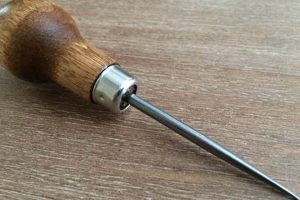
The phrase denotes a collection of implements essential for individuals beginning the craft of shaping wood. This selection typically includes instruments for measuring, cutting, shaping, and joining wood components. For example, a starting set often features a hand saw, a chisel, a measuring tape, and safety glasses.
Selecting the appropriate initial set of implements is crucial for successful and safe project execution. Investing in quality basic instruments provides a solid foundation for skill development and prevents frustration arising from inadequate equipment. Historically, the core set has evolved from simple, hand-powered devices to include power tools, though fundamental instruments remain pivotal.
The following sections will detail specific tool categories, considerations for purchase, and safety precautions associated with acquiring an initial set for shaping wood.
Essential Guidance for Initial Woodworking Implement Acquisition
The following recommendations are intended to guide the selection of an appropriate initial set of woodworking implements, emphasizing both functionality and long-term value.
Tip 1: Prioritize Quality over Quantity: Instead of acquiring numerous inexpensive instruments, focus on a smaller selection of high-quality items. Durable materials and precise manufacturing contribute to both accuracy and longevity.
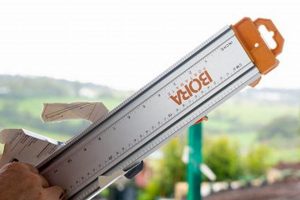
Tip 2: Invest in Accurate Measuring Tools: Precise measurements are fundamental to woodworking. A steel rule, a combination square, and a marking gauge are essential for ensuring accuracy in projects.
Tip 3: Select Appropriate Cutting Implements: A backsaw and a coping saw are suitable for hand-cutting operations. Ensure blades are sharp and appropriate for the type of wood being used.
Tip 4: Acquire a Versatile Chisel Set: Chisels are crucial for shaping wood and creating joinery. A set of chisels in various sizes, along with a sharpening stone, allows for controlled material removal.
Tip 5: Emphasize Safety Equipment: Eye protection, hearing protection, and dust masks are non-negotiable. Prioritize safety to prevent injury and protect long-term health.
Tip 6: Consider Ergonomics: Tool handles should be comfortable and easy to grip. Ergonomic designs reduce fatigue and improve control, particularly during extended use.
Tip 7: Research Before Purchasing: Read reviews and compare specifications before investing in any instrument. Understanding the features and limitations of each allows for informed decision-making.
These recommendations serve as a foundation for building a useful and dependable toolkit. Selecting appropriate instruments is a crucial step in successful woodworking.
The subsequent section will explore specific tool recommendations based on common project types.
1. Quality of Instruments

The attribute of quality in woodworking instruments significantly impacts the success and safety of beginner woodworking endeavors. Selecting durable, precisely manufactured instruments provides a foundation for accurate work and prevents premature tool failure. Inferior tools may yield inaccurate cuts, inconsistent shaping, and compromised joinery. For instance, a low-quality hand plane may chatter across the wood surface, resulting in an uneven finish, while a poorly tempered chisel may dull quickly or, worse, chip during use. Therefore, when assembling the essential instruments for starting woodworking, quality directly influences the accuracy, efficiency, and enjoyment of the craft.
The practical significance of understanding this connection extends beyond immediate project outcomes. Investing in higher-quality instruments establishes a reliable toolkit that can withstand repeated use and evolving skill levels. A well-made saw, for example, will maintain its sharpness longer and provide more precise cuts over time compared to a cheaper alternative. This long-term reliability translates into cost savings by reducing the need for frequent replacements. Furthermore, working with reliable instruments fosters confidence and enhances the learning process, as the user can focus on developing technique rather than compensating for tool deficiencies.
In summary, the selection of quality instruments is a critical component of establishing an initial woodworking toolkit. Although the initial investment may be higher, the long-term benefits of improved accuracy, increased efficiency, enhanced safety, and sustained tool performance outweigh the cost difference. The challenge lies in identifying quality instruments within a given budget, often requiring careful research and comparison. Ultimately, prioritizing quality forms a solid basis for successful woodworking projects and long-term skill development.
2. Measurement Precision

Measurement precision is paramount when selecting tools for starting woodworking. Accurate dimensions are fundamental to structural integrity, aesthetic appeal, and successful project outcomes. Suboptimal precision at the initial stage compromises the entire endeavor.
- Importance of Calibrated Instruments
Accurate dimensions necessitate calibrated measuring instruments. A combination square, for instance, must maintain a true 90-degree angle. Similarly, a measuring tape should conform to established standards of length. Deviations from these standards propagate errors throughout the project, resulting in misaligned joints and dimensional discrepancies. Proper calibration is therefore vital.
- Application of Marking Tools
Marking tools facilitate the transfer of measurements to the workpiece. A sharp marking knife, as opposed to a pencil, creates a fine, precise line, minimizing potential inaccuracies. A marking gauge maintains a consistent distance from an edge, ensuring parallel lines and uniform dimensions. The selection and proper use of marking instruments contribute directly to measurement precision.
- Impact on Joinery
Joinery, the technique of connecting wood pieces, relies heavily on precise measurements. Mortise and tenon joints, dovetail joints, and rabbet joints all demand accurate dimensions to achieve structural integrity and aesthetic appeal. Errors in measurement lead to weak, ill-fitting joints that compromise the overall quality of the finished piece. Precise measurement is, therefore, crucial to effective joinery.
- Influence on Project Completion
Cumulative errors in measurement can impede project completion. Small discrepancies in individual components add up, leading to misalignment and difficulty in assembly. Correcting these errors requires additional time, effort, and material. In some cases, the accumulated errors may render the project unsalvageable. Precise measurement reduces the likelihood of such problems, facilitating smooth project completion.
These facets emphasize the pivotal role of measurement precision in woodworking. The selection of appropriate measuring and marking instruments, coupled with diligent adherence to precise techniques, is essential for achieving successful outcomes when starting the craft. Investment in quality measuring instruments and a commitment to accurate measurement techniques provides a solid foundation for woodworking skills.
3. Cutting Capability

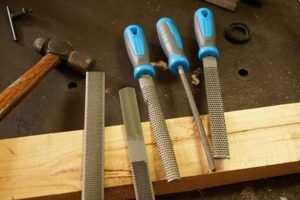
Cutting capability, within the context of initial woodworking implements, dictates the range and complexity of achievable projects. The inclusion of saws, chisels, and potentially planes directly enables the controlled separation and shaping of wood. A deficient cutting capability limits project scope to pre-cut components or basic assembly, restricting the user’s ability to refine designs or adapt to unforeseen material imperfections. For example, a beginner solely equipped with a handsaw struggles to create precise joinery like dovetails, necessitating a coping saw and chisels for accurate material removal. Consequently, a balanced selection of cutting instruments is fundamental to developing core woodworking skills.
Further illustrating this point, consider the creation of a simple box. A handsaw allows for initial cuts to dimension, but refined edges and flush surfaces demand a hand plane or sharp chisels. Without these, achieving a professional finish proves difficult. Alternatively, intricate curves require a coping saw or band saw (potentially a more advanced acquisition). The absence of these tools forces reliance on simpler, less aesthetically refined designs. Practical application demonstrates that a diverse cutting capability empowers the woodworker to execute a broader array of designs and techniques, ultimately enhancing both skill and project quality.
In summary, cutting capability is an indispensable element of the essential tool selection for beginning woodworking. The inclusion of appropriate saws and chisels, chosen to accommodate various cutting tasks, directly impacts the feasibility and quality of projects. Neglecting this area restricts skill development and limits design possibilities. Prioritizing a balanced cutting capability empowers the woodworker to progress beyond basic assembly and engage in more complex and rewarding woodworking endeavors.
4. Safety Equipment
The integration of safety equipment within the initial selection of woodworking implements is not discretionary; it represents an indispensable element. Woodworking, by its nature, involves potential hazards, including projectile debris, sharp cutting edges, and the inhalation of wood dust. The absence of appropriate protective measures escalates the risk of injury and long-term health complications. For example, failing to wear safety glasses exposes the eyes to flying wood chips, potentially causing corneal abrasions or more severe trauma. Similarly, neglecting to use a dust mask during sanding operations increases the likelihood of respiratory irritation and, over time, more serious lung conditions.
The inclusion of safety equipment mitigates these risks directly. Safety glasses provide a physical barrier against projectile debris. Hearing protection reduces the risk of noise-induced hearing loss, particularly when operating power tools. Dust masks filter airborne particles, safeguarding respiratory health. Furthermore, specialized equipment such as push sticks and feather boards helps maintain a safe distance between hands and cutting blades. The proper use of these instruments significantly reduces the potential for accidents. The selection of appropriate safety equipment, therefore, constitutes a proactive measure to minimize risk and promote a safe working environment.
In summary, the connection between safety equipment and the initial woodworking implement set is fundamentally causal. The presence of safety equipment directly reduces the risk of injury associated with woodworking activities. The omission of this equipment increases the likelihood of accidents and long-term health problems. Prioritizing safety through the inclusion and proper use of appropriate protective measures is therefore essential for ensuring a secure and sustainable woodworking practice from the outset. It is a critical investment, no less important than the tools themselves.
5. Ergonomic Design

Ergonomic design considerations are integral to selecting woodworking tools for beginners. The interface between the tool and the user directly impacts efficiency, comfort, and safety, particularly during extended periods of use. Attention to ergonomic attributes mitigates strain and fatigue, fostering a more sustainable woodworking practice.
- Handle Geometry and Material
Handle design influences grip strength and control. Tools with handles that conform to the natural curvature of the hand reduce muscle strain. Materials such as hardwood or textured synthetic polymers provide secure grip even with perspiration. Poorly designed handles necessitate excessive force, increasing the risk of repetitive strain injuries. The selection of tools with optimized handle geometry and appropriate materials is critical.
- Weight Distribution and Balance
Weight distribution significantly impacts tool handling. Tools with a balanced weight distribution require less effort to control and maneuver. A tool that is excessively heavy or unbalanced leads to fatigue and diminished precision. Ergonomic designs prioritize weight distribution to minimize user strain and improve overall control, thus contributing to accuracy and safety.
- Vibration Dampening
Power tools generate vibration, which can lead to hand-arm vibration syndrome (HAVS) over time. Ergonomic designs incorporate vibration-dampening features, such as rubberized grips or internal dampening mechanisms, to reduce the transmission of vibration to the user’s hands. This is particularly important for tools used frequently or for extended periods.
- Adjustability and Customization
Ergonomic tools often feature adjustable components, such as handle angles or blade positions, to accommodate individual user preferences and working styles. This allows users to customize the tool to fit their specific needs, improving comfort and reducing strain. The ability to adjust a tool’s configuration enhances its versatility and promotes a more personalized woodworking experience.
These facets of ergonomic design collectively contribute to the suitability of tools for beginner woodworkers. Prioritizing tools with thoughtful ergonomic features enhances comfort, reduces strain, and promotes safety, thereby fostering a more enjoyable and sustainable introduction to the craft. The initial investment in ergonomically sound implements establishes a positive foundation for long-term woodworking practice.
Frequently Asked Questions
The following questions and answers address common inquiries regarding the selection and use of initial woodworking implements. Understanding these aspects can significantly influence a beginner’s success and safety in the craft.
Question 1: Is it more advantageous to purchase a complete set of tools or acquire individual implements?
The optimal approach depends on budget and specific project requirements. Complete sets often provide a cost-effective initial investment, but the quality of individual items may vary. Acquiring tools individually allows for prioritizing quality and selecting specific implements tailored to immediate needs, potentially leading to a more versatile and reliable toolkit.
Question 2: What is the minimum number of tools necessary to begin basic woodworking?
A minimum set includes a measuring tape, a combination square, a hand saw, a set of chisels, a mallet, and safety glasses. These implements facilitate fundamental measuring, cutting, and shaping tasks. Additional tools, such as a hand plane or marking gauge, enhance capabilities but are not strictly essential for initial projects.
Question 3: How critical is tool maintenance for starting woodworking?
Tool maintenance is paramount. Sharp tools are safer and more efficient. Regular sharpening of blades and chisels ensures clean cuts and reduces the force required, minimizing the risk of injury. Proper cleaning and storage protect tools from rust and damage, extending their lifespan.
Question 4: What safety precautions are essential when using woodworking instruments?
Eye protection, in the form of safety glasses or a face shield, is non-negotiable. Hearing protection is advisable when using power tools. A dust mask or respirator is necessary to prevent inhalation of wood dust. Maintaining a clean and organized workspace reduces the risk of tripping hazards. Adherence to these precautions promotes a safe working environment.
Question 5: Can power tools be substituted for hand tools when starting woodworking?
While power tools offer speed and efficiency, hand tools foster a deeper understanding of wood properties and cutting techniques. Mastering basic hand tool skills provides a valuable foundation for using power tools safely and effectively. Starting with hand tools is generally recommended before transitioning to power tools.
Question 6: What resources are available for learning to use woodworking implements correctly?
Numerous resources exist, including instructional books, online tutorials, and woodworking courses. Local woodworking clubs and community centers often offer introductory classes. Seeking guidance from experienced woodworkers is also beneficial. Consistent practice and a commitment to learning are essential for developing proficiency.
These frequently asked questions highlight key considerations for assembling an initial set of woodworking instruments. Understanding these aspects contributes to a safer and more rewarding woodworking experience.
The subsequent article section will explore advanced tool options and specialized woodworking techniques.
Concluding Remarks on Essential Woodworking Implements
This exposition has detailed core considerations surrounding woodworking tools to start with, emphasizing quality, precision, safety, and ergonomics. Prioritizing these aspects is not merely a matter of convenience; it directly influences the efficacy, longevity, and safety of woodworking pursuits. The informed selection of implements establishes a foundational framework for skill development and project execution.
The presented insights serve as a catalyst for informed acquisition and responsible application. It is incumbent upon those initiating woodworking endeavors to heed these principles, ensuring not only the successful completion of immediate projects but also the cultivation of a sustainable and safe practice. Diligence in this regard constitutes a sound investment in both craft and personal well-being.