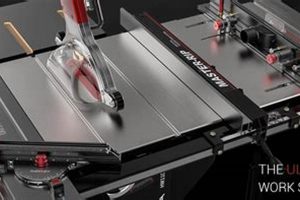
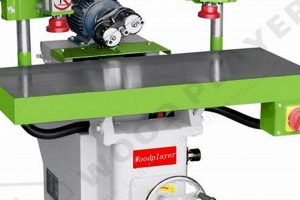
A stationary power tool used in woodworking, this device employs a rotating spindle to which various cutters are attached. These cutters shape the edges, surfaces, or profiles of wood stock. For instance, it can be used to create decorative moldings, raised panels, or complex joinery details.
This equipment is vital for high-volume production and achieving consistent, intricate designs that would be difficult or impossible to replicate by hand. Its development significantly increased efficiency in woodworking, allowing for the creation of standardized parts and complex designs with greater speed and accuracy. Originally, these machines were often belt-driven, but modern versions utilize direct drive motors for increased power and control.
The subsequent sections will delve into different types of cutters, safety protocols essential for operating the equipment, and best practices for achieving optimal results, as well as maintenance and troubleshooting.
Operational Tips
The following guidance aims to maximize the effectiveness and safety of shaping operations. Adherence to these principles contributes to consistent results and a prolonged lifespan for both tooling and machine.
Tip 1: Cutter Selection: Always select the appropriate cutter profile for the intended application. Using an undersized or improperly shaped cutter may result in tear-out or inaccurate profiles. Verify that the cutter’s shank diameter matches the spindle size of the shaper.
Tip 2: Feed Rate Optimization: A consistent, moderate feed rate is crucial. Feeding too quickly can overload the motor and lead to poor surface finish. Feeding too slowly can cause burning or chatter. Experiment with scrap material to determine the optimal feed rate for the wood species and cutter profile.
Tip 3: Workpiece Support: Adequate workpiece support is essential for safety and accuracy. Use featherboards, hold-downs, or a power feeder to maintain consistent pressure against the fence and table. This prevents kickback and ensures a uniform cut.
Tip 4: Fence Adjustment: Precise fence adjustment is critical for achieving the desired cut depth and profile. Use a precision measuring tool, such as a dial indicator, to accurately set the fence position. Ensure the fence is parallel to the cutter to avoid uneven cuts.
Tip 5: Spindle Speed Selection: Select the appropriate spindle speed for the cutter diameter and wood species. Larger diameter cutters require slower speeds. Softer woods generally allow for higher speeds than hardwoods. Refer to the cutter manufacturer’s recommendations for specific speed settings.
Tip 6: Dust Collection: Effective dust collection is vital for maintaining a clean and safe work environment. Connect a dust collector with sufficient CFM to the shaper’s dust port. This helps to remove airborne particles, reducing the risk of respiratory problems and improving visibility.
Tip 7: Regular Maintenance: Implement a routine maintenance schedule, which may include: cleaning accumulated resin and sawdust from the machine and cutter, inspecting the spindle bearings, and verifying the cutter assembly and lock.
By implementing these tips, operators can enhance the precision, safety, and efficiency of shaping operations. Consistently applied best practices prolong the life of both the tool and cutting bits.
The subsequent sections will address specific safety measures and cutter selection in further detail.
1. Cutter profile
The cutter profile is a defining characteristic of the shapes created by a shaping device. It is a direct determinant of the aesthetic and functional features imparted to the workpiece. The geometry of the cutter, whether a simple round-over or an elaborate molding shape, dictates the edge or surface detail that the machine imprints on the material. The selection of the appropriate cutter is therefore paramount to the outcome of any shaping operation. For instance, a cabinet door manufacturer will select a specific cutter profile designed to create the desired raised panel effect. Similarly, a furniture maker may employ a cove cutter to create a decorative edge on a tabletop. Incorrect selection would prevent the operator from achieving the desired form.
The cutter’s geometry also influences the machine’s performance. Intricate profiles or those with large cutting surfaces demand greater motor torque and may necessitate slower feed rates to prevent stalling or tear-out. The cutter material, whether high-speed steel (HSS) or carbide, directly impacts the cutter’s lifespan and its ability to maintain a sharp edge when machining different wood species. Carbide cutters, for instance, are favored for machining abrasive materials like hardwoods or MDF due to their superior wear resistance. A dull or improperly sharpened cutter profile will invariably lead to a poor surface finish and increase the risk of kickback.
In summary, the cutter profile is integral to this devices function, with specific designs enabling diverse shaping operations. Selecting the correct cutter profile is not merely a matter of aesthetics but also a critical determinant of machine performance, workpiece quality, and operational safety. The understanding and correct selection of cutter profiles are therefore essential skills for any operator to master.
2. Spindle speed

Spindle speed, measured in revolutions per minute (RPM), is a critical operational parameter directly affecting the performance and safety when utilizing a shaping device. It must be carefully selected based on several factors to ensure optimal cutting conditions and minimize the risk of accidents.
- Cutter Diameter and Cutting Speed
The diameter of the cutter directly influences the required spindle speed. Larger diameter cutters require lower spindle speeds to maintain an appropriate cutting speed, which is the speed at which the cutting edge moves through the wood. Exceeding the recommended cutting speed generates excessive heat, leading to premature cutter wear and potential burning of the wood. Conversely, insufficient cutting speed reduces cutting efficiency and may result in a rough or uneven surface finish. Cutter manufacturers typically provide speed recommendations based on cutter diameter.
- Wood Species and Material Density
Different wood species possess varying densities and hardness, necessitating adjustments to the spindle speed. Softer woods generally allow for higher spindle speeds, while denser hardwoods require slower speeds to prevent overloading the motor and ensure a clean cut. Furthermore, man-made materials such as MDF or particleboard, which contain abrasive components, often require slower speeds to minimize cutter wear. A trial-and-error approach, starting with a lower speed, is often recommended when working with unfamiliar materials.
- Cutter Material and Design
The material composition of the cutter, such as high-speed steel (HSS) or carbide, influences the acceptable spindle speed range. Carbide cutters, known for their superior heat resistance and edge retention, typically tolerate higher speeds than HSS cutters. The cutter’s design, including the number of cutting edges and the chip load per tooth, also affects the optimal spindle speed. Cutters with more cutting edges generally require slower speeds to prevent excessive chip load and potential kickback.
- Safety Considerations and Machine Capabilities
Operating a shaping device at excessive spindle speeds significantly increases the risk of cutter failure, projectile debris, and potential injury to the operator. It is imperative to adhere to the manufacturer’s recommended speed limits for both the cutter and the machine itself. Furthermore, operators must ensure that the selected spindle speed does not exceed the machine’s maximum rated speed. Regular inspection of cutters for cracks or damage, coupled with the consistent use of safety guards, is crucial for mitigating risks associated with high spindle speeds.
The proper selection of spindle speed is a critical skill for any shaping device operator. By carefully considering the factors outlined above, operators can maximize cutting performance, extend cutter lifespan, and, most importantly, maintain a safe working environment. Ignoring these considerations increases the risk of equipment damage, material waste, and potential injury.
3. Workpiece support

Effective workpiece support is fundamentally linked to the safe and accurate operation of a woodworking shaper machine. The absence of adequate support mechanisms can lead to a cascade of negative consequences, ranging from imprecise cuts to hazardous kickback events. The rotating cutter head of a shaper exerts significant force on the material being shaped. Without appropriate support, the workpiece is prone to shifting, vibrating, or even being ejected from the machine. This instability directly translates to inaccurate profiles, inconsistent depths of cut, and an increased risk of damage to both the material and the cutting tool.
Various methods are employed to provide robust workpiece support. Featherboards, for instance, apply consistent pressure to hold the material firmly against the fence and table, preventing lateral movement. Hold-downs, whether mechanical or pneumatic, exert downward pressure to keep the workpiece flat and stable. Power feeders, often utilized in high-volume production, offer a controlled and consistent feed rate while maintaining secure contact between the workpiece and the machine. The selection of the appropriate support mechanism depends on the size and shape of the workpiece, the complexity of the cut, and the operational requirements. For example, shaping narrow strips of wood typically necessitates the use of featherboards positioned both vertically and horizontally, while shaping large panels may require a combination of hold-downs and a power feeder to ensure stability and prevent flexing.
In summary, reliable workpiece support is not merely an ancillary consideration but an integral component of a properly functioning shaping operation. It mitigates the risks associated with the powerful forces exerted by the machine, enabling accurate and consistent results while prioritizing operator safety. A thorough understanding of available support techniques and their appropriate application is essential for maximizing the utility and minimizing the hazards associated with woodworking shaper machines.
4. Fence alignment

Fence alignment within a woodworking shaper machine directly influences the precision and accuracy of cuts. The fence serves as a stationary reference surface against which the workpiece is guided during the shaping process. Misalignment, even by a small fraction of an inch, can result in inaccuracies in the final profile, leading to inconsistencies in dimensions and unwanted deviations from the intended design. For example, if the fence is not perfectly parallel to the cutter, the resulting molding will have a varying width, rendering it unsuitable for applications requiring consistent dimensions, such as cabinet door frames or intricate joinery.
The significance of correct fence alignment extends beyond dimensional accuracy. A misaligned fence can also induce uneven stress on the workpiece, potentially leading to tear-out or splintering, particularly when working with figured or brittle woods. Furthermore, it can compromise operator safety by increasing the risk of kickback. Kickback occurs when the cutter unexpectedly catches the workpiece and throws it back towards the operator, posing a serious hazard. Proper fence alignment ensures a smooth and controlled cutting action, minimizing the likelihood of such events. Modern shaper machines often incorporate micro-adjustment mechanisms to facilitate precise fence positioning. These mechanisms allow for minute adjustments, enabling operators to fine-tune the fence alignment and achieve the required level of accuracy. Dial indicators can be used to measure the parallelism between the fence and the cutter, providing a quantitative assessment of the alignment and enabling operators to make informed adjustments.
In summary, fence alignment is a critical factor in the proper functioning of a woodworking shaper machine. Its influence extends from dimensional accuracy and surface quality to operator safety. Maintaining correct fence alignment requires a thorough understanding of the machine’s mechanics, the use of precision measuring tools, and a commitment to meticulous setup procedures. Overlooking the importance of fence alignment can lead to costly material waste, compromised project quality, and increased risk of injury. Thus, it constitutes a cornerstone of effective and safe shaper operation.
5. Motor power

Motor power, typically measured in horsepower (HP), represents a fundamental determinant of a woodworking shaper machine’s capabilities and operational limits. Its selection directly impacts the machine’s ability to handle various wood species, cutter sizes, and cut depths, thereby defining the range of projects it can effectively undertake.
- Workpiece Material Compatibility
The motor’s power output dictates its ability to machine different wood species. Hardwoods, such as oak or maple, require significantly more power than softwoods, such as pine or cedar, to achieve a clean and consistent cut. Insufficient motor power can lead to stalling, burning, or tear-out, particularly when shaping hardwoods. Industrial shapers designed for continuous operation on hardwoods often employ motors rated at 5 HP or greater.
- Cutter Size and Profile Complexity
Larger diameter cutters and those with intricate profiles demand greater motor torque to maintain a constant spindle speed. The force required to remove material increases proportionally with the size and complexity of the cutter. A shaper equipped with an underpowered motor may struggle to maintain the desired RPM, resulting in a reduced cut quality and an increased risk of kickback. Heavy molding cuts, for example, typically necessitate a more powerful motor to ensure a smooth and safe operation.
- Cut Depth and Feed Rate
The depth of cut and the feed rate, which is the speed at which the workpiece is fed into the cutter, directly influence the load on the motor. Deeper cuts and faster feed rates require more power to maintain the desired spindle speed and prevent stalling. Attempting to exceed the motor’s capabilities by taking excessively deep cuts or feeding the material too quickly can lead to motor overload and potential damage. Professional shapers provide adjustments for the feed rate, allowing the operator to calibrate the machine for optimum performance.
- Operational Efficiency and Duty Cycle
The motor’s power rating influences its overall operational efficiency and duty cycle, which refers to the percentage of time the motor can operate continuously without overheating. A more powerful motor will generally operate more efficiently under load, consuming less energy and generating less heat. This increased efficiency translates to a longer lifespan and reduced maintenance requirements. In commercial settings, shapers often operate for extended periods, necessitating a robust motor capable of withstanding continuous use without compromising performance.
The selection of a shaper machine’s motor power should be guided by the anticipated demands of the woodworking tasks it will undertake. Overestimating power requirements can lead to unnecessary expense, while underestimating can result in compromised performance, reduced lifespan, and potential safety hazards. A thorough assessment of the intended applications, including the types of wood to be machined, the cutter sizes to be used, and the anticipated production volume, is essential for selecting a shaper machine with an appropriately sized motor.
6. Safety guards
The integration of safety guards within a woodworking shaper machine constitutes a critical component in mitigating inherent operational hazards. The high-speed rotation of exposed cutting tools presents a significant risk of injury, including lacerations, amputations, and projectile debris impact. Safety guards are designed to physically shield the operator from direct contact with these hazards, preventing accidental contact and deflecting ejected material.
The effectiveness of safety guards hinges on their proper design, installation, and consistent use. A well-designed guard encompasses the cutting tool as completely as possible while still allowing for workpiece manipulation. It should be constructed from durable materials capable of withstanding impact and resistant to deflection or breakage. Guards must be securely mounted to the machine frame and easily adjustable to accommodate various cutter sizes and shaping operations. Furthermore, the guards should not impede the operator’s visibility of the cutting process, as clear visibility is crucial for maintaining control and preventing errors. An example of inadequate guarding can be seen in older machines where the guards are too small, flimsy, or easily removable. This can give the operator a false sense of security while failing to provide adequate protection. Conversely, a machine with a properly designed and maintained guard system significantly reduces the risk of injury, allowing the operator to focus on the shaping process with greater confidence.
The practical significance of understanding safety guard implementation extends beyond mere regulatory compliance. Proper safety guards directly correlate with reduced workplace accidents, lower insurance premiums, and increased productivity. Moreover, they foster a safety-conscious work environment, promoting responsible machine operation and minimizing the risk of long-term disability. Addressing challenges inherent in safety guard design and implementation, such as accommodating complex shaping operations or balancing protection with operational efficiency, requires ongoing research, innovation, and a commitment to continuous improvement in woodworking machinery safety standards.
Frequently Asked Questions
The following section addresses commonly encountered inquiries regarding the application, operation, and maintenance of a woodworking shaper machine. The information presented aims to provide clarity and promote safe and effective utilization of this equipment.
Question 1: What are the primary applications of a woodworking shaper machine?
This machine serves primarily to create intricate edge profiles, moldings, raised panels, and various joinery elements in wood. It excels in tasks requiring precision and repeatability, often exceeding the capabilities of handheld routers.
Question 2: What safety precautions are essential when operating this equipment?
Adherence to stringent safety protocols is paramount. These include wearing appropriate personal protective equipment (PPE), ensuring proper workpiece support, utilizing functioning safety guards, and understanding the machine’s operational limits. Never operate the equipment while fatigued or under the influence of impairing substances.
Question 3: How does one select the appropriate cutter for a specific shaping operation?
Cutter selection depends on the desired profile, the wood species, and the machine’s capabilities. Consult cutter manufacturers’ specifications and consider factors such as cutter diameter, cutting angle, and material composition. Using an inappropriate cutter can compromise cut quality and operator safety.
Question 4: What are the key maintenance procedures for ensuring optimal machine performance?
Regular maintenance includes cleaning accumulated resin and sawdust, lubricating moving parts, inspecting spindle bearings, and verifying cutter alignment. A preventative maintenance schedule can significantly extend the machine’s lifespan and maintain its operational efficiency.
Question 5: What factors should be considered when determining the appropriate spindle speed?
Spindle speed selection depends on cutter diameter, wood species, and cutter material. Larger diameter cutters generally require slower speeds. Refer to cutter manufacturers’ recommendations and consult relevant woodworking resources for guidance on speed selection.
Question 6: What are the common causes of kickback and how can it be prevented?
Kickback is often caused by improper feed rate, inadequate workpiece support, or dull cutters. Maintaining a consistent feed rate, using featherboards and hold-downs, and ensuring sharp cutters can significantly reduce the risk of kickback. Never attempt to take excessively deep cuts.
These FAQs provide a concise overview of key considerations for the safe and effective use of a woodworking shaper machine. Always prioritize safety and consult relevant resources for detailed information on specific applications or procedures.
The subsequent sections will delve into troubleshooting common issues and advanced shaping techniques.
Conclusion
This exploration of the woodworking shaper machine has highlighted its operational complexities, safety imperatives, and transformative impact on woodworking practices. Key aspects such as cutter selection, spindle speed management, and the crucial role of workpiece support were examined, emphasizing their contribution to both precision and safety. Understanding these elements is fundamental to maximizing the utility and minimizing the risks associated with this equipment.
As technology advances, further refinements in machine design and control systems are anticipated, potentially leading to increased automation and enhanced safety features. Continued adherence to established safety protocols and a commitment to ongoing education remain essential for responsible and effective utilization of the woodworking shaper machine within evolving woodworking environments.