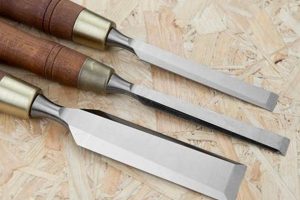
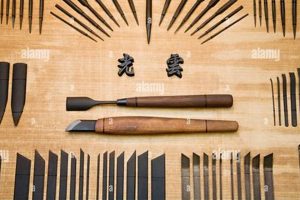
Essential implements for individuals engaged in woodworking encompass a range of instruments designed to shape, cut, join, and finish wood. These implements, crucial for both amateur hobbyists and professional artisans, allow for the creation of diverse wooden objects, from simple furniture to intricate sculptures. A common example is a set of chisels, used for carving and shaping wood with precision.
The possession of appropriate and well-maintained implements is paramount for achieving quality results in woodworking projects. Proper tools enhance efficiency, improve the accuracy of cuts and joints, and contribute to the overall safety of the woodworking process. Historically, advancements in tool design and materials have significantly expanded the possibilities within the craft, enabling increasingly complex and refined woodworking techniques.
The subsequent sections will explore specific categories of implements necessary for a well-equipped workshop. This discussion will delve into the hand tools vital for detailed work, the power tools that expedite larger tasks, and the measuring and marking tools essential for precision and accuracy.
Guidance on Essential Woodworking Implements
This section provides key considerations for acquiring and utilizing implements essential for successful woodworking endeavors.
Tip 1: Prioritize Quality Over Quantity: It is more advantageous to invest in a smaller number of high-quality implements than to acquire a large collection of inferior tools. Superior materials and construction ensure longevity, precision, and enhanced safety.
Tip 2: Begin with Fundamental Hand Tools: Proficiency with basic hand implements such as saws, chisels, planes, and measuring devices provides a solid foundation for woodworking skills. Mastery of these tools allows for greater control and finesse.
Tip 3: Understand Wood Grain Direction: Awareness of wood grain orientation is critical when selecting implements for specific tasks. Cutting against the grain can lead to tearing and splintering, so choose appropriate tools and techniques accordingly.
Tip 4: Maintain Sharp Cutting Edges: Sharp tools are safer and more efficient. Regularly hone and sharpen blades to ensure clean cuts and minimize the risk of injury. A dull tool requires more force, increasing the likelihood of slips.
Tip 5: Invest in Accurate Measuring and Marking Tools: Precise measurements are essential for creating accurate and well-fitting joinery. Utilize high-quality rulers, squares, and marking gauges to ensure accuracy throughout the project.
Tip 6: Organize the Workspace Efficiently: A well-organized workspace promotes safety and efficiency. Store frequently used implements within easy reach and implement a system for locating specific tools quickly.
Tip 7: Learn Safe Operating Procedures: Thoroughly understand the safe operation of all implements before use. Consult manufacturer instructions and seek guidance from experienced woodworkers to prevent accidents.
Adhering to these guidelines promotes safety, efficiency, and precision, leading to superior results in all woodworking projects.
The concluding section will summarize the essential considerations for equipping a woodworking workshop and emphasize the ongoing pursuit of knowledge and skill development.
1. Precision measuring instruments

Precision measuring instruments form a core component of any collection of woodworking implements. The accuracy of cuts, joinery, and overall project dimensions depends directly on the quality and proper use of these tools. Inaccurate measurements invariably lead to misaligned parts, weak joints, and a compromised final product. For example, a cabinet built with imprecise measurements may exhibit uneven doors, drawers that do not align correctly, or structural instability. Therefore, the inclusion of high-quality precision measuring instruments within the collection of implements is not merely desirable; it is essential for producing professional-grade work.
The selection of appropriate measuring instruments depends on the type of woodworking projects undertaken. A basic set should include a high-quality steel rule, combination square, marking gauge, and calipers. For more intricate or specialized work, digital angle finders, laser measuring tools, and thickness gauges may be required. Each instrument serves a specific purpose in ensuring dimensional accuracy and consistency. Accurate measurement enables woodworkers to replicate designs, create repeatable cuts, and maintain consistent dimensions across multiple components. Failure to employ precise measuring instruments may result in wasted materials, increased labor costs, and an overall reduction in the quality of the finished product.
In summary, precision measuring instruments are indispensable for successful woodworking. Their absence or improper use has cascading effects, leading to inaccuracies that compromise the structural integrity, aesthetic appeal, and overall value of the project. The investment in high-quality measuring instruments, coupled with a commitment to their correct application, is a fundamental requirement for woodworkers aiming to produce work of superior quality and lasting value.
2. Sharp cutting edges
The condition of cutting edges is a critical determinant of the utility of implements categorized as implements for woodworking. The efficacy of saws, chisels, planes, and carving implements hinges directly on the sharpness of their respective blades. A dull edge necessitates increased force to achieve the desired cut, leading to reduced control, potential for slippage, and a greater risk of injury. Conversely, a keen edge allows for precise material removal with minimal effort, yielding cleaner cuts, smoother surfaces, and improved overall accuracy. Examples include a dull chisel tearing wood fibers instead of cleanly paring them away, or a saw blade wandering off-course due to excessive friction caused by a blunted tooth.
The maintenance of sharp cutting edges is therefore an integral aspect of the proper use and care of woodworking implements. This involves regular honing and sharpening using appropriate methods and tools, such as sharpening stones, strops, and specialized sharpening jigs. The frequency of sharpening depends on the type of wood being worked, the intensity of tool use, and the steel composition of the blade. Ignoring the need for regular sharpening not only diminishes the performance of the tools but can also lead to premature wear and damage, requiring more extensive and costly repairs. Furthermore, employing a dull implement often necessitates the application of excessive force, which can strain muscles, increase fatigue, and ultimately compromise the quality of the finished work.
In conclusion, the presence of sharp cutting edges is not merely a desirable attribute of woodworking implements; it is a fundamental requirement for achieving predictable, safe, and high-quality results. Regular sharpening and maintenance are essential practices that contribute to the longevity of the implements, the safety of the user, and the overall success of woodworking projects. A commitment to maintaining sharp edges is a hallmark of a skilled and conscientious woodworker.
3. Versatile hand saws

Versatile hand saws represent a cornerstone within the array of implements necessary for woodworking. Their adaptability to a diverse range of tasks and their capacity to operate independently of power sources render them indispensable in any well-equipped workshop. Versatility in this context refers to the ability of a single implement, or a small collection thereof, to perform a wide spectrum of cutting operations on various types of wood.
- Crosscut Saw Proficiency
The crosscut saw is designed primarily for cutting wood perpendicular to the grain. Its tooth geometry, characterized by beveled teeth that slice through wood fibers, facilitates clean and efficient cuts across boards, panels, and other wooden components. For instance, when constructing a frame, a crosscut saw allows for accurate trimming of pieces to length, ensuring tight-fitting joints. The absence of a reliable crosscut saw necessitates reliance on power tools, which may not always be feasible or appropriate for smaller-scale tasks.
- Ripsaw Efficiency
Conversely, the ripsaw is optimized for cutting wood parallel to the grain. Its teeth, resembling small chisels, remove material quickly and efficiently along the length of the wood. When preparing stock for a project, a ripsaw enables the woodworker to dimension boards to the desired width. Without a functional ripsaw, the process of preparing lumber becomes significantly more time-consuming and labor-intensive.
- Coping Saw Precision
The coping saw excels in intricate cutting tasks, particularly curves and complex shapes. Its thin, flexible blade, held under tension in a U-shaped frame, allows for precise navigation around tight corners and delicate details. Example applications include cutting dovetails, shaping decorative elements, and creating custom profiles. The coping saw’s unique capabilities make it an essential implement for achieving intricate designs that would be challenging or impossible with other tools.
- Backsaw Accuracy
Backsaws, such as dovetail saws and tenon saws, are characterized by a reinforced spine along the back of the blade, which imparts rigidity and prevents flexing during use. This added stiffness allows for precise cuts, especially in joinery. Cutting dovetails, tenons, and other intricate joinery elements requires the accuracy afforded by a backsaw. The stability of the blade ensures clean, square cuts that are crucial for creating strong and aesthetically pleasing joints.
The multifaceted capabilities exhibited by diverse hand saws underscore their importance within the toolkit of a woodworker. The ability to select and employ the appropriate saw for a given task ensures efficiency, accuracy, and control, ultimately contributing to the creation of high-quality woodworking projects. Therefore, a selection of versatile hand saws is a defining element of the collection of essential woodworking implements.
4. Reliable power tools
The integration of reliable power tools within the complement of implements for woodworking is paramount for enhancing efficiency and precision across a spectrum of operations. The effect of incorporating such implements translates directly to reduced labor hours, increased output, and the capacity to execute complex designs with greater accuracy. A dependable table saw, for instance, permits the consistent and precise cutting of large panels, a task that would be arduous and time-consuming with manual methods. Similarly, a robust router facilitates the creation of intricate edge profiles and joinery elements that are impractical to produce by hand.
The practical significance of employing reliable power tools extends beyond mere expediency. The consistency and repeatability afforded by these implements lead to a reduction in material waste and a corresponding increase in cost-effectiveness. Furthermore, the ergonomic benefits of power tools, when appropriately used, mitigate physical strain and fatigue, thereby reducing the risk of injury and enhancing overall productivity. An unreliable power tool, conversely, can introduce significant challenges, including inconsistent cuts, increased vibration leading to user fatigue, and the potential for sudden failure, which can be both dangerous and costly in terms of downtime and repairs. This emphasizes the need of having tools woodworkers should have are also reliable.
In summary, the inclusion of dependable power tools is a crucial component of equipping a woodworking workspace. The capacity of these implements to enhance efficiency, improve accuracy, and reduce physical strain makes them indispensable for both professional and serious amateur woodworkers. While the initial investment in high-quality power tools may be substantial, the long-term benefits in terms of increased productivity, reduced material waste, and improved overall quality more than justify the expenditure. Prioritizing reliability ensures a safer and more productive woodworking experience.
5. Durable clamping systems

Durable clamping systems are an indispensable component of the comprehensive range of implements necessary for woodworking. The application of controlled force is fundamental to securing workpieces during assembly, shaping, and finishing processes. Insufficient or unreliable clamping can lead to misaligned joints, weakened bonds, and compromised structural integrity. For example, during the glue-up of a tabletop, inadequate clamping pressure may result in gaps between the boards, requiring rework or rendering the piece unusable. The availability of robust and dependable clamping systems directly impacts the quality and longevity of completed projects.
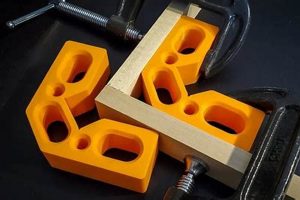
The selection of appropriate clamping systems is dictated by the specific requirements of the woodworking task. Bar clamps, pipe clamps, and parallel clamps are commonly employed for securing large assemblies, while smaller clamps, such as spring clamps and hand screw clamps, are better suited for intricate or delicate work. Specialized clamps, such as miter clamps and corner clamps, facilitate the creation of precise and accurate joints. The effective application of these tools requires an understanding of clamping pressure, alignment techniques, and the properties of adhesives. Proper clamping not only ensures a strong and durable bond but also minimizes the risk of distortion or movement during the curing process. For instance, when applying edge banding to plywood, consistent and uniform clamping pressure is essential to prevent the banding from lifting or separating over time.
In conclusion, the implementation of durable clamping systems is critical for achieving successful outcomes in woodworking endeavors. These implements provide the necessary force to secure workpieces, ensuring accurate alignment, strong bonds, and structural stability. Neglecting the importance of proper clamping techniques can lead to compromised quality, increased material waste, and diminished project longevity. The investment in high-quality clamping systems, coupled with a thorough understanding of their application, is an essential investment for woodworkers striving for excellence in their craft.
6. Effective dust collection

Effective dust collection is not merely an accessory but an integral component of the implements woodworkers should have. Its inclusion directly impacts worker health, tool longevity, and the overall quality of finished projects.
- Respiratory Health Protection
Wood dust, a byproduct of many woodworking processes, poses a significant respiratory hazard. Inhaling fine particles can lead to various health issues, ranging from allergic reactions and asthma to more severe conditions such as chronic bronchitis and certain types of cancer. An effective dust collection system mitigates these risks by capturing airborne particles at the source, thereby safeguarding the respiratory health of the woodworker. The absence of such a system necessitates the use of personal protective equipment, which, while helpful, does not address the root cause of the problem.
- Enhanced Tool Performance and Lifespan
Accumulation of dust and debris can negatively impact the performance and lifespan of woodworking power tools. Dust can clog motors, bearings, and other critical components, leading to overheating, reduced efficiency, and premature failure. An effective dust collection system prevents this buildup, ensuring that tools operate optimally and last longer. For example, a table saw equipped with dust collection will maintain cleaner internal mechanisms, reducing friction and wear on the motor.
- Improved Visibility and Precision
Airborne dust obscures vision, making it difficult to accurately execute cuts and joinery. This reduced visibility can lead to mistakes, inaccuracies, and potential injuries. Effective dust collection clears the air, providing a clear line of sight and enabling the woodworker to perform tasks with greater precision. Imagine attempting to cut a precise dovetail joint with a cloud of dust obscuring the workpiece; the likelihood of error is significantly increased.
- Cleaner Workspace and Reduced Cleanup Time
Woodworking without dust collection invariably results in a messy workspace, requiring significant time and effort for cleanup. Dust settles on surfaces, clogs machinery, and contaminates finishes. An effective dust collection system minimizes dust accumulation, resulting in a cleaner and more organized workspace. This not only enhances the aesthetic appeal of the shop but also reduces the time spent on cleanup, allowing the woodworker to focus on productive tasks.
These facets underscore the necessity of effective dust collection as a primary consideration when assembling the implements woodworkers should have. The benefits extend beyond mere convenience, impacting worker health, tool longevity, and the overall quality of woodworking projects. A comprehensive dust collection strategy is, therefore, an investment in a safer, more efficient, and more productive woodworking environment.
7. Safety equipment

Safety equipment constitutes an inextricable component of the complete collection of implements for woodworking. The operation of numerous woodworking implements inherently poses risks, ranging from lacerations and abrasions to more severe injuries involving eyes, lungs, and hearing. The inclusion of appropriate safety measures directly mitigates these risks, creating a safer working environment and preserving the long-term health and well-being of the woodworker. For example, the operation of a table saw without appropriate eye protection exposes the user to the potential of flying debris, which can cause serious and permanent vision damage. Therefore, the integration of safety implements is not merely a precautionary measure but a fundamental requirement for responsible and sustainable woodworking practice.
The specific type of safety equipment required depends on the particular implements being used and the nature of the woodworking task. Minimum essential equipment includes eye protection (safety glasses or a face shield), hearing protection (earplugs or earmuffs), and respiratory protection (a dust mask or respirator). Additional equipment may be necessary depending on the work environment and the implements in use. For example, when operating a lathe, a full face shield is recommended to protect against flying wood chips, and when handling rough lumber, gloves are advisable to prevent splinters and abrasions. The implementation of a comprehensive safety protocol, encompassing the consistent use of appropriate equipment, reduces the incidence of accidents and promotes a culture of safety within the woodworking environment.
In conclusion, safety equipment is an indispensable and non-negotiable aspect of the implements woodworkers should have. The use of this equipment directly reduces the risk of injury, preserves worker health, and fosters a safer and more productive woodworking environment. Neglecting safety protocols not only jeopardizes the well-being of the woodworker but also undermines the long-term sustainability of the craft. Therefore, the integration of appropriate safety measures is a fundamental responsibility for all individuals engaged in woodworking activities.
Frequently Asked Questions
This section addresses common inquiries concerning the selection, utilization, and maintenance of implements vital for woodworking endeavors.
Question 1: What constitutes a foundational set of implements for an aspiring woodworker?
A foundational set comprises a selection of essential hand implements. These implements typically include a hand saw, a set of chisels, a smoothing plane, a combination square, a measuring tape, and a marking gauge. These implements enable the performance of fundamental woodworking operations, such as cutting, shaping, and joining wood.
Question 2: How frequently should implements such as chisels and plane blades be sharpened?
The frequency of sharpening depends on several factors, including the hardness of the wood being worked, the frequency of use, and the quality of the steel. As a general guideline, implements should be sharpened whenever the cutting edge exhibits a noticeable decrease in performance or a visible dulling. Regular honing can extend the intervals between sharpening.
Question 3: What are the key considerations when selecting power tools for a woodworking workshop?
Key considerations include the tool’s intended application, power requirements, build quality, safety features, and dust collection capabilities. Selecting tools from reputable manufacturers and prioritizing robust construction and safety features is advisable.
Question 4: Is dust collection truly essential, or is it merely a matter of convenience?
Dust collection is essential for preserving respiratory health, maintaining a clean and safe working environment, and prolonging the life of power tools. Wood dust poses a significant health hazard, and its effective removal is a critical safety measure.
Question 5: What types of clamping systems are necessary for most woodworking projects?
A versatile clamping system typically includes bar clamps, pipe clamps, parallel clamps, hand screw clamps, and spring clamps. The specific selection depends on the size and complexity of the projects being undertaken. Investing in a variety of clamp types ensures adaptability to diverse clamping requirements.
Question 6: What constitutes appropriate safety equipment for woodworking?
Appropriate safety equipment includes safety glasses or a face shield, hearing protection (earplugs or earmuffs), and respiratory protection (a dust mask or respirator). Additional safety equipment, such as gloves and appropriate footwear, may be necessary depending on the specific tasks being performed.
These responses provide a concise overview of key considerations pertaining to the selection and utilization of implements for woodworking. Prioritizing quality, safety, and proper maintenance contributes to a more efficient and enjoyable woodworking experience.
The subsequent section will explore advanced woodworking techniques and strategies for optimizing the utilization of implements.
Conclusion
The preceding discussion has comprehensively examined the implements woodworkers should have, emphasizing the critical role they play in achieving safety, precision, and efficiency. Topics covered included measuring instruments, sharp cutting tools, versatile saws, power tools, clamping systems, dust collection, and safety equipment. Each element is essential for enabling woodworkers to transform raw materials into functional and aesthetically pleasing creations.
The investment in high-quality implements, coupled with a dedication to continuous learning and skill development, represents a commitment to excellence in the craft of woodworking. Furthermore, adherence to safety protocols and best practices is paramount for ensuring the well-being of the woodworker and the long-term sustainability of the craft. Therefore, a thoughtful and informed approach to equipping a woodworking workspace is not merely a matter of convenience, but a prerequisite for achieving professional-grade results and upholding the integrity of the woodworking profession.