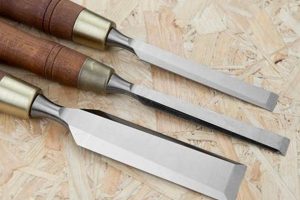
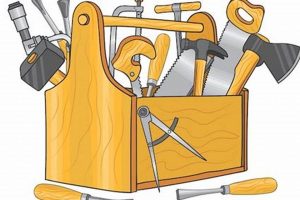
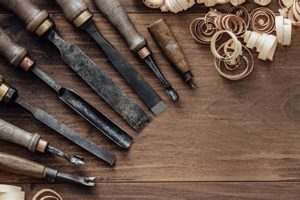
Essential implements employed in shaping and joining wood are foundational to the craft. These instruments, ranging from hand-powered devices to electrical equipment, allow for precise cutting, shaping, and fastening of timber. A handsaw, for instance, enables manual cutting of wood, while a chisel allows for detailed shaping and removal of material.
Mastery of these implements unlocks creative potential and enables the construction of functional and aesthetically pleasing objects. The ability to accurately manipulate wood has been valued throughout history, contributing to shelter, furniture, and artistic expression. Developing proficiency in the use of these instruments fosters self-sufficiency and provides a tangible connection to a time-honored tradition.
The following sections will detail specific examples, focusing on hand tools, power tools, measuring devices, and safety equipment necessary to begin woodworking projects. Each category will explore individual instruments, their applications, and essential considerations for safe and effective use.
Essential Guidance
The proper selection and utilization of these fundamental implements are critical for achieving high-quality woodworking results. These guidelines offer practical advice for maximizing their effectiveness and ensuring safety.
Tip 1: Prioritize Sharpness: Regularly sharpen blades and cutting edges. A dull instrument requires more force, increasing the risk of slippage and injury, and produces inferior results.
Tip 2: Master Measurement: Accurate measurement is essential for precise joinery and project success. Always double-check measurements before cutting to minimize errors.
Tip 3: Secure Workpieces: Securely clamp workpieces to a stable surface before cutting or shaping. Movement during operation can lead to inaccurate cuts and potential hazards.
Tip 4: Respect Grain Direction: Understanding the direction of the wood grain is crucial for preventing tear-out and achieving smooth cuts, particularly when planing or chiseling.
Tip 5: Practice Controlled Cuts: Avoid rushing when using cutting implements. Slow, controlled movements promote accuracy and reduce the risk of accidents.
Tip 6: Maintain Equipment: Regularly clean and lubricate these implements to ensure optimal performance and longevity. Proper maintenance prevents rust and corrosion.
Tip 7: Invest in Quality: While budget constraints are a factor, prioritizing quality over cost can yield superior performance, increased durability, and ultimately, better results.
Adherence to these guidelines enhances the precision and safety of woodworking endeavors, resulting in improved project outcomes and a more rewarding experience.
The subsequent section will conclude this exploration by emphasizing the importance of continuous learning and skill development within the realm of woodworking.
1. Cutting
The act of separating wood fibers, known as cutting, constitutes a primary function within woodworking and necessitates specific implements. Saws, chisels, and knives are the core instruments employed in this process. Inadequate cutting can lead to imprecise joinery, structural instability, and aesthetic flaws. Consider the creation of a mortise and tenon joint; an inaccurate cut in either component compromises the joint’s integrity. Thus, cutting directly determines the quality and durability of wooden structures.
The selection of a particular cutting instrument is dependent on the nature of the cut and the properties of the wood. For instance, a hand saw, such as a tenon saw or dovetail saw, offers precision in creating fine joints or intricate details in softwood. Conversely, a rip saw is designed for efficient cutting parallel to the grain in harder woods. Electric saws, such as circular saws and jigsaws, expedite larger cutting tasks but require a high degree of precision and control. The incorrect tool can cause splintering, tear-out, or inaccurate cuts.
Proficiency in cutting, therefore, requires an understanding of wood grain, tool selection, and appropriate cutting techniques. Precision cutting is essential for achieving structurally sound and visually appealing woodwork. In essence, its a foundational element that impacts project outcome and quality. Mastering these cutting tools ensures reliability for many woodwork projects.
2. Shaping
Shaping, as an element within woodworking, fundamentally alters the form and surface characteristics of wood, transforming raw material into refined components. This process directly relies on specific implements, their sharp edges and precise control allowing for the removal of material to achieve desired contours and profiles. Incorrect shaping can manifest as uneven surfaces, misaligned features, or structural weaknesses in the finished product. A tabletop, for instance, requires careful planing and smoothing to ensure a level surface, essential for both functionality and aesthetic appeal.
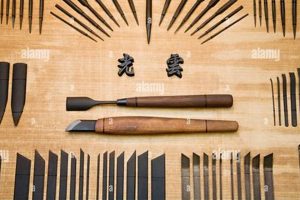
The implements dedicated to shaping extend beyond mere material removal; they also contribute to surface refinement. Planes, rasps, and files, each designed for a particular level of precision, enable gradual adjustments to the wood’s form. A block plane, used to smooth end grain, prevents splintering and produces a clean, polished edge. Similarly, carving tools permit the creation of intricate decorative elements. This level of refinement, often subtle, elevates the quality and visual impact of the workpiece. Shaping tools are thus integral to producing woodworking projects.
Precise shaping is imperative for constructing durable and aesthetically pleasing woodworking projects. The ability to manipulate the form and surface of wood with accuracy allows for both structural integrity and visual harmony. Consequently, proficiency in shaping, coupled with the understanding and application of essential implements, is crucial for woodworking endeavors. The skill to shape is necessary for woodworking projects and their successful completion.
3. Measuring

The act of obtaining precise dimensions, termed measuring, is inextricably linked to the utilization of implements in woodworking. Accurate measurements are a prerequisite for achieving the desired fit, alignment, and overall quality of woodworking projects. Errors in measurement, however small, can compound during the construction process, leading to structural instability or aesthetic imperfections. The relationship between tools and measurement is a critical determinant of the success of any woodworking endeavor.
- Rulers and Measuring Tapes: Establishing Base Dimensions
Linear measurement, fundamental to all woodworking tasks, relies on rulers and tapes. These instruments establish the length, width, and height of components. Inaccurate readings introduce deviations from the intended design, resulting in ill-fitting parts or misaligned structures. For example, a bookshelf with uneven shelf spacing, stemming from inaccurate initial measurements, compromises both its functionality and aesthetic appeal. The precision afforded by these tools is essential for reliable dimensional control.
- Squares and Bevels: Ensuring Accuracy of Angles
The creation of accurate angles is equally important. Squares and bevels, essential implements for measuring and transferring angles, ensure perpendicularity and consistent angular relationships. A poorly squared frame, for instance, exhibits visual imbalance and structural weakness. These tools facilitate the creation of precise joints and symmetrical forms, contributing significantly to the overall quality and stability of the woodworking project. These angular considerations can be critical.
- Marking Gauges: Establishing Parallel Lines
Consistently spaced parallel lines are essential for creating accurate mortises, rabbets, and other joinery elements. Marking gauges, designed to scribe lines parallel to an edge, ensure uniform depth and width. Variations in the scribed lines can lead to loose-fitting or uneven joints, reducing the strength and visual appeal of the finished piece. Accurate marking contributes to the precision and consistency of woodworking tasks.
- Calipers: Measuring Internal and External Dimensions
Calipers provide a level of precision that rulers or tape measures cannot provide. Especially when needing to measure inside or outside of something like a hole. These measurements ensure components fit precisely together, which is necessary for both structural integrity and visual accuracy.
The implements used for measuring, including rulers, squares, and marking gauges, are not merely accessories but integral components of the woodworking process. Accurate and consistent application of these instruments directly influences the precision, stability, and aesthetic quality of the final product. The synergy between implements and measuring techniques is a hallmark of skilled woodworking.
4. Fastening

The process of joining separate wooden components to create a cohesive structure, termed fastening, represents a crucial phase in woodworking. The efficacy of this stage relies directly on the appropriate selection and skillful application of implements designed for this purpose. Fastening contributes significantly to the structural integrity, stability, and longevity of woodworking projects. The failure to adequately secure components can result in premature failure, compromising both the functionality and safety of the finished item. A chair, for example, with inadequately fastened joints is susceptible to collapse under load.
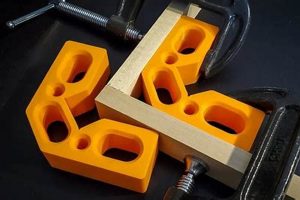
Several implements serve specific fastening needs. Hammers, used in conjunction with nails, provide a rapid method for joining materials, particularly in applications where high precision is not paramount. Screwdrivers, in conjunction with screws, offer a more secure and adjustable fastening solution, ideal for applications requiring disassembly or increased load-bearing capacity. Clamps are necessary to hold components together during gluing, ensuring uniform pressure and proper adhesion. Mallets are required to ensure components can be fastened without harm. Choosing the correct fastening implement directly affects the strength and durability of the constructed object.
Effective fastening requires consideration of the wood species, the type of joint being formed, and the anticipated stress the joint will endure. Selecting the appropriate implements and employing proper fastening techniques are essential for ensuring the structural soundness and longevity of woodworking projects. Therefore, mastering fastening techniques alongside a working knowledge of the implements used is an integral part of woodworking skill. Proper technique means project success.
5. Safety

Safety is inextricably linked to implements, forming a critical component of responsible woodworking practice. Neglecting safety protocols when using such implements invariably leads to increased risk of injury. The inherent sharpness of cutting edges, the forceful nature of shaping tools, and the potential for projectile debris from power equipment all pose hazards. For instance, failure to wear eye protection while using a chisel can result in eye injury from flying wood chips. Therefore, adherence to safety measures is not merely advisable but fundamentally necessary when engaging with woodworking implements.
The integration of safety practices into the use of essential woodworking implements directly influences the outcome of projects and the well-being of the woodworker. Proper use of safety glasses, hearing protection, and dust masks mitigates the risks associated with airborne particles and loud machinery. Securing workpieces with clamps or vises prevents unexpected movement during cutting or shaping, reducing the likelihood of slippage and injury. The consistent application of these measures minimizes the probability of accidents and promotes a safer working environment. For example, proper use of clamps and safety goggles, can greatly reduce accidents when using circular saws.
Effective woodworking practice mandates a comprehensive understanding of implements and the associated safety requirements. Knowledge of potential hazards, coupled with diligent adherence to safety protocols, is crucial for preventing injuries and ensuring a sustainable woodworking practice. Embracing safety as an integral aspect of utilizing fundamental implements fosters a culture of responsibility and minimizes the risk of harm. The safe handling of these tools is essential for maintaining both personal well-being and the integrity of the woodworking craft. Woodworking safety considerations should be the first consideration when selecting necessary implements.
6. Sharpening

The maintenance of sharp cutting edges is a critical, often overlooked, aspect of effective woodworking. The performance of woodworking implements, from saws and chisels to planes and knives, is directly contingent upon the keenness of their blades. Dull implements not only reduce efficiency but also increase the risk of accidents and compromise the quality of the finished work.
- Enhanced Cutting Efficiency
Sharp cutting edges minimize the force required to sever wood fibers, leading to cleaner, more precise cuts. A dull chisel, for instance, necessitates excessive force to pare wood, increasing the likelihood of slippage and potential injury. Conversely, a sharp chisel allows for controlled, deliberate cuts, resulting in smoother surfaces and more accurate joinery. Sharpness directly translates to increased productivity and reduced physical strain.
- Improved Precision and Control
Sharp implements provide the woodworker with greater control over the cutting process. A dull saw, for example, tends to wander from the intended line, making it difficult to achieve accurate cuts. A sharp saw, however, tracks more precisely, enabling the creation of accurate joints and intricate details. Improved control contributes to the overall quality and aesthetic appeal of woodworking projects.
- Reduced Risk of Accidents
Counterintuitively, sharp implements are often safer to use than dull ones. Dull edges require more force, increasing the risk of slippage and uncontrolled movements. A sharp tool, by contrast, requires less force, reducing the likelihood of losing control and causing injury. Regular maintenance of sharp edges promotes a safer working environment.
- Prolonged Tool Lifespan
Consistent maintenance of sharp edges preserves the integrity of woodworking implements. Neglecting sharpening allows cutting edges to degrade, requiring more aggressive sharpening methods that remove excessive material. Regular honing and sharpening, on the other hand, remove minimal material, extending the lifespan of the tool and preserving its original geometry.
In summation, sharpening is an indispensable element of woodworking practice, inextricably linked to the performance, safety, and longevity of essential woodworking implements. Neglecting sharpening undermines the potential of even the finest implements, compromising the quality of work and increasing the risk of accidents. Consistent maintenance of sharp cutting edges is therefore a hallmark of skilled and responsible woodworking.
7. Maintenance

The sustained functionality and longevity of fundamental woodworking implements are directly correlated with consistent and appropriate maintenance practices. These are not separate entities but interconnected aspects of responsible tool ownership and effective woodworking. A failure to maintain edges of saws, the calibration of measuring devices, or the cleanliness of moving parts directly results in diminished performance, reduced precision, and accelerated wear, effectively rendering implements less capable of fulfilling their intended purpose. A dull hand plane, for example, requires significantly more effort to operate, produces a rougher surface, and increases the likelihood of tear-out, thereby negating the implement’s ability to shape wood efficiently. This highlights the direct cause-and-effect relationship between neglect and compromised tool performance.
Proper maintenance encompasses several key actions. Sharpening cutting edges, cleaning and lubricating moving parts, protecting surfaces from rust, and ensuring accurate calibration are all essential. Furthermore, storing implements in a clean, dry environment minimizes exposure to environmental factors that contribute to deterioration. The implementation of these measures not only preserves the effectiveness of implements but also enhances safety. A well-maintained chisel, for example, is less likely to slip during use, thereby reducing the risk of injury. Routine maintenance contributes to consistent results and minimizes the potential for costly repairs or replacements. Regularly lubricating a hand drill keeps it running smoothly preventing damage.
In conclusion, maintenance is not a supplementary consideration but an integral component of utilizing implements effectively. Consistent and appropriate maintenance sustains the performance, precision, safety, and lifespan of these essential woodworking implements. Neglecting maintenance ultimately undermines the investment in these implements and compromises the quality of woodworking projects. The connection between maintenance and tool performance is inextricably linked, forming the foundation of responsible and effective woodworking practice. The upkeep of woodworking tools should be prioritized.
Frequently Asked Questions About Essential Woodworking Implements
The following addresses common inquiries regarding fundamental instruments used in woodworking, providing clarity on their selection, application, and maintenance.
Question 1: What constitutes a minimal starting set of woodworking implements?
A beginning woodworker typically requires a crosscut saw, a block plane, a sharpening stone, a combination square, a marking gauge, a set of chisels, a mallet, a hand drill, an assortment of screwdrivers, and a selection of clamps. These items facilitate basic cutting, shaping, measuring, and joining tasks.
Question 2: How frequently should cutting edges be sharpened?
Sharpening frequency depends on usage and the type of wood being worked. As a general guideline, edges should be honed before each project and re-sharpened when cutting becomes noticeably more difficult or the edge begins to dull. A keen edge ensures both safety and efficiency.
Question 3: Is power-assisted implements always superior to hand-operated ones?
Power instruments offer speed and efficiency, particularly for larger tasks. Hand tools, conversely, afford greater control and precision, especially in intricate work. The choice depends on project requirements and personal preference. Both categories serve distinct and valuable purposes in woodworking.
Question 4: What safety precautions are paramount when working with essential implements?
Eye protection, hearing protection, and dust masks are essential to prevent injury from flying debris and loud noise. Workpieces must be securely clamped to prevent movement. Hands must be kept clear of cutting edges. Familiarization with operating procedures is also key.
Question 5: How does the type of wood affect the choice of implement?
Hardwoods necessitate stronger and sharper cutting edges compared to softwoods. Fine-toothed saws are generally preferred for hardwoods to minimize tear-out. More abrasive sharpening stones may be required to maintain cutting edges when working with dense hardwoods.
Question 6: What are the key considerations when selecting hand tools?
Ergonomics, balance, and quality of materials are primary factors. Implements should feel comfortable in the hand and be constructed from durable materials that will withstand repeated use. Investing in quality usually yields better performance and longevity.
Proper selection, maintenance, and safe usage are essential to maximizing the potential of instruments employed in woodworking. These practices result in higher-quality work and a safer working environment.
The subsequent section will provide a comprehensive glossary of terminology and components related to essential woodworking implements.
Conclusion
The preceding discussion has explored the diverse range and critical function of basic tools for woodworking. It has emphasized their role in cutting, shaping, measuring, fastening, safety, sharpening, and maintenance, highlighting how each contributes to successful project outcomes. The appropriate selection, skillful application, and consistent maintenance of these implements are essential for precision, safety, and durability in woodworking endeavors.
Mastery of basic tools for woodworking establishes a strong foundation for further skill development. Proficiency allows for the creation of enduring and functional objects and fosters an appreciation for the craft. Continued learning and dedicated practice ensures the preservation of woodworking as a valuable and sustainable skill.