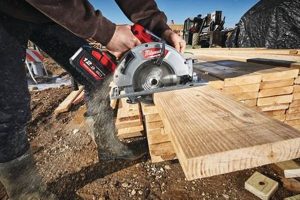
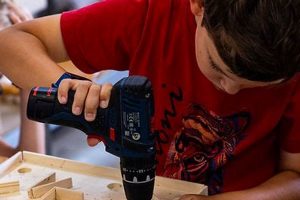
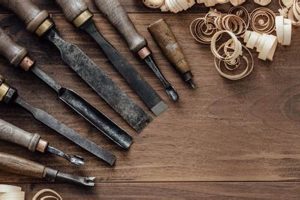
Implements employed in the shaping and manipulation of wood that are characterized by their compact size and suitability for detailed or intricate tasks are essential to the craft. Examples include precision chisels, miniature hand planes, coping saws, and specialized carving knives. These instruments facilitate accuracy and control when working on smaller-scale projects or in confined areas.
The significance of appropriately sized instruments lies in their capacity to enhance precision, improve efficiency, and reduce the risk of errors in woodworking endeavors. Their use enables craftspeople to achieve finer details and create complex designs with greater ease. Historically, these specialized tools have played a crucial role in the development of cabinetry, instrument making, and various other woodworking disciplines.
The following sections will delve into specific categories of these tools, examining their applications, maintenance, and selection criteria. Furthermore, relevant safety considerations and best practices for their effective utilization will be discussed.
Essential Tips for Utilizing Compact Woodworking Instruments
This section provides fundamental advice for optimizing the use of appropriately sized instruments in woodworking, promoting efficiency, precision, and safety.
Tip 1: Prioritize Sharpness: Maintain impeccable sharpness on all cutting edges. A honed tool requires less force, yielding cleaner cuts and reducing the likelihood of accidents. Regularly sharpen blades with appropriate stones or honing systems.
Tip 2: Implement Correct Gripping Techniques: Use appropriate grip techniques for enhanced control and reduced fatigue. Practice secure and comfortable hand positions to guide the tool accurately during operation. Incorrect gripping can lead to slippage and potential injury.
Tip 3: Practice on Scrap Material: Before applying a specific instrument to a project piece, experiment on scrap material to refine technique and calibrate the tool’s performance. This minimizes the risk of damaging valuable materials and allows for adjustments in approach.
Tip 4: Ensure Adequate Lighting: Work in a well-lit environment to maintain clear visibility of the workpiece and the tool’s cutting path. Proper lighting reduces eye strain and minimizes the possibility of errors or accidents.
Tip 5: Employ Appropriate Work Holding Devices: Securely fasten the workpiece using clamps, vises, or other work holding devices. A stable workpiece allows for precise and controlled tool movements, enhancing accuracy and safety.
Tip 6: Maintain Tools Regularly: Clean and lubricate implements after each use. This prevents corrosion, maintains smooth operation, and extends the tool’s lifespan. Periodic inspections for damage or wear are also crucial.
Tip 7: Select the Right Tool for the Task: Choose the instrument that is best suited for the specific operation. Using an inappropriately sized or designed implement can compromise the quality of the work and increase the risk of injury.
Adherence to these tips fosters improved accuracy, enhanced safety, and prolonged tool life when working with instruments scaled for detail work. Mastery of these skills contributes to more successful and enjoyable woodworking outcomes.
The subsequent sections will address specific implement categories and detailed safety protocols to further enhance woodworking expertise.
1. Precision
In woodworking, the concept of precision is paramount, particularly when employing instruments of reduced scale. Achieving accuracy in detailed work is contingent upon the quality and capabilities of these instruments.
- Fine Detail Execution
The primary role of precision-oriented implements lies in the execution of fine details. This includes tasks such as intricate carving, inlay work, and the creation of precise joinery. A miniature chisel, for instance, allows for the removal of minute amounts of material, facilitating the creation of complex shapes and patterns. Imprecise instruments would render such intricate work impossible.
- Material Accuracy
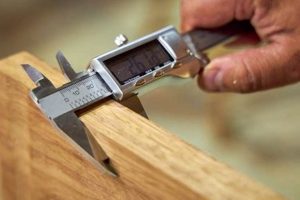
Precision extends beyond mere shape; it encompasses dimensional accuracy. Small instruments, particularly measuring and marking tools, are essential for ensuring that components fit together correctly. The use of a precision marking gauge, for example, ensures that mortise and tenon joints are accurately sized, resulting in a strong and aesthetically pleasing assembly.
- Error Minimization
The application of precise implements significantly reduces the risk of errors. In woodworking, even minor discrepancies can accumulate, leading to structural weaknesses or visual imperfections. The use of a high-quality hand plane, carefully adjusted, allows for the removal of thin shavings, minimizing the risk of over-cutting and maintaining flatness and squareness.
- Repeatability and Consistency
Precision also enables repeatability and consistency. The ability to reproduce identical components is essential for many woodworking projects, particularly those involving multiple identical elements. The careful use of jigs and fixtures, in conjunction with precise hand tools, ensures that each component meets the required specifications.
In conclusion, precision is not merely a desirable attribute but a fundamental requirement for successful woodworking, especially when employing instruments of smaller dimensions. The capacity to execute fine details, maintain dimensional accuracy, minimize errors, and ensure repeatability is directly linked to the quality and application of these instruments. Without precision, the creation of complex and aesthetically pleasing woodworking projects would be significantly compromised.
2. Maneuverability
Maneuverability, in the context of implements for shaping wood, refers to the ease with which these instruments can be manipulated and controlled, particularly within confined spaces or when performing intricate tasks. The design and dimensions of implements directly influence their maneuverability, impacting both efficiency and the quality of the final product.
- Limited Space Operation
Instruments with reduced dimensions are particularly advantageous when working within restrictive environments. Cabinet interiors, corners, and other confined areas necessitate implements that can be easily positioned and manipulated. A short-handled screwdriver or a miniature block plane exemplifies this, allowing access and control in situations where larger tools would be impractical. The benefit lies in the ability to perform necessary tasks without dismantling or altering the surrounding structure.
- Intricate Detail Work
The capacity to navigate complex shapes and patterns is fundamental to detail work. Instruments designed for maneuverability, such as carving knives or precision chisels, enable woodworkers to execute fine cuts and achieve desired contours with accuracy. The reduced size and specialized shape of these implements allow for precise control over the cutting edge, facilitating the creation of intricate designs and patterns. A larger, less maneuverable tool would likely result in imprecise cuts and damage to the surrounding material.
- Reduced User Fatigue
Lightweight and ergonomically designed implements contribute to reduced user fatigue during extended periods of use. Instruments that are easily handled and require minimal force to operate minimize strain on the hands, wrists, and arms. This is particularly important when performing repetitive tasks or working on complex projects that demand sustained focus. The selection of instruments designed for maneuverability can significantly enhance comfort and productivity, reducing the risk of repetitive strain injuries.
- Enhanced Control and Precision
Maneuverability directly correlates with enhanced control and precision. Instruments that are easily manipulated allow woodworkers to maintain a steady hand and execute cuts with greater accuracy. The ability to precisely position the cutting edge and adjust the angle of attack is crucial for achieving desired results. For example, when using a coping saw to cut intricate curves, the maneuverability of the saw allows for smooth, controlled movements, minimizing the risk of blade breakage or inaccurate cuts.
These facets of maneuverability highlight the importance of instrument design and selection in woodworking. Implements that prioritize ease of handling, access to confined spaces, and precise control ultimately contribute to improved efficiency, reduced user fatigue, and higher-quality results. The choice of tools that optimize maneuverability is therefore essential for woodworkers seeking to achieve exceptional craftsmanship and maintain long-term physical well-being.
3. Sharpness

The property of a cutting edge to readily sever or shape wood fibers, termed sharpness, is fundamentally critical in the application of compact woodworking instruments. The efficiency and accuracy of these instruments are directly contingent upon the maintenance of an acutely honed edge.
- Reduced Force Exertion
A keen edge necessitates minimal physical exertion to achieve the desired cut. This is especially pertinent when utilizing hand-operated implements, as diminished force requirements translate to enhanced control and reduced user fatigue. For instance, a precisely sharpened carving knife will glide through wood with minimal pressure, enabling the creation of intricate details that would be arduous, if not impossible, with a dull blade.
- Enhanced Cut Precision
The acuity of the cutting edge directly influences the cleanliness and accuracy of the resultant cut. A dull edge tends to crush or tear wood fibers, yielding ragged edges and imprecise dimensions. Conversely, a sharp edge severs the fibers cleanly, resulting in smooth surfaces and accurate dimensions. In the context of creating precise joinery, such as dovetails, a sharp chisel is paramount to achieving tight-fitting and aesthetically pleasing connections.
- Minimized Risk of Injury
Counterintuitively, a sharp instrument is often safer than a dull one. A dull edge necessitates the application of greater force, increasing the likelihood of slippage and uncontrolled movements. A sharp edge, requiring less force, allows for greater control and predictability, thereby reducing the risk of accidental injury. When using a block plane, for instance, a sharp blade ensures controlled shaving removal, preventing the tool from skipping or binding, which could lead to injury.
- Prolonged Tool Lifespan
Properly maintained sharpness contributes to the extended operational life of the instrument. Attempting to force a dull tool through wood places undue stress on the blade and the tool body, accelerating wear and increasing the potential for damage. Regular sharpening, on the other hand, preserves the integrity of the cutting edge and ensures optimal performance over an extended period. A well-maintained set of carving chisels, consistently sharpened, will provide reliable service for many years, whereas a neglected set will quickly degrade.
These facets underscore the indispensable role of sharpness in the context of instruments scaled for detail work. The benefits extend beyond mere convenience, encompassing enhanced precision, improved safety, and prolonged tool longevity. Consequently, a commitment to maintaining acutely honed edges is essential for any woodworker seeking to achieve high-quality results and ensure the safe and effective utilization of their compact instruments.
4. Durability

The characteristic of withstanding wear, pressure, or damage, termed durability, assumes paramount importance when evaluating the efficacy of instruments scaled for detail work. Given their often delicate construction and intended use for intricate tasks, the capacity of these instruments to endure prolonged use and resist degradation is crucial.
- Material Composition
The inherent resistance of the constituent materials to deformation, fracture, and corrosion directly influences the longevity of implements. High-carbon steel, for instance, exhibits superior hardness and wear resistance compared to softer alloys, making it a preferred material for cutting edges. The selection of appropriate materials, coupled with proper heat treatment processes, ensures that instruments maintain their structural integrity under demanding conditions. An implement constructed from inferior materials may exhibit premature wear, leading to reduced performance and eventual failure.
- Structural Integrity
The design and construction methods employed in the fabrication of the instrument contribute significantly to its overall strength and resilience. A full tang chisel, wherein the blade extends through the entire handle, offers superior stability and resistance to breakage compared to a partial tang design. Furthermore, robust joinery techniques, such as dovetail construction in wooden handles, enhance the instrument’s ability to withstand stress and impact. Weak structural points can lead to premature failure under sustained use.
- Surface Treatment
The application of protective coatings and finishes can mitigate the effects of environmental factors, such as moisture and oxidation, which can compromise the integrity of instruments over time. Powder coating, bluing, and oiling techniques provide a barrier against corrosion, preventing rust formation and maintaining the instrument’s functional and aesthetic qualities. Untreated surfaces are susceptible to degradation, potentially leading to reduced performance and a shortened lifespan.
- Manufacturing Quality Control
Stringent quality control measures during the manufacturing process are essential for ensuring that each instrument meets predefined standards for durability. Rigorous testing protocols, including hardness testing, tensile strength analysis, and impact resistance assessments, identify potential weaknesses and ensure consistent performance. Implements produced without adequate quality control may exhibit variations in material properties or structural integrity, leading to unpredictable performance and a higher risk of failure.
These interconnected aspects underscore the critical role of durability in determining the long-term value and utility of instruments scaled for detail work. The selection of instruments constructed from high-quality materials, featuring robust structural designs, protected surfaces, and adhering to stringent manufacturing standards ensures a worthwhile investment, providing years of reliable service and contributing to successful woodworking outcomes.
5. Ergonomics
Ergonomics, the science of designing and arranging tools people use so that the people and things interact most efficiently and safely, assumes heightened significance when considering instruments scaled for detail work. Given the repetitive nature and precision demands of many woodworking tasks, the ergonomic design of implements directly impacts user comfort, reduces the risk of strain injuries, and influences overall work quality.
- Handle Design and Grip
The shape, size, and material of the handle significantly affect grip comfort and control. Ergonomic handle designs often incorporate contoured shapes that conform to the natural curvature of the hand, reducing pressure points and minimizing fatigue. For example, a carving knife with a sculpted wooden handle provides a secure and comfortable grip, allowing for precise control during intricate carving operations. Conversely, a handle with sharp edges or an awkward shape can lead to discomfort and reduced dexterity, increasing the risk of slippage and injury.
- Weight Distribution and Balance
Proper weight distribution and balance are crucial for maintaining control and minimizing strain. An instrument that is excessively heavy or poorly balanced requires greater effort to manipulate, leading to fatigue and reduced accuracy. A well-balanced chisel, for instance, allows for precise control and reduces the risk of over-cutting. Conversely, an unbalanced tool can feel unwieldy and difficult to control, increasing the risk of errors and accidents.
- Material Selection for Vibration Dampening
The selection of materials that effectively dampen vibrations is essential for reducing hand-arm vibration syndrome (HAVS), a common ailment among woodworkers. Materials such as certain types of wood or specialized polymers can absorb vibrations generated during cutting or shaping operations, minimizing the transmission of energy to the user’s hands and arms. Instruments lacking vibration dampening features can contribute to fatigue, numbness, and long-term nerve damage.
- Tool Angle and Offset
The angle and offset of the instrument’s cutting edge relative to the handle can significantly impact wrist and arm posture. Instruments designed with an optimized angle allow for a more natural and comfortable working position, reducing strain on the wrist and forearm muscles. An offset handle on a hand plane, for example, allows the user to maintain a more neutral wrist position, minimizing the risk of carpal tunnel syndrome. In contrast, instruments with poor angle or offset can force the user to adopt awkward postures, increasing the risk of musculoskeletal disorders.
These considerations underscore the importance of ergonomics in the design and selection of instruments scaled for detail work. Implements that prioritize user comfort, minimize strain, and promote natural working postures contribute to improved productivity, reduced risk of injury, and enhanced overall work quality. A focus on ergonomic principles is therefore essential for woodworkers seeking to maintain long-term physical well-being and achieve exceptional craftsmanship.
6. Storage
The correlation between the safekeeping of instruments scaled for detail work and their continued functionality is undeniable. Improper containment precipitates a cascade of potential detriments, ranging from blunted edges and corroded surfaces to outright loss or damage. Consider a set of miniature carving chisels left exposed to the elements; humidity fosters rust, rendering them unusable. Conversely, a dedicated storage system, such as a fitted wooden box with individual compartments, mitigates these risks, preserving the instruments’ cutting capabilities and extending their operational life. The storage of saws requires protection of teeth. These teeth is very sharp and can be harmed other object.
Effective storage is not merely about preservation; it also enhances workflow efficiency. A disorganized collection of instruments necessitates a time-consuming search for the desired implement, disrupting the creative process. A well-organized storage solution, such as a wall-mounted rack or a drawer insert with labeled compartments, allows for rapid identification and retrieval of implements, streamlining the woodworking process. For instance, a woodworker engaged in crafting a detailed inlay would benefit from having readily accessible knives, chisels, and measuring tools, minimizing interruptions and maximizing productivity.
The selection of a suitable storage strategy should align with the size, quantity, and fragility of the instruments. While a simple tool roll may suffice for a basic set, more extensive collections necessitate specialized solutions. The inherent challenges involve balancing accessibility with protection, optimizing space utilization, and accommodating evolving tool acquisitions. In summation, the proper safeguarding is an indispensable component, directly influencing longevity, usability, and overall woodworking efficiency.
7. Maintenance
The prolonged operational lifespan and consistent performance of implements intended for detail work are inextricably linked to diligent maintenance practices. The unique characteristics of these instruments, including their intricate mechanisms and delicate cutting edges, necessitate a proactive approach to upkeep.
- Cleaning and Lubrication
The removal of accumulated debris, such as wood shavings, dust, and resin, is essential for maintaining smooth operation and preventing corrosion. Regular cleaning with appropriate solvents and the subsequent application of lubricants, such as specialized tool oils or waxes, protects metal surfaces and minimizes friction. Neglecting this aspect can lead to reduced performance, increased wear, and eventual failure of moving parts. For example, the intricate gears of a miniature hand drill require periodic cleaning and lubrication to ensure smooth and precise operation.
- Sharpening and Honing
Maintaining the acuity of cutting edges is paramount for achieving clean cuts and reducing the risk of injury. Regular sharpening and honing, using appropriate stones or sharpening systems, restores the cutting edge to its optimal condition. The frequency of sharpening depends on the type of wood being worked and the intensity of use. A dull cutting edge requires significantly more force to operate, increasing the likelihood of slippage and inaccurate cuts. The blades of small carving knives, for instance, require frequent honing to maintain their ability to execute intricate details.
- Rust Prevention and Corrosion Control
Exposure to moisture and humidity can lead to rust formation and corrosion, compromising the structural integrity and performance of instruments. Protective coatings, such as rust inhibitors or specialized waxes, can be applied to metal surfaces to prevent oxidation. Proper storage in a dry environment is also crucial. Instruments left exposed to the elements are particularly susceptible to corrosion, rendering them unusable over time. For example, the delicate mechanisms of a precision measuring tool, such as a marking gauge, are vulnerable to rust and require diligent protection.
- Handle and Component Inspection
Periodic inspection of handles, fasteners, and other components is essential for identifying potential damage or wear. Loose handles, cracked scales, or damaged screws can compromise the safety and performance of instruments. Prompt replacement or repair of these components ensures continued functionality and prevents more serious damage. For example, a loose handle on a miniature hand plane can lead to inaccurate cuts and an increased risk of injury, necessitating immediate attention.
These multifaceted maintenance practices are indispensable for preserving the value and extending the service life of instruments scaled for detail work. The consistent application of these measures ensures that these implements remain reliable tools, contributing to successful woodworking outcomes and minimizing the need for costly replacements.
Frequently Asked Questions
The following section addresses common inquiries regarding the selection, application, and maintenance of compact instruments employed in woodworking.
Question 1: What distinguishes instruments designed for detail work from their larger counterparts?
These instruments are characterized by their reduced dimensions, which facilitate access to confined spaces and enable the execution of intricate tasks. Their design emphasizes precision and control over raw power or material removal capacity. Their suitability depends upon the particular task.
Question 2: What are the essential instruments a beginning woodworker should acquire?
A foundational kit should include a selection of precision chisels in varying sizes, a miniature hand plane, a marking gauge, a coping saw, and a set of carving knives. These implements provide the necessary tools for basic shaping, joinery, and detail work. Safety equipment is also a priority.
Question 3: How does one properly sharpen and maintain the cutting edges of these instruments?
Regular sharpening and honing are crucial. Employ sharpening stones of varying grits, progressing from coarse to fine, to restore the cutting edge. Honing with a strop refines the edge and removes any burrs. Routine cleaning and lubrication prevent corrosion.
Question 4: What safety precautions must be observed when using compact implements?
Always secure the workpiece using clamps or a vise. Maintain sharp cutting edges to minimize the force required and reduce the risk of slippage. Wear appropriate eye protection. Use caution when working with small pieces of material. A first-aid kit should always be available.
Question 5: How does one select instruments of appropriate quality and durability?
Examine the material composition of the blades and handles. High-carbon steel blades and hardwood handles generally indicate higher quality. Inspect the overall construction for solid joinery and a well-balanced design. Reputable brands often provide a guarantee of quality.
Question 6: What are common mistakes to avoid when using implements scaled for detail work?
Avoid applying excessive force, which can lead to loss of control and damage the workpiece. Do not use dull instruments, as they increase the risk of slippage and inaccurate cuts. Ensure adequate lighting and a stable work surface. Rushing the task is also a very common and avoidable mistake.
In conclusion, the effective and safe use of implements scaled for detail work requires a combination of knowledge, skill, and attention to detail. Adherence to proper techniques and maintenance practices will ensure the long-term value and performance of these instruments.
The following section will explore advanced techniques and applications for instruments designed for intricate woodworking tasks.
Small Woodworking Tools
This exposition has delineated the multifaceted aspects of instruments scaled for detail work. It has underscored the importance of precision, maneuverability, sharpness, durability, ergonomics, storage, and maintenance. Further, it has presented a comprehensive overview of essential tips, frequently asked questions, and key considerations pertinent to these indispensable implements. The efficacy of these instruments lies in their capacity to facilitate intricate tasks with accuracy and control, while prioritizing user safety and comfort.
The mastery of implements scaled for detail work is an ongoing pursuit, requiring continuous refinement of skills and a commitment to best practices. A dedication to proper care, maintenance, and application will ensure that these instruments remain valuable assets, enabling the realization of intricate woodworking projects with exceptional craftsmanship. The informed and judicious utilization of these implements elevates woodworking from a mere craft to an art form, characterized by precision, skill, and enduring quality.