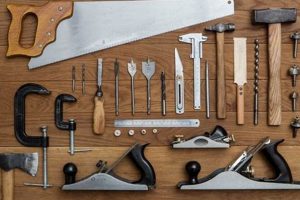
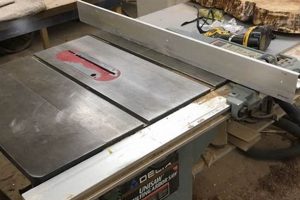
A collection of implements essential for foundational tasks in shaping and joining wood forms the core of many entry-level carpentry endeavors. This compilation typically includes instruments for measuring, marking, cutting, shaping, and fastening wood components. Examples are hand saws, chisels, planes, measuring tapes, squares, and screwdrivers, all selected for their versatility and utility in various woodworking projects.
Possessing the fundamental implements enables the execution of a wide range of projects, from simple repairs to the construction of intricate pieces. Mastery of these instruments fosters skill development, providing a solid base for more advanced techniques. Historically, access to effective and reliable instruments has been a key factor in the progression of woodworking as both a craft and an industry, enabling precise and durable constructions throughout various eras.
The following sections will delve into the specific components typically found within a starter kit, examining their functions, selection criteria, and maintenance requirements. Understanding these aspects is crucial for maximizing the potential of the tools and ensuring safe and efficient woodworking practices.
Essential Usage Guidance
Effective utilization of the fundamental instrument collection is paramount for achieving desired outcomes and ensuring user safety. The following recommendations offer practical guidance for maximizing the capabilities and longevity of these implements.
Tip 1: Prioritize Sharpness. Sharp cutting edges are essential for clean cuts and reduced effort. Regularly hone chisels, planes, and saw blades to maintain optimal performance. Dull tools increase the risk of injury and compromise the quality of the work.
Tip 2: Employ Proper Measurement Techniques. Accurate measurement is the foundation of any successful woodworking project. Utilize measuring tapes and squares to ensure precise dimensions and angles. Double-check all measurements before cutting or assembling components.
Tip 3: Master Basic Hand Sawing. Developing proficiency in hand sawing is crucial for creating accurate cuts. Practice proper sawing techniques, including initiating the cut with a pull stroke and maintaining a consistent angle throughout the sawing process.
Tip 4: Understand Wood Grain Direction. Wood grain significantly affects cutting and shaping operations. Always consider the grain direction when planing or chiseling to avoid tear-out or splintering. Cutting with the grain typically yields a smoother surface.
Tip 5: Practice Safe Fastening Methods. Select the appropriate fasteners for the intended application and material. Use pilot holes to prevent wood splitting when driving screws. Ensure that all fasteners are securely tightened to create strong and durable joints.
Tip 6: Regular Maintenance. Periodic maintenance is a must to preserve your items’ longevity. Wipe down each piece after use to prevent sawdust and residue buildup. Apply oil to prevent rust.
Tip 7: Storage. Storing your items properly is critical to prevent damage. When not in use, store them in a toolbox or case to protect them from moisture and dust. This can also prevent accidental injuries.
Adherence to these tips will facilitate efficient and safe woodworking practices, leading to improved project outcomes and enhanced skill development. Consistent application of these principles will contribute to a more enjoyable and rewarding woodworking experience.
The subsequent sections will elaborate on advanced woodworking techniques and project planning strategies, building upon the foundational knowledge presented herein.
1. Essential Hand Tools

A foundational compilation for woodworking consists primarily of instruments designed for manual operation, commonly referred to as essential hand tools. These form the nucleus of a rudimentary woodworking kit and dictate the range and type of projects that can be effectively undertaken.
- Cutting Implements
Saws, chisels, and planes are integral for shaping and dimensioning wood. Hand saws enable controlled cuts, while chisels are used for refining joints and creating intricate details. Planes facilitate the smoothing and leveling of wood surfaces. The inclusion of a variety of these items is crucial for addressing different cutting and shaping needs. For example, a dovetail saw is essential for creating fine joinery, while a block plane is utilized for smoothing end grain.
- Fastening Instruments
Screwdrivers, hammers, and hand drills are vital for joining wood components securely. Screwdrivers drive screws into wood, creating strong mechanical connections. Hammers drive nails and other fasteners. Hand drills create pilot holes for screws or bore larger holes for dowels. The appropriate selection of these instruments allows for the creation of durable and stable structures, such as fastening cabinet frames and installing hardware.
- Measuring and Marking Devices
Measuring tapes, squares, and marking gauges are fundamental for ensuring accuracy and precision. Measuring tapes provide linear measurements. Squares ensure right angles. Marking gauges create parallel lines for consistent joinery. Inaccurate measurements can lead to structural instability and aesthetic imperfections. Examples include using a combination square to mark a precise 45-degree angle or a marking gauge to score a consistent line for a mortise.
- Shaping and Finishing Tools
Rasps, files, and sandpaper are employed for refining shapes and preparing surfaces for finishing. Rasps and files remove material quickly, allowing for the creation of curved or contoured surfaces. Sandpaper smoothes surfaces and removes imperfections. These instruments are critical for achieving a professional and aesthetically pleasing finish. They are involved with smoothing the round-over on a table edge or for refining the shape of a carved element.
These fundamental instruments, when combined and utilized effectively, empower the woodworker to execute a broad spectrum of tasks. The selection and proficiency in the use of such items is the cornerstone of success in woodworking, serving as a pathway for advancing from simple repairs to complex constructions.
2. Accurate Measurement Devices

The presence and utilization of accurate measurement devices within a fundamental implement collection directly determines the precision and quality of the resulting woodwork. Without reliable means of quantifying dimensions and angles, projects are prone to errors that compromise structural integrity and aesthetic appeal. The inability to measure precisely affects the fitting of joints, the alignment of components, and the overall adherence to design specifications. For instance, if the length of a table leg is miscalculated, the entire piece may become unstable or visually unappealing. Therefore, accurate measurement devices are not merely accessories but essential components for ensuring desired outcomes.
The devices themselves include measuring tapes, rulers, squares, and levels, each serving a distinct function in ensuring dimensional accuracy. Measuring tapes allow for the determination of lengths and widths, while rulers provide a more precise standard for smaller dimensions. Squares guarantee right angles, essential for creating true corners and ensuring proper alignment. Levels ensure horizontal and vertical accuracy, crucial for maintaining stability in structures. The proper selection and use of these instruments, combined with a clear understanding of measurement principles, are indispensable for translating design concepts into tangible objects. An example of the practical application of these tools would be squaring a cabinet frame prior to assembling its components, guaranteeing that the finished piece is free of distortion.
In summary, accurate measurement devices are integral to a woodworker’s success, forming the foundation for precise execution and aesthetically pleasing results. Their absence or misuse introduces variability and undermines the potential for quality craftsmanship. Mastery of these tools is therefore a prerequisite for anyone seeking to engage in woodworking with competence and achieve professional results. The accuracy that these tools bring translates directly into both structural integrity and visual appeal, creating a clear link between proper tools and quality results. Challenges in this aspect often stem from a lack of understanding of measurement principles or using sub-par or uncalibrated tools. Addressing these challenges allows for more successful and satisfying woodworking experiences.
3. Sharp Cutting Edges

The efficacy of implements within a woodworking collection hinges critically upon the sharpness of their cutting edges. The state of these edges directly impacts the quality of the work, the effort required to manipulate wood, and the overall safety of the user. Blunt edges necessitate increased force, leading to potential errors, splintering, and elevated risk of accidents. A well-honed edge, conversely, allows for precise and controlled removal of material, resulting in cleaner cuts, smoother surfaces, and reduced physical strain. For instance, a sharp chisel effortlessly slices through wood fibers when creating a mortise, while a dull chisel crushes and tears the material, compromising the joint’s integrity.
Sharpness, in the context of woodworking, extends beyond the immediate cutting action; it significantly affects the longevity of the implements themselves. Excessive force applied to compensate for dullness accelerates wear and tear, requiring more frequent sharpening and potentially leading to premature failure. Regular maintenance of cutting edges, through honing and sharpening, preserves the integrity of the tool and maximizes its operational life. A sharp plane blade, for example, glides across the wood surface with minimal resistance, extending its lifespan and ensuring consistent performance over time. This preventative care is an economical approach, reducing the necessity for frequent replacements and maintaining the high performance level of the instruments.
In summary, the significance of sharp cutting edges in a woodworking set is multifaceted, encompassing work quality, user safety, and tool longevity. Maintaining sharpness is not merely a desirable practice, but a fundamental requirement for achieving professional results and ensuring a safe and efficient working environment. Neglecting this aspect undermines the potential of the implements and increases the likelihood of errors and accidents. Prioritizing and practicing regular sharpening techniques are critical skills for any woodworker seeking to produce high-quality work and preserve their tools.
4. Reliable Fastening Methods
The successful execution of woodworking projects is intrinsically linked to the employment of reliable fastening methods, a facet inextricably connected to the composition of a basic woodworking tool set. The implements contained within the set directly determine the scope and effectiveness of available fastening techniques. The presence of screwdrivers, hammers, and drills dictates the ability to utilize screws, nails, and dowels, respectively, to create secure joints. If a basic woodworking tool set lacks a sufficient range of screwdrivers or drill bits, for instance, the selection of appropriate fasteners becomes limited, potentially compromising the integrity of the finished piece. A failure in fastening translates directly to structural instability or reduced durability, diminishing the functional lifespan of the constructed object. As an example, attempting to assemble a cabinet with inadequate screw sizes may result in a weakened frame, prone to separation under stress. Understanding the interconnection between available tools and fastening capabilities is fundamental to achieving sound woodworking outcomes.
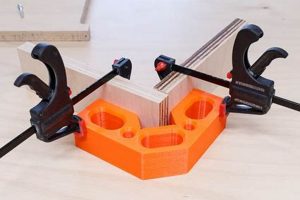
Practical applications of reliable fastening methods span a wide array of woodworking endeavors. The construction of furniture, cabinetry, and structural frameworks all rely on the precise and secure joining of individual components. For instance, constructing a mortise and tenon joint, often secured with glue and wedges, requires the use of chisels, saws, and potentially a mallet, all elements of a comprehensive set. The strength of this joint is dependent on the accuracy of the cut and the secure application of the adhesive and wedges. Similarly, the assembly of a picture frame using miter joints necessitates the employment of corner clamps and fasteners, often brad nails or specialized screws, to maintain alignment and ensure a lasting bond. The absence of appropriate tools for applying clamping pressure or driving fasteners can result in misaligned joints and a structurally unsound frame. Thus, a properly equipped toolbox is not merely a collection of tools but an enabler of reliable fastening techniques essential for producing robust and aesthetically pleasing results.
In summary, the reliability of fastening methods is a critical determinant of success in woodworking, directly influenced by the completeness and quality of the basic woodworking tool set. The absence of necessary implements limits the range of viable fastening options, potentially compromising structural integrity and durability. Proficiency in woodworking demands a comprehensive understanding of the relationship between tools and fastening techniques, enabling the selection of appropriate methods for specific applications and ensuring the creation of robust and aesthetically pleasing finished products. Furthermore, regular inspection and appropriate care for items promotes longevity. The ability to address fastening challenges hinges on both the availability of suitable tools and a thorough understanding of their application.
5. Effective Shaping Instruments
The presence of effective shaping instruments within a fundamental woodworking assemblage directly influences the creative potential and precision achievable in woodworking endeavors. A basic set lacking appropriate tools for shaping limits the ability to produce intricate designs, curved surfaces, or refined details. The instruments designed to manipulate forms directly dictate the scope of projects one can undertake with any degree of success. For instance, the absence of chisels, rasps, or planes inhibits the capacity to create complex joinery, smooth contours, or refine surfaces to a desired finish. This deficiency, in turn, restricts the ability to realize more ambitious or nuanced woodworking designs. It’s an example where cause and effect are apparent: inadequate shaping tools limit creative expression and the level of detail achievable.
The importance of effective shaping instruments is further underscored when considering the creation of specific types of woodworking projects. Carving a decorative element, forming a cabriole leg for a piece of furniture, or smoothing a curved tabletop all necessitate the use of specialized instruments tailored for these tasks. A rudimentary assortment of tools may suffice for basic tasks, such as constructing simple boxes or straight-edged frames. However, pursuing more advanced or artistic woodworking requires a more extensive repertoire of shaping instruments, selected for their precision, control, and ability to remove material efficiently. For example, a spokeshave allows for the controlled shaping of curved surfaces, such as chair spindles, while a drawknife enables the removal of large amounts of material quickly for rough shaping tasks. Without these specialized shaping items, the woodworker is relegated to more basic or simplified designs, compromising the potential for creative expression.
In summary, effective shaping instruments represent an essential component of a functional woodworking collection, directly influencing the scope of achievable projects and the level of precision attainable in shaping and refining wood forms. The inclusion of a diverse array of instruments, designed for specific shaping tasks, is crucial for enabling creative expression and producing high-quality woodworking results. The challenge lies in selecting a balanced array of tools that provides both versatility and specialization, allowing the woodworker to adapt to a wide range of shaping demands. Ultimately, a commitment to acquiring and mastering the appropriate shaping items is a prerequisite for advancing beyond basic woodworking tasks and realizing more complex and artistically refined designs.
6. Safe Operational Practices
The correlation between safe operational practices and a basic woodworking tool set is central to preventing injuries and ensuring the longevity of both the user and the implements. The inherent functionality of cutting and shaping instruments necessitates adherence to established safety protocols. A lack of such adherence, even with a complete and well-maintained implement assortment, elevates the risk of accidents. For instance, failing to wear appropriate eye protection while operating a saw can result in serious ocular injury from flying debris. Similarly, neglecting to secure a workpiece adequately before drilling can cause the material to spin unexpectedly, leading to potential harm. A proper tool inventory alone does not guarantee safety; rather, it is the conscientious application of safe techniques in conjunction with those items that mitigates risk.
The integration of safe operational practices as a component of a woodworking compilation extends beyond personal protective measures to encompass proper tool handling and maintenance. Ensuring that cutting edges are sharp, for example, reduces the force required to manipulate wood and minimizes the likelihood of slippage or uncontrolled movements. Regularly inspecting tools for damage and addressing any deficiencies promptly prevents equipment failures that could lead to accidents. Furthermore, maintaining a clean and organized workspace reduces the risk of trips, falls, and accidental contact with sharp instruments. These aspects of tool maintenance and workspace organization are intrinsically linked to creating a safer operational environment, demonstrating that safety is not merely an afterthought but an integral part of responsible woodworking practice.
In conclusion, safe operational practices are not merely supplementary guidelines but an indispensable element of any woodworking activity, inextricably linked to the effectiveness and longevity of the user and the collection of tools employed. The absence of adherence to these principles undermines the potential benefits of even the most comprehensive tool assortment. Prioritizing safety through training, consistent application of protective measures, and diligent tool maintenance is essential for minimizing risk and fostering a sustainable and rewarding woodworking experience. Overcoming challenges such as complacency or a lack of formal instruction is critical to instilling a culture of safety within the woodworking community, promoting responsible practices that benefit both individuals and the craft as a whole.
7. Proper Maintenance Regimen

The sustained functionality and efficacy of a collection designed for introductory woodworking relies heavily on the implementation of a proper maintenance regimen. This regimen serves as the cornerstone for preserving the operational life of the items, preventing premature degradation, and ensuring consistent performance over time. A failure to adhere to established maintenance protocols results in diminished tool effectiveness, increased risk of injury, and ultimately, a shorter lifespan for the set. The act of regular cleaning, sharpening, and lubrication directly mitigates these adverse effects, upholding the value and utility of the initial investment. For example, neglecting to remove resin buildup from a saw blade leads to increased friction, reduced cutting efficiency, and potential damage to the saw itself. Therefore, establishing and consistently executing a maintenance schedule is not merely a supplemental practice, but an essential element in maximizing the return on investment.
Specific maintenance tasks include, but are not limited to, regular sharpening of cutting edges, cleaning of surfaces to remove debris and prevent corrosion, lubrication of moving parts to ensure smooth operation, and proper storage to protect against environmental factors. The frequency of these tasks is contingent upon usage patterns and the specific characteristics of the items within the set. For instance, chisels used frequently on hardwoods require more frequent sharpening than those used sparingly on softwoods. Similarly, tools stored in humid environments demand more vigilant rust prevention measures. By tailoring the maintenance schedule to the specific needs of the items and the conditions of use, the longevity and performance of the woodworking tools can be significantly enhanced. Examples of this include applying a thin coat of oil to metal surfaces after each use or storing sharp-edged items in protective sheaths to prevent damage.
In conclusion, the implementation of a structured maintenance plan is critical for preserving the functionality, safety, and longevity of any introductory woodworking collection. Neglecting this aspect undermines the value of the set, increasing the likelihood of equipment failure and personal injury. Adopting a proactive and informed approach to maintenance, characterized by regular inspection, cleaning, sharpening, and lubrication, ensures that the items remain in optimal condition and provide reliable service for an extended period. Addressing common challenges such as time constraints or a lack of technical knowledge is paramount to instilling a culture of proactive maintenance within the woodworking community. This creates a sustainable practice of responsible tool ownership.
Frequently Asked Questions About Basic Woodworking Tool Sets
The following questions address common inquiries regarding foundational implements necessary for woodworking.
Question 1: What constitutes a fundamental woodworking collection?
A fundamental woodworking collection comprises essential hand tools, measuring instruments, cutting implements, fastening devices, and shaping tools necessary for undertaking basic woodworking projects.
Question 2: What is the expected cost for a basic woodworking tool set?
The cost varies significantly depending on the quality and number of items included. A reasonable budget for a starter collection of essential implements ranges from \$100 to \$500.
Question 3: Are power tools necessary for a basic woodworking setup?
Power tools are not strictly essential for a fundamental set, as many tasks can be accomplished with hand tools. However, the inclusion of select power tools, such as a drill or circular saw, enhances efficiency.
Question 4: How does one maintain a basic woodworking tool collection?
Maintenance includes regular sharpening of cutting edges, cleaning to remove debris, lubrication of moving parts, and proper storage to prevent rust and damage.
Question 5: What safety precautions are paramount when using a basic woodworking tool set?
Essential safety measures encompass wearing appropriate eye protection, using work-holding devices to secure materials, and maintaining sharp cutting edges to reduce the risk of slippage.
Question 6: How does a beginner choose a basic woodworking tool set?
A beginner should select implements based on project needs, prioritizing quality over quantity. Starting with a smaller set of well-made, versatile tools is advisable.
Understanding these fundamental aspects facilitates informed decision-making regarding the acquisition and utilization of such a collection.
The next section will explore advanced techniques and projects that build upon the foundational skills acquired with this implement compilation.
In Summary
This exploration has elucidated the composition, utilization, and maintenance of a basic woodworking tool set. Critical aspects include the selection of essential hand tools, the adherence to accurate measurement techniques, the maintenance of sharp cutting edges, and the implementation of reliable fastening methods. Furthermore, the significance of effective shaping instruments, safe operational practices, and a proper maintenance regimen have been underscored. This knowledge provides a foundation for both novice and experienced woodworkers to engage in projects with competence and safety.
The mastery of fundamental implements and techniques outlined herein represents a gateway to a world of creative possibilities within woodworking. The continued pursuit of knowledge, skill development, and safe practices is essential for maximizing the potential of these tools and fostering a sustainable and rewarding woodworking journey. The legacy of craftsmanship relies on the responsible and informed use of such implements to create durable and aesthetically pleasing objects for generations to come. Therefore, prioritize learning, practice diligence, and always maintain a commitment to safety in this demanding art form.