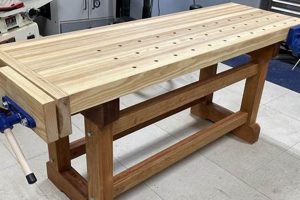
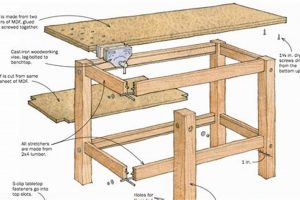
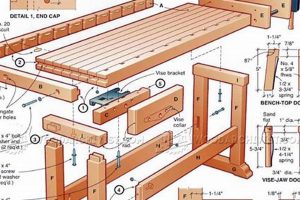
Detailed diagrams and instructions outlining the construction of a workbench form the basis of many woodworking projects. These resources typically specify material dimensions, joinery techniques, and assembly procedures, guiding craftspeople through the process of creating a functional and durable work surface. A set of instructions, for instance, might detail the steps for building a Roubo workbench, including the construction of the legs, top, and any vises or other work-holding devices.
The availability of detailed guides significantly reduces the learning curve for both novice and experienced woodworkers, promoting efficiency and accuracy in project execution. The use of established designs can help ensure the workbench will withstand the rigors of daily use and provide a stable platform for a wide range of tasks. Historically, these guides were passed down through generations of craftspeople; today, they are readily accessible in print and digital formats, democratizing access to woodworking knowledge and techniques.
This article will examine essential considerations when selecting a suitable design, discuss the common elements found within various design types, and provide resources for further exploration. It will also touch upon adapting existing instructions to individual needs and skill levels, as well as alternative approaches to achieving a robust and functional workspace.
Essential Considerations for Workbench Construction
Effective workbench construction relies on careful planning and execution. The following tips provide guidance to optimize the creation of a durable and functional workspace.
Tip 1: Material Selection. Select lumber appropriate for the intended use. Hardwoods such as maple or beech offer superior durability for work surfaces subjected to heavy use. Softwoods like pine may be suitable for less demanding applications or for specific workbench components.
Tip 2: Joint Strength. Employ robust joinery techniques. Mortise and tenon joints, dovetails, and properly executed screws provide the necessary strength to withstand racking and heavy loads. Prioritize techniques commensurate with the anticipated stress on the workbench.
Tip 3: Workbench Height. Determine optimal workbench height based on personal ergonomics and primary tasks. A height too low will induce back strain, while one too high will limit effective force application. A common recommendation is knuckle height with arms hanging loosely at the sides.
Tip 4: Flattening the Top. Implement a reliable method for flattening the workbench top. Hand planing, power planing, or the use of a router sled can achieve a level surface. Consistent flatness is crucial for accurate woodworking.
Tip 5: Vise Placement. Strategically position vises to accommodate a variety of work-holding needs. Consider both face vises and tail vises, selecting models appropriate for the scale and type of projects undertaken. Ensure adequate support and reinforcement for vise mounting.
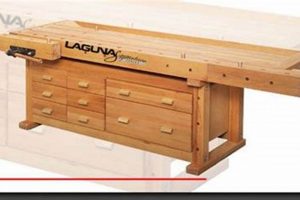
Tip 6: Incorporating Storage. Integrate storage solutions into the workbench design. Drawers, shelves, or cabinets can improve workflow and organization. Consider the types and quantities of tools to be stored when planning storage compartments.
Tip 7: Stability and Rigidity. Prioritize overall stability and rigidity. Proper bracing and substantial leg construction minimize movement and vibration during use. A solid foundation is essential for accurate and efficient work.
Adhering to these guidelines will result in a durable and efficient workbench, fostering productivity and enjoyment in the woodworking process. Careful planning and execution directly correlate with the long-term value and utility of the finished product.
The subsequent sections will delve into specific design features and provide resources for further exploration of these construction principles.
1. Design Selection

Design selection stands as the foundational element within the broader context of workbench construction. The chosen design dictates not only the overall form of the workbench but also influences material requirements, joinery methods, and the ultimate suitability of the bench for specific woodworking activities. A poorly selected design can lead to structural instability, inefficient workflow, and user fatigue. Conversely, a well-chosen design provides a solid platform for accurate and enjoyable woodworking. For example, a woodworker primarily focused on carving intricate details might opt for a smaller, lighter-weight bench with specialized work-holding features, whereas a furniture maker would likely require a larger, more robust bench capable of supporting heavy components and resisting significant forces during sawing and planing operations.
Considerations during design selection extend beyond mere aesthetics. Factors such as available space, budget constraints, and the woodworker’s skill level play crucial roles. A complex design requiring advanced joinery techniques may be unsuitable for a beginner, while a design that does not adequately address the woodworker’s specific needssuch as incorporating a specific type of vise or providing sufficient storagewill ultimately prove unsatisfactory. The selection process often involves a careful evaluation of various existing workbench plans, followed by modifications to adapt the chosen design to individual requirements. This adaptive approach requires a thorough understanding of the underlying principles of workbench construction and an ability to anticipate potential challenges.
In summary, design selection represents a critical decision point in the workbench construction process. A thoughtful approach, informed by a clear understanding of the intended use, available resources, and the woodworker’s skill set, is essential for achieving a successful outcome. Failure to adequately address this initial step can result in a workbench that is structurally unsound, ergonomically deficient, or simply unsuited for the tasks at hand, thereby undermining the woodworker’s efforts and diminishing the enjoyment of the craft. The subsequent phases of construction are inherently dependent on the soundness of the initial design selection.
2. Material Cost

Material cost constitutes a significant factor in the execution of woodworking projects, directly impacting the accessibility and feasibility of constructing a workbench. The selection of a specific woodworking resource invariably introduces a corresponding material budget. Simple designs, often employing readily available softwood lumber, present lower initial expenses. Conversely, complex configurations, especially those utilizing dense hardwoods or specialized hardware like premium vises, can substantially elevate project costs. This correlation necessitates a preliminary assessment of available financial resources before committing to a particular approach. Failure to consider material expenses can lead to project abandonment or compromises in structural integrity due to the substitution of less suitable, lower-priced materials. For example, a workbench designed for heavy-duty use featuring a maple top, when switched to pine to reduce cost, will likely exhibit diminished resistance to wear and tear.
Beyond lumber selection, other materials contribute to the overall expense. Hardware, including screws, bolts, and fasteners, constitutes a notable cost, especially when opting for corrosion-resistant or high-strength options. Finishes, such as varnish or oil, used to protect the workbench from moisture and abrasion, also factor into the budget. The presence of a premium vise significantly increases the total outlay, possibly exceeding the cost of the lumber itself. Therefore, a comprehensive resource analysis includes a detailed inventory of all required components, accompanied by a realistic pricing assessment. One might opt to source lumber locally to minimize transportation fees or reuse existing materials to reduce expenditures. Such strategies require adaptability and may influence modifications to the intended dimensions or aesthetic qualities of the project.
The interplay between a resource guide and material expenditures is undeniable. Accurate resource allocation serves as a foundation for successful completion, permitting informed decisions regarding design selection, material sourcing, and overall project scope. Neglecting this interaction invites financial strain and potential compromise in the workbench’s structural integrity. A thorough understanding of material costs empowers craftspeople to manage budgets effectively, optimizing value while maintaining quality. This cost-conscious approach promotes sustainable woodworking and encourages widespread participation in the craft.
3. Joinery Techniques

The success of any woodworking bench is inextricably linked to the application of sound joinery techniques. The phrase defines a set of structural requirements that depend heavily on properly executed joinery. The specific joints outlined directly dictate the bench’s overall strength, rigidity, and long-term durability. A bench subjected to heavy use, for example, demands robust joints such as mortise and tenon or dovetails to withstand racking forces and prevent premature failure. Inadequately executed joints represent a critical point of weakness, compromising the bench’s stability and potentially leading to hazardous working conditions. Therefore, the proper selection and execution of joinery are not merely aesthetic considerations; they are fundamental to the workbench’s structural integrity.
Diverse design types will specify various joinery methods suitable for different purposes. A simple saw bench might rely on basic lap joints or screw construction, whereas a Roubo-style workbench, intended for heavy planing and chopping, necessitates more complex and robust joinery. The design may indicate that specific joints be used for the legs, stretchers, and top. Failure to adhere to these joint specifications can result in a structurally inferior bench. Furthermore, accurate execution is as important as the choice of joint. A poorly cut mortise and tenon, even if theoretically strong, will provide inadequate support. The document therefore functions as a blueprint for precise joinery, guiding the woodworker through the crucial steps of construction. This illustrates the direct causal relationship between the document and the final products structural properties.
In conclusion, an understanding of joinery is essential for effective woodworking. The phrase and practical application form the basis of a sturdy and reliable workbench. The absence of sound joint construction inherently undermines the bench’s usefulness and lifespan. By meticulously following the joinery specifications detailed, woodworkers create workbenches that are not only functional but also enduring, providing a stable and safe platform for a wide range of woodworking endeavors. The interplay between technique and the blueprint underscores the importance of craftsmanship in achieving optimal results.
4. Vise Integration

Vise integration constitutes a critical element in workbench design, significantly influencing the utility and functionality of the completed workspace. It refers to the strategic incorporation of work-holding devices into the overall structure. The specific type, placement, and mounting method of vises directly impact the range of tasks a workbench can effectively accommodate. Different projects necessitate different clamping solutions; therefore, design must provide for suitable options.
- Type and Size Selection
The selection of vise type and size directly correlates with the intended use of the workbench. Face vises, typically mounted on the front apron, are well-suited for general clamping tasks. Tail vises, integrated into the end of the bench, excel at securing long boards for edge jointing. Leg vises offer powerful vertical clamping force. The physical dimensions of the vise must be proportional to the bench size and capable of handling the typical stock dimensions used by the woodworker. The choice depends heavily on the projects undertaken.
- Mounting Method and Stability
Secure and stable mounting is paramount for effective vise integration. The design must provide adequate reinforcement to prevent racking or movement during use. Traditional designs often employ mortise-and-tenon joinery to secure the vise chop to the bench apron. Modern designs may incorporate steel reinforcement or specialized hardware. Regardless of the method, the mounting must withstand significant clamping forces without compromising the integrity of the workbench structure. A wobbly or unstable vise negates its utility and compromises the accuracy of the work.
- Placement and Accessibility
Strategic vise placement optimizes workflow and accessibility. Face vises are typically positioned to maximize clear working space around the clamped object. Tail vises are aligned with dog holes in the benchtop to accommodate a wide range of stock lengths. Considerations such as handedness and frequently performed operations influence optimal vise placement. A well-placed vise enhances efficiency and reduces physical strain.
- Integration with Dog Holes
The effective integration of dog holes within the benchtop extends the functionality of the vise. Dog holes, strategically positioned along the benchtop, allow for the use of bench dogs in conjunction with the vise to secure workpieces of various shapes and sizes. This system provides versatile clamping options and facilitates a wide range of woodworking operations. Careful planning of dog hole placement is essential for maximizing the vise’s utility. The inclusion of dog holes significantly enhances the versatility of the workbench clamping system.
These integrated elements contribute significantly to the overall functionality and usability of the workbench. The appropriate type of vise, securely mounted, strategically placed, and integrated with a functional dog hole system, allows the workbench to adapt to diverse woodworking projects. Therefore, thorough consideration of vise integration is essential during the planning stage to ensure the construction of a versatile and efficient woodworking platform.
5. Ergonomic Height

Ergonomic height represents a crucial consideration within woodworking practices and must be carefully addressed during the selection or modification of plans. A workbench designed without regard to human factors introduces risks of musculoskeletal strain and reduced efficiency. Proper ergonomic design ensures a comfortable and sustainable work environment, promoting accuracy and minimizing the potential for long-term physical ailments.
- Defining Optimal Height
Optimal workbench height is defined by the relationship between the worker’s stature and the typical tasks performed. A common recommendation is that the bench surface should align with the user’s wrist when standing upright with relaxed shoulders. This benchmark minimizes bending and reaching, reducing strain on the back and shoulders. However, specific operations may necessitate adjustments. For instance, detailed carving might benefit from a higher surface, while heavy planing requires a lower one to leverage body weight effectively. The design, therefore, must accommodate these individual needs.
- Impact on Posture and Strain
An inappropriately sized workbench forces the worker to adopt awkward postures, leading to musculoskeletal strain. A surface that is too low necessitates excessive bending, stressing the lower back. Conversely, a surface that is too high requires the worker to raise their shoulders, causing strain in the neck and upper back. Over time, these repetitive stresses can manifest as chronic pain and debilitating conditions. Properly integrating ergonomic height into design minimizes these risks, promoting a healthier and more sustainable workflow.
- Adjustability and Customization
Because human dimensions vary considerably, the ideal solution incorporates adjustability. Adjustable-height workbenches allow the user to fine-tune the surface to their specific needs and the demands of the task. This adjustability can be achieved through various mechanisms, including adjustable legs or integrated lift systems. When adjustability is not feasible, the design should be customized to the primary user’s dimensions. Standard sizes are not universally appropriate and may compromise ergonomic benefits. The ability to alter existing parameters according to ergonomic needs is vital.
- Integration with Task-Specific Operations
The height should be considered in relation to specific woodworking operations. Planing requires a lower stance to facilitate downward force, whereas fine detailing or assembly may benefit from a higher surface for enhanced visibility. The integration of adjustable features, such as a tilting workbench top, further enhances the ergonomic adaptability. Such adjustments optimize the workstation for diverse tasks, minimizing strain and maximizing efficiency.
Integrating ergonomic height into the planning stage represents a crucial step toward creating a safe and productive woodworking environment. Workbench design should not prioritize aesthetic appeal over the physical well-being of the worker. Prioritizing ergonomic principles promotes long-term sustainability, reduces the risk of injury, and enhances the overall enjoyment of the craft. The design must reflect a commitment to the worker’s health and well-being, ensuring a comfortable and efficient work experience.
6. Workspace Optimization
Workspace Optimization, in the context of woodworking, refers to the strategic arrangement and utilization of available space to enhance efficiency, safety, and comfort. The integration of optimized principles into resource management is paramount, influencing the layout, storage solutions, tool accessibility, and overall workflow within a woodworking area. Effective optimization maximizes productivity while minimizing wasted effort and the risk of accidents.
- Spatial Arrangement
The physical arrangement of tools, equipment, and materials directly impacts workflow. Logical zoning, with dedicated areas for cutting, assembly, finishing, and storage, minimizes unnecessary movement and reduces clutter. The design should account for the size of typical projects and allow for sufficient clearance around equipment. The organization of tools directly enhances effectiveness by providing order and accessibility.
- Tool Accessibility and Storage
Readily accessible tools and well-organized storage solutions streamline woodworking processes. Dedicated racks, drawers, and shelving units should be incorporated into the resource structure. Frequently used tools should be positioned within easy reach, while less frequently used items can be stored more remotely. Proper storage not only improves efficiency but also protects tools from damage and ensures their longevity. Optimizing the location of tools provides a safer work environment.
- Lighting and Ventilation
Adequate lighting and ventilation are essential components of a safe and productive woodworking workspace. Sufficient lighting minimizes eye strain and improves accuracy during detailed tasks. Proper ventilation removes dust, fumes, and odors, mitigating health risks and improving air quality. The design should integrate both natural and artificial lighting sources, along with an effective dust collection system. Clean air is vital for health.
- Ergonomic Considerations
Ergonomics influence the design. The placement of tools, the height of work surfaces, and the overall layout should be tailored to minimize strain and promote comfortable posture. The positioning of tools and material locations directly correlate to the physical well being and endurance of the woodworker. Attention to these ergonomic factors reduces fatigue, prevents injuries, and enhances long-term productivity. The use of space affects the health of the woodworker.
The principles of workspace optimization directly influence the selection and modification of resources. A carefully planned integrates optimized design principles, maximizing efficiency, safety, and comfort. Effective layout and functionality lead to a more productive and enjoyable woodworking experience.
Frequently Asked Questions
This section addresses common inquiries regarding woodworking, aiming to provide clarity on aspects related to design, materials, and construction techniques.
Question 1: What is the primary factor in selecting a plan? The intended use of the bench is the primary factor. A plan suitable for light tasks differs significantly from one designed for heavy-duty applications such as timber framing. Matching the plan to the anticipated workload is crucial.
Question 2: Are free options reliable? Free options vary considerably in quality and accuracy. While some provide adequate guidance, others may lack detail or contain errors. Thoroughly vetting free plans against established woodworking principles is advisable before commencing construction.
Question 3: What type of wood is best suited for a bench top? Hardwoods, such as maple or beech, offer superior durability and resistance to wear. Softwoods, like pine, may be suitable for less demanding applications or as a cost-effective alternative, but their lifespan is typically shorter.
Question 4: How does design impact stability? A well-designed bench distributes weight evenly and incorporates robust joinery techniques. Features such as splayed legs, a thick top, and strategically placed stretchers contribute to overall stability and minimize racking.
Question 5: Is it necessary to follow a plan exactly? While adhering to a plan provides a solid foundation, modifications to suit individual needs and preferences are common. However, alterations should be carefully considered to avoid compromising the bench’s structural integrity.
Question 6: What are common mistakes to avoid? Common mistakes include using inadequate joinery, neglecting to flatten the top, and failing to account for the bench’s final location. Attention to detail throughout the construction process minimizes the risk of these errors.
In summary, informed decision-making, careful execution, and a thorough understanding of woodworking principles are essential for success. Selecting a plan that aligns with specific needs, utilizing appropriate materials, and employing sound construction techniques ensure a durable and functional workbench.
The next article section provides a summary, synthesizing the key concepts discussed and providing actionable steps for embarking on a woodworking venture.
Conclusion
This discourse has illuminated essential facets of woodworking, emphasizing design considerations, material selection, joint construction, vise integration, ergonomic principles, and workspace optimization. Understanding these elements empowers practitioners to create functional and enduring work surfaces tailored to their specific needs and skill levels. Thoughtful deliberation in each of these areas ensures a safe and productive crafting environment.
The continued pursuit of knowledge and refinement of skills remains paramount in the woodworking domain. The crafting of a workbench represents not merely a construction project but an investment in one’s capabilities and the enduring quality of future endeavors. The commitment to quality and craftsmanship continues to provide solid and reliable workbenches for woodworkers worldwide.