



![Top-Rated Best Design Software for Woodworking [2024]](data:image/svg+xml;base64,PHN2ZyB4bWxucz0iaHR0cDovL3d3dy53My5vcmcvMjAwMC9zdmciIHdpZHRoPSI0NzQiIGhlaWdodD0iNjYiIHZpZXdCb3g9IjAgMCA0NzQgNjYiPjxyZWN0IHdpZHRoPSIxMDAlIiBoZWlnaHQ9IjEwMCUiIHN0eWxlPSJmaWxsOiNjZmQ0ZGI7ZmlsbC1vcGFjaXR5OiAwLjE7Ii8+PC9zdmc+ "Top-Rated Best Design Software for Woodworking [2024] Step-by-Step Guides, Tools & Inspiration to Build Beautiful Wooden Decor on a Budget")
The appropriate software applications enable woodworkers to conceptualize, refine, and visualize projects before commencing physical construction. These tools offer a digital workspace to create detailed plans, experiment with different materials and joinery techniques, and generate precise cutting lists, optimizing resource utilization and minimizing potential errors in the build process. An example would be utilizing a CAD program to draft a complex furniture piece with intricate joinery before cutting any lumber.
The adoption of digital design methodologies offers substantial advantages in woodworking, including enhanced accuracy, reduced material waste, improved communication with clients and collaborators, and the ability to explore complex designs that would be challenging to execute manually. Historically, woodworking relied heavily on hand-drawn plans and physical models. The introduction of computer-aided design (CAD) and subsequently more specialized applications, has revolutionized the field, allowing for iterative design processes and precise execution.
This article will explore the various types of software available, their key features, and the factors to consider when selecting the appropriate tool for specific woodworking needs, ranging from simple home projects to complex professional commissions. A comparison of several leading solutions, discussing their strengths and weaknesses, will also be presented.
Optimizing Workflow Through Digital Design
The utilization of specialized software significantly enhances the woodworking process. The following tips provide guidance on leveraging these digital tools effectively.
Tip 1: Establish Project Parameters: Before initiating design work, define project dimensions, material specifications, and functional requirements. This upfront planning ensures the digital model accurately reflects intended outcomes. For example, determine load-bearing requirements for a shelving unit before designing its supports.
Tip 2: Master Fundamental CAD Techniques: Proficiency in basic drafting functions, such as line drawing, geometric shape creation, and dimensioning, is essential. These skills form the foundation for creating accurate and detailed plans. Focus on precision and adherence to scale.
Tip 3: Utilize Parametric Modeling: Explore the capabilities of parametric modeling for projects requiring iterative adjustments. By defining relationships between design elements, alterations to one component automatically update related parts, saving time and ensuring consistency. This is beneficial when designing adjustable furniture.
Tip 4: Simulate Material Properties: Some software packages allow for simulating material behavior under stress. This feature assists in identifying potential structural weaknesses and optimizing designs for durability. An example is simulating stress on a table leg to determine its optimal thickness.
Tip 5: Generate Accurate Cutting Lists: Leverage the software’s ability to automatically generate cutting lists from the completed design. This minimizes manual calculation errors and optimizes material yield, reducing waste. Ensure the software’s output is compatible with available fabrication equipment.
Tip 6: Visualize in 3D: Utilize 3D modeling capabilities to visualize the finished project from multiple angles. This allows for identifying aesthetic issues and making design refinements before committing to physical construction. Consider rendering realistic textures and lighting to enhance visualization.
Tip 7: Export for Manufacturing: Ensure the software is capable of exporting designs in formats compatible with CNC machines or other digital fabrication equipment. This streamlines the transition from design to manufacturing. Verify compatibility before commencing design work.
Adhering to these principles will significantly improve the efficiency and accuracy of woodworking projects. By leveraging the power of digital design, woodworkers can minimize errors, optimize material use, and create complex designs with greater precision.
The subsequent sections of this article will delve into specific software options and their suitability for different woodworking applications.
1. Functionality

Functionality, in the context of software applications for woodworking design, refers to the range and capabilities of the tools and features available to the user. It is a primary determinant of the software’s suitability for specific project requirements and influences the efficiency and precision of the design process.
- Parametric Modeling
Parametric modeling allows for the creation of designs where geometric relationships are defined by parameters. Changing a parameter automatically updates all related elements, enabling efficient design iteration and customization. For example, adjusting the height of a table leg in a parametric model would automatically adjust the positions of supporting rails. This feature is crucial for complex projects requiring frequent modifications and ensures design consistency.
- Joinery Tools
Specialized tools for creating and visualizing joinery techniques, such as mortise and tenon, dovetail, and rabbet joints, are essential for woodworking software. These tools should accurately represent the physical characteristics of each joint and allow for precise dimensioning and placement. An example is a tool that automatically generates the mating components of a dovetail joint based on user-defined parameters, ensuring a tight and accurate fit.
- Material Libraries
Comprehensive material libraries containing properties such as density, strength, and appearance are invaluable for simulating real-world performance and aesthetics. These libraries enable users to select appropriate materials for specific applications and visualize the finished product with realistic textures and colors. For instance, a material library might include various types of wood, each with its own set of properties and visual characteristics, allowing users to accurately simulate the appearance and structural behavior of different wood species.
- CAM Integration
The ability to directly integrate with Computer-Aided Manufacturing (CAM) software is crucial for streamlining the transition from design to fabrication. This integration allows for the automatic generation of toolpaths for CNC machines, eliminating the need for manual programming and reducing the risk of errors. An example is the ability to export a design as a G-code file, which can then be directly loaded into a CNC router for cutting and shaping the workpiece.
The integration of these functional aspects significantly enhances the utility of woodworking design software. A robust set of functionalities translates directly into increased design precision, reduced errors, and improved workflow efficiency. The selection of software should align with the specific needs of the user and the complexity of the woodworking projects undertaken, ensuring that the chosen tool possesses the necessary capabilities to facilitate successful outcomes.
2. Precision

Precision is a cornerstone attribute of effective software for woodworking design. It directly influences the accuracy of project execution and the overall quality of the finished product. Inadequate precision in design translates to inaccuracies in cutting lists, joinery, and overall dimensions, leading to potential material waste, structural weaknesses, and aesthetic flaws. For example, a discrepancy of even a fraction of an inch in a critical dimension can compromise the integrity of a complex mortise and tenon joint, resulting in a weak or unstable connection. Software that facilitates accurate measurements, precise angles, and detailed representations of woodworking joints is therefore essential.
The role of precision extends beyond mere dimensioning. Software should enable the creation of detailed plans with accurate representations of material thicknesses, joinery offsets, and hardware placement. Features such as snap-to-grid functions, parametric modeling, and automated calculations contribute to maintaining precision throughout the design process. Consider the design of a complex cabinet system: accurate measurements and precise placement of each component are crucial for achieving a flush and aligned finish. Software allowing for detailed cross-sectional views and precise dimensioning enables the designer to foresee and rectify potential alignment issues before any physical construction commences.
In summary, precision is an indispensable element of appropriate software for woodworking. It directly impacts material usage, structural integrity, and final product quality. The capacity of the software to facilitate accurate measurement, detailed planning, and error-free execution defines its utility and contributes to a more efficient and effective woodworking workflow. Choosing software that prioritizes and ensures precision is vital for achieving successful woodworking outcomes, minimizing waste, and ensuring the durability and aesthetic appeal of the finished product.
3. Compatibility

Compatibility serves as a crucial determinant in evaluating the suitability of design software for woodworking applications. It encompasses the ability of the software to seamlessly interact with various file formats, operating systems, and external hardware, significantly impacting workflow efficiency and overall project success. Incompatibility can result in data loss, translation errors, and increased project costs due to the need for workarounds or format conversions. For instance, software unable to import standard CAD files may necessitate the manual reconstruction of designs, a time-consuming and error-prone process. This directly affects productivity and negates many of the advantages afforded by digital design tools. In the context of computer-aided manufacturing (CAM), seamless compatibility is imperative; the design software must generate toolpaths that are accurately interpreted by the CNC machine’s controller, ensuring the intended design is faithfully replicated.
The practical significance of compatibility extends to collaboration and file sharing. Woodworking projects frequently involve multiple stakeholders, including designers, fabricators, and clients. Design software that supports common file formats like DXF, DWG, or STEP enables seamless exchange of information, facilitating efficient communication and minimizing the risk of misinterpretations or data corruption. Moreover, the ability to integrate with other software packages, such as rendering engines or project management tools, further enhances workflow efficiency. For example, the ability to export a design to a rendering engine allows for the creation of photorealistic visualizations, enabling clients to fully appreciate the design before physical construction begins. Software with limited compatibility restricts these collaborative opportunities and can isolate the user from the broader woodworking community.
In conclusion, compatibility is an essential attribute when assessing software for woodworking design. Its absence can lead to significant inefficiencies, errors, and communication breakdowns. Evaluating software based on its ability to seamlessly integrate with various file formats, operating systems, and external hardware is crucial for ensuring a smooth and productive workflow, minimizing potential challenges, and maximizing the benefits of digital design technology in woodworking. This interoperability contributes directly to cost savings, improved accuracy, and enhanced collaboration, ultimately contributing to the success of woodworking projects.
4. Visualization

Visualization is a critical component in software applications designed for woodworking. It bridges the gap between abstract digital designs and tangible, real-world objects, providing a means to assess aesthetics, functionality, and potential design flaws before physical construction commences.
- 3D Modeling and Rendering
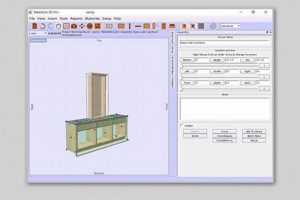
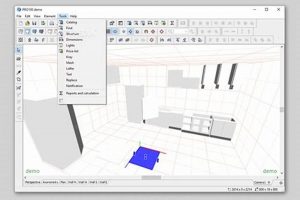
3D modeling capabilities enable the creation of virtual representations of woodworking projects, allowing for examination from any angle. Rendering enhances these models by simulating lighting, textures, and material finishes, providing a photorealistic preview. For example, a software package may simulate the play of light across a finished cabinet surface, revealing subtle imperfections or highlighting design strengths that would be difficult to assess from a simple blueprint. The ability to create realistic 3D models significantly reduces the risk of unexpected aesthetic outcomes.
- Exploded Views and Assembly Simulations
Exploded views provide a clear depiction of how individual components fit together, aiding in the understanding of complex assemblies. Assembly simulations take this a step further by demonstrating the construction process step-by-step. A cabinet design might be visualized in an exploded view to confirm the proper ordering and alignment of its various parts. Assembly simulations can identify potential clashes or difficulties in the construction process, allowing for proactive adjustments before any physical work is undertaken.
- Material Visualization and Texture Mapping
Material visualization enables the application of different material finishes to the 3D model, allowing the user to assess the aesthetic impact of various wood species, stains, and hardware options. Texture mapping provides even greater realism by applying high-resolution images of wood grain and other surface details. Consider a chair design: software allows to assess the suitability of various wood grains and finishes on the final appearance, allowing informed decisions before the selection of materials.
- Clash Detection and Interference Analysis
Clash detection identifies potential collisions or interferences between components in the design, ensuring that all parts fit together as intended. Interference analysis goes further by calculating the amount of space required for moving parts, such as drawers or doors, to function properly. Within a set of cabinets, clash detection can identify potential conflicts between adjacent drawers or doors, preventing design errors and ensuring smooth operation.
These facets of visualization collectively enhance the design process, allowing woodworkers to identify and correct potential problems before any physical material is cut. By providing a clear and accurate representation of the finished product, software effectively minimizes errors, reduces material waste, and ensures that the final outcome aligns with the intended design. This capability is critical for both professional woodworkers and hobbyists alike, contributing to increased efficiency, improved product quality, and enhanced customer satisfaction.
5. Cost

The financial investment associated with design software significantly impacts its accessibility and long-term viability for woodworking professionals and hobbyists alike. Cost considerations extend beyond the initial purchase price, encompassing subscription fees, upgrade expenses, and potential training requirements.
- Initial Purchase Price vs. Subscription Model
Software is typically offered under two pricing models: a one-time perpetual license or a recurring subscription. Perpetual licenses involve a higher upfront cost but provide indefinite access to a specific software version. Subscription models, conversely, require ongoing payments for continued access, often including updates and support. The choice between these models hinges on budgetary constraints, project duration, and the need for continuous software updates. For example, a small woodworking shop with limited capital may favor a perpetual license, while a larger enterprise reliant on cutting-edge features may opt for a subscription.
- Feature Sets and Pricing Tiers
Many software vendors offer tiered pricing structures that correspond to different feature sets. Entry-level tiers may provide basic design capabilities suitable for simple projects, while higher tiers unlock advanced features such as parametric modeling, CNC integration, and photorealistic rendering. Evaluating the necessary feature set in relation to the associated cost is essential for maximizing value. A hobbyist designing basic furniture may find an entry-level package sufficient, while a professional crafting intricate pieces for clients may require a more comprehensive, and therefore more expensive, solution.
- Training and Implementation Costs
The cost of design software extends beyond the purchase price to include the investment in training and implementation. Complex software packages may require specialized training to maximize their potential. This training can involve formal courses, online tutorials, or on-site consulting. Additionally, the time and resources required to integrate the software into an existing workflow represent a significant cost factor. A software package with a steep learning curve may require considerable time investment before yielding tangible benefits, thereby increasing the overall cost of ownership.
- Long-Term Cost of Ownership
The long-term cost of ownership considers not only the initial purchase price but also the ongoing expenses associated with software maintenance, upgrades, and support. Maintenance contracts provide access to technical support and bug fixes, ensuring continued software reliability. Upgrades introduce new features and enhancements, maintaining software compatibility and competitiveness. Ignoring these long-term costs can result in unforeseen expenses and diminished software effectiveness. A cost-benefit analysis that incorporates both short-term and long-term expenses is crucial for making informed decisions about software investments.
The financial implications of selecting design software are multifaceted, encompassing initial purchase costs, recurring expenses, training investments, and long-term maintenance. A comprehensive evaluation of these cost factors, in relation to the desired feature set and project requirements, is essential for maximizing value and ensuring a sustainable return on investment in the context of woodworking endeavors.
6. Learning Curve

The learning curve associated with design software represents a significant consideration in the selection process, directly impacting the time required to achieve proficiency and the overall efficiency of its implementation within woodworking workflows. Its relevance stems from the need to balance feature-rich capabilities with user-friendliness, ensuring that the chosen software can be effectively utilized by individuals with varying levels of technical expertise.
- Complexity of Interface and Tools
The interface design and tool organization contribute significantly to the learning curve. Intuitively designed interfaces with logically grouped tools facilitate faster comprehension and skill acquisition. Conversely, cluttered or poorly organized interfaces can hinder learning and increase the time required to become proficient. For instance, software employing ribbon-style interfaces may be initially unfamiliar to users accustomed to traditional menu systems, requiring a period of adaptation. The complexity of individual tools also affects the learning curve; parametric modeling tools, while powerful, often require a deeper understanding of mathematical relationships and geometric constraints.
- Availability of Training Resources
The presence of comprehensive training resources, such as tutorials, documentation, and community forums, plays a critical role in mitigating the steepness of the learning curve. Well-structured tutorials, covering both basic and advanced features, enable users to progressively acquire skills. Comprehensive documentation provides detailed explanations of tool functions and parameters. Active community forums foster peer-to-peer learning and provide solutions to common problems. Software vendors that invest in robust training resources significantly reduce the time required for users to become proficient.
- Prior Experience and Skill Level
An individual’s prior experience with CAD software, woodworking techniques, and computer literacy influences the speed at which they can master new design software. Users with a background in engineering or architecture may find it easier to grasp the principles of 3D modeling and parametric design. Similarly, experienced woodworkers may readily understand the application of specific joinery tools and material properties. The learning curve is generally steeper for individuals with limited prior experience, necessitating a more structured and patient approach to skill acquisition.
- Customization and Adaptability
Software that allows for customization of the interface, toolbars, and keyboard shortcuts can significantly reduce the learning curve. By tailoring the software to their individual preferences and workflows, users can streamline their design process and minimize the need to navigate unfamiliar menus or tools. Adaptability to different project types and design styles also contributes to a more gradual learning curve. Software that can be readily applied to a variety of woodworking projects allows users to progressively expand their skills and knowledge without being constrained by the limitations of the tool.
The learning curve is a pivotal factor influencing the effective utilization of design software in woodworking. Careful consideration of interface complexity, availability of training resources, prior experience, and software customization options is crucial for selecting a tool that aligns with individual skill levels and project requirements. A software package with a manageable learning curve maximizes productivity, minimizes frustration, and ensures that the benefits of digital design are fully realized within the woodworking workflow.
Frequently Asked Questions About Design Software for Woodworking
This section addresses common inquiries and clarifies prevalent misconceptions surrounding the utilization of design software in woodworking applications. It provides concise answers to frequently asked questions, promoting a deeper understanding of these tools and their optimal implementation.
Question 1: Is specialized design software truly necessary for woodworking, or can traditional methods suffice?
While traditional methods remain viable, specialized software enhances precision, reduces material waste, and enables the creation of complex designs that may be difficult or impossible to execute manually. The software facilitates iterative design processes and allows for accurate simulation of material behavior, offering significant advantages over purely manual approaches.
Question 2: What are the primary differences between CAD software and software specifically designed for woodworking?
CAD software provides general-purpose drafting and design tools suitable for various engineering and architectural applications. Software designed specifically for woodworking typically incorporates features tailored to the craft, such as joinery tools, material libraries, and CNC integration, streamlining the design-to-fabrication process.
Question 3: How does design software contribute to minimizing material waste in woodworking projects?
The software optimizes material usage through accurate cutting list generation and the ability to simulate different layouts, allowing for efficient nesting of parts to minimize offcuts. Visualization capabilities also aid in identifying potential design flaws early in the process, preventing costly errors that would result in wasted materials.
Question 4: Does the utilization of design software require extensive technical expertise?
The learning curve varies depending on the complexity of the software and the user’s prior experience. While some packages require specialized training, many offer intuitive interfaces and comprehensive tutorials, making them accessible to individuals with varying levels of technical proficiency. Prior CAD experience is beneficial but not always essential.
Question 5: What are the key considerations when selecting design software for woodworking?
The selection process should consider functionality (e.g., joinery tools, parametric modeling), precision, compatibility with other software and hardware (e.g., CNC machines), visualization capabilities, cost, and the learning curve. The specific requirements of the woodworking projects undertaken will dictate the relative importance of each factor.
Question 6: Can design software effectively replace physical prototyping in woodworking?
While design software provides comprehensive visualization and simulation capabilities, it does not entirely eliminate the need for physical prototyping in all cases. For critical projects, particularly those involving complex joinery or novel designs, physical prototypes may still be necessary to validate design assumptions and ensure structural integrity.
In summary, design software represents a valuable tool for woodworkers, offering enhanced precision, efficiency, and design capabilities. Careful consideration of software features, cost, and the learning curve is essential for selecting the appropriate tool for specific project requirements.
The following section will delve into specific software options available in the market, providing a comparative analysis of their features and suitability for different woodworking applications.
Conclusion
The foregoing exploration has elucidated the significant impact of appropriate applications on woodworking endeavors. Factors such as functionality, precision, compatibility, visualization capabilities, cost considerations, and the learning curve were identified as critical determinants in selecting the most suitable tool. This analysis has highlighted the trade-offs between advanced features and ease of use, emphasizing the need for careful alignment with individual project requirements and skill levels.
The judicious selection and effective implementation of these programs offer significant advantages in terms of design accuracy, material optimization, and workflow efficiency. Continued advancements in digital design technologies promise further enhancements to the woodworking process, empowering woodworkers to achieve increasingly complex and innovative outcomes. Further, a commitment to ongoing learning and adaptation remains essential for maximizing the benefits afforded by design software in the woodworking field. The ability to craft intricate designs, minimize errors, and optimize material utilization positions these applications as indispensable tools for both professional woodworkers and dedicated hobbyists.


![Top Rated Best Design App for Woodworking Designs [2024] | Step-by-Step Guides, Tools & Inspiration to Build Beautiful Wooden Decor on a Budget](https://woodfromhome.com/wp-content/uploads/2026/03/th-321-300x200.jpg "Top Rated Best Design App for Woodworking Designs [2024] Step-by-Step Guides, Tools & Inspiration to Build Beautiful Wooden Decor on a Budget")