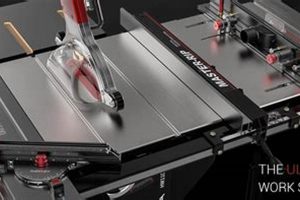
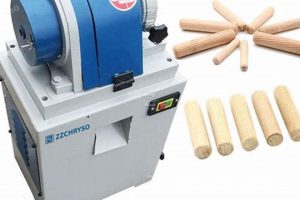
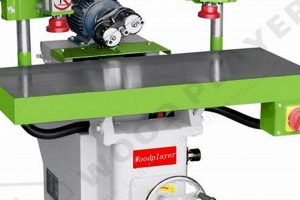
This process involves using specialized equipment designed to create precise holes in wood. This equipment, available in various sizes and configurations, allows for the accurate drilling of holes for dowels, hardware, or decorative elements. For example, a multi-spindle apparatus can simultaneously drill several holes with consistent spacing and depth, significantly increasing efficiency in furniture production.
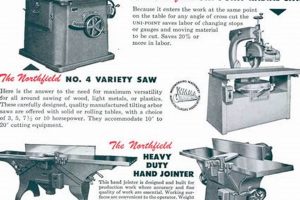
The importance of this technique lies in its ability to produce consistent and repeatable results, crucial for mass production and complex joinery. Benefits include increased precision, reduced labor costs, and improved product quality. Historically, hand-operated tools were employed, but the advent of mechanized solutions revolutionized woodworking, enabling greater accuracy and speed in hole creation.
The following sections will delve into specific types of machines, their applications, and the factors to consider when selecting the appropriate equipment for particular projects. This will also cover best practices for operation and maintenance, ensuring optimal performance and longevity of the machinery.
Operational Best Practices
Maximizing the efficiency and lifespan of specialized drilling equipment requires adherence to several crucial guidelines. Proper setup, consistent maintenance, and a thorough understanding of material properties are paramount.
Tip 1: Material Selection and Preparation: The type of wood dictates the appropriate speed and bit selection. Hardwoods require slower speeds and sharper bits compared to softwoods. Ensuring the wood is properly seasoned and free from knots or imperfections minimizes bit deflection and splintering.
Tip 2: Bit Selection and Maintenance: Using the correct bit type is crucial. Forstner bits are ideal for clean, flat-bottomed holes, while brad-point bits offer precise starts. Regularly sharpen or replace dull bits to prevent excessive heat buildup and ensure clean cuts.
Tip 3: Speed and Feed Rate Optimization: The rotational speed and feed rate must be carefully calibrated to the wood species and bit diameter. Excessive speed can lead to burning and bit damage, while insufficient feed rate may cause the bit to wander. Refer to manufacturer guidelines for specific recommendations.
Tip 4: Secure Workpiece Clamping: The workpiece must be securely clamped to prevent movement during the drilling operation. Vibration and slippage can result in inaccurate holes and potential damage to the equipment.
Tip 5: Regular Lubrication: Consistent lubrication of moving parts is essential for smooth operation and reduced wear. Use the recommended lubricant type and follow the manufacturer’s maintenance schedule.
Tip 6: Depth Stop Utilization: Employ depth stops to ensure consistent hole depth across multiple pieces. This is particularly important in joinery applications where precise alignment is critical.
Tip 7: Dust and Chip Extraction: Implement an effective dust collection system to remove wood chips and debris from the drilling area. This improves visibility, prevents overheating, and maintains a clean working environment.
By implementing these best practices, operators can ensure accurate, efficient, and safe operation, extending the lifespan of their equipment and producing high-quality woodworking projects.
The subsequent sections will delve into specific machine types and their appropriate applications, building upon these fundamental operational principles.
1. Precision Hole Creation

In woodworking, the ability to create holes with exacting dimensions and placement is often a critical determinant of project success, particularly when utilizing specialized drilling machinery. Precision hole creation impacts structural integrity, aesthetic appeal, and the seamless integration of components.
- Accuracy of Hole Dimensions
Deviation from specified hole diameters directly affects the fit of fasteners, dowels, and other hardware. Undersized holes can prevent proper insertion, while oversized holes compromise holding strength. Precision machining minimizes these discrepancies, ensuring optimal fit and functionality.
- Consistency in Hole Placement
Accurate hole placement is essential for proper alignment in joinery. Misalignment, even by a small margin, can weaken structural integrity and detract from the overall aesthetics. Precision drilling equipment, often guided by digital controls, ensures consistent and repeatable hole positioning.
- Minimization of Tear-Out and Splintering
Clean hole edges are crucial for a professional finish. Tear-out and splintering, common occurrences with hand-operated tools or poorly maintained machinery, can necessitate time-consuming repairs. Specialized drilling machinery, with sharp bits and controlled feed rates, minimizes these defects, resulting in cleaner, more aesthetically pleasing holes.
- Repeatability in Production
In mass production scenarios, repeatability is paramount. Precision drilling equipment ensures that each hole, across multiple workpieces, is drilled to the same specifications. This consistency streamlines assembly processes and minimizes errors.
These facets of precision hole creation are inextricably linked to the efficacy of specialized drilling equipment. The machinery’s capacity to deliver accurate dimensions, consistent placement, minimal tear-out, and repeatable results directly translates to improved product quality, reduced waste, and increased efficiency in woodworking operations. Investment in high-quality equipment and rigorous operational procedures are essential for achieving these benefits.
2. Efficient Material Removal
Effective material removal is intrinsically linked to productivity and quality in specialized drilling operations. The rate and manner in which waste material (chips, shavings, dust) are evacuated directly influence the cutting bit’s performance, the surface finish of the bored hole, and the longevity of the equipment. Inadequate removal leads to several detrimental effects: increased friction between the bit and workpiece, resulting in overheating and accelerated bit wear; clogging of the cutting flutes, reducing drilling efficiency; and the potential for marred surfaces due to chip compaction within the hole. Consider, for instance, the drilling of deep holes in hardwoods. Without efficient chip evacuation, the bit can bind, leading to motor strain, potential workpiece damage, and increased cycle times. Conversely, a properly designed dust collection system, coupled with optimized bit geometry, ensures continuous material removal, allowing the bit to cut cleanly and efficiently.
The design of the cutting bit itself plays a critical role in efficient material removal. Bits with aggressive flute designs, combined with optimized helix angles, facilitate the rapid lifting of chips away from the cutting surface. Furthermore, the use of through-tool coolant systems can significantly improve material removal rates, particularly when machining denser materials. The coolant not only lubricates the cutting edge, reducing friction and heat, but also acts as a flushing agent, carrying away chips and debris. A practical example is the use of coolant systems in metalworking applications adapted for specialized woodworking scenarios, such as drilling composite materials or highly resinous woods. In these cases, the coolant mitigates resin buildup on the bit and prevents premature dulling.
In summary, efficient material removal is not merely an ancillary consideration in specialized drilling, but an integral factor that dictates overall operational success. It directly impacts cutting speed, bit life, surface finish, and the integrity of the workpiece. Therefore, careful attention to bit design, dust collection systems, and the potential implementation of coolant strategies are essential for maximizing the benefits of specialized drilling equipment. Failure to address this aspect can lead to reduced productivity, increased operating costs, and compromised product quality.
3. Versatile Machine Types

The domain of specialized drilling machinery presents a spectrum of equipment designs, each tailored to specific tasks and production environments. This versatility is crucial in woodworking, where projects range from simple furniture construction to intricate architectural millwork. The selection of an appropriate machine directly impacts efficiency, precision, and the range of operations that can be performed.
- Single-Spindle Boring Machines
These machines are characterized by a single drilling head, offering simplicity and precision for basic hole-boring operations. They are often manually operated, making them suitable for smaller workshops or custom projects requiring careful control. An example is the creation of pilot holes for screw placement or the boring of precise holes for dowel joinery. Their implications include lower capital investment but also reduced production speed compared to multi-spindle alternatives.
- Multi-Spindle Boring Machines
These machines feature multiple drilling heads arranged in a fixed or adjustable pattern, enabling the simultaneous boring of multiple holes. They are ideally suited for mass production environments, such as furniture manufacturing, where consistent hole patterns are required. For instance, a multi-spindle machine can simultaneously drill all the holes for shelf supports in a cabinet side panel. The benefit is significantly increased throughput, but the setup complexity and initial cost are higher.
- Line Boring Machines
Line boring machines specialize in drilling a series of equally spaced holes along a straight line. They are commonly used for creating shelf support systems or for drilling hinge pockets in cabinet doors. A typical application is the production of adjustable shelving systems, where consistent hole spacing is critical for functionality. These machines offer a balance between precision and efficiency for specific repetitive tasks.
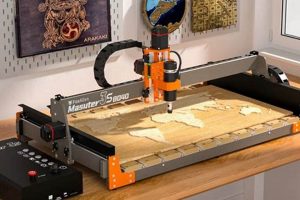
- CNC Boring Machines
Computer Numerical Control (CNC) boring machines offer the highest level of precision and versatility. These machines utilize computer-controlled movements to position the drilling head and workpiece, allowing for the creation of complex hole patterns and shapes. They are commonly used for intricate woodworking projects, such as custom cabinetry and architectural millwork. For example, a CNC boring machine can create precisely positioned mortises for complex joinery. Their advantage lies in their ability to handle intricate designs with minimal operator intervention, but they require specialized programming skills and represent a significant capital investment.
The diverse range of specialized drilling machines reflects the varying needs of the woodworking industry. From basic single-spindle models to sophisticated CNC-controlled systems, each machine type offers a unique balance of precision, efficiency, and cost. The selection of the appropriate machine is a critical decision that directly impacts the productivity and quality of woodworking operations.
4. Durable Tooling Options

Durable tooling options are an indispensable element within specialized drilling applications. The correlation stems from the fundamental principle that the longevity and performance of the cutting tool directly influence the efficiency, accuracy, and cost-effectiveness of the entire operation. Inferior tooling materials and construction lead to premature wear, frequent replacements, and increased downtime. For example, using high-speed steel (HSS) bits for drilling hardwoods will result in rapid dulling and necessitate frequent sharpening or replacement. This increased frequency translates directly into higher operational costs and reduced productivity.
The significance of durable tooling extends beyond mere cost considerations. Tooling material affects the quality of the finished hole. Carbide-tipped bits, for example, offer superior hardness and wear resistance compared to HSS bits, enabling them to maintain a sharper cutting edge for a longer period. This translates into cleaner, more precise holes with reduced tear-out, particularly in challenging materials such as veneered plywood or composite boards. An apt illustration is in the production of high-end cabinetry, where precise and flawless hole creation is paramount. Utilizing durable carbide tooling minimizes defects and enhances the overall aesthetic appeal of the finished product. Moreover, appropriate geometries tailored for specific materials are also important for better cutting.
In summary, the selection of durable tooling options is not merely a procedural step in specialized drilling applications, but a critical determinant of operational success. The investment in high-quality, wear-resistant tooling materials, such as carbide or diamond-coated bits, yields significant benefits in terms of reduced downtime, improved hole quality, and extended tool life. Furthermore, understanding the specific demands of the workpiece material and selecting tooling accordingly is crucial for optimizing performance and minimizing operational costs. While the initial investment may be higher, the long-term return on investment justifies the use of durable tooling options in nearly all specialized drilling scenarios.
5. Optimized Operational Parameters

Operational parameters, encompassing feed rate, spindle speed, and depth of cut, directly influence the effectiveness and longevity of specialized drilling equipment. Inefficiently calibrated settings induce excessive heat generation, leading to premature bit wear and potential damage to the workpiece. For example, an excessively high spindle speed applied to hardwoods without appropriate coolant generates friction, resulting in burning and a compromised hole finish. Conversely, a feed rate that is too slow can cause the bit to dwell, increasing the likelihood of tear-out and splintering, particularly at the exit point of the hole. Consequently, optimization of these parameters is not merely a matter of achieving faster cycle times, but a fundamental requirement for maintaining equipment integrity and producing consistent, high-quality results.
The selection of optimal operational parameters necessitates a comprehensive understanding of material properties, tooling characteristics, and machine capabilities. The type of wood (hardwood versus softwood, density, grain orientation), the composition of composite materials (particleboard, MDF, plywood), and the geometry and material of the drill bit all contribute to determining the appropriate settings. Advanced drilling machines equipped with programmable logic controllers (PLCs) allow for precise control and automated adjustment of these parameters. For instance, a CNC boring machine can be programmed to automatically reduce the feed rate as the bit approaches the exit point of the hole, mitigating the risk of tear-out. In contrast, manual machines demand greater operator expertise in fine-tuning settings based on real-time feedback, such as the sound and vibration of the machine. This adaptability to specific conditions is indispensable for maximizing operational efficiency.
Ultimately, the integration of optimized operational parameters within specialized drilling workflows is crucial for achieving both efficiency and quality. Neglecting this aspect leads to increased tool wear, higher reject rates, and potential safety hazards. By adopting a data-driven approach to parameter optimization, leveraging machine capabilities, and continually refining processes based on performance metrics, woodworking operations can maximize the return on investment in specialized drilling equipment and consistently produce high-quality results. The challenge lies in the ongoing process of data analysis and parameter adjustments required to maintain optimal performance across a variety of materials and project requirements.
Frequently Asked Questions about Boring Machine Woodworking
This section addresses common inquiries regarding the use of specialized drilling equipment in woodworking, providing clear and concise answers to ensure a comprehensive understanding of the subject matter.
Question 1: What distinguishes horizontal boring machines from vertical models?
Horizontal boring machines typically feature a horizontally oriented spindle, enabling the drilling of holes along the length of a workpiece. They are often employed for mortise and tenon joinery. Vertical boring machines, conversely, possess a vertically oriented spindle, primarily used for drilling holes perpendicular to the surface of the workpiece. They are common in applications such as shelf-pin drilling. The optimal choice depends on the specific orientation and type of hole required.
Question 2: What safety precautions are paramount when operating specialized drilling machinery?
Adherence to stringent safety protocols is essential. Eye protection, hearing protection, and appropriate dust collection are mandatory. Workpieces must be securely clamped to prevent movement during the drilling process. Operators should receive thorough training on machine operation and maintenance. Additionally, machines should be equipped with emergency stop mechanisms and regularly inspected for mechanical integrity.
Question 3: What are the common causes of bit deflection during drilling?
Bit deflection, the deviation of a drill bit from its intended path, can stem from several factors. These include dull or improperly sharpened bits, excessive feed rates, insufficient workpiece clamping, and variations in wood density. Addressing these issues through bit maintenance, parameter adjustments, and secure clamping is crucial for maintaining hole accuracy.
Question 4: How does the selection of drill bit material impact the quality and efficiency of boring operations?
The drill bit material directly influences cutting performance and bit longevity. High-speed steel (HSS) bits are suitable for softer woods but dull quickly when used on hardwoods. Carbide-tipped bits offer superior hardness and wear resistance, making them ideal for hardwoods and abrasive materials. Diamond-coated bits provide exceptional durability for specialized applications involving composites and engineered wood products.
Question 5: What are the implications of improper dust extraction during specialized drilling?
Inadequate dust extraction leads to several adverse consequences. Accumulation of wood dust impairs visibility, increases the risk of respiratory irritation, and can pose a fire hazard. Moreover, dust buildup on machinery can impede performance and accelerate wear. Implementing an effective dust collection system is therefore essential for maintaining a safe and efficient work environment.
Question 6: How can the life of specialized drilling equipment be extended?
Extending the service life of drilling equipment requires consistent maintenance and adherence to operational best practices. Regular lubrication of moving parts, prompt replacement of worn bits, proper cleaning and dust extraction, and adherence to manufacturer’s recommendations are all crucial. Implementing a preventative maintenance schedule can significantly reduce the risk of equipment failure and ensure long-term reliability.
In summary, understanding the nuances of boring machine woodworking, from safety protocols to equipment maintenance, is critical for achieving optimal results and ensuring a safe and productive working environment.
The following section will provide a glossary of terms related to specialized drilling equipment, clarifying technical terminology for improved comprehension.
Conclusion
The preceding analysis elucidates the multifaceted nature of boring machine woodworking. From fundamental operational practices to nuanced considerations concerning tooling and machine types, proficiency in this domain necessitates a comprehensive understanding. The precision and efficiency afforded by specialized drilling equipment directly impact the quality and productivity of woodworking operations. Rigorous adherence to safety protocols, coupled with ongoing maintenance, ensures both operator well-being and equipment longevity.
The continued evolution of drilling technology promises further advancements in precision, automation, and material compatibility. Woodworking professionals must remain abreast of these developments to leverage the full potential of specialized equipment and maintain a competitive edge. The strategic implementation of boring machine woodworking techniques represents a significant investment in enhanced craftsmanship and streamlined production capabilities.