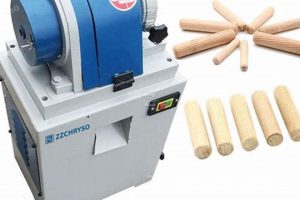
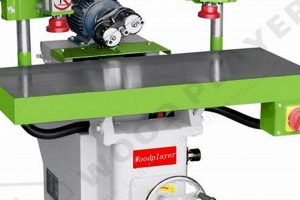
The apparatus in question serves to create a precisely shaped projection on a piece of wood, designed to fit snugly into a corresponding mortise, forming a robust joint. This specialized equipment automates and refines a technique historically executed by hand, ensuring accuracy and repeatability in joinery applications. An example of its employment can be found in the construction of robust furniture frames or intricate cabinet assemblies where strong, interlocking connections are paramount.
Such devices provide increased efficiency and consistency compared to manual methods, significantly reducing production time and minimizing material waste. Their adoption represents a move towards enhanced precision and structural integrity in woodworking projects. Historically, joinery determined the lifespan and quality of wooden constructions; automated processes build upon this legacy.
Further discussion will explore the various types of these machines, examining their operational principles, typical applications, and the factors influencing their selection for specific woodworking tasks. A deeper analysis of their impact on manufacturing workflows and the evolution of woodworking practices is also forthcoming.
Woodworking Tenon Machine
Effective utilization of these devices requires careful attention to several critical parameters to ensure optimal performance and longevity.
Tip 1: Material Selection: The type of wood being processed dictates the appropriate cutter speed and feed rate. Denser hardwoods necessitate slower speeds to prevent burning and premature tool wear, while softer woods can accommodate faster processing.
Tip 2: Cutter Maintenance: Regular inspection and sharpening of the cutting tools are essential. Dull cutters generate excessive heat, leading to inaccurate cuts and potential damage to the workpiece and the equipment.
Tip 3: Proper Clamping: Securely clamping the workpiece is paramount to prevent movement during the cutting operation. Insufficient clamping can result in inaccuracies, tool damage, and potential operator hazard.
Tip 4: Dust Extraction: Effective dust extraction is crucial for maintaining a clean and safe working environment. Wood dust accumulation can interfere with the machine’s operation and pose a health risk to the operator.
Tip 5: Precision Measurement: Accurate measurement and setup are critical for achieving precise tenon dimensions. Utilize calibrated measuring tools and verify all settings before initiating the cutting process.
Tip 6: Gradual Depth of Cut: For larger tenons, consider employing multiple passes with incremental depth increases. This technique reduces stress on the machine and the workpiece, minimizing the risk of chipping or breakage.
Tip 7: Lubrication: Follow the manufacturer’s recommendations regarding lubrication of moving parts. Proper lubrication reduces friction, extends the life of the machine, and ensures smooth operation.
Adherence to these guidelines promotes efficient and safe operation, ensuring the consistent production of high-quality tenons.
Subsequent sections will delve into specific machine types and their respective advantages in various woodworking applications.
1. Joint Strength

Joint strength, the capacity of a wooden joint to withstand force without failure, is intrinsically linked to the operation of a woodworking tenon machine. The machine’s primary function the creation of accurate and consistent tenons directly influences the structural integrity of assembled components. Proper tenon formation is paramount for achieving optimal joint performance.
- Tenon Geometry and Fit
The shape and dimensions of the tenon, precisely controlled by the machine, dictate the surface area available for adhesive bonding and mechanical interlocking. A tightly fitted tenon maximizes contact with the mortise, distributing stress evenly and reducing the likelihood of joint failure under load. Deviations from intended dimensions compromise the integrity of the assembly.
- Material Properties and Grain Orientation
The machine’s capabilities must be considered in conjunction with the wood species and its grain orientation. Cutting a tenon across the grain weakens its inherent strength. The machine’s ability to produce tenons with grain aligned for maximum resistance to shear forces is crucial. The selection of appropriate species based on inherent strength also contributes to overall joint performance.
- Adhesive Application and Bond Integrity
While the machine facilitates precise tenon creation, the proper application of adhesive is equally critical. A consistent and complete adhesive bond between the tenon and mortise is essential for distributing stress and preventing movement. The machine-produced tenon provides the structural foundation for the adhesive to function effectively. Contaminants or insufficient adhesive application will negate the benefits of a well-formed tenon.
- Joint Design and Load Distribution
The overall design of the joint, including the size and number of tenons, influences its load-bearing capacity. The machine’s ability to produce multiple identical tenons allows for the creation of complex joints capable of withstanding significant stress. The design must account for anticipated forces and distribute them effectively across the joint surfaces.
In summary, the woodworking tenon machine’s contribution to joint strength extends beyond mere tenon creation. It provides the means to achieve dimensional accuracy, material optimization, and joint design complexity, all of which directly impact the long-term structural performance of wooden assemblies. A holistic approach, considering machine capabilities, material properties, and joint design principles, is essential for realizing the full potential of the joint.
2. Cutting Precision

Cutting precision is intrinsically linked to the effectiveness of any woodworking tenon machine. The fundamental purpose of such a machine is to create tenons that conform to exacting specifications, ensuring a secure and stable joint. The degree of accuracy achieved in the cutting process directly impacts the strength, appearance, and longevity of the final wood assembly. Variations beyond acceptable tolerances can result in weakened joints, aesthetic flaws, and ultimately, structural failure. For instance, a tenon cut even slightly undersized will not adequately fill the mortise, reducing the glue surface area and creating play in the joint.
The cutting precision of a woodworking tenon machine is determined by several factors, including the rigidity of the machine frame, the quality of the cutting tools, and the accuracy of the setup and adjustment mechanisms. A machine with a solid frame will minimize vibration during the cutting process, leading to smoother and more accurate cuts. Sharp, well-maintained cutting tools are essential for producing clean edges and preventing tear-out. Precise adjustment mechanisms allow the operator to fine-tune the machine settings to achieve the desired tenon dimensions. Consider, for example, the construction of fine furniture, where even minor discrepancies in tenon dimensions can be readily apparent and detract from the overall quality of the piece.
In conclusion, cutting precision is a critical attribute of a woodworking tenon machine. It directly influences the quality and integrity of the resulting wood joints. Achieving and maintaining precision requires a combination of robust machine design, high-quality cutting tools, and meticulous setup procedures. The ability to consistently produce accurate tenons is essential for creating durable, aesthetically pleasing, and structurally sound wood assemblies, thereby highlighting the practical significance of understanding this connection in woodworking applications.
3. Material Compatibility

The selection of appropriate material for a woodworking tenon machine is not merely a matter of preference but a critical determinant of performance, longevity, and safety. Material compatibility, in this context, encompasses the suitability of a given wood species for processing on a specific machine model, considering factors such as density, grain structure, and resin content. Incompatibility can manifest in various detrimental effects, ranging from substandard cut quality to outright machine failure. For example, attempting to cut extremely dense hardwoods on a machine designed primarily for softwoods can overload the motor, damage the cutting tools, or even fracture structural components. Conversely, processing softwoods with aggressive feed rates intended for hardwoods can result in splintering, tear-out, and imprecise tenon dimensions.
The cutting tools themselves represent another facet of material compatibility. The type of blade or cutter head employed must be appropriate for the hardness and abrasive properties of the wood being worked. Carbide-tipped cutters, for instance, are generally preferred for hardwoods due to their superior wear resistance, while high-speed steel cutters may suffice for softer species. However, using high-speed steel on highly resinous woods, such as pine, can lead to rapid dulling and resin buildup, diminishing cut quality and increasing the risk of kickback. Furthermore, the moisture content of the wood significantly impacts machine performance. Wood that is excessively wet or dry is more prone to warping, splitting, or chipping during the cutting process, leading to inaccurate tenon dimensions and compromised joint integrity. The machine operator must therefore account for these variables and adjust the machine settings accordingly to ensure optimal results.
In summary, material compatibility is an indispensable consideration in the operation of woodworking tenon machines. Failure to account for the characteristics of the wood being processed can lead to diminished performance, increased maintenance costs, and heightened safety risks. A thorough understanding of wood properties and their interaction with machine capabilities is essential for achieving consistent, high-quality results and prolonging the lifespan of the equipment. This understanding should inform both machine selection and operational procedures, ensuring that the chosen tool is appropriate for the specific material and application at hand.
4. Operational Safety

The use of a woodworking tenon machine necessitates strict adherence to established safety protocols to mitigate the inherent risks associated with high-speed rotating machinery and sharp cutting tools. A failure to prioritize operational safety can result in severe physical injury, including lacerations, amputations, and eye damage. The machine’s function, shaping wood into tenons, inherently involves exposing the operator to potential hazards. For instance, a loose workpiece can become a projectile, and unguarded cutting areas present an immediate threat of contact with moving blades. The implementation of comprehensive safety measures is, therefore, not merely a recommendation but a fundamental requirement for responsible machine operation. Protective eyewear, hearing protection, and appropriate personal protective equipment are essential components of a safe working environment.
Effective safety practices extend beyond the use of protective gear. Proper machine setup, including secure workpiece clamping and accurate adjustment of cutting parameters, is crucial to prevent unexpected machine behavior. Regular inspection and maintenance of the machine, including sharpening or replacement of dull cutting tools, minimizes the risk of kickback and ensures predictable performance. Training and certification programs are vital to equip operators with the knowledge and skills necessary to identify potential hazards and respond appropriately in emergency situations. Emergency stop mechanisms must be readily accessible and regularly tested to ensure their functionality. Moreover, adequate ventilation and dust collection systems are necessary to maintain air quality and prevent the accumulation of combustible dust, which can pose a fire or explosion hazard. A documented lockout/tagout procedure should be implemented for maintenance and repair operations to prevent accidental machine activation.
In summary, operational safety is an inextricable element of working with woodworking tenon machines. A proactive approach, encompassing comprehensive training, meticulous machine maintenance, and strict adherence to safety protocols, is essential to minimize the risk of injury. Neglecting these aspects can lead to severe consequences, underscoring the importance of integrating safety considerations into every facet of machine operation. Prioritizing safety not only protects the operator but also contributes to a more productive and efficient working environment.
5. Machine Maintenance

Machine maintenance is not merely a procedural task but a critical determinant of the operational lifespan, precision, and safety of a woodworking tenon machine. Regular and comprehensive maintenance ensures consistent performance and minimizes the risk of costly repairs or downtime. Neglecting routine maintenance can lead to diminished accuracy, increased wear and tear, and potentially hazardous operating conditions.
- Lubrication of Moving Parts
Consistent lubrication of bearings, gears, and other moving parts reduces friction and wear, extending the lifespan of critical components. Inadequate lubrication can lead to overheating, increased energy consumption, and premature failure of parts. For example, failure to lubricate the spindle bearings can result in reduced cutting precision and eventual bearing seizure, necessitating costly repairs.
- Inspection and Sharpening of Cutting Tools
Regular inspection and sharpening of cutting tools, such as knives or cutter heads, are essential for maintaining cutting accuracy and surface finish quality. Dull or damaged tools can cause splintering, tear-out, and increased stress on the machine’s motor and drive system. A dull tenoning head, for instance, will require more force to cut, potentially damaging the wood and shortening the life of the machine.
- Cleaning and Dust Removal
The accumulation of sawdust and debris can impede machine operation, clog ventilation systems, and pose a fire hazard. Regular cleaning and dust removal are necessary to maintain proper airflow and prevent overheating. Sawdust buildup around the motor can reduce its cooling efficiency, leading to premature failure. Effective dust collection systems are an integral part of machine maintenance.
- Calibration and Adjustment
Periodic calibration and adjustment of machine settings, such as fence alignment and cutter height, are crucial for maintaining tenon dimensions and accuracy. Misalignment can result in inaccurate tenons, leading to weakened joints and assembly problems. Regular checks with precision measuring tools are necessary to ensure that the machine is operating within specified tolerances.
These facets of machine maintenance are inextricably linked to the overall performance and longevity of a woodworking tenon machine. Proactive maintenance practices not only ensure consistent and accurate tenon production but also contribute to a safer and more efficient working environment. Consistent application of these elements ensures the woodworking tenon machine achieves maximum utilization and produces precise tenons throughout its operational life.
6. Production Efficiency

The integration of a woodworking tenon machine into a manufacturing workflow directly influences the overall production efficiency. This relationship stems from the machine’s ability to automate and expedite the creation of tenon joints, a critical element in many woodworking projects. Consequently, the selection, utilization, and maintenance of such a machine have significant ramifications for throughput, cost-effectiveness, and labor allocation.
- Reduced Labor Costs
Automated tenon creation significantly reduces the manual labor required compared to traditional hand-tool methods. A single operator can manage the machine, producing a higher volume of tenons in a given timeframe than multiple workers using hand tools. This translates to reduced labor costs per unit produced, contributing to increased profitability. The shift towards automation also allows skilled woodworkers to focus on more complex and nuanced tasks, optimizing labor resource allocation.
- Increased Throughput
The speed and consistency of a tenon machine enable a higher volume of parts to be processed in a given period. Unlike manual methods, a well-maintained machine can operate continuously, producing a steady stream of tenons with minimal downtime. This increased throughput allows manufacturers to fulfill larger orders and meet demanding deadlines, enhancing their competitiveness in the market. Bottlenecks in production related to tenon creation are mitigated by the machine’s capacity for rapid and repeatable operation.
- Improved Accuracy and Consistency
A tenon machine produces tenons with a high degree of accuracy and consistency, minimizing variations that can occur with manual methods. This reduces the need for rework and ensures that joints fit together properly, streamlining the assembly process. Consistent tenon dimensions also contribute to the structural integrity and aesthetic appeal of the finished product, enhancing its overall value.
- Optimized Material Utilization
Precise cutting capabilities minimize material waste compared to manual methods, where errors and inconsistencies can lead to unusable offcuts. A tenon machine can be programmed to optimize the yield from raw materials, reducing waste and lowering production costs. The consistent dimensions of the tenons also allow for more efficient use of adhesives and other joining materials, further contributing to material savings.
These interconnected factors demonstrate the profound impact of woodworking tenon machines on production efficiency. The ability to reduce labor costs, increase throughput, improve accuracy, and optimize material utilization makes these machines an invaluable asset for woodworking manufacturers seeking to enhance their competitiveness and profitability. The selection and integration of a tenon machine should, therefore, be carefully considered in the context of overall production goals and resource allocation.
7. Automation Capabilities

Automation capabilities are central to the modern woodworking tenon machine, dictating its operational efficiency, precision, and suitability for high-volume production. The extent of automation directly correlates with the machine’s ability to reduce manual intervention, minimize human error, and consistently produce tenons within strict dimensional tolerances. The shift from manual tenoning techniques to automated machinery has revolutionized woodworking, enabling manufacturers to achieve levels of productivity and accuracy previously unattainable. For instance, CNC-controlled tenon machines can execute complex tenon profiles with minimal operator involvement, ensuring uniformity across hundreds or thousands of parts. This not only streamlines production but also reduces the need for skilled labor to perform repetitive and physically demanding tasks.
Practical applications of automation in tenon machines extend beyond basic tenon creation. Automated material feeding systems load workpieces into the machine, reducing operator handling and increasing throughput. Programmable logic controllers (PLCs) govern the machine’s movements, ensuring precise and repeatable cutting cycles. Automatic tool changers allow for rapid transitions between different tenon profiles, enhancing versatility and adaptability. Real-world examples include the mass production of furniture components, where automated tenon machines consistently generate thousands of identical tenons per day, minimizing assembly time and ensuring structural integrity. In contrast to hand-cut tenons, automation provides a level of precision that significantly improves the quality and durability of the finished product. Furthermore, automated systems can often incorporate safety features, such as light curtains and emergency stop buttons, that enhance operator safety and prevent accidents.
In conclusion, automation capabilities are an indispensable component of the modern woodworking tenon machine, driving advancements in productivity, accuracy, and safety. The level of automation directly impacts the machine’s suitability for different applications, ranging from small-scale custom woodworking to large-scale industrial production. While initial investments in automated equipment may be substantial, the long-term benefits in terms of reduced labor costs, increased throughput, and improved product quality often outweigh the initial expense. The future of woodworking likely hinges on continued advancements in automation technology, further blurring the lines between human skill and machine precision.
Frequently Asked Questions Regarding Woodworking Tenon Machines
This section addresses common inquiries concerning the selection, operation, and maintenance of equipment designed for automated tenon creation. Understanding these aspects is crucial for maximizing the value and longevity of such machinery.
Question 1: What factors should be considered when selecting a woodworking tenon machine?
The selection process should encompass an assessment of production volume requirements, material type and dimensions, tenon geometry complexity, available floor space, and budget constraints. Furthermore, ease of operation, maintenance requirements, and the availability of technical support are critical considerations.
Question 2: How does the type of wood affect the operation of a tenon machine?
Wood density, grain structure, and moisture content significantly influence cutting parameters. Hardwoods necessitate slower feed rates and potentially specialized cutting tools to prevent burning and premature wear. Softer woods may require modifications to clamping pressure to avoid compression damage. Proper adjustment of machine settings based on wood species is essential for optimal results.
Question 3: What are the primary safety considerations when operating a tenon machine?
Adherence to established safety protocols is paramount. This includes the use of appropriate personal protective equipment, secure workpiece clamping, regular inspection of cutting tools, and strict avoidance of reaching into the cutting area while the machine is in operation. Emergency stop mechanisms should be readily accessible and functioning correctly.
Question 4: How frequently should a tenon machine undergo maintenance?
Maintenance frequency depends on usage intensity and environmental conditions. However, daily tasks should include cleaning, lubrication, and inspection of cutting tools. Weekly or monthly checks should encompass belt tension, bearing condition, and calibration of measuring devices. A comprehensive annual inspection by a qualified technician is recommended.
Question 5: What types of tenon joints can a typical machine produce?
The capabilities vary depending on the machine model and tooling configuration. However, common tenon types include standard rectangular tenons, haunched tenons, and round or oval tenons. Advanced machines with CNC control may be capable of creating complex custom tenon profiles.
Question 6: How can the accuracy of a tenon machine be verified and maintained?
Accuracy verification involves using precision measuring tools, such as calipers and micrometers, to assess tenon dimensions against specified tolerances. Regular calibration of machine settings and careful inspection of cutting tools are essential for maintaining accuracy. Consistent adherence to proper operating procedures is also critical.
In conclusion, understanding these aspects is vital for maximizing the benefits and minimizing the risks associated with the utilization of equipment designed for automated tenon joinery. Informed decision-making in selection, operation, and maintenance ensures consistent performance and prolonged machine lifespan.
Subsequent analysis will delve into emerging trends in automated woodworking and the potential impact on the future of tenon joint creation.
Woodworking Tenon Machine
This exploration has illuminated the multifaceted role of the woodworking tenon machine in modern wood manufacturing. From enhancing joint strength and cutting precision to facilitating material compatibility and ensuring operational safety, the machines influence is pervasive. Efficient maintenance practices and automation capabilities further solidify its position as a cornerstone of efficient and accurate woodworking processes. The presented frequently asked questions provide practical guidance for effective machine selection, operation, and upkeep.
Ongoing advancements in technology will undoubtedly further refine the capabilities of this equipment, demanding continuous education and adaptation within the woodworking industry. A thorough understanding of the principles and practices outlined is essential for those seeking to harness the full potential of automated tenon joinery. Investment in knowledge and proper utilization of these machines represent a critical pathway towards achieving superior craftsmanship and maintaining competitiveness in an evolving market.