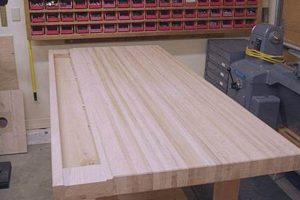
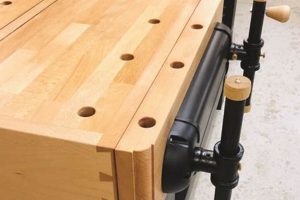
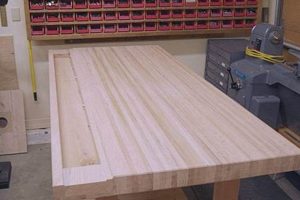
The construction of a personal workstation designed for woodworking activities involves a multi-stage process encompassing design, material selection, joinery, and finishing. This customized furniture provides a stable and functional surface upon which a wide array of woodworking tasks can be performed. An example includes a sturdy platform with integrated vises and dog holes, facilitating precise stock manipulation and secure clamping.
Such an endeavor offers numerous advantages, including cost savings compared to purchasing pre-made options and the ability to tailor the dimensions and features to individual needs and available workspace. Historically, the craft of creating these specialized structures represents a cornerstone of woodworking practice, with designs evolving over centuries to optimize efficiency and ergonomic considerations. The practice also fosters a deeper understanding of woodworking principles and techniques.
The subsequent sections will delve into essential considerations for planning and executing this project, encompassing design choices, material selection criteria, step-by-step construction methods, and considerations for surface treatment and long-term maintenance.
Essential Considerations
The following constitutes practical recommendations for those undertaking the project of creating a personalized workbench designed for woodworking. These suggestions address critical phases of the process, ensuring structural integrity and optimizing utility.
Tip 1: Design Thoroughly: The initial design phase requires meticulous planning. Consider the types of projects to be undertaken and the available workspace. Scale drawings and material lists are indispensable for accurate execution.
Tip 2: Select Materials Judiciously: Hardwoods such as maple, beech, or ash provide superior durability and stability. Softwoods, while more affordable, are less resistant to wear and tear. Kiln-dried lumber minimizes warping and cracking.
Tip 3: Prioritize a Sturdy Base: The base of the workbench must be robust enough to withstand significant weight and force. Employ mortise and tenon joinery or robust metal fasteners for maximum stability. A well-braced lower shelf adds substantial rigidity.
Tip 4: Incorporate a Flat and Stable Top: The work surface must be perfectly flat to ensure accurate woodworking. Lamination of multiple layers of wood creates a stable and durable top. Flatten the completed surface with hand planes or a belt sander.
Tip 5: Integrate Vises Strategically: The selection and placement of vises are critical for effective clamping. Choose vises appropriate for the intended tasks, and mount them securely to the workbench top and apron.
Tip 6: Consider Dog Holes: Dog holes, when used with bench dogs, provide versatile clamping options. Drill these holes accurately and consistently to ensure proper alignment. Standardize the spacing to accommodate commercially available bench dogs.
Tip 7: Apply a Durable Finish: A robust finish protects the workbench from moisture, stains, and abrasion. Oil-based finishes or polyurethane coatings provide excellent protection while preserving the natural appearance of the wood. Apply multiple coats for maximum durability.
These tips provide a solid foundation for building a woodworking bench that is both functional and durable, designed to facilitate years of productive woodworking activities.
The ensuing discussion will focus on advanced techniques and customization options for enhancing the functionality of the woodworking bench.
1. Stability

Stability represents a foundational requirement for any woodworking bench. A stable work surface mitigates movement and vibration during woodworking operations, contributing directly to precision, safety, and the overall quality of the finished product. The absence of stability compromises accuracy and can potentially lead to unsafe working conditions.
- Joinery Techniques
The choice of joinery significantly influences the stability of a woodworking bench. Mortise and tenon joints, dovetail joints, and robust bolted connections offer superior resistance to racking forces compared to simpler joints like butt joints secured with screws. The implementation of stronger joinery minimizes flex and ensures the bench remains square and rigid under load. For instance, a well-executed mortise and tenon joint in the base frame effectively distributes weight and withstands lateral forces, preventing the bench from wobbling or shifting during use.
- Weight and Mass
The weight and mass of a woodworking bench contribute significantly to its stability. A heavier bench resists movement and absorbs vibrations more effectively than a lighter one. Employing thicker lumber and incorporating features like a tool well or a lower shelf filled with weights can increase mass. This increased mass provides a more stable platform for activities such as planing or chiseling, reducing the likelihood of the bench moving or vibrating excessively. The weight of the bench should be strategically distributed to maintain balance and prevent tipping.
- Foot Design and Floor Contact
The design of the bench feet and the quality of contact with the floor influence stability. Leveling feet allow for adjustments on uneven surfaces, ensuring all feet bear weight equally. Rubber or non-slip pads can improve grip on smooth floors, preventing the bench from sliding. Conversely, poorly designed feet or inadequate floor contact can lead to instability, even with robust joinery and sufficient weight. Ensuring a solid, level contact between the bench feet and the floor is crucial for maintaining a stable work surface.
- Bracing and Support Structures
Bracing elements, such as stretchers and aprons, provide additional support and resistance to racking forces. Properly placed and securely fastened bracing significantly enhances the overall stability of the bench. For example, stretchers connecting the legs of the bench frame resist lateral movement, while aprons beneath the work surface provide vertical support. Effective bracing distributes load and minimizes flex, contributing to a more stable and reliable woodworking platform. The strategic placement of bracing elements is crucial for maximizing their effectiveness in enhancing stability.
The aforementioned elementsjoinery, weight, foot design, and bracingcollectively determine the stability of a self-constructed woodworking bench. A focus on these factors during the design and construction process will result in a stable, reliable, and safe platform for woodworking tasks, improving accuracy and productivity. A stable bench allows the woodworker to focus on the craft, free from the distractions and potential hazards of an unstable work surface.
2. Work Surface

The work surface constitutes the primary interface between the woodworker and the material, and its characteristics significantly impact the precision, efficiency, and safety of woodworking operations. In the context of constructing a personal woodworking bench, the design and construction of the work surface represent critical stages, influencing the usability and longevity of the entire structure. Cause-and-effect relationships are evident; for example, an uneven work surface directly results in inaccurate cuts and joinery. The selection of material for the surface influences its ability to withstand wear, resist warping, and maintain flatness over time. A robust and well-prepared work surface provides a stable platform for tasks ranging from delicate carving to heavy planing. The practical significance lies in the reduction of errors, improved project outcomes, and enhanced work efficiency.
Variations in work surface design are numerous, each suited to different woodworking specializations. A bench designed for hand tool work might feature a thick, solid wood top, frequently constructed from hardwoods like maple or beech, to absorb vibration and resist denting. Conversely, a bench intended for more machine-based operations may incorporate a thinner, laminated top for cost-effectiveness, prioritizing flatness and stability over extreme durability. The inclusion of features like dog holes and integrated vises further enhances the functionality of the surface, enabling secure clamping and manipulation of workpieces. Proper surface finishing, typically involving several coats of oil or varnish, protects the wood from moisture and wear, prolonging its useful life. Attention to these factors ensures the work surface supports a wide array of woodworking tasks with precision and reliability.
In conclusion, the work surface stands as a central component of a self-constructed woodworking bench, and its characteristics dictate the bench’s overall utility and effectiveness. Addressing issues related to flatness, material selection, integrated features, and surface treatment results in a woodworking platform capable of supporting a wide range of projects and enduring years of use. The challenges associated with creating a superior work surface necessitate careful planning and execution, linking the workbench to the broader theme of skilled craftsmanship and attention to detail within the realm of woodworking.
3. Clamping Options

Clamping options represent a fundamental consideration in the design and construction of a personalized woodworking bench. The efficacy of a workbench is directly proportional to its capacity to securely hold workpieces in diverse orientations and configurations. A well-equipped bench, therefore, incorporates a variety of clamping mechanisms strategically positioned to accommodate a wide spectrum of woodworking tasks.
- Vise Integration
The integration of vises constitutes a primary means of securing workpieces to a woodworking bench. Front vises, also known as face vises, typically mounted flush with the front edge of the bench, provide clamping pressure parallel to the benchtop. Tail vises, often incorporated into the end of the bench, work in conjunction with bench dogs to exert clamping force along the length of the bench. The selection and placement of vises determine the types of projects the bench can accommodate. Heavy-duty vises with wide jaws facilitate clamping large panels, while smaller vises are suited for detail work.
- Bench Dog Systems
Bench dog systems, comprised of a series of holes drilled into the benchtop and corresponding pegs or dogs, offer versatile clamping options. These systems allow for the secure clamping of workpieces between bench dogs or in conjunction with vises. The spacing and diameter of the dog holes are critical considerations. Standardized spacing allows for the use of commercially available bench dogs and clamping accessories. Bench dogs are employed in a variety of tasks, including edge jointing, mortising, and tenoning. The versatility of bench dog systems enhances the overall utility of the woodworking bench.
- Holdfasts and Clamping Accessories
Holdfasts, forged steel clamps that grip the bench via friction within a tapered hole, provide a quick and secure method for clamping workpieces. These clamps are particularly useful for securing irregularly shaped objects or for tasks requiring frequent repositioning of the workpiece. A range of clamping accessories, such as cam clamps, toggle clamps, and specialized jigs, can further expand the clamping capabilities of the bench. These accessories provide solutions for specific clamping challenges, enhancing the efficiency and precision of woodworking operations.
- Integrated Clamping Solutions
Some woodworking bench designs incorporate integrated clamping solutions, such as built-in planing stops, recessed clamping tracks, or pivoting clamp arms. These features provide specialized clamping options that are seamlessly integrated into the bench structure. Integrated solutions can streamline workflow and eliminate the need for external clamping devices in certain situations. The design and implementation of integrated clamping solutions require careful planning and execution to ensure functionality and durability.
The strategic integration of various clamping options is critical to the functionality of any woodworking bench. The choice of clamping mechanisms should align with the intended use of the bench and the types of woodworking projects to be undertaken. A thoughtfully designed and well-equipped bench enhances efficiency, precision, and safety, making it an invaluable tool for any woodworker. The design of clamping solutions can be a creative and customized endeavor, tailored to the specific needs and preferences of the individual woodworker.
4. Material Strength
The correlation between material strength and a self-constructed woodworking bench constitutes a pivotal aspect influencing the bench’s longevity, stability, and overall performance. The choice of materials directly affects the structure’s capacity to withstand the stresses inherent in woodworking activities, such as planing, hammering, and clamping. Material inadequacy results in premature wear, deformation, and eventual structural failure. For example, a bench constructed from low-density softwood is susceptible to denting and warping under heavy use, compromising its utility as a precision workstation. The practical significance lies in the ability to undertake demanding woodworking tasks without compromising the integrity of the bench.
Hardwoods, such as maple, beech, and oak, are frequently chosen for their high density and resistance to wear. These materials provide a rigid and stable work surface capable of withstanding significant impact and pressure. Furthermore, the selection extends beyond the primary work surface to include the frame and legs of the bench. The use of robust joinery techniques, combined with high-strength materials, creates a solid and durable foundation. An instance includes employing mortise and tenon joints in conjunction with hardwood to construct a frame that resists racking and maintains its structural integrity over extended periods. Appropriate material selection also influences the bench’s resistance to environmental factors, such as moisture and temperature fluctuations, which can contribute to warping and cracking.
In summary, material strength is an indispensable consideration in the design and construction of a self-made woodworking bench. Careful selection of appropriate materials, coupled with sound construction techniques, ensures a workbench capable of withstanding the demands of woodworking operations for years. Ignoring this facet leads to compromised performance, reduced lifespan, and potentially hazardous working conditions, whereas a focus on material strength translates to a durable, stable, and reliable platform, ultimately enhancing the quality and enjoyment of woodworking activities.
5. Ergonomics

Ergonomics represents a critical element in the design and construction of a personalized woodworking bench. The application of ergonomic principles aims to optimize user comfort, minimize physical strain, and enhance productivity during woodworking activities. Ignoring ergonomic considerations can lead to musculoskeletal disorders, reduced efficiency, and an increased risk of injury. A well-designed woodworking bench, therefore, integrates ergonomic features to promote a safe and comfortable working environment.
- Bench Height Optimization
Optimizing bench height constitutes a primary ergonomic consideration. An inappropriately sized bench forces the user to work in awkward postures, leading to back, neck, and shoulder strain. The ideal bench height varies depending on the woodworker’s stature and the types of tasks performed. As a general guideline, the benchtop should be positioned at a height that allows the user to work with a slightly bent elbow while planing. Customizing the bench height to individual dimensions ensures a neutral posture, reducing the risk of musculoskeletal disorders. A bench that is too low necessitates excessive bending, while a bench that is too high forces the shoulders to elevate, both contributing to discomfort and fatigue.
- Reach and Accessibility
Reach and accessibility to tools and materials represent another crucial ergonomic factor. A well-organized bench facilitates easy access to frequently used items, minimizing the need to stretch or reach awkwardly. Tool storage solutions, such as drawers, shelves, and tool wells, should be strategically positioned within easy reach. Similarly, readily accessible clamping mechanisms contribute to efficiency and reduce strain. Optimizing reach and accessibility minimizes unnecessary movements and promotes a smoother workflow. Poorly organized storage forces the user to expend additional energy searching for tools and materials, leading to fatigue and frustration.
- Work Surface Inclination
The inclination of the work surface, though less common, can enhance ergonomic comfort for specific tasks. A slight incline can improve visibility and reduce the need to bend over the workpiece, particularly during tasks such as carving or detail work. However, an excessively inclined surface can cause tools and materials to slide, presenting a safety hazard. The optimal inclination depends on the type of work performed and individual preferences. An adjustable inclination allows for customization to suit various tasks and user needs. The addition of a tilting mechanism requires careful design and construction to ensure stability and prevent accidental adjustments.
- Vibration Dampening
Vibration dampening is a consideration in reducing fatigue and minimizing the risk of hand-arm vibration syndrome (HAVS), particularly when using power tools. A massive workbench constructed from dense materials absorbs vibrations more effectively than a lighter bench. The addition of rubber feet or vibration-dampening mats can further reduce the transmission of vibrations to the user’s hands and arms. Prolonged exposure to vibration can lead to circulatory and nerve damage, highlighting the importance of vibration dampening measures. A stable and well-dampened workbench promotes a more comfortable and safer working environment.
The implementation of ergonomic principles in the construction of a personalized woodworking bench directly contributes to user well-being, enhanced productivity, and a reduction in the risk of injury. Addressing factors such as bench height, reach, work surface inclination, and vibration dampening results in a workbench that is both functional and comfortable, promoting a sustainable and enjoyable woodworking experience. Prioritizing ergonomics transforms the woodworking bench from a mere work surface into a supportive and adaptive tool, fostering a more harmonious relationship between the woodworker and their craft.
Frequently Asked Questions
The following section addresses common inquiries and misconceptions regarding the design and construction of personalized woodworking benches. The information presented is intended to provide clarity and guidance for individuals undertaking such projects.
Question 1: What is the minimum size for a functional woodworking bench?
The minimum dimensions are dictated by the typical size of the projects to be undertaken. However, a bench smaller than 48 inches in length and 24 inches in width may prove restrictive for many woodworking tasks.
Question 2: Is it necessary to use hardwood for the entire woodworking bench?
While a hardwood work surface is highly recommended for durability, the frame and legs can be constructed from softwood, provided adequate bracing and robust joinery are employed to ensure stability.
Question 3: What are the essential tools required to construct a woodworking bench?
Essential tools include a saw (hand saw or circular saw), a drill, a measuring tape, a level, clamps, and tools for joinery, such as chisels or a router. A hand plane is also valuable for flattening the work surface.
Question 4: How can a perfectly flat work surface be achieved?
A flat work surface is achieved through careful construction and subsequent flattening with hand planes or a belt sander. Lamination of multiple layers of wood can also contribute to stability and flatness.
Question 5: What is the optimal height for a woodworking bench?
The optimal height is typically determined by the woodworker’s stature. As a general rule, the benchtop should be at a height that allows for working with a slightly bent elbow.
Question 6: What type of finish is best suited for a woodworking bench?
Oil-based finishes or polyurethane coatings offer durable protection against moisture, stains, and abrasion. Multiple coats are recommended for enhanced durability.
These FAQs provide a concise overview of key considerations when building a woodworking bench. Careful planning and execution, taking into account these aspects, contributes significantly to the construction of a functional and durable workstation.
The subsequent section will explore advanced techniques and customization options for woodworking benches.
Conclusion
The preceding exploration of design and construction elucidates the multifaceted nature of this undertaking. Essential aspects, including stability, work surface characteristics, clamping options, material strength, and ergonomics, demand meticulous attention. Overlooking these elements compromises the resulting structure’s utility and longevity.
Successful implementation of these principles yields a functional and durable platform for woodworking pursuits. Continued refinement and adaptation of the craft promotes enhanced precision and efficient labor.
![Build A Roman Woodworking Bench [DIY Guide] | Step-by-Step Guides, Tools & Inspiration to Build Beautiful Wooden Decor on a Budget](https://woodfromhome.com/wp-content/uploads/2026/05/th-207-300x200.jpg "Build A Roman Woodworking Bench [DIY Guide] Step-by-Step Guides, Tools & Inspiration to Build Beautiful Wooden Decor on a Budget")