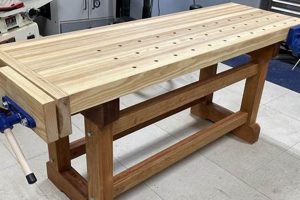
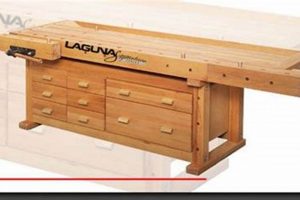
A designated surface equipped with integrated compartments, drawers, or shelves designed for the secure placement of tools and materials constitutes a fundamental component of any serious woodworking endeavor. This dual-purpose furnishing provides a stable platform for executing joinery, shaping stock, and assembling projects, while simultaneously offering readily accessible organizational space.
The utility of such a station extends beyond mere convenience; it directly contributes to enhanced efficiency and safety. A well-organized workspace minimizes wasted time searching for necessary implements and reduces the risk of accidents caused by clutter. Historically, craftspeople have relied upon variations of this core design, adapting it to suit the specific demands of their trade and available space, demonstrating its enduring value and adaptability.
Subsequent sections will delve into crucial considerations for selecting or constructing an appropriate workstation, including size and material selection, vise options, and strategies for optimizing its integrated storage capabilities. Furthermore, the diverse array of designs available will be explored, catering to varying skill levels, workshop sizes, and project requirements.
Optimizing a Woodworking Bench with Integrated Storage
Effective utilization of a woodworking bench that incorporates storage significantly enhances workflow and workspace organization. The following guidelines offer strategies for maximizing the benefits of such a unit.
Tip 1: Strategically Position Drawers and Shelves. Consider the frequency with which tools are used. Frequently accessed items should be placed in easily reachable drawers or shelves, while less frequently used tools can be stored in more remote locations within the unit.
Tip 2: Implement a Tool Organization System. Within drawers and shelves, employ dividers, trays, or custom-built inserts to compartmentalize tools. This prevents clutter and allows for rapid identification and retrieval of necessary implements.
Tip 3: Maximize Vertical Space. Utilize the area above the workbench by installing shelves or pegboards to store items such as hand saws, chisels, and measuring tools. This frees up valuable surface area on the bench itself.
Tip 4: Designate a Specific Area for Project Components. Allocate a dedicated shelf or drawer for storing work-in-progress components. This prevents the mixing of parts from different projects and reduces the risk of misplacement.
Tip 5: Implement a Regular Cleaning Schedule. Periodically clear out accumulated sawdust, shavings, and other debris from drawers and shelves. This maintains cleanliness and prevents damage to stored tools.
Tip 6: Utilize Bins for Small Hardware. Employ small, clearly labeled bins to store screws, nails, dowels, and other small hardware items. This prevents them from being scattered throughout the storage area and simplifies the selection process.
Tip 7: Optimize for Task-Specific Needs. Tailor the storage configuration to the specific types of projects undertaken. For example, if carving is a frequent activity, dedicate a drawer or shelf to carving tools and supplies.
Effective organization significantly reduces wasted time spent searching for tools and materials. By implementing these strategies, the user can create a more efficient, safer, and enjoyable woodworking environment.
The subsequent discussion will address specific types of storage solutions and their suitability for various woodworking tasks and shop environments.
1. Stability

Stability in a woodworking bench with storage is paramount for precision, safety, and overall effectiveness. The integrity of the workbench as a platform is intrinsically linked to the quality of the work produced and the security of the user.
- Foundation Rigidity
A stable foundation minimizes movement during sawing, planing, and other demanding operations. For instance, a bench constructed with solid wood legs and a robust joinery system resists racking and vibration, preventing inaccuracies in workpiece dimensions and joinery. Conversely, a wobbly or unstable bench compromises precision and increases the risk of errors.
- Weight Distribution and Load Capacity
The capacity to bear significant weight without deflection is critical. A bench designed to accommodate heavy tools and stock, especially when combined with the added weight of stored items, necessitates a rigid frame and a substantial work surface. Inadequate load capacity can lead to sagging or structural failure, rendering the bench unusable or even dangerous. Uniform weight distribution is also essential; localized overloading can induce instability.
- Vibration Dampening
Excessive vibration can negatively impact the quality of detailed work and accelerate tool wear. A heavy, solid bench absorbs vibrations generated by power tools or hand tools, providing a more controlled and predictable working environment. Incorporating vibration-dampening materials, such as rubber feet or strategically placed masses, can further enhance stability and reduce noise.
- Secure Tool and Material Storage
Integrated storage, if not properly executed, can compromise stability. Drawers and shelves must be securely attached to the bench frame to prevent them from shifting or causing imbalances. Overloading storage compartments can also induce instability; therefore, careful consideration must be given to the weight-bearing capacity of each storage element and the overall structural integrity of the bench.
These facets collectively illustrate the importance of robust design and construction for ensuring stability in a woodworking bench with storage. A stable bench not only improves the quality of woodworking projects but also enhances safety and extends the lifespan of the tool itself.
2. Material Durability

The longevity and utility of a woodworking bench with integrated storage are intrinsically linked to the durability of the materials employed in its construction. Selection of appropriate materials directly influences the bench’s resistance to wear, deformation, and degradation over time, impacting its functional lifespan and overall value.
- Work Surface Resistance
The workbench surface, the primary point of contact with tools and workpieces, requires exceptional resistance to abrasion, impact, and chemical exposure. Hardwoods such as maple, beech, or birch are frequently chosen for their density and ability to withstand repeated use. Softwood surfaces, while more affordable, are susceptible to dents and scratches, potentially compromising precision and requiring more frequent maintenance. The application of protective finishes, such as varnish or polyurethane, further enhances resistance to moisture and stains, prolonging the surface’s lifespan.
- Structural Frame Integrity
The frame supporting the work surface and storage components must possess adequate strength and rigidity to withstand sustained loads. Solid hardwoods, plywood, or engineered wood products are commonly used for frame construction. The selection of material depends on the desired balance between cost, weight, and structural performance. Proper joinery techniques, such as mortise-and-tenon or dovetail joints, are critical for ensuring the long-term stability and durability of the frame.
- Storage Component Resilience
Drawers, shelves, and other storage elements must be constructed from materials capable of supporting the weight of stored tools and materials without deformation or failure. Solid wood, plywood, or metal are commonly used for storage components. The choice of material influences the load-bearing capacity, resistance to moisture, and overall aesthetic appeal of the storage system. Drawer slides and hardware should be of high quality to ensure smooth operation and long-term reliability.
- Fastener Selection and Corrosion Resistance
The durability of a woodworking bench is also affected by the quality of the fasteners used to assemble its components. Screws, bolts, and other fasteners should be made from corrosion-resistant materials, such as stainless steel or galvanized steel, to prevent rust and degradation. The proper selection of fastener size and type is essential for ensuring a secure and lasting connection between structural elements. Corrosion can weaken joints over time, leading to instability and eventual failure.
Collectively, these considerations underscore the critical role of material selection in determining the long-term durability and utility of a woodworking bench with storage. Careful attention to material properties, construction techniques, and fastener selection ensures that the bench will provide a stable, reliable, and long-lasting platform for woodworking activities.
3. Accessibility

Accessibility, within the context of a woodworking bench with storage, denotes the ease and efficiency with which tools and materials can be retrieved and utilized during project execution. It directly influences workflow, minimizes wasted time, and enhances overall productivity.
- Ergonomic Arrangement of Storage
Optimizing the physical placement of storage compartments is crucial. Frequently used tools should be positioned within easy reach, minimizing unnecessary movement and strain. For example, locating commonly employed hand tools in drawers directly beneath the work surface allows for rapid access without requiring the user to move from their working position. Conversely, infrequently used items can be stored in more remote or less accessible locations.
- Clear Visibility and Identification
Effective storage solutions facilitate clear visibility and rapid identification of stored items. Transparent drawer fronts, labeled compartments, or shadow boards allow the user to quickly locate necessary tools without extensive searching. This reduces the time spent rummaging through cluttered drawers and enhances overall efficiency. A standardized labeling system can further improve organization and reduce the likelihood of misplacing tools.
- Smooth Operation of Storage Mechanisms
Drawers, shelves, and other storage mechanisms should operate smoothly and reliably. High-quality drawer slides, hinges, and latches ensure effortless opening and closing, preventing frustration and minimizing the risk of damage to tools or materials. Sticking drawers or difficult-to-access shelves can significantly impede workflow and reduce the overall utility of the storage system.
- Adaptability to User Needs
An ideal woodworking bench with storage allows for customization to accommodate individual preferences and project requirements. Adjustable shelves, removable dividers, or modular storage components provide flexibility in organizing tools and materials. This adaptability ensures that the storage system can evolve to meet the changing needs of the user and the demands of different woodworking tasks.
These elements of accessibility, when thoughtfully integrated into the design of a woodworking bench with storage, contribute to a more efficient, productive, and enjoyable woodworking experience. A well-designed storage system minimizes wasted time, reduces physical strain, and allows the user to focus on the craft itself.
4. Organization
The relationship between a woodworking bench that incorporates storage and a well-defined system of organization is one of symbiotic dependence. The presence of integrated storage provides the physical capacity for organization, while the implementation of an organizational system unlocks the full potential of that capacity. Without a structured approach, the storage elements become merely repositories for tools and materials, often leading to clutter, inefficiency, and diminished usability. The effect of poor organization is readily observable in workshops where tools are misplaced, work surfaces are obscured by debris, and project timelines are extended due to the time spent searching for necessary implements. Conversely, a bench with organized storage facilitates a streamlined workflow, reduces the risk of accidents, and enhances the overall quality of workmanship. For example, a woodworker utilizing a bench with designated drawers for specific tool types (e.g., measuring tools, cutting tools, fastening hardware) can significantly reduce the time required to set up and execute a project, compared to one who must sift through a disorganized collection to find the necessary items. The practical significance of this understanding lies in the recognition that the investment in a bench with storage is only partially realized without a commensurate investment in organizational strategies.
The implementation of effective organization within a woodworking bench’s storage system extends beyond simple tool placement. It involves a conscious effort to categorize tools and materials based on frequency of use, project type, or function. Furthermore, the system should incorporate elements of visual management, such as labeling drawers and shelves, utilizing color-coding, or creating shadow boards to facilitate rapid identification and retrieval. Real-world applications of organizational systems include the use of French cleats to hang frequently used tools within easy reach, the employment of drawer dividers to separate different sizes of screws and nails, and the creation of custom-built storage inserts tailored to specific tool shapes. The key is to tailor the organizational system to the specific needs and workflow of the individual woodworker. This may involve experimenting with different layouts, storage containers, and labeling methods to find the most effective configuration. Ultimately, the goal is to create a system that minimizes wasted time, reduces physical strain, and promotes a safe and efficient working environment.
In summary, the integration of storage into a woodworking bench provides a valuable foundation for organization, but it is the implementation of a well-designed organizational system that truly unlocks its potential. The challenges lie in the initial effort required to establish a system and the ongoing discipline needed to maintain it. However, the benefits of improved efficiency, reduced frustration, and enhanced safety far outweigh the initial investment. A woodworking bench with organized storage is not merely a piece of furniture; it is a strategic tool that empowers woodworkers to produce higher-quality work with greater ease and enjoyment. The connection between organization and the functionality of a woodworking bench with storage highlights a crucial aspect of effective workshop design and management.
5. Space Efficiency

Space efficiency, within the context of woodworking, denotes the maximization of usable area within a given workshop footprint. The integration of storage into a woodworking bench presents a critical opportunity to optimize spatial utilization, particularly in environments where square footage is limited.
- Vertical Space Maximization
The effective use of vertical space is a cornerstone of space-efficient design. A woodworking bench with storage can extend upwards, incorporating shelves, drawers, and cabinets that utilize the often-underutilized area above the work surface. For example, tall, narrow cabinets integrated into the bench structure can house lumber or larger tools, minimizing the need for separate storage units that occupy valuable floor space. The design must account for ergonomic considerations, ensuring that frequently used items are easily accessible without requiring excessive reaching or bending.
- Multifunctional Design
A space-efficient woodworking bench often incorporates multiple functions into a single unit. Beyond providing a stable work surface and storage, it may include features such as integrated vises, clamping systems, or even fold-out extensions that expand the work area when needed. A well-designed bench might feature a removable tool tray that can be easily moved from the storage area to the work surface, consolidating necessary implements and reducing clutter. This multifunctional approach minimizes the number of dedicated tools or furniture pieces required, freeing up valuable space.
- Compact Footprint with Ample Storage
Achieving space efficiency requires balancing the need for a sufficiently large work surface with the desire to minimize the bench’s overall footprint. Compact designs, such as those incorporating drawers that extend the full depth of the bench or sliding doors that minimize the swing radius, can maximize storage capacity without significantly increasing the bench’s dimensions. A small footprint allows for greater maneuverability within the workshop and leaves more room for other essential equipment.
- Modular and Adaptable Configurations
Space efficiency can be further enhanced through modular designs that allow the woodworking bench to be reconfigured to suit changing needs. Modular storage units can be added or removed as required, and the bench itself may be designed to be easily disassembled and stored when not in use. This adaptability ensures that the bench can be tailored to the specific demands of each project and can be optimized for storage when space is at a premium.
In conclusion, space efficiency in woodworking is not merely about minimizing the size of the bench, but rather about intelligently integrating storage solutions that maximize the utility of the available space. By considering vertical space, multifunctional design, compact footprints, and modular configurations, a woodworking bench with storage can transform a cramped workshop into a highly functional and productive environment. The proper integration of storage into the bench design is important.
6. Tool Protection
The integration of storage within a woodworking bench provides a critical mechanism for tool preservation. Direct exposure to environmental factors and potential physical damage represents significant threats to the functional lifespan and precision of woodworking implements. A well-designed storage system mitigates these risks through controlled environments and physical barriers.
The protective qualities of integrated storage extend beyond simple containment. Enclosed drawers and cabinets shield tools from dust, moisture, and direct sunlight, all of which can contribute to corrosion, warping, and accelerated wear. Furthermore, a properly organized storage system prevents tools from rubbing against each other, minimizing the risk of nicks, scratches, and impact damage. For instance, individual tool slots or padded liners within drawers can provide a secure and cushioned environment, particularly crucial for delicate measuring instruments and edged tools. The organization of storage reduces wear and enhances accessibility, ensuring a long lasting, and readily used tool kit.
The practical significance of tool protection within the context of a woodworking bench with storage lies in its direct impact on the quality of workmanship, the cost of tool maintenance and replacement, and the overall efficiency of the woodworking process. Protected tools maintain their sharpness and accuracy, resulting in cleaner cuts, tighter joints, and more precise dimensions. This is particularly critical for precision tasks such as joinery and fine detail work. While the initial investment in a well-designed bench with storage may be substantial, the long-term savings realized through reduced tool wear and replacement costs justify the expense. The impact of maintaining and protecting the tool impacts a multitude of factors, with organization and well placed storage being some of the biggest.
7. Work Flow

Work flow, representing the sequence of actions necessary to complete a woodworking project, is significantly impacted by the design and organization of a woodworking bench that incorporates storage. The efficient arrangement of tools and materials, coupled with an ergonomic layout, directly affects the smoothness and speed of project execution.
- Immediate Tool Availability
The strategic placement of frequently used tools within easy reach of the primary work surface minimizes interruptions and reduces the time spent searching for necessary implements. Integrating tool storage directly into the bench structure allows for near-instantaneous access, streamlining operations such as switching between chisels during mortise creation or quickly grabbing a measuring tool for dimension verification. The result is a more continuous and efficient work process.
- Material Staging and Organization
A woodworking bench with storage facilitates the organized staging of project components and materials. Designated shelves or drawers can be allocated for storing lumber, hardware, and work-in-progress pieces, preventing clutter and reducing the risk of misplacement or damage. The ability to pre-sort and organize materials before commencing a project ensures that all necessary elements are readily available when needed, minimizing delays and improving overall workflow.
- Waste Management Integration
The inclusion of integrated waste management solutions, such as a built-in dust collection port or designated waste bin, contributes to a cleaner and more efficient work environment. The prompt removal of sawdust and shavings from the work surface prevents obstructions and improves visibility, while the proper disposal of waste materials reduces the risk of accidents and promotes a more organized work process. Integrating waste management into the bench design minimizes interruptions and enhances overall workflow.
- Ergonomic Work Surface Design
The height and configuration of the work surface, in conjunction with the placement of storage components, significantly impacts the woodworker’s posture and comfort. An ergonomically designed bench minimizes strain and fatigue, allowing for longer periods of focused work. Strategic placement of storage elements ensures that tools and materials are accessible without requiring excessive reaching or bending, further contributing to a more comfortable and efficient work environment. An ergonomically optimized bench contributes to increased productivity and reduced risk of injury.
These elements highlight the critical role of a well-designed woodworking bench with storage in optimizing workflow. By prioritizing tool availability, material organization, waste management, and ergonomic considerations, woodworkers can create a more efficient, productive, and enjoyable working environment. The link between thoughtful bench design and seamless work flow is a key factor in maximizing workshop productivity and project outcomes.
Frequently Asked Questions
This section addresses common inquiries regarding the selection, utilization, and maintenance of woodworking benches that incorporate integrated storage solutions.
Question 1: What are the essential dimensions for a woodworking bench designed with integrated storage?
The optimal dimensions depend on the user’s height and typical project size. A work surface height that allows the user to work comfortably with slightly bent elbows is recommended. The length and width should accommodate the largest anticipated workpiece while providing adequate space for tool placement. Integrated storage should be sized to accommodate commonly used tools and materials, minimizing wasted space.
Question 2: What materials are best suited for constructing a durable woodworking bench with storage?
Hardwoods such as maple, beech, or birch are ideal for the work surface due to their resistance to wear and impact. The frame can be constructed from solid hardwoods, plywood, or engineered wood products, depending on budget and structural requirements. Storage components can be fabricated from solid wood, plywood, or metal, selected based on load-bearing capacity and aesthetic considerations.
Question 3: How can one effectively organize the storage within a woodworking bench?
Implementing a tool organization system that categorizes tools by type, frequency of use, or project type is recommended. Dividers, trays, and custom-built inserts can compartmentalize tools within drawers and shelves. Labeling storage compartments and utilizing visual management techniques enhances accessibility and reduces wasted time.
Question 4: What are the key considerations for ensuring the stability of a woodworking bench with storage?
A rigid frame, robust joinery, and even weight distribution are essential for stability. The bench should be constructed with solid wood legs and a substantial work surface to resist racking and vibration. Storage components should be securely attached to the bench frame to prevent shifting or imbalances. Uniform weight distribution across the work surface and storage areas is crucial for maintaining stability.
Question 5: How can one protect tools stored within a woodworking bench from damage?
Enclosed drawers and cabinets shield tools from dust, moisture, and direct sunlight. Individual tool slots or padded liners within drawers provide a secure and cushioned environment, particularly for delicate instruments and edged tools. Regular cleaning and maintenance of storage compartments prevent the accumulation of debris that can damage tools.
Question 6: What are the advantages of integrating storage directly into a woodworking bench compared to using separate storage units?
Integrated storage maximizes space efficiency, particularly in smaller workshops. It provides immediate access to tools and materials, streamlining workflow and reducing wasted time. An integrated design creates a more cohesive and organized work environment compared to separate, freestanding storage units.
In summary, a well-designed and properly maintained woodworking bench with integrated storage is an invaluable asset for any woodworker. Careful consideration of dimensions, materials, organization, stability, tool protection, and integration yields a functional and efficient workspace.
The subsequent section will delve into advanced techniques for customizing a woodworking bench with storage to suit individual needs and preferences.
Conclusion
The preceding exploration has illuminated the multifaceted role of a woodworking bench with storage in fostering efficient and productive woodworking practices. Key attributes such as stability, material durability, accessibility, organization, space efficiency, and tool protection have been examined in detail. The integration of storage directly into the bench structure demonstrably enhances workflow and contributes to a safer and more organized workspace.
The informed selection and strategic utilization of a woodworking bench with storage represents a significant investment in the craft. Woodworkers are encouraged to consider the principles outlined herein when designing, selecting, or modifying their work stations. A properly configured bench not only supports the execution of projects, but also elevates the overall woodworking experience, fostering both precision and enjoyment in the pursuit of the craft.

![Top-Rated Best Portable Woodworking Bench [2024 Guide] | Step-by-Step Guides, Tools & Inspiration to Build Beautiful Wooden Decor on a Budget](https://woodfromhome.com/wp-content/uploads/2026/05/th-181-300x200.jpg "Top-Rated Best Portable Woodworking Bench [2024 Guide] Step-by-Step Guides, Tools & Inspiration to Build Beautiful Wooden Decor on a Budget")