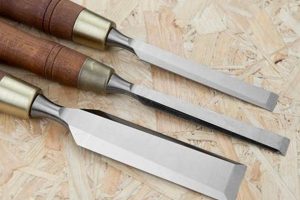
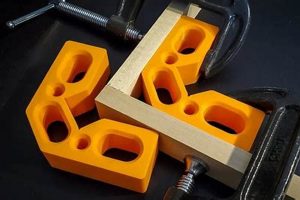
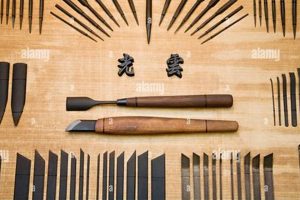
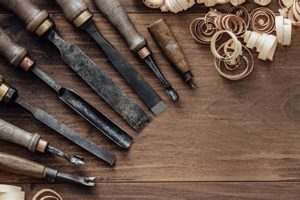
The creation of implements used for shaping wood requires a blend of engineering principles, material science, and practical craftsmanship. The process involves selecting appropriate materials like steel, wood, and composites, then shaping and assembling these components to create functional tools. Examples include crafting hand planes from durable hardwoods and precisely ground steel, or fabricating jigs and fixtures to enhance accuracy and repeatability in woodworking operations.
The ability to produce implements for shaping wood offers significant advantages. It allows craftspeople to customize tools to meet specific needs, reduce reliance on commercial suppliers, and gain a deeper understanding of tool mechanics and performance. Historically, the skill of crafting tools was essential, providing independence and fostering innovation in woodworking techniques. This practice continues to be relevant for those seeking to optimize their workflow, repair and maintain existing equipment, and explore advanced woodworking methods.
The following sections will delve into specific aspects of this skill, exploring material selection, fabrication techniques, and design considerations. This exploration aims to provide a comprehensive understanding of the considerations involved in creating effective and durable implements for shaping wood.
Considerations for Tool Construction
The following considerations are crucial for individuals undertaking the creation of implements used for shaping wood. These guidelines aim to ensure safety, precision, and longevity in the constructed tools.
Tip 1: Material Selection: Prioritize high-quality materials. For cutting edges, hardened steel is essential to maintain sharpness and resist deformation. For handles and bodies, select durable hardwoods such as maple or beech for their strength and stability.
Tip 2: Design Optimization: Thoroughly analyze the intended function of the implement. Ergonomic design considerations, such as handle shape and balance, are paramount for minimizing fatigue and maximizing control during use.
Tip 3: Precision Machining: Accuracy in machining critical components is non-negotiable. Tight tolerances are essential for ensuring proper tool function and preventing premature wear. Employ appropriate measuring instruments and machining techniques to achieve the required level of precision.
Tip 4: Heat Treatment: For steel components, proper heat treatment is crucial to achieve the desired hardness and temper. Incorrect heat treatment can result in brittle tools that are prone to breakage or soft tools that quickly lose their edge.
Tip 5: Joint Integrity: Pay meticulous attention to the construction of joints. Utilize appropriate joinery techniques, such as mortise and tenon or dovetail joints, to create robust and durable connections between tool components.
Tip 6: Finishing and Protection: Apply a protective finish to prevent corrosion and degradation of the tool’s components. Oil finishes, varnishes, or powder coating can significantly extend the lifespan of the constructed implement.
Tip 7: Calibration and Testing: Before deploying the crafted tool, rigorously calibrate and test its performance. Ensure that cutting edges are properly sharpened and aligned and that all moving parts function smoothly. This step is essential for ensuring safety and accuracy.
Adhering to these considerations will significantly increase the likelihood of producing implements for shaping wood that are both effective and durable.
The subsequent sections will expand upon specific tools and their construction methodologies, offering detailed insights into advanced crafting techniques.
1. Material Hardness

Material hardness is a critical determinant in the performance and longevity of implements used for shaping wood. The selection of materials with appropriate hardness characteristics directly impacts the tool’s ability to maintain a sharp cutting edge, resist deformation under stress, and withstand the abrasive forces encountered during woodworking operations. The hardness of steel used in plane blades, chisels, and saw teeth, for example, dictates the tool’s capacity to efficiently sever wood fibers. Insufficient hardness leads to rapid dulling, requiring frequent sharpening and diminishing precision. Excessive hardness, conversely, can result in brittleness and increased susceptibility to chipping or fracture.
The relationship between material hardness and tool effectiveness is exemplified in the context of hand plane construction. A plane blade manufactured from high-carbon steel, properly hardened and tempered, will hold its edge far longer than one made from a softer steel alloy. This prolonged sharpness translates into smoother, more consistent cuts and reduced effort on the part of the woodworker. Similarly, the durability of a saw blade hinges on the hardness of the steel used in its teeth. Softer teeth will wear down quickly when sawing hardwoods, leading to inaccurate cuts and increased friction. The specification of appropriate hardness levels, therefore, is not merely a theoretical consideration but a practical necessity for achieving optimal woodworking outcomes.
In summary, material hardness is a paramount consideration when crafting implements for shaping wood. The careful selection and treatment of materials to achieve the desired hardness characteristics directly influences tool performance, durability, and the overall quality of woodworking results. Understanding the nuanced interplay between hardness and other material properties is essential for producing tools that meet the demands of rigorous woodworking applications. This is a foundational aspect, and influences design choices and performance expectations.
2. Edge Geometry

Edge geometry, the precise configuration of a cutting tool’s edge, is a fundamental determinant of its performance in woodworking. The design and execution of this geometry directly impact the efficiency of material removal, the quality of the finished surface, and the overall usability of implements used for shaping wood.
- Bevel Angle
The bevel angle, the angle formed between the tool’s face and its cutting edge, significantly influences the tool’s cutting action. Steeper angles, common in tools like chisels intended for heavy stock removal, offer greater strength but require more force to drive. Shallower angles, typical of smoothing planes, produce finer shavings and smoother surfaces but are more prone to chipping. Precise control over the bevel angle is crucial for achieving the desired performance characteristics.
- Relief Angle
The relief angle, the angle behind the cutting edge that prevents the tool’s body from rubbing against the workpiece, is essential for smooth and efficient cutting. An insufficient relief angle causes friction and overheating, hindering the tool’s ability to cleanly sever wood fibers. An excessive relief angle weakens the cutting edge, making it more susceptible to damage. Optimizing the relief angle for a specific tool and application is paramount for preventing these issues.
- Cutting Angle
The cutting angle, the angle at which the cutting edge meets the wood, influences the force required to make a cut and the direction in which the wood fibers are severed. Different cutting angles are appropriate for various woodworking tasks, from crosscutting to ripping. Understanding and adjusting the cutting angle allows for efficient and controlled material removal, minimizing tear-out and producing clean, precise cuts.
- Edge Rounding (Honing)
Even microscopic rounding or “micro-bevels” at the very edge of a cutting tool significantly impacts its performance. Purposeful edge rounding, achieved through honing techniques, strengthens the extreme edge and improves its resistance to chipping, particularly when working with figured or abrasive woods. A meticulously prepared and slightly rounded edge, properly honed, contributes to a tool’s ability to maintain sharpness and produce clean, smooth surfaces over extended use.
The principles of edge geometry, when skillfully applied, enable the creation of woodworking tools that are not only effective but also a pleasure to use. Attention to detail in the shaping and maintenance of cutting edges transforms a basic implement into a precision instrument, enhancing the woodworker’s ability to achieve desired results. The interplay of bevel, relief, cutting angles, and edge rounding is the key to optimal performance in building woodworking tools.
3. Ergonomic Design

Ergonomic design, the science of adapting workplace conditions and job demands to the capabilities of workers, is paramount when constructing implements used for shaping wood. It directly affects the user’s comfort, efficiency, and long-term physical well-being. Poorly designed tools can lead to fatigue, repetitive strain injuries, and decreased productivity. Therefore, the incorporation of ergonomic principles is not merely an aesthetic consideration but a critical factor in tool functionality and user safety.
- Handle Shape and Size
The shape and size of a tool handle significantly impact grip comfort and control. Handles that are too small can cause hand cramping, while those that are too large may be difficult to grip securely. Cylindrical handles offer uniform grip but can cause discomfort during prolonged use. Contoured handles, designed to fit the natural curves of the hand, distribute pressure more evenly and reduce strain. Handle materials, such as wood or synthetic polymers, should also be chosen for their comfortable feel and non-slip properties. A well-designed handle allows the user to apply force effectively and maintain precise control over the tool.
- Weight and Balance
The weight and balance of a tool influence the amount of effort required to use it and the precision with which it can be controlled. A tool that is too heavy can cause fatigue and strain, particularly during repetitive tasks. A tool that is poorly balanced may require excessive effort to maintain its orientation, leading to inaccuracies. Ideally, a tool should be balanced so that its center of gravity is located close to the user’s hand, minimizing the amount of force required to control its movement. Weight can be distributed strategically to improve balance and reduce strain.
- Grip Angle and Offset
The grip angle and offset of a tool can affect wrist posture and reduce the risk of repetitive strain injuries. A grip angle that forces the wrist into an unnatural position can cause discomfort and pain. Offset handles, which position the hand away from the cutting edge, can improve visibility and reduce the need to bend or twist the wrist. The optimal grip angle and offset depend on the specific task and the user’s individual anatomy. Careful consideration of these factors can significantly enhance tool usability and prevent injuries.
- Vibration Dampening
Tools that generate vibration can cause fatigue and increase the risk of developing hand-arm vibration syndrome (HAVS). Vibration dampening features, such as rubber grips or vibration-isolating mechanisms, can reduce the amount of vibration transmitted to the user’s hand. These features are particularly important in power tools but can also be beneficial in hand tools that are used for impact tasks. Effective vibration dampening can significantly improve user comfort and reduce the risk of long-term health problems.
Integrating ergonomic principles into the construction of implements used for shaping wood requires a thorough understanding of human anatomy, biomechanics, and the specific demands of woodworking tasks. By prioritizing user comfort and safety, designers can create tools that are not only effective but also contribute to a more sustainable and enjoyable woodworking experience. Attention to detail in handle design, weight distribution, grip angle, and vibration dampening are essential for maximizing tool usability and minimizing the risk of injury. The synthesis of ergonomics and craftsmanship results in tools that are both a pleasure to use and a testament to thoughtful design.
4. Joint Stability

Joint stability is a foundational aspect of implements used for shaping wood. The integrity of connections between tool components directly influences performance, longevity, and user safety. Well-constructed joints ensure that forces are distributed effectively, preventing premature failure and maintaining the tool’s intended geometry under load.
- Mechanical Fasteners
The strategic use of mechanical fasteners, such as screws, bolts, and rivets, contributes significantly to joint stability. Fasteners must be appropriately sized and selected based on the materials being joined and the forces anticipated. For example, constructing a hand plane may involve using brass screws to secure the sole to the body, preventing movement under the stress of planing. Improper fastener selection or installation can compromise joint integrity, leading to tool malfunction or breakage.
- Adhesive Bonding
Adhesives play a crucial role in stabilizing joints, particularly in complex or curved tool components. The choice of adhesive must be compatible with the materials being joined and capable of withstanding the stresses involved in tool use. Epoxy resins, for instance, are frequently employed in securing handles to tool shanks, providing a strong and durable bond that resists impact and vibration. Inadequate adhesive application or the use of inappropriate adhesives can result in joint separation and tool failure.
- Interlocking Joinery
Incorporating interlocking joinery techniques, such as mortise and tenon joints, dovetail joints, or lap joints, enhances joint stability by creating a mechanical interlock between components. These joints rely on the shape and fit of the pieces to resist forces, reducing reliance on fasteners or adhesives. Constructing a wooden mallet might involve using a wedged mortise and tenon joint to secure the head to the handle, creating a robust connection that withstands repeated impacts. Poorly executed joinery, characterized by loose fits or inaccurate cuts, undermines joint stability and compromises tool performance.
- Material Compatibility
Joint stability is also contingent on the compatibility of materials being joined. Differences in thermal expansion or contraction rates can create stresses that weaken joints over time. For example, using dissimilar metals in contact with wood in a humid environment can lead to corrosion and joint failure. Selecting compatible materials and employing appropriate joint construction techniques minimizes these stresses and ensures long-term joint integrity.
These facets of joint stability are integral to the creation of robust and reliable implements used for shaping wood. The careful selection of fasteners and adhesives, the skillful execution of interlocking joinery, and the consideration of material compatibility contribute to tools that withstand the rigors of woodworking, providing users with dependable performance and lasting value. Ignoring these principles inevitably leads to tools that are prone to failure, compromising both safety and efficiency.
5. Heat Treatment

Heat treatment is a critical process in the creation of durable and effective implements used for shaping wood. It manipulates the microstructure of metals, primarily steel, to achieve desired hardness, toughness, and wear resistance. The correct application of heat treatment techniques transforms raw materials into tools capable of withstanding the stresses and strains of woodworking.
- Hardening
Hardening involves heating steel to a specific temperature, typically above its critical point, and then rapidly cooling it, often through quenching in water or oil. This process increases the steel’s hardness, making it more resistant to indentation and abrasion. In the context of crafting cutting tools, such as plane blades or chisels, hardening is essential for creating a keen edge that can efficiently sever wood fibers. However, hardening alone can make the steel brittle. Overly hardened tools are prone to chipping or fracture, rendering them unusable. Therefore, hardening is invariably followed by tempering.
- Tempering
Tempering is a subsequent heat treatment process applied after hardening. It involves heating the hardened steel to a lower temperature and holding it there for a specific period, followed by controlled cooling. Tempering reduces the steel’s brittleness while retaining a significant portion of its hardness. The tempering temperature dictates the final balance between hardness and toughness. Lower tempering temperatures result in harder, more wear-resistant tools, while higher temperatures yield tougher, less brittle tools. Properly tempered plane blades, for instance, will hold a sharp edge without being excessively prone to chipping.
- Annealing
Annealing is a heat treatment process used to soften metal, relieve internal stresses, and improve machinability. It involves heating the steel to a high temperature and then slowly cooling it. Annealing is often employed during the initial stages of tool fabrication to make the metal easier to shape, drill, or grind. For example, annealing a piece of high-carbon steel before forging it into a chisel allows for easier manipulation of the metal without the risk of cracking. This process ensures that the tool can be accurately formed before subsequent hardening and tempering operations.
- Stress Relieving
Stress relieving is a heat treatment process used to reduce residual stresses in metal components. These stresses can arise from manufacturing processes such as machining, welding, or cold forming. Stress relieving involves heating the metal to a moderate temperature and holding it there for a specific time before slowly cooling it. This process minimizes the risk of distortion or cracking during subsequent machining operations or under service loads. Stress relieving is particularly important in building woodworking tools with complex shapes or welded joints to ensure dimensional stability and long-term durability.
These heat treatment methods are crucial in crafting implements for shaping wood, enhancing mechanical characteristics. Strategic application ensures that tools exhibit optimal performance. Skillful implementation is indispensable for tools designed to meet demands in woodworking applications.
6. Calibration Accuracy

Calibration accuracy is inextricably linked to the successful creation and utilization of implements used for shaping wood. It dictates the precision with which tools can be manufactured, maintained, and employed. Inaccurate calibration during the construction phase leads to tools that deviate from their intended design specifications, resulting in flawed cuts, imprecise joinery, and compromised structural integrity. This directly affects the quality of woodworking projects and can pose safety risks. For instance, a miscalibrated marking gauge will consistently produce inaccurate layout lines, leading to joinery errors that compromise the strength and aesthetic appeal of a finished piece.
Maintaining implements used for shaping wood requires periodic calibration checks and adjustments. Woodworking machinery, such as table saws and planers, relies on precise settings for accurate material removal. A table saw with a misaligned blade, due to calibration errors, will produce angled cuts, impacting the accuracy of joinery and potentially leading to dangerous kickback. Similarly, a jointer with out-of-calibration fences will create uneven surfaces, necessitating additional corrective measures. Precision hand tools, such as squares and levels, also require regular calibration to ensure accurate layout and alignment. A square that is not perfectly orthogonal will introduce errors into joinery, leading to gaps and misalignments. Precision in calibration enables the efficient and reliable use of implements used for shaping wood.
The significance of calibration accuracy extends beyond individual tools to encompass the overall workflow of woodworking projects. It establishes a foundation for repeatable and predictable results, reducing the likelihood of errors and rework. Properly calibrated tools contribute to efficient material usage, minimizing waste and maximizing the value of resources. The challenge lies in implementing systematic calibration procedures and utilizing appropriate measuring instruments. Understanding the principles of calibration and consistently applying them is crucial for achieving professional-grade woodworking results and ensuring the long-term reliability of implements used for shaping wood.
7. Protective Finishes

Protective finishes represent a crucial element in the comprehensive construction of implements used for shaping wood. Application of appropriate coatings serves to mitigate environmental degradation, enhance durability, and maintain the functional integrity of these implements over extended periods. The corrosive effects of moisture, atmospheric pollutants, and physical abrasion pose significant threats to the longevity of materials commonly used in implements used for shaping wood, such as steel and various hardwoods. Without adequate protection, metal components are susceptible to rust and oxidation, leading to weakened structural integrity and impaired performance. Similarly, wood components can absorb moisture, causing swelling, warping, and ultimately, structural failure. Protective finishes, therefore, act as a barrier against these destructive forces, prolonging the lifespan and operational efficiency of the implements. For example, a linseed oil finish on a wooden hand plane protects the body from moisture absorption, preventing warping and maintaining the flatness of the sole, which is critical for accurate planing. Likewise, a protective coating on a saw blade reduces friction, minimizes heat build-up, and inhibits rust formation, ensuring smooth cutting and extending the blade’s useful life.
The selection of a specific protective finish must align with the intended application and the materials used in the implement. Oil-based finishes, such as linseed oil and tung oil, penetrate wood fibers, providing a degree of moisture resistance and enhancing the wood’s natural beauty. However, they offer limited protection against abrasion and require periodic reapplication. Varnish and lacquer finishes form a more durable surface coating, offering superior resistance to moisture, scratches, and chemicals. These finishes are particularly suitable for tools that are exposed to harsh environments or frequent handling. Powder coating, an electrostatic application of dry powder followed by heat curing, provides an exceptionally durable and corrosion-resistant finish for metal components. This is often used for modern hand planes and machine parts where long life and high precision are needed. The strategic application of protective finishes, coupled with proper maintenance practices, is essential for ensuring that implements used for shaping wood remain reliable and effective tools for years to come.
In conclusion, protective finishes are not merely cosmetic enhancements but integral components in building woodworking tools. Their selection and application directly impact the implement’s durability, functionality, and long-term value. The challenge lies in choosing the finish that best balances protection, aesthetic appeal, and ease of application, considering the specific materials and intended use of the tool. Understanding the properties and application techniques of various protective finishes is therefore essential for any woodworker seeking to create high-quality, long-lasting implements for shaping wood.
Frequently Asked Questions
The following questions address common inquiries regarding the construction of implements used for shaping wood. They aim to clarify fundamental concepts and address prevalent misconceptions surrounding this skill.
Question 1: What are the essential materials needed for constructing durable implements used for shaping wood?
High-carbon steel is paramount for cutting edges, providing hardness and wear resistance. Durable hardwoods, such as maple or beech, are suitable for handles and bodies, offering strength and dimensional stability. Appropriate fasteners, like brass screws or steel rivets, are necessary for secure component assembly. The specific material requirements vary depending on the tool’s intended function and design.
Question 2: What role does heat treatment play in enhancing the properties of steel components within woodworking tools?
Heat treatment processes, including hardening, tempering, and annealing, manipulate the microstructure of steel to achieve desired mechanical properties. Hardening increases steel hardness for improved cutting performance. Tempering reduces brittleness while retaining hardness. Annealing softens steel for easier machining. Proper heat treatment is essential for optimizing tool performance and longevity.
Question 3: How does edge geometry influence the performance of cutting tools?
Edge geometry, encompassing bevel angle, relief angle, and cutting angle, dictates the efficiency of material removal and the quality of the finished surface. Precise control over edge geometry enables the creation of tools optimized for specific woodworking tasks, such as roughing, smoothing, or detail carving. Improper edge geometry leads to inefficient cutting and a compromised surface finish.
Question 4: What are the key ergonomic considerations in tool design?
Ergonomic design prioritizes user comfort, efficiency, and safety. Handle shape and size, weight distribution, and grip angle are critical factors. Handles should be contoured to fit the hand comfortably, weight should be balanced to minimize strain, and grip angles should promote natural wrist posture. Neglecting ergonomic principles can lead to fatigue, repetitive strain injuries, and reduced productivity.
Question 5: How important is joint stability in woodworking implements?
Joint stability is paramount for structural integrity and tool longevity. Strong, well-constructed joints ensure that forces are distributed effectively, preventing premature failure. Appropriate joint construction techniques, such as mortise and tenon or dovetail joints, should be employed, along with suitable adhesives and fasteners. Weak or poorly constructed joints compromise tool performance and pose safety risks.
Question 6: Why are protective finishes essential for implements used for shaping wood?
Protective finishes shield tools from environmental degradation, including moisture, corrosion, and abrasion. Oil-based finishes penetrate wood, providing moisture resistance. Varnish and lacquer finishes form durable surface coatings. Powder coating provides exceptional corrosion resistance for metal components. Protective finishes prolong tool lifespan and maintain their aesthetic appeal. The long-term value is enhanced by protective finishes.
These FAQs emphasize critical aspects, enabling the creation of durable woodworking implements. Skillful design contributes to long-term value.
The ensuing section will present advanced strategies for refinement.
Conclusion
The preceding sections have detailed the multifaceted nature of crafting implements used for shaping wood. From material selection and heat treatment to edge geometry and ergonomic considerations, a comprehensive understanding of these principles is essential for creating tools that are both effective and durable. Emphasis has been placed on the interplay between design, fabrication, and maintenance, highlighting the importance of precision and attention to detail.
Mastering the art of crafting implements for shaping wood requires dedication and continuous learning. However, the rewards are significant: enhanced control over the woodworking process, increased self-reliance, and the satisfaction of creating tools that are uniquely suited to specific needs. Further exploration of advanced techniques and ongoing refinement of skills are encouraged to ensure the continued evolution and improvement of this valuable craft.