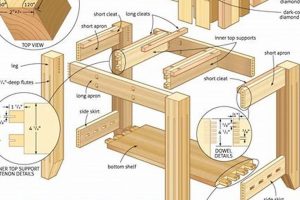
Crafting miniature items from wood presents opportunities to develop woodworking skills on a manageable scale. These projects often involve utilizing minimal materials and tools, making them accessible to beginners and those with limited workspace. Examples include building small boxes, crafting wooden toys, or creating decorative items like miniature furniture.
Engaging in these smaller-scale endeavors provides several advantages. They facilitate the acquisition of fundamental woodworking techniques such as measuring, cutting, joining, and finishing. Successfully completing such a project boosts confidence and encourages the pursuit of more complex undertakings. Historically, apprenticeship often began with such items, honing skills without the expense of larger projects.
The following sections will explore specific project ideas, material selection guidelines, tool recommendations, and essential techniques applicable to the creation of diminutive wooden objects.
Tips for Diminutive Wood Creations
Successfully executing smaller-scale woodworking requires precision and attention to detail. The following tips are designed to enhance the outcome of such projects.
Tip 1: Prioritize Accurate Measurement: Due to the reduced dimensions, even slight inaccuracies in measurement can significantly impact the final result. Employ precise measuring tools and techniques to ensure components fit together seamlessly.
Tip 2: Select Appropriate Wood Species: Choose hardwoods like maple or cherry for increased durability and finer detail work. Softer woods, such as pine, are more easily worked but may lack the structural integrity for intricate designs. Consider the wood grain when selecting material.
Tip 3: Sharpen Tools Regularly: Sharp tools are essential for clean cuts and smooth surfaces. Dull tools can lead to splintering and imprecise joinery, which is particularly noticeable in smaller items. Maintain a consistent sharpening regimen.
Tip 4: Employ Clamps Strategically: Clamps are crucial for securing joints during glue-up. Utilize various clamp sizes and configurations to apply even pressure across the entire joint surface. Avoid over-tightening, which can damage the wood.
Tip 5: Sand Meticulously: Surface preparation is vital for achieving a professional finish. Progress through progressively finer grits of sandpaper to eliminate imperfections and create a smooth, uniform surface. Pay particular attention to edges and corners.
Tip 6: Apply Finish Sparingly: When applying finishes, use thin, even coats to prevent runs and drips. Multiple thin coats are preferable to a single heavy coat. Allow each coat to dry completely before applying the next.
Tip 7: Consider Joinery Techniques: Explore different joinery methods suitable for small parts, such as mortise and tenon, dovetails (miniature versions), or simple butt joints reinforced with dowels or screws. The choice depends on the project’s complexity and structural requirements.
Adhering to these guidelines will significantly improve the quality and longevity of smaller woodworking projects, maximizing the enjoyment and satisfaction derived from the craft.
The subsequent section will address common challenges encountered during these projects and provide troubleshooting strategies.
1. Design Complexity

The level of intricacy in a design exerts a direct influence on the perceived appeal and the overall difficulty of small-scale woodworking endeavors. Projects exhibiting simple, clean lines and basic geometric shapes are generally more accessible to novice woodworkers, requiring fewer specialized tools and less demanding techniques. In contrast, designs incorporating complex curves, intricate joinery, or delicate embellishments necessitate advanced skills and meticulous execution. The selection of a design, therefore, becomes a critical factor in determining the feasibility and ultimate success of the woodworking project.
Examples demonstrating this connection abound. A simple wooden box with a hinged lid represents a low level of design complexity, suitable for beginners. The construction involves straightforward cuts, basic joinery, and minimal finishing. Conversely, a miniature replica of a Queen Anne chair, complete with cabriole legs and precisely carved details, signifies a high degree of design complexity, demanding exceptional skill and specialized tools. The chair’s success hinges upon the accurate execution of numerous intricate components and the mastery of advanced carving techniques. The cause-and-effect relationship between design and project success is clearly illustrated in these examples.
Understanding the impact of design complexity is crucial for effectively planning and executing small woodworking projects. Selecting an appropriately challenging design, given the available skills, tools, and time, will significantly increase the likelihood of a positive outcome. A well-executed simple design is often preferable to a poorly executed complex one. The key takeaway is that the “cool” factor often derives not from sheer intricacy, but from skillful execution and thoughtful design choices, regardless of the design’s initial complexity.
2. Material Selection

Material selection is paramount in smaller-scale woodworking, directly impacting the aesthetic appeal, structural integrity, and workability of the finished piece. Careful consideration of wood species, grain patterns, and material dimensions is essential for successful project completion.
- Wood Species Characteristics
Different wood species exhibit varying properties that influence their suitability. Hardwoods such as maple and cherry offer increased density and finer grain, allowing for intricate detailing and durable construction. Softwoods like pine and basswood are more pliable, making them easier to shape but less resistant to wear and tear. The selection should align with the project’s intended use and aesthetic requirements.
- Grain Pattern and Orientation
The grain pattern of the wood affects its visual appeal and structural strength. Straight-grained wood is generally easier to work with and provides consistent aesthetic. More complex patterns, such as burl or curly grain, can add visual interest but present challenges during cutting and shaping. Proper grain orientation is crucial for preventing warping and ensuring structural stability, particularly in smaller components.
- Material Dimensions and Availability
The dimensions of available lumber often dictate the design possibilities in smaller projects. Scraps and offcuts can be repurposed, promoting resourcefulness and minimizing waste. The ability to source appropriately sized pieces reduces the need for extensive cutting and shaping, streamlining the construction process.
- Wood cost considerations
The choice of wood has cost effect especially when starting out, choosing locally sourced wood or soft wood examples pine are good way to cut the cost of starting out with this hobby. If project require more complex materials you can consider to make smaller scale prototypes of the project to make a good estimate for material needed to build the main project to avoid wastages.
The synergy between material selection and project design is crucial for achieving the desired result. The conscious choice of wood species, attention to grain patterns, and consideration of available dimensions collectively contribute to the creation of small woodworking projects that are both aesthetically pleasing and structurally sound. This combination has effect on final product of cool woodworking projects small.
3. Precision Tools

The successful execution of diminutive wooden creations is intrinsically linked to the utilization of precision tools. In smaller-scale woodworking, where tolerances are minimal, inaccuracies in cutting, shaping, or joining become readily apparent. The use of tools designed for precise control and accuracy is, therefore, not merely a preference, but a necessity for achieving professional-quality results. The cause-and-effect relationship is direct: imprecise tools lead to imprecise components, which ultimately compromise the overall quality and aesthetic appeal of the finished piece. A miniature dovetail joint, for example, requires a dovetail saw with fine teeth and a precisely angled chisel to achieve the necessary tight fit. Without these tools, a clean and structurally sound joint is unattainable.
The importance of precision extends beyond hand tools to include measuring and marking devices. A high-quality digital caliper, for instance, allows for measurements accurate to within fractions of a millimeter, crucial for ensuring the precise dimensions of small components. Similarly, a marking gauge with a fine cutting wheel enables accurate and repeatable scribing of lines, essential for consistent joinery. Practical application extends to power tools as well. A benchtop sander with a miter gauge can be used to produce precisely angled edges on small pieces, ensuring accurate assembly. The availability and proper use of such tools directly impact the feasibility of executing complex designs in a small format.
In summary, the connection between precision tools and smaller woodworking projects is undeniable. The attainment of accurate dimensions, clean cuts, and tight joinery is dependent upon the use of tools designed for precision and control. While skill and technique remain important factors, the right tools provide the foundation for achieving professional-quality results. The challenge lies in selecting the appropriate tools for the specific project and mastering their proper usage, ultimately contributing to the creation of smaller wooden objects that are both functional and aesthetically pleasing. This understanding of the role precision plays in delivering a successful outcome in this type of woodworking is key, and contributes significantly to the “cool” factor.
4. Joinery Methods

The success of smaller woodworking projects hinges critically on the appropriate selection and execution of joinery methods. Given the reduced scale and limited surface area for glue application, traditional joinery techniques assume amplified importance. The cause-and-effect relationship is evident: poorly executed joinery leads to structural instability and compromised aesthetics, rendering the project unsuccessful. Techniques like dovetails, mortise and tenon, or even precisely executed rabbet joints become essential for ensuring durability and longevity. Consider a small jewelry box; dovetail joints, though challenging to execute at a miniature scale, provide superior strength and visual appeal compared to simple butt joints. A well-crafted joint not only provides structural support but can also serve as a decorative element, enhancing the project’s overall coolness.
Practical application extends beyond structural integrity. The choice of joinery directly influences the overall design. For example, a mitered corner with a concealed spline offers a clean, seamless appearance suitable for modern designs, while exposed dovetails contribute to a more traditional aesthetic. Experimentation with different joinery types on practice pieces is crucial for developing the necessary skills and understanding the strengths and weaknesses of each method. Specialized tools, such as miniature saws and chisels, often become necessary for achieving the precision required in smaller woodworking projects. Consider building a small drawer; its function depends entirely on the quality of the drawers joinery method. How it is constructed is just as important as the material it is made out of.
In summary, the understanding and skillful application of appropriate joinery methods are paramount to the success of cool woodworking projects small. The correct choice and execution of joinery dictate the project’s structural integrity, aesthetic appeal, and overall durability. While challenging, mastering these techniques allows for the creation of truly impressive and functional miniature wooden objects. The challenge lies in adapting traditional methods to a smaller scale and selecting the most appropriate joint for the specific demands of each project.
5. Finishing Techniques
Finishing techniques are integral to the success and perceived value of small-scale woodworking. The application of a well-chosen and expertly applied finish enhances the wood’s natural beauty, protects the surface from damage, and ultimately contributes to the project’s overall appeal. The connection is direct: a poorly executed finish can detract from even the most meticulously crafted piece, while a superior finish can elevate a simple design to a level of perceived sophistication. The cause-and-effect relationship is readily observable; a blotchy stain or uneven varnish application will compromise the aesthetic of any small wooden object. This understanding is not merely aesthetic; a protective finish, such as varnish or lacquer, shields the wood from moisture, scratches, and UV damage, extending the lifespan of the project. Consider a miniature wooden toy: a non-toxic finish is crucial for safety, while a durable finish protects against wear and tear.
Practical significance lies in the selection of appropriate finishing materials and techniques for the specific wood species and project application. Oil finishes, for instance, penetrate the wood, enhancing its grain and providing a soft, natural appearance, suitable for decorative items. Polyurethane finishes offer superior durability and water resistance, ideal for functional objects subjected to frequent handling. The application method is equally important; spraying provides a smooth, even coat, while brushing requires careful technique to avoid brush marks. Sanding between coats is essential for removing imperfections and creating a flawless surface. Practical applications include choosing a clear, protective finish for a small wooden box to showcase the natural grain, or selecting a colored stain to enhance the character of a turned wooden bowl.
In summary, mastering finishing techniques is essential for realizing the full potential of small woodworking projects. A well-applied finish not only enhances the aesthetic appeal but also protects the wood and extends its lifespan. The challenge lies in selecting the appropriate materials and techniques for the specific project and mastering the application process. This understanding is paramount for achieving professional-quality results and transforming simple wooden objects into cherished keepsakes. In the world of “cool woodworking projects small”, finishing is the element that truly elevates the work from basic to extraordinary.
6. Functional Use

The incorporation of functional utility into small-scale woodworking significantly enhances project value and appeal. Practical application transforms decorative items into purposeful tools or objects, adding a dimension of usability that elevates their significance. The design and execution of projects, therefore, should consider not only aesthetics but also the intended function, ensuring the finished piece serves a practical purpose.
- Storage Solutions
Small wooden boxes, drawers, and organizers provide compact storage solutions for various items, such as jewelry, craft supplies, or office materials. The construction of these items demands precision and attention to detail, ensuring smooth operation and secure closure. Practical examples include miniature tool chests, desk organizers, or spice racks, each offering a tangible benefit beyond mere decoration. The efficient and stylish storage adds value to the “cool woodworking projects small”.
- Household Accessories
Smaller wooden projects can be adapted to create functional household accessories, ranging from coasters and cutting boards to candle holders and serving trays. These items require durable materials and finishes to withstand regular use and exposure to various elements. Examples include customized wooden trivets, handcrafted soap dishes, or unique key holders, each contributing to the functionality and aesthetics of the home. The usability and attractive design make “cool woodworking projects small” stand out.
- Tools and Implements
Woodworking lends itself to the creation of smaller tools and implements, such as marking gauges, mallets, or hand planes. These items require precise construction and ergonomic design to ensure efficient operation and user comfort. Practical examples encompass miniature carving tools, custom-made handles for existing tools, or specialized jigs for specific woodworking tasks. These tools are not just useful, but show unique ingenuity.
- Gifts and Personalized Items
Functional gifts such as custom-made pens, personalized cutting boards, or engraved wooden keepsakes offer a unique and thoughtful alternative to mass-produced items. The creation of these gifts involves incorporating personal touches and tailoring the design to the recipient’s preferences. Examples include handcrafted wooden picture frames, customized desk nameplates, or engraved wooden jewelry boxes, each conveying a sense of care and attention to detail. The personalized and functional nature is “cool woodworking projects small”.
The integration of functional use transforms diminutive wooden creations into valuable and appreciated items. By prioritizing both aesthetics and practicality, woodworkers can create projects that are not only visually appealing but also serve a tangible purpose, enhancing their overall value and appeal. This thoughtful approach to design and execution elevates the significance of small-scale woodworking, demonstrating its versatility and potential for creating both beautiful and functional objects.
7. Aesthetic Appeal

Aesthetic appeal is a critical component of successful diminutive woodworking. It determines the visual impact and perceived quality of the finished piece, influencing its desirability and value. Projects lacking aesthetic consideration, however skillfully constructed, may fail to capture attention or evoke appreciation.
- Wood Selection and Grain
The selection of wood species, with its inherent color and grain patterns, contributes significantly to aesthetic appeal. The strategic orientation of the wood grain can enhance visual interest and complement the project’s design. Examples include utilizing figured maple for decorative boxes or selecting contrasting wood species to create visually striking inlays. Careful attention to these details elevates the perceived quality and beauty.
- Form and Proportion
The overall form and proportions of the project dictate its visual harmony and balance. Employing the principles of design, such as the Golden Ratio, can create pleasing and visually appealing shapes. Examples include carefully proportioned furniture replicas or elegantly curved boxes. Well-defined form and harmonious proportions create projects that resonate with viewers.
- Surface Finish and Texture
The surface finish and texture play a critical role in aesthetic appeal. A smooth, flawlessly applied finish enhances the wood’s natural beauty and protects the surface. Techniques such as polishing, distressing, or texturing can add visual interest and tactile appeal. Examples include a high-gloss lacquer finish on a turned bowl or a textured surface on a wooden sculpture.
- Embellishments and Details
The addition of embellishments and details, such as carving, inlay, or decorative hardware, can enhance the aesthetic appeal of smaller woodworking projects. These details add visual interest and showcase craftsmanship. Examples include hand-carved details on a wooden box or intricate inlays on a jewelry chest. Thoughtful and well-executed embellishments enhance the overall aesthetic impression.
These combined elements of wood selection, form, finish, and embellishment create the overall impression of “cool woodworking projects small.” It is this holistic approach to aesthetics that makes these miniature creations stand out from the ordinary. The integration of functional use transforms diminutive wooden creations into valuable and appreciated items.
Frequently Asked Questions
This section addresses common inquiries regarding the design, execution, and material considerations for small-scale woodworking projects.
Question 1: What constitutes a “small” woodworking project?
A small woodworking project typically involves dimensions suitable for tabletop display or handheld manipulation. Material usage is minimized, and the project can generally be completed within a reasonable timeframe, typically ranging from a few hours to several days, depending on complexity.
Question 2: Is specialized equipment required for small woodworking?
While advanced machinery can be beneficial, many smaller projects can be successfully completed with basic hand tools, including saws, chisels, measuring devices, and clamping mechanisms. The emphasis is on precision and control rather than heavy machinery.
Question 3: Which wood species are most suitable for smaller-scale projects?
Hardwoods such as maple, cherry, and walnut offer superior detail and durability for intricate designs. Softwoods like pine and basswood are more easily worked but may lack the necessary strength for certain applications. Wood selection should align with the project’s intended function and aesthetic requirements.
Question 4: What are common joinery challenges encountered in smaller projects?
The reduced dimensions in smaller woodworking amplify the importance of precise joinery. Challenges include achieving tight fits, preventing glue squeeze-out, and maintaining structural integrity with minimal surface area for adhesion. Techniques such as dovetails, mortise and tenon, and precise rabbet joints are often employed.
Question 5: How can one achieve a professional finish on small woodworking projects?
Surface preparation is crucial, involving meticulous sanding to progressively finer grits. Application of thin, even coats of finish, followed by light sanding between coats, is essential. The choice of finish depends on the desired aesthetic and level of protection required, ranging from oils and waxes to varnishes and lacquers.
Question 6: What are some examples of functional small woodworking projects?
Examples include small storage boxes, desk organizers, miniature furniture replicas, handcrafted tools, and personalized gifts. The functional element enhances the project’s value and appeal, transforming it from a purely decorative item into a practical object.
Mastering the nuances of design, material selection, and execution is crucial for success in small-scale woodworking. The application of precision and attention to detail, combined with the appropriate tools and techniques, will yield aesthetically pleasing and functional objects.
The subsequent section will explore sources of inspiration and design resources for smaller woodworking projects.
Conclusion
The preceding exploration detailed essential considerations for successfully executing diminutive wooden creations. These factors encompass design intricacy, material properties, tool precision, joinery techniques, finishing methods, functional application, and aesthetic qualities. Mastery of these aspects enables the creation of objects that are both visually appealing and structurally sound.
Continued investigation and refinement of these principles will undoubtedly lead to further innovation and advancement within the realm of “cool woodworking projects small”. Aspiring and experienced craftspeople are encouraged to experiment, explore, and share their knowledge, contributing to the ongoing evolution of this demanding yet rewarding craft.