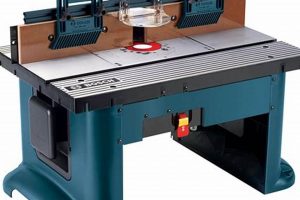
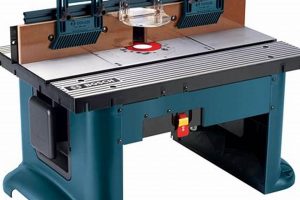
An auxiliary surface designed to enhance the functionality of a stationary drill press, used primarily in carpentry, provides a stable and expansive work area. This facilitates accurate and repeatable drilling operations on wooden materials. Examples include shop-built platforms constructed from plywood, or commercially available models featuring adjustable fences and clamping systems.
The implementation of this accessory offers several advantages. It improves work piece support, minimizes splintering, and allows for the integration of jigs and fixtures, thus increasing precision and efficiency. Historically, craftsmen fashioned rudimentary versions to address the limitations of the drill press’s standard table, eventually leading to the development of sophisticated, purpose-built options.
The ensuing discussion will address critical considerations when selecting or fabricating an appropriate version, including material choices, size requirements, integrated features such as dust collection and T-tracks, and strategies for ensuring optimal alignment and stability.
Enhancing Drill Press Operations
The following provides insights designed to optimize the use of an auxiliary surface for drill presses in woodworking applications.
Tip 1: Material Selection: Plywood, MDF (Medium Density Fiberboard), and hardwoods are common choices. Plywood offers dimensional stability, while MDF provides a smooth, consistent surface. Hardwoods deliver durability. Choose materials based on the anticipated workload and desired lifespan.
Tip 2: Table Size and Extension Wings: The surface area should accommodate the typical size of work pieces. Consider adding extension wings for larger projects. Ensure adequate support to prevent sagging or deflection under load.
Tip 3: Fence Systems: A robust fence aids in repeatable drilling operations. Ensure the fence is square to the drill bit and can be securely locked in place. Micro-adjustment capabilities enhance precision.
Tip 4: Clamping Mechanisms: Integrated T-tracks or similar systems allow for secure clamping of work pieces. This minimizes movement during drilling, improving accuracy and safety.
Tip 5: Dust Collection Integration: Incorporate a dust port to connect to a vacuum system. Effective dust collection improves visibility and reduces the health hazards associated with wood dust.
Tip 6: Surface Finish: Apply a durable finish to the surface to prevent moisture absorption and reduce friction. Wax or a polyurethane coating are suitable options.
Tip 7: Mounting Security: Ensure the auxiliary surface is securely attached to the drill press table. Use appropriate fasteners and consider adding reinforcing brackets for added stability.
Adhering to these considerations will contribute to a safer, more efficient, and more accurate woodworking experience.
The final segment will provide guidance on maintenance and troubleshooting.
1. Material

Material selection constitutes a foundational element in the design and utility of auxiliary surfaces for drill presses used in woodworking. The choice of material directly impacts table stability, durability, vibration dampening, and ultimately, the precision of drilling operations.
- Plywood Composition and Layering
Plywood, a laminated sheet material, exhibits varying degrees of stability and resistance to warping depending on the quality and number of its plies. Higher-grade plywood with a greater number of layers provides superior dimensional stability, essential for maintaining a flat and consistent work surface under load. For instance, Baltic Birch plywood is often favored due to its void-free construction and consistent thickness.
- Hardwood Density and Rigidity
Solid hardwoods, such as maple or oak, offer exceptional rigidity and vibration absorption. Their density contributes to a robust platform, minimizing deflection during drilling. However, hardwoods are typically more expensive and susceptible to seasonal moisture changes, potentially causing warping or cracking if not properly sealed and maintained. A practical example involves using hard maple for the table’s primary surface to withstand heavy use, while softer woods are used for supporting structures.
- MDF Uniformity and Machinability
Medium-Density Fiberboard (MDF) presents a homogenous composition, allowing for smooth and consistent machining. Its lack of grain minimizes splintering and facilitates the creation of precisely sized components. However, MDF is significantly more susceptible to moisture damage than plywood or solid wood, leading to swelling and disintegration. As an example, an MDF core covered with a durable laminate offers a stable and machinable surface while mitigating moisture concerns.
- Metal Reinforcement and Stability
The incorporation of metal components, such as steel or aluminum, provides enhanced structural support and rigidity. Metal reinforcement can be strategically integrated into the table’s design to minimize deflection and maintain flatness under heavy loads or extended use. For instance, steel braces can be added beneath the table surface to prevent sagging, especially in larger tables constructed from less rigid materials.
The selection of materials for auxiliary surfaces in woodworking involves a careful balancing act between cost, stability, machinability, and resistance to environmental factors. A hybrid approach, utilizing a combination of materials tailored to specific functions, often yields the most effective and durable solution. For example, plywood provides the structural base, MDF offers a smooth surface, and hardwood is applied in high-wear areas.
2. Stability

Stability is paramount in the design and application of auxiliary drill press surfaces for woodworking. It directly affects the accuracy of drilling operations, the quality of the finished product, and the safety of the operator. A lack of stability introduces vibrations and movement, leading to inaccuracies and potential hazards.
- Surface Rigidity and Material Deflection
The ability of the auxiliary surface to resist bending or deformation under load is critical. Materials with high flexural strength, such as hardwoods or thick-gauge plywood, are preferred. Excessive deflection introduces inaccuracies in hole placement and can cause premature wear on drill bits. An example is a table constructed from thin MDF, which may sag under the weight of a large workpiece, compromising drilling precision.
- Vibration Dampening Characteristics
Drill presses inherently generate vibrations during operation. A stable surface absorbs these vibrations, preventing them from transferring to the workpiece. Dense materials like hardwoods are effective at dampening vibrations. Conversely, lightweight materials like thin plywood can amplify vibrations, resulting in jagged or oversized holes. Consider the application of vibration-dampening pads between the drill press and the table to further mitigate this effect.
- Secure Mounting to the Drill Press
The auxiliary surface must be firmly attached to the drill press’s existing table. Loose or improperly secured mounting introduces instability and movement. Employing robust fasteners, such as bolts and lock washers, ensures a secure connection. Regularly inspect the mounting hardware for tightness and signs of wear. An example would be using U-bolts to clamp an auxiliary table to the drill press table.
- Base Support and Floor Contact
The base of the drill press, and by extension the auxiliary surface, must maintain consistent contact with the floor. Uneven or unstable flooring can introduce vibrations and movement. Leveling feet can compensate for irregularities in the floor surface. A wide and stable base design also contributes to overall stability. A drill press mounted on a rolling stand requires locking casters to ensure stability during operation.
The collective effect of surface rigidity, vibration dampening, secure mounting, and stable base support directly influences the precision and safety of drilling operations performed on auxiliary drill press surfaces in woodworking. Careful consideration of these factors is essential for achieving accurate and repeatable results.
3. Fence Accuracy

The accuracy of a fence system integrated with drill press tables directly influences the precision and repeatability of drilling operations in woodworking. This component serves as a reference edge against which workpieces are aligned, ensuring consistent hole placement and minimizing errors.
- Parallelism to the Drill Bit
The fence must maintain strict parallelism with the drill bit’s axis of rotation. Any deviation from this parallel alignment introduces angular errors in hole placement, particularly noticeable when drilling multiple holes along a common line. This is crucial for applications such as creating precisely spaced dowel holes for joinery. Even minute errors accumulate over distance, impacting the integrity of the final assembly. Precision-ground fences and meticulous setup procedures are essential.
- Fence Straightness and Rigidity
The fence itself must be perfectly straight and possess sufficient rigidity to resist deflection under pressure from the workpiece. Warped or flexible fences introduce inconsistencies in alignment, leading to variable hole positions. High-quality materials, such as hardened steel or extruded aluminum, and robust construction techniques contribute to fence straightness and rigidity. Regularly checking the fence with a precision straightedge is advisable.
- Secure Locking Mechanism
A reliable locking mechanism ensures the fence remains securely positioned during the drilling operation. Slippage or movement of the fence results in misaligned holes and potential damage to the workpiece. Cam-over locks, lever clamps, or threaded knobs provide secure and repeatable fence positioning. The locking mechanism should apply consistent pressure along the entire length of the fence to prevent localized movement.
- Micro-Adjustment Capabilities
The inclusion of micro-adjustment capabilities allows for fine-tuning the fence position to achieve precise hole placement. This is particularly valuable for tasks requiring exacting tolerances. Lead screws with calibrated dials or rack-and-pinion systems facilitate incremental adjustments, enabling accurate positioning down to fractions of a millimeter. This level of precision is essential for advanced woodworking techniques.
The interconnectedness of these facets underscores the importance of fence accuracy in the context of drill press tables for woodworking. Investing in a high-quality fence system and adhering to meticulous setup procedures translates directly into improved accuracy, reduced material waste, and enhanced project outcomes.
4. Clamping Security

Clamping security is a fundamental requirement for safe and accurate operation of drill presses, particularly when utilizing auxiliary surfaces for woodworking. Reliable clamping prevents workpiece movement during drilling, minimizing the risk of injury and ensuring precise hole placement.
- Workpiece Immobilization
Effective clamping fully immobilizes the workpiece, preventing any lateral or vertical movement during the drilling process. Failure to adequately secure the workpiece can result in the drill bit catching, causing the piece to spin violently, potentially damaging the workpiece and endangering the operator. Examples include using toggle clamps or hold-down clamps to firmly secure lumber to the drill press surface.
- Fixture Integration
Clamping mechanisms often facilitate the integration of jigs and fixtures, enhancing repeatability and precision. These specialized clamping systems allow for consistent placement of workpieces for repetitive drilling tasks. An example is a custom-built jig that incorporates a clamping mechanism to secure multiple identical pieces for drilling, ensuring uniformity across all components.
- Clamp Force Distribution
Proper clamping requires even distribution of force across the workpiece surface. Concentrated clamping pressure can damage the material, while insufficient pressure allows for movement. Clamps with large clamping faces or the use of pads can help distribute the clamping force evenly. The use of a padded clamp when securing softwoods prevents indentation and maintains workpiece integrity.
- Quick-Release Mechanisms
Efficient workflows often necessitate quick-release clamping mechanisms that allow for rapid workpiece changes. This minimizes downtime and maximizes productivity. Cam clamps, over-center clamps, and pneumatic clamps are examples of quick-release clamping systems. These systems are particularly useful in production environments where speed and efficiency are critical.
The above elements of clamping security demonstrate its crucial role in maximizing the utility and safety of drill press auxiliary surfaces for woodworking. Proper implementation of these principles not only ensures operator safety but also significantly improves the quality and consistency of drilled holes.
5. Dust Control

Effective dust control is an integral component of drill press tables designed for woodworking. The drilling process generates fine particulate matter that, if uncontrolled, presents health hazards and impairs visibility, thereby reducing accuracy and increasing the risk of accidents. The presence of a dedicated dust collection port integrated into the auxiliary surface allows for the direct extraction of dust at the source. This mitigates airborne dust concentrations, minimizing respiratory exposure for the operator and creating a cleaner, safer workspace.
Consider a scenario where a woodworker is drilling a series of holes in MDF (Medium Density Fiberboard) without adequate dust control. MDF dust contains formaldehyde and is known to be a respiratory irritant. Without extraction, the dust accumulates rapidly, obscuring the drill bit and the layout marks on the workpiece, leading to inaccurate hole placement and potential splintering. Integrating a dust collection system, connected to a shop vacuum or dust collector, directly addresses this problem by capturing the dust before it becomes airborne. Furthermore, the reduced dust accumulation on the drill press table minimizes the risk of the workpiece slipping during drilling.
In conclusion, the incorporation of dust control measures into drill press tables for woodworking is not merely an optional feature but a necessity for maintaining a safe, healthy, and efficient working environment. While the initial investment in dust collection infrastructure may represent an upfront cost, the long-term benefits in terms of operator health, improved accuracy, and reduced cleanup time justify the expenditure. The design and integration of dust ports should be a primary consideration when selecting or fabricating an auxiliary drill press surface.
6. Adjustability

The capacity for adjustment constitutes a critical aspect of drill press tables used in woodworking. Its presence or absence directly affects the versatility and precision achievable with the tool. The primary function of adjustability is to accommodate a wide range of workpieces and drilling operations, allowing the user to adapt the table’s configuration to meet the specific requirements of a given task. For example, a table with adjustable height settings can accommodate workpieces of varying thicknesses, ensuring proper drill bit engagement. Similarly, an adjustable fence system enables accurate and repeatable drilling at precise distances from an edge. Failure to provide adequate adjustability limits the drill press’s functionality, forcing the user to devise ad-hoc solutions that may compromise accuracy and safety.
Practical applications of adjustability in woodworking are numerous. When constructing cabinetry, for instance, the ability to precisely position an adjustable fence facilitates the creation of accurately spaced shelf pin holes. An adjustable stop block, integrated into the table’s design, ensures consistent drilling depths for repetitive tasks such as creating mortises or recesses. Adjustable hold-down clamps, which can be repositioned along T-tracks or similar mounting systems, provide secure workpiece retention, minimizing the risk of movement during drilling, especially when working with irregular or awkwardly shaped components. Furthermore, the ability to tilt the table surface allows for drilling angled holes with precision, a necessity for creating complex joinery or decorative features.
In conclusion, adjustability is not merely an ancillary feature of drill press tables for woodworking; it is an essential element that directly impacts the tool’s functionality and the user’s ability to perform accurate and repeatable drilling operations. While fixed-configuration tables may suffice for limited applications, the added versatility and precision afforded by adjustable systems justify the investment for woodworkers seeking to maximize the potential of their drill press and achieve professional-quality results. Challenges in implementing adjustability lie in maintaining rigidity and stability across the range of adjustments, requiring robust design and high-quality materials.
Frequently Asked Questions
The following addresses common inquiries regarding auxiliary surfaces designed to enhance drill press functionality in woodworking applications.
Question 1: What materials are most suitable for constructing an auxiliary drill press table?
Plywood, MDF (Medium Density Fiberboard), and hardwoods represent viable options. Plywood offers dimensional stability, MDF provides a smooth surface, and hardwoods deliver durability. The selection depends on the intended use and budget.
Question 2: How important is dust collection integration within a drill press table?
Dust collection integration is paramount for mitigating health risks associated with airborne wood dust and improving visibility during drilling operations. The incorporation of a dust port connected to a vacuum system is highly recommended.
Question 3: What features should be considered when selecting a fence for a drill press table?
Key considerations include parallelism to the drill bit, straightness, rigidity, a secure locking mechanism, and ideally, micro-adjustment capabilities for precise positioning.
Question 4: How can the stability of an auxiliary drill press table be maximized?
Stability can be enhanced through the use of rigid materials, secure mounting to the drill press, and a stable base with adjustable leveling feet to compensate for uneven floor surfaces.
Question 5: What are the benefits of incorporating T-tracks into a drill press table?
T-tracks allow for the secure attachment of clamping systems, jigs, and fixtures, enabling repeatable drilling operations and improved workpiece control.
Question 6: How can the accuracy of hole placement be ensured when using an auxiliary drill press table?
Accuracy is achieved through a combination of factors, including a stable table, a precise fence system, secure workpiece clamping, and careful attention to layout and alignment.
In summary, the selection or construction of a drill press table requires careful consideration of materials, features, and integration with existing shop infrastructure to optimize performance and safety.
The final section will explore maintenance and troubleshooting procedures.
Conclusion
The preceding examination of drill press tables for woodworking underscores their significance in achieving accurate and repeatable drilling operations. Key attributesmaterial selection, stability, fence accuracy, clamping security, dust control, and adjustabilitydirectly influence performance and safety. Properly implemented, these auxiliary surfaces expand the capabilities of standard drill presses, facilitating complex joinery and intricate woodworking tasks with greater efficiency and precision.
Therefore, the informed selection, careful construction, and diligent maintenance of these work surfaces represent a critical investment for woodworkers seeking to elevate the quality and consistency of their projects. Continued innovation in materials and design promises to further enhance the functionality and utility of drill press tables for woodworking in the future.
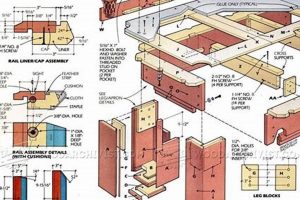
![Best Woodworking Plans Drafting Table [Guide] for Table | Step-by-Step Guides, Tools & Inspiration to Build Beautiful Wooden Decor on a Budget](https://woodfromhome.com/wp-content/uploads/2026/05/th-80-300x200.jpg "Best Woodworking Plans Drafting Table [Guide] for Table Step-by-Step Guides, Tools & Inspiration to Build Beautiful Wooden Decor on a Budget")