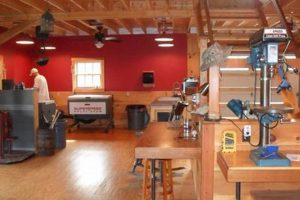
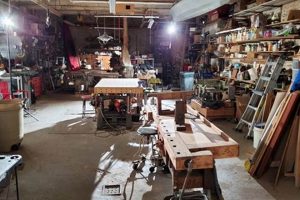
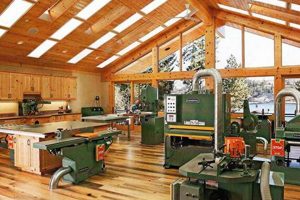
Effective illumination within a woodworking environment involves the strategic placement and selection of light sources to optimize visibility and reduce shadows. This specialized lighting setup aims to enhance detail recognition and minimize eye strain for craftspeople involved in intricate projects. For example, task lighting focused directly on the workbench, combined with ambient lighting to fill the space, constitutes a comprehensive approach to illuminate the work area.
Adequate light improves safety and accuracy in woodworking. By reducing the risk of errors and potential injuries, proper illumination contributes to increased productivity and the creation of higher-quality finished products. The evolution of illumination from natural light and early electric lamps to modern LED systems reflects a continual pursuit of better, more controllable, and energy-efficient options to support craftsmanship.
The subsequent sections will explore specific types of fixtures, considerations for color temperature and intensity, and techniques for positioning light to maximize its effectiveness in a woodworking setting. Guidance on minimizing glare and shadows, as well as choosing energy-efficient solutions, will also be provided.
Illumination Enhancement Strategies for Woodworking Environments
The following recommendations outline best practices for optimizing illumination within woodworking spaces, enhancing both safety and project quality.
Tip 1: Layer Ambient Illumination. Employ general lighting across the shop to provide a baseline level of brightness. This should minimize harsh contrasts and shadows before task-specific lighting is addressed.
Tip 2: Implement Task-Specific Fixtures. Utilize focused lighting directly over workbenches and machinery. Articulating arms or adjustable fixtures offer flexibility in directing light precisely where it is needed.
Tip 3: Consider Color Temperature. Opt for “daylight” balanced LEDs (around 5000-6500K) for accurate color rendering, especially when staining or finishing. This reduces the risk of misjudging color tones.
Tip 4: Maximize Lumens per Square Foot. Ensure adequate light intensity by calculating the necessary lumens for the size of the workspace. Insufficient brightness can lead to eye strain and errors.
Tip 5: Minimize Glare. Select fixtures with diffusers or reflectors to reduce glare from shiny surfaces. Direct light away from the operator’s line of sight to prevent eye fatigue.
Tip 6: Address Shadows Strategically. Consider positioning multiple light sources to minimize shadows cast by tools or workpieces. Overhead and side lighting can work in tandem to achieve balanced illumination.
Tip 7: Utilize Energy-Efficient Lighting. Prioritize LED fixtures due to their longevity and low energy consumption. This reduces operational costs and contributes to environmental sustainability.
Tip 8: Regularly Maintain Fixtures. Ensure lenses are clean and bulbs are replaced promptly when they dim. Diminished output reduces effectiveness and negates the benefits of a well-designed lighting system.
Implementing these lighting strategies will enhance visibility, safety, and productivity in the woodworking shop. A well-illuminated workspace reduces errors and allows for greater attention to detail.
The following section will delve into specific fixture recommendations and explore the implementation of smart lighting control systems.
1. Brightness

Brightness, measured in lumens or foot-candles, directly impacts visibility within the woodworking shop. Insufficient brightness causes eye strain and reduces the ability to discern fine details, increasing the risk of errors and potential injuries. Conversely, excessive brightness can lead to glare and discomfort. The appropriate level of brightness is contingent upon the specific task being performed, with intricate operations requiring higher levels than general shop activities. For example, tasks such as dovetailing or applying finishes necessitate greater illumination compared to rough lumber milling.
The relationship between brightness and safety is demonstrably significant. Inadequate lighting is a contributing factor to many shop accidents, particularly those involving power tools. Clear visibility ensures the operator can accurately position materials and control machinery, reducing the likelihood of mishaps. In areas where precision cuts are required, such as with a table saw or router, strategically placed, bright task lights improve the accuracy of the cut and the overall quality of the finished product. Furthermore, the implementation of dimming controls allows for adjustments to brightness levels, accommodating various tasks and individual preferences.
In summary, adequate brightness is a critical component of effective shop illumination. Balancing the need for clear visibility with the mitigation of glare is essential for promoting both safety and accuracy. Investing in adaptable lighting solutions and regularly assessing brightness levels can significantly enhance the woodworking experience and contribute to superior craftsmanship. Therefore, brightness shouldn’t be considered in isolation but integrated in to the overall strategy for improved working.
2. Color Accuracy

Within fine woodworking, accurate color representation under artificial lighting is paramount, directly impacting material selection, finishing processes, and ultimately, the aesthetic quality of the final piece. Illumination that distorts color perception can lead to costly mistakes and dissatisfaction with the finished product. Thus, the choice of lighting must prioritize color fidelity.
- Color Rendering Index (CRI)
The Color Rendering Index (CRI) quantifies a light source’s ability to reveal the true colors of an object compared to an ideal light source, such as natural sunlight. A CRI score of 100 represents perfect color rendering. For critical woodworking tasks, such as stain matching or grain selection, a CRI of 90 or higher is generally recommended. Lower CRI values can cause colors to appear washed out or shifted, leading to inaccurate material selection and finishing outcomes. For instance, if the CRI is low, a cherry stain might appear more brown than red, causing a misapplication.
- Color Temperature
Color temperature, measured in Kelvin (K), describes the warmth or coolness of a light source. Lower Kelvin values (2700K-3000K) produce a warm, yellowish light, while higher values (5000K-6500K) yield a cool, bluish light. For woodworking, a color temperature around 5000K-5500K is often preferred, simulating daylight conditions and providing a neutral color rendering. Warmer light can distort the perceived hue of wood finishes, while cooler light may exaggerate blues and grays. The correct temperature is essential for ensuring that the project is correctly illuminated.
- Impact on Finishing
Finishing processes are particularly sensitive to color inaccuracies. Stains, dyes, and topcoats can appear significantly different under various light sources. Selecting and applying finishes under lighting with poor color rendering can result in mismatched components or an undesirable final color. For example, a woodworker applying a clear coat under yellowish light might not detect a slight discoloration in the finish, leading to an uneven appearance when viewed under natural light. Consistent and accurate lighting throughout the finishing process is crucial for achieving professional results.
- Material Selection Considerations
When selecting wood species or matching wood grains, accurate color representation is essential. Variations in wood color and grain pattern can be subtle, and distorted lighting can obscure these details. Ensuring consistent color-accurate light will show all imperfections.
The facets discussed demonstrate that color accuracy is not merely a desirable feature but a necessity in fine woodworking. The appropriate selection of light sources with high CRI values and suitable color temperatures directly influences the accuracy of material selection, the quality of finishing, and the overall aesthetic appeal of the finished product. Implementing a color-accurate illumination setup requires a considered investment, but the long-term benefits in terms of reduced errors, improved quality, and enhanced craftsmanship are significant.
3. Shadow Mitigation

Shadow mitigation in fine woodworking shop illumination is a critical factor influencing both the accuracy and safety of various tasks. The presence of pronounced shadows can obscure fine details, distort depth perception, and impede the precise execution of woodworking techniques. Effective lighting strategies are therefore essential to minimize shadows and optimize visibility across the workspace.
- Multiple Light Sources
Employing multiple light sources is a fundamental approach to reducing shadows. A single light source creates strong shadows, while distributing light from various angles fills in these shadowed areas. For example, combining overhead lighting with task-specific lights positioned at different heights and angles can significantly minimize shadows around a workbench or machine. This allows for clearer observation of the workpiece and tool interaction, leading to improved accuracy and reduced risk of errors.
- Diffuse Lighting
Diffused lighting, achieved through the use of light fixtures with diffusers or by bouncing light off reflective surfaces, produces a softer, more even illumination. This minimizes harsh shadows and reduces glare, creating a more comfortable and visually accurate working environment. Examples of diffuse lighting techniques include using frosted light covers or reflecting light off white walls and ceilings. This approach is particularly beneficial when working with glossy materials or applying finishes, as it reduces the appearance of specular reflections and reveals subtle imperfections.
- Light Source Placement
Strategic light source placement is crucial for effective shadow mitigation. Positioning lights to the side and slightly in front of the workpiece can minimize shadows cast by the hands or tools. Adjustable light fixtures allow for fine-tuning the light direction to optimize visibility for specific tasks. For example, when using a lathe, positioning lights on either side of the machine can eliminate shadows that obscure the shape of the turning, enabling the woodworker to create more precise and symmetrical forms.
- Reflective Surfaces
Incorporating reflective surfaces within the shop, such as light-colored walls, ceilings, and workbenches, can enhance overall illumination and reduce shadows by bouncing light into shadowed areas. This approach supplements direct lighting and creates a more evenly illuminated space. A white or light gray paint finish on the walls and ceiling is a simple and effective way to improve light reflectivity and minimize shadows. Regularly cleaning these surfaces ensures optimal reflectivity and sustained illumination performance.
The principles of shadow mitigation are integral to the design and implementation of effective illumination systems. By strategically employing multiple light sources, diffused lighting techniques, and reflective surfaces, woodworkers can minimize shadows, optimize visibility, and enhance both the accuracy and safety of their work. The strategic integration is especially crucial in tasks demanding high precision, such as carving or intricate joinery.
4. Fixture Placement

Optimal fixture placement constitutes a critical element in establishing effective illumination in fine woodworking shops. It goes beyond simply installing light sources; it entails strategic positioning to maximize usable light, minimize shadows and glare, and enhance safety and productivity. The arrangement of fixtures directly influences visibility and the overall quality of the work environment.
- Task-Specific Lighting Zones
Creating distinct lighting zones tailored to specific tasks within the shop is essential. For example, over workbenches, fixtures should be positioned to provide direct, focused illumination without casting shadows from the woodworker’s body or tools. Machine areas require a different approach, with fixtures strategically located to illuminate the cutting point and surrounding area, ensuring clear visibility of the blade and material. In finishing areas, fixtures should provide consistent, diffused light to facilitate accurate color matching and application of finishes. The absence of these zones may create visibility difficulties and potential for error.
- Height and Angle Considerations
The height and angle at which light fixtures are mounted significantly impact the distribution of light and the formation of shadows. Lower-mounted fixtures provide more intense, localized illumination, while higher-mounted fixtures offer broader, more diffused light. Angling fixtures can direct light precisely where it is needed, mitigating shadows and glare. For instance, adjustable arm fixtures allow woodworkers to reposition the light source as needed, adapting to the changing requirements of the task. The position of the fixtures determines lighting quality and visual comfort.
- Ambient and Accent Lighting Integration
A balanced lighting design incorporates both ambient and accent lighting to achieve optimal illumination. Ambient lighting provides a general level of illumination throughout the shop, reducing contrast and minimizing eye strain. Accent lighting highlights specific areas or features, such as displays of finished work or intricate details on a project. Properly integrating these two types of lighting creates a more visually appealing and functional workspace. An imbalance between the types of lighting can result in eye fatigue and less-than-optimal working conditions.
- Consideration of Natural Light Sources
The positioning of artificial light fixtures should take into account the presence and direction of natural light sources. Windows and skylights can provide ample natural light during the day, reducing the need for artificial illumination. However, it’s crucial to supplement natural light with artificial light to ensure consistent illumination levels throughout the day and during periods of low natural light. The interplay between natural and artificial light affects overall visual comfort, safety, and efficiency.
The strategic arrangement of fixtures directly translates into enhanced visibility, reduced eye strain, improved accuracy, and increased productivity. Thoughtful fixture placement is a relatively low-cost investment that yields substantial returns in the form of higher quality work and a safer, more comfortable shop environment. This should be a critical consideration when setting up or upgrading a woodworking shop’s illumination system.
5. Energy Efficiency

Energy efficiency is a critical consideration in contemporary woodworking shop design, driven by both economic and environmental imperatives. The selection and management of illumination systems can significantly impact a shop’s energy consumption and operational costs. Prioritizing energy-efficient lighting technologies is essential for minimizing resource depletion and reducing the environmental footprint of woodworking operations.
- LED Lighting Technology
Light-Emitting Diodes (LEDs) represent a substantial advancement in energy-efficient illumination. LEDs consume significantly less electricity than traditional incandescent or fluorescent bulbs, while providing comparable or superior light output. Their extended lifespan reduces the frequency of replacements, minimizing maintenance costs and waste. For example, replacing a 60-watt incandescent bulb with a 9-watt LED equivalent can result in an energy savings of over 80%. The reduced heat output of LEDs also contributes to lower cooling costs, particularly in enclosed shop environments. Furthermore, LED lighting is a cost effective option.
- Lighting Control Systems
The implementation of intelligent lighting control systems offers further opportunities for energy savings. These systems utilize sensors and timers to automatically adjust light levels based on occupancy, ambient light conditions, and time of day. Motion sensors can activate lights only when personnel are present, while daylight harvesting systems dim or switch off artificial lights when sufficient natural light is available. Programmable timers can ensure that lights are switched off during non-operational hours. By optimizing light usage, control systems can substantially reduce energy consumption and prolong the lifespan of lighting fixtures. Integrating smart control systems ensures the proper levels are used.
- Fixture Design and Placement
Energy efficiency is also influenced by fixture design and placement. Reflective fixtures can maximize light output by directing more light towards the work surface, reducing the need for higher wattage bulbs. Strategic fixture placement ensures that light is focused where it is needed most, minimizing wasted illumination. Task lighting, which concentrates light on specific work areas, is more energy-efficient than general ambient lighting. Thoughtful fixture design and placement optimize light utilization and minimize energy waste. The right design and placement provides the shop with proper levels of light.
- Energy Audits and Monitoring
Regular energy audits and monitoring are essential for identifying opportunities to improve energy efficiency in woodworking shop lighting. An energy audit involves a comprehensive assessment of the shop’s lighting system, including an analysis of energy consumption patterns and identification of potential areas for improvement. Monitoring energy usage over time provides valuable data for tracking progress and verifying the effectiveness of energy-saving measures. By conducting regular audits and monitoring energy consumption, woodworking shops can proactively identify and implement strategies to optimize energy efficiency and reduce operational costs. The use of these steps ensures cost effective measures.
The combined effect of adopting LED lighting, implementing intelligent control systems, optimizing fixture design and placement, and conducting regular energy audits results in significant energy savings and a reduced environmental impact. Prioritizing energy efficiency in woodworking shop illumination contributes to a more sustainable and cost-effective operation, benefiting both the business and the environment. Investing in energy saving devices yields a significant return.
6. Glare Reduction

Glare reduction is a critical consideration in fine woodworking shop illumination, directly impacting visual comfort, accuracy, and safety. Excessive glare can cause eye strain, headaches, and reduced visibility, leading to errors and potential accidents. Effective strategies to minimize glare are therefore essential for creating a productive and safe woodworking environment.
- Fixture Selection with Diffusers and Reflectors
The choice of lighting fixtures plays a crucial role in glare reduction. Fixtures equipped with diffusers or reflectors soften and distribute light, minimizing harsh contrasts and specular reflections. Diffusers, typically made of frosted glass or plastic, scatter light in multiple directions, reducing the intensity of direct light and creating a more uniform illumination. Reflectors, often made of polished metal or white enamel, redirect light towards the work surface, maximizing light output while minimizing glare. For instance, using parabolic louvers in overhead fixtures can control the direction of light, preventing it from shining directly into the eyes. Selection of appropriate fixtures makes a significant impact on the overall atmosphere.
- Light Source Positioning and Shielding
The positioning of light sources is another important factor in glare reduction. Directing light away from the operator’s line of sight prevents direct glare, while positioning lights at an angle to reflective surfaces minimizes reflected glare. Shielding, achieved through the use of baffles or shades, blocks direct light from reaching the eyes. For example, positioning task lights at an angle to the workbench and using shades to block direct light can significantly reduce glare. Adjustment of lighting is a crucial factor.
- Surface Finishes and Material Selection
The surface finishes of workbenches, machinery, and other shop surfaces can contribute to glare. Glossy or highly polished surfaces reflect light intensely, increasing the risk of glare. Selecting matte or satin finishes reduces specular reflections and creates a more visually comfortable environment. Similarly, choosing light-colored materials for walls and ceilings can diffuse light and minimize glare. For example, painting the walls with a matte white paint can improve light reflectivity and reduce glare compared to a glossy, dark-colored paint. A deliberate surface strategy ensures comfort.
- Ambient Light Control
Managing ambient light levels is also important for glare reduction. Excessive ambient light can create a high level of background illumination, exacerbating the effects of glare from direct light sources. Implementing window coverings, such as blinds or shades, can control the amount of natural light entering the shop, minimizing glare and reducing the need for artificial illumination. Daylight harvesting systems, which automatically dim or switch off artificial lights when sufficient natural light is available, can also contribute to glare reduction and energy savings. Management of ambient light enhances working visibility.
Addressing all the factors outlined above, woodworkers can create a workspace where vision is comfortable and safe. Effective glare reduction not only minimizes eye strain and headaches but also enhances precision and reduces the risk of accidents. The integration of appropriate fixtures, strategic light source positioning, glare-reducing surface finishes, and ambient light control ensures a productive and visually comfortable environment that supports high-quality craftsmanship.
7. Task Specificity
Illumination tailored to the distinct requirements of individual woodworking tasks is paramount for precision, safety, and efficiency. A generalized lighting scheme often proves inadequate for the diverse operations within a woodworking shop, where tasks range from coarse milling to delicate finishing. Task-specific illumination addresses these varying demands by providing targeted light where it is most needed.
- Workbench Lighting
Workbench lighting necessitates adjustable fixtures that can be positioned to minimize shadows and maximize visibility of fine details. Articulating arm lamps equipped with high-CRI LEDs are suitable for this purpose, enabling woodworkers to direct light precisely onto the workpiece. An example includes a machinist lamp with a magnetic base, allowing secure attachment to metal surfaces and flexible positioning for optimal illumination. The incorrect lighting can compromise the accuracy of cuts and joinery.
- Machine Lighting
Power tools such as table saws, band saws, and routers require dedicated lighting to ensure safe and accurate operation. Fixtures should be positioned to illuminate the cutting point and surrounding area, providing clear visibility of the blade and material interaction. LED strip lights mounted along the blade guard or articulating spotlights affixed to the machine frame are common solutions. Adequate lighting around machinery minimizes the risk of accidents and improves the quality of cuts.
- Finishing Area Lighting
The finishing area demands uniform, diffused lighting to ensure consistent color representation and detection of surface imperfections. Fixtures with high CRI ratings are crucial for accurate stain matching and finish application. Light boxes or enclosures with integrated LED panels provide controlled and even illumination, eliminating shadows and highlighting flaws. Proper lighting in the finishing area reduces the likelihood of mismatched colors and uneven finishes.
- Assembly Area Lighting
Assembly operations require sufficient ambient light supplemented by task-specific lighting for intricate joinery. Overhead fixtures with a broad distribution pattern provide general illumination, while adjustable task lights offer focused illumination for detailed assembly work. This combination ensures clear visibility of joints and fasteners, facilitating accurate and secure assembly. Proper lighting ensures strong bonds are created during assembly.
These task-specific illumination strategies underscore the importance of a tailored approach to shop lighting. By addressing the unique visual demands of each task, woodworkers can enhance accuracy, improve safety, and increase productivity. Investment in appropriate lighting solutions is an investment in the overall quality and efficiency of the woodworking operation.
Frequently Asked Questions
The following section addresses common questions and concerns related to illumination in woodworking shops, offering guidance based on best practices and industry standards.
Question 1: What is the optimal lumen output for a woodworking shop?
The required lumen output varies depending on the size of the shop and the types of tasks performed. A general recommendation is 70-80 lumens per square foot for ambient lighting. Task-specific areas, such as workbenches and machine stations, may require 100-150 lumens per square foot. The use of light meters is advised to ensure adequate illumination levels.
Question 2: What color temperature is best for woodworking?
A color temperature between 5000K and 6500K, simulating natural daylight, is generally recommended. This range provides accurate color rendering, which is crucial for stain matching and finish application. Lower color temperatures may distort colors, leading to inaccurate results.
Question 3: How can glare be effectively minimized in a woodworking shop?
Glare can be reduced by using fixtures with diffusers or reflectors, positioning lights to avoid direct line of sight, selecting matte surface finishes for workbenches and machinery, and controlling ambient light levels through window coverings. These strategies minimize specular reflections and improve visual comfort.
Question 4: Are LED lights the best choice for woodworking shops?
LEDs offer several advantages over traditional lighting technologies, including lower energy consumption, longer lifespan, and reduced heat output. Their superior energy efficiency and durability make them a cost-effective and environmentally responsible choice for woodworking shop illumination.
Question 5: How should task lighting be positioned at a workbench?
Task lights should be adjustable and positioned to minimize shadows and maximize visibility of the workpiece. Articulating arm lamps or adjustable spotlights allow for precise control over light direction. The lights should be placed to the side and slightly in front of the workpiece to avoid casting shadows from the hands or tools.
Question 6: Is it necessary to have separate lighting for different woodworking tasks?
Yes, task-specific lighting is crucial for optimizing visibility and safety. Workbenches, machine areas, and finishing areas require distinct lighting schemes tailored to their specific demands. This approach ensures adequate illumination for each task, improving accuracy and reducing the risk of errors.
In summary, effective illumination in woodworking shops necessitates careful consideration of lumen output, color temperature, glare reduction, fixture selection, and task-specific requirements. By implementing best practices and addressing these factors, woodworkers can create a safe, comfortable, and productive working environment.
The next section will present case studies of effective lighting designs in various woodworking shop configurations.
Conclusion
The preceding analysis underscores the critical role of meticulous “fine woodworking shop lighting” in achieving precision, safety, and productivity. The selection of appropriate fixtures, strategic placement, and consideration of factors such as color rendering index (CRI), lumen output, and glare reduction are not merely cosmetic enhancements, but essential components of a functional and effective workspace. Furthermore, the adoption of energy-efficient technologies contributes to sustainability and cost reduction.
As advancements in lighting technology continue, woodworking professionals are encouraged to remain informed and proactive in optimizing their illumination systems. The long-term benefits of well-designed lightingreduced eye strain, improved accuracy, and a safer working environmentfar outweigh the initial investment, ultimately contributing to superior craftsmanship and professional success. Continued research and adaptation of evolving lighting solutions remain crucial for woodworkers seeking peak performance and enduring excellence in their craft.