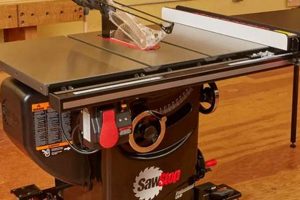
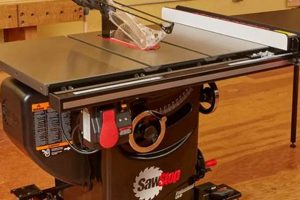
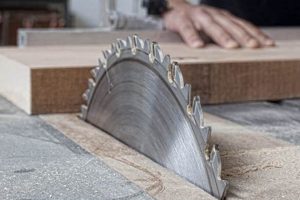
The central piece of machinery allows for precise cutting of wood stock. It generally consists of a circular saw blade mounted on an arbor, driven by an electric motor, and protruding through the surface of a table. This tool enables the creation of accurate and repeatable cuts essential for projects demanding a high level of craftsmanship, for instance, building cabinetry, crafting furniture, or producing intricate joinery.
This machine is pivotal in a woodworker’s shop, offering efficiency and accuracy unmatched by hand tools alone. Its use facilitates intricate designs and complex assemblies, leading to durable and aesthetically pleasing finished products. The evolution of this essential tool reflects advancements in manufacturing and engineering, contributing significantly to the quality and precision achievable in woodworking today. Its adoption transformed woodworking from a primarily manual craft to one that integrates machine precision with artisanal skill.
The following sections will delve into specific blade types, safety considerations, setup procedures, maintenance routines, and advanced techniques related to optimizing the performance and extending the lifespan of this indispensable tool. Further discussion will cover selection criteria, focusing on features, power ratings, and fence systems available on the market.
Tips for Optimal Operation
Maximizing performance and ensuring safety necessitate adherence to established best practices. These guidelines focus on achieving accuracy, extending equipment life, and promoting a safe working environment.
Tip 1: Blade Selection. Employ blades specifically designed for the intended material. A ripping blade, characterized by a lower tooth count and larger gullets, optimizes performance when cutting along the grain. Conversely, a crosscut blade, featuring a higher tooth count and smaller gullets, yields cleaner results when cutting across the grain.
Tip 2: Proper Blade Alignment. Verify blade parallelism to the miter slots. Misalignment can result in binding, kickback, and inaccurate cuts. Utilize a precision measuring tool to ensure consistent alignment.
Tip 3: Fence Adjustment and Locking. Confirm fence squareness to the blade prior to each cut. A fence out of square will result in angled cuts. Ensure the fence is securely locked to prevent movement during the cutting process.
Tip 4: Feed Rate Control. Maintain a consistent and moderate feed rate. Excessive force can overload the motor and increase the risk of kickback. An insufficient feed rate can cause burning and inconsistent cuts.
Tip 5: Regular Maintenance. Clean accumulated dust and debris from the machine after each use. Periodically lubricate moving parts to ensure smooth operation and prevent premature wear.
Tip 6: Use of Safety Equipment. Always utilize appropriate safety equipment, including eye protection, hearing protection, and push sticks or push blocks. Never operate the machine without these safeguards.
Tip 7: Power Considerations. Ensure the machine operates on a dedicated circuit with sufficient amperage. Voltage fluctuations can damage the motor and compromise performance.
Implementing these strategies promotes precision, extends equipment longevity, and significantly enhances operator safety. Consistent application of these principles is paramount for achieving professional-quality results.
The concluding section will summarize key aspects of the efficient and safe use of this equipment, reinforcing the principles discussed and highlighting future trends in design and functionality.
1. Accuracy

Precision is the paramount attribute defining a high-quality cut. The inherent accuracy of this tool directly influences the dimensional stability and structural integrity of any woodworking project. Inaccurate cuts result in misaligned joinery, weakened structures, and aesthetic imperfections. This tool’s design seeks to mitigate these errors through several features: a flat, stable table surface, a rigid fence system, and precise blade angle adjustment mechanisms. The cause and effect relationship is direct: superior accuracy facilitates superior craftsmanship.
For example, consider the construction of a frame and panel door. A slight deviation from a perfect 90-degree angle in any rail or stile compromises the entire assembly. The resulting gaps and misalignments are immediately apparent and weaken the structural integrity of the door. The ability to consistently produce accurate cuts enables the creation of tight-fitting joinery, resulting in robust and visually appealing products. Therefore, accuracy, embodied in the stability of the table, precision of the fence, and sharpness of the blade, is not merely a desirable feature but a fundamental requirement for producing professional-grade results.
Achieving accuracy requires careful setup and meticulous operation. Blade alignment, fence calibration, and consistent feed rate are crucial. Challenges include dealing with material inconsistencies and machine vibration, which can subtly affect cut quality. Nevertheless, understanding and addressing these factors is essential for maximizing the potential of this tool and achieving the high degree of accuracy required for fine woodworking. Accuracy is intrinsically linked to the success of any fine woodworking endeavor.
2. Blade Quality

Blade quality exerts a direct and significant influence on the performance and output of any device used for precision cutting. The properties of the bladeits material composition, tooth geometry, and manufacturing precisiondetermine the smoothness, accuracy, and efficiency of the cut. Inferior blades compromise the capabilities of even the most advanced machines, resulting in substandard work and potential safety hazards.
- Material Composition and Hardness
The steel alloy used in blade manufacturing dictates its hardness and wear resistance. Higher-grade alloys maintain a sharper edge for a longer duration, reducing the need for frequent sharpening. Blades constructed from lower-quality steel dull rapidly, leading to increased cutting resistance, tear-out, and potential motor strain. For example, using a blade made from inferior steel to cut hardwoods such as maple or cherry results in a rougher surface finish and requires more sanding to achieve a smooth result.
- Tooth Geometry and Configuration
The shape and arrangement of teeth on the blade significantly impact cutting performance. Tooth geometry tailored for ripping (cutting along the grain) differs substantially from that designed for crosscutting (cutting across the grain). Incorrect tooth geometry leads to inefficient material removal, increased vibration, and a greater risk of kickback. A blade with a flat-top grind, ideal for ripping, would produce excessive tear-out when used for crosscutting plywood, whereas a triple-chip grind blade would provide a clean, splinter-free cut.
- Blade Tension and Flatness
Proper blade tension and flatness are essential for stable and accurate cuts. Warped or improperly tensioned blades introduce vibration, leading to inconsistent cut depths and increased noise. Blade flatness ensures a consistent kerf, minimizing the risk of binding and kickback. Using a blade with insufficient tension, for example, can lead to “blade wander,” resulting in cuts that deviate from the intended line.
- Kerf Width and Material Removal Rate
The kerf width, or the amount of material removed by the blade, directly affects cutting speed and material yield. Thinner kerf blades reduce material waste and require less power to operate, but they may be more prone to deflection. Thicker kerf blades offer greater stability but remove more material. Selecting an appropriate kerf width is critical for balancing efficiency and accuracy. For instance, thin-kerf blades are frequently used to cut expensive hardwoods, maximizing the number of usable pieces from a single board.
The selection of an appropriate blade is therefore a critical factor in optimizing the effectiveness of any precision cutting tool. The investment in high-quality blades directly translates to improved accuracy, cleaner cuts, reduced material waste, and enhanced safety. Conversely, the use of inferior blades compromises the potential of the tool, leading to decreased productivity and diminished results.
3. Safety Features

The integration of safety features is a non-negotiable aspect of any device intended for precision cutting, particularly within the context of fine woodworking. This tool, while offering unparalleled accuracy and efficiency, inherently presents risks due to the high-speed rotating blade. The presence and proper utilization of safety features directly mitigate these risks, protecting the operator from potential injury. The causal relationship is evident: robust safety mechanisms drastically reduce the incidence and severity of accidents.
Several critical safety features are paramount. The blade guard, a physical barrier intended to prevent accidental contact with the blade, is a primary safeguard. Anti-kickback pawls, designed to grip the workpiece and prevent it from being thrown back toward the operator, are essential for controlling hazardous situations. A riving knife, positioned behind the blade, maintains the kerf open and prevents the wood from pinching the blade, a leading cause of kickback. Furthermore, emergency stop mechanisms provide immediate shut-down capabilities in the event of a malfunction or unsafe condition. For instance, the absence of a properly adjusted riving knife significantly increases the likelihood of kickback, potentially resulting in serious injury. The implementation and consistent use of these features constitute a foundational layer of protection.
Beyond the mechanical features, operator awareness and adherence to safe practices are equally important. Understanding the potential hazards, using push sticks to maintain a safe distance from the blade, and never reaching over a spinning blade are crucial elements of a comprehensive safety protocol. Regular inspection and maintenance of safety components are also vital. A damaged blade guard or malfunctioning anti-kickback pawl renders the equipment significantly more dangerous. Ultimately, the incorporation of safety features into this tool, coupled with diligent operator practice, fosters a safe working environment and enables the responsible pursuit of fine woodworking endeavors.
4. Power Delivery
The effectiveness of a precision cutting device hinges significantly on the consistent and reliable delivery of power to the blade. Insufficient or erratic power delivery compromises cutting accuracy, increases the risk of kickback, and diminishes the overall quality of the finished product. Understanding the nuances of power delivery is therefore critical for optimizing the performance and safety of such tools.
- Motor Horsepower and Torque
The horsepower rating of the motor dictates the tool’s ability to handle various wood species and thicknesses. Insufficient horsepower results in motor strain, reduced cutting speed, and potential stalling, particularly when working with dense hardwoods. Torque, the rotational force exerted by the motor, is equally important, as it determines the tool’s ability to maintain a consistent cutting speed under load. A motor with inadequate torque struggles to maintain speed when cutting thicker materials, leading to uneven cuts and increased vibration. For example, cutting thick maple requires a higher horsepower motor with substantial torque compared to cutting pine.
- Voltage and Amperage Requirements
Matching the tool’s voltage and amperage requirements to the available power supply is essential for safe and efficient operation. Operating the tool on an insufficient voltage or amperage supply can damage the motor, reduce cutting power, and pose a fire hazard. Voltage fluctuations can also affect motor performance, leading to inconsistent cutting speeds and reduced accuracy. Ensuring the tool operates on a dedicated circuit with appropriate voltage and amperage is a fundamental safety precaution.
- Motor Type and Efficiency
Different motor types offer varying levels of efficiency and performance. Induction motors, commonly found in stationary equipment, are known for their durability and consistent power output. Universal motors, often used in portable tools, provide higher power-to-weight ratios but tend to be noisier and less efficient. The efficiency of the motor impacts both the tool’s power consumption and its ability to maintain a constant cutting speed. A high-efficiency motor converts a greater percentage of electrical energy into mechanical power, resulting in less heat generation and improved overall performance.
- Blade Stabilization Mechanisms
Power delivery is not solely about the motor; blade stabilization mechanisms also play a crucial role. Vibration dampers and precision arbor assemblies minimize blade wobble, ensuring a smoother cut and reducing the risk of kickback. These mechanisms contribute to a more stable and controlled cutting process, enhancing the overall precision of the equipment. The use of vibration dampers, for instance, can significantly improve the cut quality when working with thin materials prone to chattering.
These factors demonstrate that consistent and appropriate power delivery is integral to the successful and safe use of a precision cutting device. Adequate horsepower and torque, correct voltage and amperage, efficient motor design, and effective blade stabilization mechanisms work in concert to facilitate precise cuts and minimize the risk of accidents. A comprehensive understanding of these aspects is therefore essential for maximizing the capabilities of this equipment and achieving professional-quality results.
5. Fence System

The fence system on a precision woodworking tool serves as a critical guide, directly impacting the accuracy and repeatability of cuts. This component dictates the straightness and dimensional consistency of workpieces, influencing the quality of joinery and the overall aesthetic of finished projects. A poorly designed or improperly calibrated fence system negates the benefits of a high-quality blade and powerful motor, undermining the fundamental purpose of the equipment. The relationship between a stable, accurate fence and the final product is a direct cause-and-effect relationship. Inaccurate fence settings result in misaligned parts, gaps in joinery, and a compromised final outcome.
Consider the construction of a cabinet carcass. Each panel must be precisely dimensioned to ensure squareness and proper fit. A fence system that is prone to deflection or lacks a reliable locking mechanism introduces errors that accumulate across multiple cuts. The resulting carcass exhibits racking, uneven reveals, and doors that do not align properly. A high-quality fence system, characterized by robust construction, smooth gliding action, and a positive locking mechanism, enables the creation of accurately dimensioned parts, leading to a structurally sound and visually appealing cabinet. Furthermore, repeatability is crucial for mass production of identical parts. A fence system that retains its settings reliably allows for efficient creation of multiple pieces with minimal variation, reducing the need for iterative adjustments and maximizing productivity.
Therefore, the fence system is not merely an accessory but an integral component of a precision woodworking tool. Its quality directly influences the accuracy, repeatability, and overall efficiency of the cutting process. Challenges in fence system design involve balancing rigidity with ease of adjustment and ensuring long-term durability. Understanding the importance and function of a reliable fence system is vital for anyone seeking to achieve professional-level results in woodworking.
6. Dust Collection

The generation of airborne particulate matter is an unavoidable consequence of employing a device for precision cutting. The high-speed rotation of the blade against wood stock produces substantial quantities of sawdust, creating potential hazards to both the operator’s health and the overall efficiency of the woodworking process. The effective implementation of a dust collection system is therefore intrinsically linked to the safe and productive utilization of this machinery. Neglecting proper dust management directly leads to a compromised working environment and potential long-term health consequences.
The fine particulate matter produced during cutting operations poses significant respiratory risks. Prolonged exposure to wood dust can lead to various respiratory ailments, including asthma, bronchitis, and in some cases, nasal cancer. A properly designed dust collection system captures a significant percentage of these airborne particles at the source, mitigating the operator’s exposure and promoting a healthier working environment. Furthermore, accumulated sawdust can interfere with the tool’s operation, affecting cut accuracy and increasing the risk of mechanical malfunctions. A clean machine operates more efficiently and reliably, resulting in improved precision and reduced downtime. Consider the creation of complex joinery; the accumulation of sawdust around the blade and workpiece obscures the cut line, hindering accuracy and potentially leading to errors. An efficient dust collection system maintains a clear line of sight, enabling precise execution and minimizing the need for rework.
In summary, dust collection is not merely an optional accessory but a fundamental requirement for the safe and effective operation of a precision cutting tool. Its integration mitigates health risks, improves cut quality, and enhances the overall efficiency of the woodworking process. Challenges in dust collection involve selecting the appropriate system for the specific tool and work environment, ensuring proper airflow and filtration, and maintaining the system’s effectiveness through regular cleaning and maintenance. Understanding the importance of dust collection and implementing appropriate measures is essential for responsible woodworking practices.
7. Maintenance

Regular maintenance is critical for ensuring the longevity, accuracy, and safety of a precision cutting device. This practice directly influences the machine’s ability to consistently deliver high-quality results, minimizing downtime and reducing the risk of accidents. A neglected machine suffers from diminished performance, increased wear, and potential mechanical failures, negating the benefits of its inherent design. For instance, a device with a rusted or improperly lubricated trunnion system will struggle to maintain accurate blade angles, rendering precise bevel cuts impossible. The effects of insufficient care ripple outward, impacting the quality of the final product and jeopardizing operator safety.
Specific maintenance tasks are paramount. Regular cleaning to remove accumulated sawdust and debris prevents interference with moving parts and reduces the risk of fire. Lubrication of bearings, gears, and other moving components minimizes friction and wear, extending the lifespan of these critical elements. Blade inspection and sharpening are essential for maintaining cutting efficiency and preventing tear-out. Calibration of the fence system ensures accurate cuts, preventing costly errors and rework. Belt tension adjustment prevents slippage and ensures consistent power transfer from the motor to the blade. These procedures, when performed consistently, contribute to the reliable operation and consistent performance of the tool. For example, a woodworking shop that neglects blade sharpening will experience increased cutting resistance, motor strain, and a higher incidence of kickback, ultimately compromising both the quality and safety of its operations.
In conclusion, consistent and diligent maintenance is not merely a supplementary task but an integral aspect of responsible operation. Its execution maximizes the tool’s potential, minimizes risks, and ensures its long-term reliability. Overcoming challenges such as time constraints and lack of awareness regarding proper maintenance procedures requires a commitment to proactive care. A well-maintained device operates safely, accurately, and efficiently, contributing to the successful and sustainable practice of fine woodworking.
Frequently Asked Questions
The following questions address common inquiries regarding the selection, operation, and maintenance of equipment used in fine woodworking.
Question 1: What distinguishes a high-quality device from a lower-quality counterpart?
Several factors differentiate superior equipment. These include the rigidity of the frame, the precision of the fence system, the power of the motor, the quality of the blade, and the effectiveness of the dust collection system. Higher-quality machines exhibit tighter tolerances, more robust construction, and more reliable performance.
Question 2: How often should the blade be sharpened or replaced?
The frequency of blade sharpening or replacement depends on several variables, including the type of wood being cut, the blade’s material, and the amount of use. A dull blade increases the risk of kickback and tear-out. If the blade shows signs of dullness, such as burning or requiring excessive force to cut, it should be sharpened or replaced.
Question 3: What are the most critical safety precautions to observe?
Several safety measures are of paramount importance. These include always wearing eye and ear protection, using push sticks or push blocks to keep hands away from the blade, ensuring the blade guard and riving knife are properly installed and adjusted, and never reaching over a spinning blade. Operators must also be thoroughly familiar with the equipment’s operating manual.
Question 4: How does one properly align the fence to the blade?
Fence alignment is essential for accurate cuts. The fence should be parallel to the blade and precisely square to the table. Use a precision measuring tool to verify alignment. Some models offer micro-adjustment features for fine-tuning. Consistent checks and adjustments are vital.
Question 5: What type of dust collection system is recommended?
The appropriate dust collection system depends on the scale of operation. For small shops, a portable dust collector connected to the equipment via a flexible hose may suffice. Larger shops may require a central dust collection system with ductwork routed to each machine. The system should provide sufficient airflow to capture the majority of airborne particulate matter.
Question 6: How often should the equipment be cleaned and lubricated?
The equipment should be cleaned after each use to remove accumulated sawdust and debris. Lubrication frequency depends on the specific components. Moving parts, such as bearings and gears, should be lubricated regularly according to the manufacturer’s recommendations. A consistent maintenance schedule extends the life of the tool and ensures optimal performance.
Consistent adherence to these guidelines promotes safe, efficient, and accurate woodworking practices. Prioritizing safety and maintenance maximizes the investment in this essential tool.
The subsequent section will explore potential upgrades and accessories designed to further enhance the capabilities of this equipment.
In Conclusion
This exploration of the fundamental tool highlighted its critical role in precision woodworking. The discussion encompassed aspects such as blade selection, safety mechanisms, fence system accuracy, power delivery consistency, dust management, and the importance of regular maintenance. These elements collectively determine the quality, safety, and efficiency of woodworking operations, impacting the final product and the well-being of the operator.
The effective utilization of the tool requires continuous learning and adaptation to evolving techniques and technologies. A commitment to safety, precision, and consistent maintenance remains paramount for achieving optimal results and sustaining a responsible woodworking practice. Ongoing investment in knowledge and equipment upgrades will further enhance the capabilities of this indispensable tool, ensuring its continued relevance in the pursuit of fine woodworking craftsmanship.