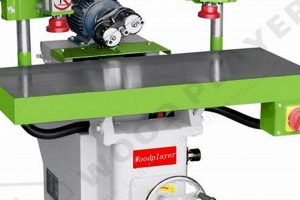
The construction of woodworking equipment within a non-factory setting, often utilizing repurposed materials and ingenuity, represents a resourceful approach to equipping a workshop. These devices, ranging from simple jigs to complex power tools, are created by individuals to meet specific needs and budgetary constraints. A shop-built bandsaw, for instance, might employ a salvaged motor and fabricated frame to achieve functionality comparable to commercially available models.
This practice fosters self-sufficiency and cost savings while enabling customization beyond the capabilities of mass-produced alternatives. Historically, such endeavors have been driven by necessity and a desire for tools tailored to unique projects. Furthermore, the creation of these tools promotes a deeper understanding of machine mechanics and woodworking principles.
Subsequent sections will explore various aspects of constructing one’s own workshop equipment, including design considerations, material selection, safety precautions, and example projects suitable for different skill levels. The objective is to provide practical guidance for those interested in pursuing this rewarding area of woodworking.
Construction Tips for Shop-Built Woodworking Equipment
The following guidance focuses on enhancing the effectiveness and safety of woodworking tools fabricated outside of a factory environment.
Tip 1: Prioritize Safety Engineering. Before construction commences, a thorough hazard analysis is essential. Integrate safety features, such as blade guards and emergency stop mechanisms, directly into the design. Do not rely solely on add-on solutions.
Tip 2: Emphasize Structural Rigidity. The stability of a shop-built machine is paramount for precision and safety. Employ robust materials and construction techniques to minimize vibration and deflection during operation. Welding or bolting heavy-gauge steel is often preferable to weaker joinery methods.
Tip 3: Implement Precise Measurement and Alignment. Inaccurate construction can compromise the accuracy of finished products. Utilize precision measuring tools and jigs during fabrication, and ensure all critical components are properly aligned and secured.
Tip 4: Choose Appropriate Power Sources. Select motors and power transmission components that are appropriately sized for the intended application. Overloading a motor can lead to premature failure or create a fire hazard. Consult electrical specifications and safety standards.
Tip 5: Incorporate Dust Collection. Woodworking generates significant particulate matter that poses respiratory hazards. Integrate dust collection ports and connect them to a suitable dust collection system to maintain a clean and safe working environment.
Tip 6: Conduct Thorough Testing and Calibration. Before placing a shop-built machine into service, perform extensive testing to ensure proper functionality and identify any potential weaknesses. Calibrate all adjustable components to ensure accurate performance.
Tip 7: Document the Construction Process. Maintain detailed records of the design, materials, and construction methods used to build the equipment. This documentation will be invaluable for troubleshooting, maintenance, and future modifications.
These considerations are critical for maximizing the utility and safety of fabricated woodworking equipment. Diligent application of these principles will contribute to a more productive and secure workshop environment.
The succeeding section will provide a conclusion, summarizing the overall benefits and potential challenges of creating woodworking equipment independently.
1. Design Adaptability

Design Adaptability, within the context of shop-built woodworking equipment, represents the capacity to modify existing plans or conceive entirely new designs to accommodate available resources, skill levels, and specific operational requirements. This adaptability is not merely a convenience; it is often a necessity driven by the constraints inherent in non-commercial construction.
- Resource Optimization
The ability to adapt a design based on available materials is crucial. A project might call for a specific type of steel, but the builder could modify the design to use a readily available alternative, adjusting dimensions and joinery to compensate for any differences in material properties. This resourcefulness directly impacts project feasibility and cost.
- Skill Level Accommodation
Designs must be adjusted to match the builder’s expertise. A complex welding assembly might be replaced with a bolted connection if welding skills are limited. Adapting the design to simpler techniques ensures project completion without compromising structural integrity, albeit potentially with increased material requirements or reduced aesthetic refinement.
- Functional Customization
Shop-built equipment often targets specific woodworking tasks. A bandsaw designed for cutting intricate curves will differ significantly from one intended for resawing wide boards. Adaptability allows tailoring the machine’s features, such as blade speed, table size, and fence system, to optimize performance for the intended application.
- Incremental Improvement
Design Adaptability extends beyond initial construction. As experience is gained using the equipment, modifications can be implemented to address shortcomings or enhance functionality. This iterative design process, driven by practical experience, allows for continuous refinement and optimization over time.
In summary, Design Adaptability is a fundamental aspect of creating woodworking equipment independently. It bridges the gap between theoretical plans and practical implementation, enabling builders to overcome resource constraints, leverage their skill sets, and tailor equipment to their specific needs. This process of continuous adaptation and refinement underscores the resourcefulness and ingenuity characteristic of the shop-built woodworking equipment approach.
2. Material Selection
Material selection is a critical determinant in the performance, longevity, and safety of woodworking equipment fabricated independently. The choice of materials directly impacts structural integrity, operational precision, and resistance to wear and tear. A judicious approach to material selection is paramount to ensuring the successful operation of shop-built machinery.
- Structural Steel Grade
The selection of steel for framing and load-bearing components dictates the rigidity and stability of the machine. Higher-grade steels, such as A36 or similar structural grades, offer increased tensile strength and resistance to deformation. Inadequate steel selection can lead to vibration, misalignment, and potential structural failure under load, compromising both accuracy and safety.
- Bearing and Bushing Materials
The materials used for bearings and bushings determine the smoothness and precision of moving parts. Bronze, brass, and specialized polymers are commonly employed for their low friction coefficients and wear resistance. Incorrect material selection can result in excessive friction, premature wear, and reduced accuracy in operations such as sawing, planing, and drilling.
- Fastener Specifications
The type and grade of fasteners used in assembly directly affect the strength and durability of joints. High-strength bolts, locking nuts, and properly sized screws are essential for maintaining structural integrity. Undersized or low-grade fasteners can fail under stress, leading to instability and potential hazards during operation.
- Table Surface Composition
The material used for table surfaces influences the ease of workpiece manipulation and resistance to wear. Hardwoods, phenolic laminates, and cast iron are frequently chosen for their durability and flatness. An unsuitable table surface can hinder smooth workpiece movement and compromise the accuracy of cuts and joinery.
These considerations collectively underscore the importance of careful material selection in the construction of woodworking equipment. The appropriate choice of materials not only contributes to the machine’s functional performance but also ensures a safe and reliable working environment. Rigorous adherence to sound engineering principles in material selection is indispensable for the successful implementation of shop-built woodworking machinery.
3. Component Sourcing

The creation of shop-built woodworking equipment relies heavily on the effective procurement of necessary components. Component sourcing, in this context, represents the acquisition of motors, bearings, hardware, and other parts essential for the functionality of the machine. The success of a fabrication project often hinges on the availability of appropriate components at a reasonable cost. For example, a shop-built bandsaw requires a motor, blade guides, wheels, and a suitable frame. The absence of any one of these components can halt the project or necessitate design compromises.
The sources for these components are varied, ranging from online retailers and surplus suppliers to local hardware stores and scrap yards. Consider the construction of a homemade lathe: a suitable motor might be salvaged from a discarded appliance, while precision bearings are purchased from a specialized supplier. The cost-effectiveness of this approach is a major driver, but it demands considerable research and evaluation to ensure compatibility and functionality. Sourcing incorrect components can lead to inefficiencies, safety hazards, or complete project failure.
In summary, component sourcing is not merely a logistical task but an integral element in the design and execution of shop-built woodworking machinery. Careful planning and evaluation are crucial for acquiring the appropriate parts, minimizing expenses, and ensuring the final product meets the required performance and safety standards. Difficulties in sourcing specific components may necessitate design alterations or a reevaluation of project feasibility.
4. Fabrication Precision
Fabrication precision, in the context of woodworking machinery constructed outside of factory settings, refers to the degree of accuracy and dimensional control achieved during the manufacturing process. The attainment of this precision is paramount for ensuring the proper functionality, safety, and longevity of the resulting equipment. Deviations from intended dimensions and tolerances can lead to operational inefficiencies, reduced accuracy in woodworking tasks, and potential safety hazards.
- Alignment of Critical Components
The precise alignment of components such as saw blades, spindle shafts, and guide rails is crucial for accurate cutting and shaping operations. Misalignment can result in inaccurate cuts, excessive vibration, and premature wear on machine components. For instance, a miter saw with a blade that is not perfectly perpendicular to the fence will produce angled cuts that deviate from the intended 90-degree angle, compromising the accuracy of joinery.
- Tolerance Management for Moving Parts
The clearances between moving parts, such as bearings and shafts, must be carefully controlled to ensure smooth and efficient operation. Excessive clearance can lead to play and vibration, reducing accuracy and increasing wear. Conversely, insufficient clearance can cause binding and overheating. The creation of a shop-built lathe requires precise control of the spindle bearing tolerances to ensure smooth rotation and minimize runout, which directly affects the quality of the finished workpiece.
- Accuracy of Structural Elements
The dimensions and squareness of structural elements, such as frames and tables, directly influence the overall stability and accuracy of the machine. Deformations or inaccuracies in these elements can compromise the ability of the machine to perform its intended function. For example, a warped table on a shop-built jointer will prevent the creation of flat, square surfaces on lumber, negating the primary purpose of the machine.
- Surface Finish and Flatness
The surface finish and flatness of critical surfaces, such as tables and fences, affect the ease of workpiece manipulation and the accuracy of cuts. Rough or uneven surfaces can impede smooth workpiece movement and introduce errors in measurements. A shop-built planer requires a flat, smooth table to ensure consistent thicknessing of lumber, and any deviations from flatness will be transferred to the finished workpiece.
The considerations outlined above underscore the importance of fabrication precision in the context of independently constructed woodworking equipment. The ability to achieve and maintain dimensional accuracy and control throughout the manufacturing process is essential for realizing the intended functionality and ensuring the safe and reliable operation of the resulting machine.
5. Safety Integration

Safety integration within the realm of individually constructed woodworking machinery signifies the proactive and systematic inclusion of protective measures to mitigate inherent risks. Given the absence of standardized manufacturing protocols and quality control processes characteristic of commercially produced equipment, meticulous attention to safety becomes paramount.
- Emergency Stop Mechanisms
The incorporation of readily accessible emergency stop mechanisms is crucial. These devices, typically in the form of large, easily activated buttons or switches, allow immediate cessation of machine operation in the event of an anomaly. For example, a shop-built bandsaw should feature an emergency stop button positioned within easy reach of the operator’s hands during normal use. The absence of such a mechanism significantly elevates the risk of injury in scenarios involving material kickback or accidental contact with moving parts.
- Guarding Systems
Effective guarding systems are essential for preventing accidental contact with blades, cutters, and other hazardous components. These guards should be designed to fully enclose or deflect projectiles away from the operator. A shop-built router table, for instance, requires a robust fence and bit guard to minimize the risk of hand contact with the rotating cutter. Compromising on guarding due to design complexity or aesthetic considerations severely increases the likelihood of injury.
- Dust Collection Integration
Woodworking processes generate substantial volumes of airborne particulate matter, posing significant respiratory hazards. The integration of efficient dust collection systems is therefore imperative. These systems should capture dust at the source, preventing it from becoming airborne and inhaled by the operator. A shop-built sanding station, for example, should incorporate a dedicated dust collection port connected to a suitable dust collector or vacuum system. Neglecting dust collection can lead to long-term respiratory ailments and increased risk of fire.
- Electrical Safety Measures
The proper wiring, grounding, and overcurrent protection of electrical components are critical for preventing electrical shock and fire hazards. Shop-built machines should adhere to relevant electrical codes and standards, and all wiring should be performed by qualified individuals. For example, a shop-built lathe powered by a salvaged motor requires proper grounding and the installation of a circuit breaker to protect against overloads. Failure to implement adequate electrical safety measures can result in severe injury or death.
These facets underscore the critical importance of safety integration in the context of independently constructed woodworking equipment. A proactive and comprehensive approach to safety is not merely an option but a fundamental requirement for ensuring a safe and productive working environment. The absence of proper safety measures significantly elevates the risk of injury and negates the potential benefits of this resource-efficient approach to woodworking.
6. Performance Calibration
Performance Calibration, in the context of shop-built woodworking machinery, signifies the systematic adjustment and fine-tuning of machine parameters to achieve optimal functional output and accuracy. Given the inherent variability in materials, construction techniques, and component sourcing associated with independently constructed equipment, calibration is not merely a finishing step but a critical process for realizing the intended performance characteristics.
- Blade Alignment and Tensioning (Saws)
For shop-built saws, including bandsaws and tablesaws, precise blade alignment and tensioning are essential for accurate cutting and preventing blade wander or breakage. Calibration involves adjusting blade guides, trunnion angles, and tensioning mechanisms to ensure the blade tracks straight and cuts cleanly. An improperly calibrated bandsaw may produce curved or uneven cuts, rendering it unsuitable for precision woodworking tasks. Adjusting the upper and lower guide to where the blade is perfectly aligned.
- Spindle Runout and Bearing Adjustment (Lathes and Mills)
In shop-built lathes and milling machines, minimizing spindle runout (the deviation of the spindle’s axis of rotation from a perfect circle) is paramount for achieving accurate turning and milling operations. Calibration involves adjusting bearing preload, spindle alignment, and quill travel to reduce runout to acceptable levels. Excessive runout can result in vibrations, chatter, and inaccuracies in the finished workpiece, compromising the machine’s utility for precision work.
- Table Flatness and Fence Squareness (Jointers and Planers)
For shop-built jointers and planers, ensuring table flatness and fence squareness is crucial for producing flat, square surfaces on lumber. Calibration involves adjusting table height, fence alignment, and blade parallelism to achieve optimal performance. An improperly calibrated jointer or planer will produce warped or uneven surfaces, negating the machine’s primary function.
- Motor Speed and Belt Tension (Various Machines)
The calibration of motor speed and belt tension is critical for achieving optimal cutting or shaping performance across a range of shop-built machines. Improper speed settings can lead to burning, tear-out, or inefficient material removal. Calibration involves adjusting motor pulleys, variable frequency drives, and belt tensioning mechanisms to achieve the appropriate speed for the intended application. Insufficient belt tension can cause slippage, reducing power transfer and affecting the quality of the finished product. In general speed should be matched to the materials worked.
These calibration procedures are integral to the successful operation of woodworking machines constructed independently. Achieving optimal performance necessitates a meticulous approach to adjustment and fine-tuning, compensating for the inherent variability of materials and construction methods. Proper calibration not only enhances the machine’s functional output but also extends its lifespan and promotes a safer working environment.
Frequently Asked Questions
This section addresses common inquiries and misconceptions regarding the design, construction, and utilization of woodworking equipment fabricated outside of a commercial manufacturing setting. The information presented aims to provide clarity and promote informed decision-making.
Question 1: Is independently constructed woodworking equipment inherently less safe than commercially manufactured alternatives?
The safety of shop-built machinery is directly proportional to the rigor with which safety principles are integrated into the design and construction process. While commercially produced equipment adheres to standardized safety regulations, a well-designed and meticulously constructed shop-built machine can achieve an equivalent or even superior level of safety. However, neglecting safety considerations during construction poses a significant risk.
Question 2: Does building one’s own woodworking equipment necessarily result in cost savings?
Cost savings are frequently a motivating factor for constructing shop-built machinery. However, the actual cost-effectiveness depends on several variables, including the availability of salvaged materials, the complexity of the design, and the builder’s skill level. In some cases, the cost of materials and components may exceed the price of a comparable commercially available machine, particularly if specialized parts are required.
Question 3: What level of expertise is required to successfully construct shop-built woodworking equipment?
The level of expertise required varies with the complexity of the project. Simple jigs and fixtures may be within the capabilities of novice woodworkers, while more complex machines, such as bandsaws or lathes, demand a solid understanding of mechanical principles, fabrication techniques, and electrical systems. Prior experience in welding, machining, and electrical wiring is highly beneficial.
Question 4: Are there legal liabilities associated with building and using shop-built woodworking equipment?
While the act of constructing shop-built equipment for personal use is generally not subject to specific legal restrictions, individuals are responsible for ensuring the safety of their designs and construction practices. If the equipment is used in a commercial setting or offered for sale, it may be subject to workplace safety regulations or product liability laws. Consulting with legal counsel is advisable in such cases.
Question 5: How does one ensure the accuracy and precision of shop-built woodworking equipment?
Achieving accuracy and precision requires careful attention to design, material selection, and fabrication techniques. The use of precision measuring tools, jigs, and fixtures is essential. Furthermore, a thorough calibration process is necessary to fine-tune the machine’s performance and compensate for any inherent inaccuracies.
Question 6: What are the primary advantages of constructing shop-built woodworking equipment compared to purchasing commercially available alternatives?
The primary advantages include customization to meet specific needs, potential cost savings, increased understanding of machine mechanics, and the satisfaction of creating a functional tool from scratch. Shop-built equipment can be tailored to unique project requirements or adapted to fit limited workshop space, offering flexibility not always available with commercial options.
In summary, the decision to construct woodworking equipment independently involves a careful evaluation of risks, benefits, and required skill levels. Safety, accuracy, and cost-effectiveness must be prioritized throughout the design and construction process.
The concluding section will provide a summary of the key points discussed and offer a final perspective on the value of creating custom woodworking equipment.
Homemade Woodworking Machines
This exploration of homemade woodworking machines has illuminated the multifaceted considerations involved in their design, construction, and utilization. Critical success factors, including design adaptability, material selection, component sourcing, fabrication precision, safety integration, and performance calibration, directly influence the functionality and safety of independently constructed equipment. The analysis has addressed common misconceptions, emphasizing the importance of prioritizing safety, accuracy, and cost-effectiveness throughout the process.
The decision to embark on the creation of woodworking machinery demands a comprehensive understanding of the inherent challenges and responsibilities. While the potential benefits of customization, cost savings, and enhanced mechanical knowledge are significant, diligent planning and execution are paramount. Continued research and adherence to sound engineering principles will ensure the safe and effective implementation of these resourceful woodworking solutions.