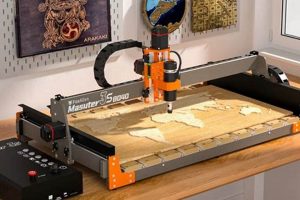
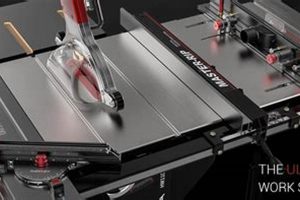
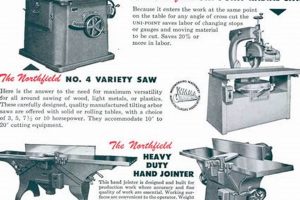
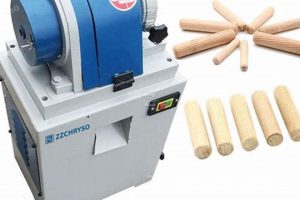
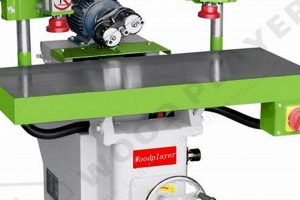
Essential stationary power tools found in many workshops enable the efficient and accurate processing of wood. These tools typically include a table saw for ripping and crosscutting boards, a jointer for creating flat, square edges on lumber, and a planer for achieving consistent material thickness. A drill press provides controlled, perpendicular drilling, while a band saw facilitates curved and irregular cuts. These are fundamental pieces of equipment for shaping and dimensioning timber.
The employment of these implements provides significant advantages in project precision and speed. They allow for repeatable accuracy, which is difficult to achieve with manual tools alone. Historically, the development and refinement of these devices have greatly contributed to advancements in carpentry and furniture making, enabling more complex and intricate designs. Their presence in a workshop accelerates production and enhances the overall quality of finished goods.
Subsequent sections will delve into specific operational techniques, safety protocols, and maintenance procedures associated with each of these core devices. Considerations for selecting the appropriate tool for a given task, as well as common troubleshooting scenarios, will also be examined. This will provide a comprehensive understanding of how to effectively and safely utilize this range of equipment.
Guidance on Fundamental Wood Processing Equipment
The following recommendations are intended to improve the operation, safety, and longevity of essential workshop devices used for timber processing.
Tip 1: Maintain Sharp Cutting Edges: Dull blades on saws, jointers, and planers increase strain on motors and can cause splintering or kickback. Regular sharpening or blade replacement is essential for optimal performance and safety.
Tip 2: Ensure Proper Dust Collection: Sawdust accumulation poses a significant fire hazard and can negatively impact respiratory health. Utilize a dedicated dust collection system or shop vacuum connected to each machine during operation.
Tip 3: Implement Regular Machine Calibration: Periodically check and adjust the alignment of table saw blades, fences, and miter gauges. Verify the flatness of jointer beds and the parallelism of planer rollers. Misalignment degrades cut quality and increases the risk of accidents.
Tip 4: Utilize Push Sticks and Push Blocks: Employ push sticks and blocks when feeding stock through saws and jointers, particularly when working with narrow or small pieces. These devices keep hands safely away from cutting edges.
Tip 5: Conduct Pre-Operation Inspections: Before initiating any cut, inspect the machine for loose components, damaged cords, or malfunctioning safety features. Ensure all guards are in place and functioning correctly.
Tip 6: Adhere to Manufacturer’s Guidelines: Always consult the manufacturer’s operating manual for specific instructions regarding setup, operation, maintenance, and safety procedures for each device.
Tip 7: Provide Adequate Workspace Lighting: Ensure sufficient illumination around the equipment to clearly see the workpiece and cutting area. Shadows can obscure potential hazards and increase the risk of errors.
Proper maintenance, calibration, and safe operating practices are crucial for achieving accurate results, extending the lifespan of the equipment, and preventing injuries.
The subsequent sections will further explore advanced techniques and specialized applications related to these tools.
1. Functionality

The functionality of fundamental woodworking equipment dictates its utility and effectiveness in transforming raw material into finished products. Each type of machine is designed for specific tasks, and its suitability directly impacts project outcomes.
- Material Removal Rate
The rate at which a machine can remove material is a key aspect of its functionality. For example, a planer’s material removal rate determines how quickly a board can be surfaced to the desired thickness. A higher rate increases efficiency but can also impact surface finish. Conversely, a lower rate may result in a smoother surface but requires more time. The optimum rate depends on the wood species and project requirements.
- Cut Precision and Accuracy
Precision and accuracy define a machine’s ability to produce consistent and dimensionally accurate results. A table saw, for instance, must deliver clean, square cuts consistently. Factors such as blade quality, fence alignment, and operator technique contribute to cut precision. Inaccuracy can lead to misaligned joinery, wasted material, and structural instability.
- Versatility in Operation
The versatility of fundamental tools refers to their ability to perform a range of tasks beyond their primary function. Some table saws can be equipped with dado blades for creating grooves, while band saws can be used for intricate curves as well as straight cuts. Increased versatility expands a machine’s utility in the workshop and reduces the need for specialized equipment.
- Scale and Capacity
The scale and capacity of the tool affect the largest dimension of wood being processed. For example, a larger joiner will allow you to flatten a wider face of board for your project. Likewise, a lathe with a longer bed will permit the turning of spindles of longer lengths.
The aggregate functionalities of these devices are crucial in enabling a spectrum of woodworking projects. Understanding these characteristics allows for informed equipment selection and promotes efficient and high-quality outcomes.
2. Safety mechanisms

Fundamental woodworking equipment inherently poses risks due to their sharp cutting edges and high-speed operation. Safety mechanisms are therefore integral components of these machines, designed to mitigate the potential for operator injury. The absence or malfunction of these mechanisms directly increases the likelihood of accidents. For example, a blade guard on a table saw, if properly positioned, prevents accidental contact with the spinning blade. Similarly, anti-kickback pawls prevent a workpiece from being violently ejected backward, a phenomenon that can cause serious harm. The design and implementation of these features represent a critical engineering consideration in the manufacture of basic woodworking machines.
Practical application of safety mechanisms necessitates user understanding and adherence to recommended procedures. While devices like push sticks and featherboards are not integral to the machine itself, they serve as extensions of the operator’s reach, maintaining a safe distance from the cutting surface. Correct setup and adjustment are essential for optimal effectiveness. For instance, a poorly aligned fence on a table saw not only compromises cut quality but also negates the protective function of anti-kickback mechanisms, increasing the risk of binding and subsequent kickback. Real-world consequences of neglecting safety features range from minor cuts to severe lacerations and dismemberment.
In summary, safety mechanisms are not merely add-ons but essential, integrated elements of basic woodworking machines. Their proper use, combined with a comprehensive understanding of inherent risks, forms the cornerstone of safe workshop practices. Challenges remain in promoting consistent adherence to safety protocols, particularly among experienced users who may become complacent. Emphasizing continuous education and reinforcing the importance of maintaining functional safety features are crucial for minimizing workplace injuries and fostering a culture of safety in woodworking environments.
3. Maintenance schedule

A well-defined maintenance schedule is paramount to the longevity, accuracy, and safe operation of fundamental woodworking equipment. Systematic upkeep prevents premature wear, ensures consistent performance, and reduces the likelihood of accidents stemming from malfunctioning machinery.
- Lubrication Regimen
Moving components, such as bearings, gears, and lead screws, require consistent lubrication to minimize friction and prevent seizing. Lack of lubrication accelerates wear, increases power consumption, and can lead to component failure. Specific lubricants, as specified by the manufacturer, should be applied at prescribed intervals, typically ranging from weekly to quarterly, depending on usage frequency and environmental conditions. For instance, neglecting to lubricate the lead screw of a planer can cause it to bind, resulting in uneven thicknessing and potential motor strain.
- Blade and Bit Maintenance
Cutting toolssaw blades, jointer knives, and drill bitsdemand periodic sharpening or replacement to maintain optimal cutting performance. Dull blades require increased force, leading to motor overload, splintering, and elevated risk of kickback. Regular sharpening not only improves cut quality but also extends the lifespan of the tools. For example, a dull band saw blade can wander off course, rendering intricate cuts inaccurate and potentially damaging the machine’s guides.
- Alignment and Calibration Checks
Precision in woodworking hinges on the accurate alignment and calibration of machine components. Table saw fences, miter gauges, jointer beds, and planer rollers must be periodically checked and adjusted to ensure squareness, parallelism, and flatness. Misalignment can result in dimensional inaccuracies, misaligned joinery, and unsafe operating conditions. For example, a misaligned fence on a table saw can lead to binding, kickback, and inaccurate cuts.
- Dust Collection System Maintenance
Efficient dust collection is critical for both operator health and machine performance. Clogged filters and blocked ducts reduce airflow, diminishing dust collection efficiency and potentially causing motor overheating. Regular cleaning of filters, ducts, and impellers is essential. Additionally, inspecting and sealing leaks in the system maintains optimal suction. Failure to maintain the dust collection system not only exposes operators to harmful wood dust but also allows debris to accumulate within the machines, potentially causing malfunctions and increasing fire risk.
The implementation of a comprehensive maintenance schedule extends the operational life of essential woodworking machines. Regular attention to lubrication, blade maintenance, alignment, and dust collection safeguards against component failure, ensures accurate results, and promotes a safer working environment. This proactive approach not only minimizes downtime but also enhances the overall quality and efficiency of woodworking operations.
4. Power requirements

The operational capability of fundamental woodworking equipment is inextricably linked to electrical power demands. Each machine necessitates a specific voltage and amperage to function correctly, as dictated by the motor’s design and operational load. Inadequate power supply results in reduced performance, potential motor damage, and compromised safety. A table saw requiring 220V and 15 amps, for example, will operate sluggishly and may overheat if connected to a 110V outlet, leading to decreased cutting efficiency and a heightened risk of motor burnout. This underscores the direct causal relationship between appropriate electrical supply and machine functionality. Undersized wiring or overloaded circuits also pose significant fire hazards. Therefore, understanding and adhering to a machine’s power specifications constitutes a fundamental aspect of safe and efficient woodworking practices.
Considerations for power requirements extend beyond mere voltage and amperage matching. The type of electrical service (single-phase or three-phase) available in the workshop is crucial. Some larger or more specialized pieces of equipment may require three-phase power, necessitating costly electrical upgrades for a residential workshop. Furthermore, the starting amperage (in-rush current) of induction motors in these machines can be substantially higher than their running amperage. Consequently, circuit breakers must be sized appropriately to accommodate these surge currents and prevent nuisance tripping. Examples include ensuring adequate amperage from dedicated circuits to prevent overload when several machines are running at the same time. Power conditioners or surge protectors further help safeguard electronic components, particularly in equipment with variable speed controls.
Accurate evaluation of power requirements and appropriate electrical infrastructure are essential prerequisites for effectively using essential woodworking machines. Overlooking these factors not only compromises the machine’s performance but also creates significant safety risks. Thorough evaluation of workshop electrical capacity should be done before acquiring new devices. Failure to do so inevitably leads to operational inefficiencies, equipment damage, and, potentially, dangerous electrical incidents. This illustrates the practical significance of comprehending the interplay between electrical parameters and machine operation, thereby ensuring a productive and secure woodworking environment.
5. Material compatibility

Material compatibility is a critical consideration in the effective and safe operation of fundamental woodworking equipment. The interaction between the material being processed and the machine’s cutting tools directly influences the quality of the finished product, the longevity of the equipment, and the safety of the operator. Using inappropriate materials can lead to damage to the machine, substandard results, and potentially hazardous conditions. For instance, attempting to cut ferrous metals with a standard wood-cutting band saw blade will rapidly dull the blade and may cause it to break, posing a significant projectile hazard. Likewise, running wood with embedded metal objects, such as nails or screws, through a planer or jointer will damage the cutting knives, resulting in uneven surfaces and requiring costly repairs.
The selection of appropriate materials extends beyond merely avoiding the use of metal on tools designed for wood. Different wood species exhibit varying levels of hardness, density, and resin content, each impacting the optimal settings and techniques required for machining. Hardwoods like oak and maple require slower feed rates and sharper cutting edges compared to softwoods like pine or cedar. Failure to adjust machine parameters accordingly can result in tear-out, burning, or excessive strain on the motor. Furthermore, certain engineered wood products, such as MDF or particleboard, contain abrasive adhesives that accelerate the wear of cutting tools. When processing these materials, specialized carbide-tipped blades are often necessary to maintain acceptable tool life. The type of finish applied to wood before machining also affects compatibility. For example, attempting to plane a surface coated with a thick layer of polyurethane may result in chipping and damage to the planer knives.
In summation, understanding material compatibility is not merely a matter of avoiding obvious mismatches but requires a nuanced consideration of the material’s properties and its interaction with the specific woodworking machine. Neglecting this aspect leads to reduced efficiency, increased maintenance costs, and elevated risk of injury. Adherence to established guidelines regarding material selection and appropriate machine settings is paramount for achieving consistent, high-quality results and promoting a safe and productive woodworking environment. Ongoing education and careful material assessment are essential for minimizing potential problems and optimizing the performance of essential shop equipment.
Frequently Asked Questions
This section addresses common inquiries and misconceptions regarding fundamental woodworking machines, providing clear, concise, and objective answers.
Question 1: What constitutes a fundamental woodworking machine?
The term generally refers to stationary power tools necessary for basic lumber processing and shaping. These commonly include a table saw, jointer, planer, drill press, and band saw.
Question 2: Is specialized training required to operate fundamental woodworking equipment safely?
While not always legally mandated, formal training or instruction is highly recommended. Understanding machine operation, safety protocols, and potential hazards minimizes the risk of injury.
Question 3: How frequently should basic woodworking machines undergo maintenance?
Maintenance frequency varies based on usage. Regular lubrication, blade sharpening, alignment checks, and dust collection system cleaning are essential components of preventative maintenance. Consult the manufacturers guidelines for specific intervals.
Question 4: What are the primary safety concerns associated with table saws?
Kickback, blade contact, and flying debris represent the primary hazards. Utilizing safety guards, push sticks, and proper cutting techniques mitigates these risks.
Question 5: Can a single woodworking machine perform multiple functions effectively?
While some machines offer versatility, specialized equipment typically provides superior results for specific tasks. Combination machines often compromise on precision and efficiency compared to dedicated tools.
Question 6: What factors should be considered when selecting a woodworking machine for a home workshop?
Available space, power supply, budget, and project requirements are crucial considerations. Prioritize safety features and ease of use, especially for novice woodworkers.
In summary, understanding the capabilities, limitations, and safety requirements of essential workshop equipment is paramount for achieving quality results and minimizing potential hazards.
The subsequent section will explore advanced techniques and specialized applications related to these tools, expanding upon the foundational knowledge presented herein.
Conclusion
This article has examined crucial aspects of basic woodworking machines. Functionality, safety mechanisms, maintenance schedules, power requirements, and material compatibility were addressed. Understanding these facets is paramount for effective and secure operation within a woodworking environment. Accurate selection, proper maintenance, and rigorous adherence to safety protocols are essential for realizing the potential of these tools.
The longevity, accuracy, and safe operation of these devices depend on continued vigilance and education. A commitment to best practices ensures not only the creation of quality woodworking projects but also a secure and productive workshop. Further exploration into advanced techniques and specialized applications remains a vital pursuit for woodworkers striving for mastery.