



The act of constructing a stable, flat work surface specifically designed for woodworking activities involves a series of processes that blend precision and structural integrity. This procedure typically encompasses design planning, material selection, cutting, assembly, and finishing, resulting in a specialized furniture piece. An example would be creating a solid maple surface with integrated vises and dog holes for securing workpieces during routing or joinery.
The construction of such a structure offers numerous advantages to woodworking enthusiasts and professionals alike. A dedicated workspace enhances safety by providing a stable platform for tools and materials, minimizing the risk of accidents. It also promotes efficiency, allowing for streamlined workflows and improved accuracy in projects. Historically, these specialized surfaces have evolved from simple benches to sophisticated systems with integrated storage and clamping mechanisms, reflecting the increasing complexity and precision demanded in woodworking.
The subsequent sections will explore various design considerations, material choices, construction techniques, and finishing options relevant to creating a robust and functional structure for woodworking tasks. These elements will guide the reader through a comprehensive understanding of the fundamental aspects involved in the creation process.
Construction Tips for a Woodworking Surface
The following tips offer critical guidance to ensure the successful creation of a durable and functional woodworking surface.
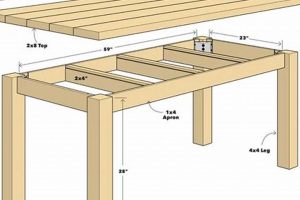
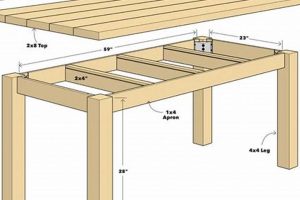
Tip 1: Prioritize a Rigid Base: The frame of the construction must be exceptionally sturdy to minimize vibrations during tool use. Employ mortise and tenon joinery or robust bolted connections for optimal stability. For example, a frame constructed from 4×4 lumber with properly executed mortise and tenon joints will provide a solid foundation.
Tip 2: Select Dense and Stable Wood: Opt for hardwoods such as maple, beech, or birch for the work surface. These species offer superior resistance to dents and warping. Consider using kiln-dried lumber to reduce the risk of dimensional changes after assembly.
Tip 3: Ensure a Flat and Level Surface: Achieving a perfectly flat surface is paramount for accurate woodworking. Use a long jointer plane or a powered hand planer to flatten the assembled surface. Regularly check for flatness with a straightedge and correct any imperfections.
Tip 4: Incorporate a Robust Vise System: A high-quality vise is essential for securely holding workpieces. Install at least one face vise and consider adding a tail vise for enhanced versatility. Choose vises with solid metal construction and smooth, reliable mechanisms.
Tip 5: Integrate Dog Holes Strategically: Dog holes, typically -inch in diameter, allow for the use of bench dogs and clamping accessories. Drill these holes in a grid pattern across the surface, ensuring they are accurately spaced and aligned.
Tip 6: Apply a Durable Finish: Protect the woodworking surface with a hard-wearing finish such as polyurethane or a specialized woodworking finish. This will prevent damage from spills, scratches, and dents. Apply multiple coats, sanding lightly between each coat for a smooth and durable surface.
Tip 7: Consider Integrated Storage: Incorporating drawers or shelves beneath the work surface can greatly improve organization and efficiency. Plan the storage layout carefully to accommodate frequently used tools and accessories.
Adhering to these recommendations will significantly contribute to the creation of a woodworking surface that is both functional and durable, ultimately enhancing the woodworking experience.
The subsequent discussion will focus on potential design variations and specialized features that can be incorporated into a woodworking surface to further optimize its utility.
1. Stable Base Construction

Stable base construction serves as a foundational element in the process of building a woodworking table. The integrity of the work surface hinges directly on the rigidity and stability of its supporting structure. An unstable base translates to vibrations during tool use, impacting cut precision and potentially compromising safety. Cause-and-effect is evident: a weak base causes inaccurate work; a robust base facilitates accurate work. The base must withstand significant downward and lateral forces exerted during woodworking operations such as planing, sawing, and hammering. For example, a base utilizing slender legs and inadequate bracing will likely flex under load, rendering the work surface effectively useless for precision tasks. Conversely, a base constructed with heavy-gauge lumber and reinforced joinery offers the necessary stability for demanding woodworking activities.
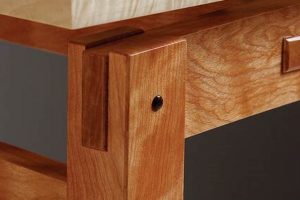
The selection of appropriate joinery methods directly influences base stability. Mortise and tenon joints, dovetail joints, and bolted connections provide superior strength compared to simpler methods such as butt joints reinforced with screws. Consider a scenario where a woodworking table base relies solely on butt joints; the inevitable racking and loosening of these joints over time will lead to a structurally unsound and unreliable work surface. Conversely, a base incorporating mortise and tenon joints, properly glued and secured, forms a near-seamless connection, distributing stress evenly throughout the structure. This enhances overall rigidity and resistance to deformation.
In summary, stable base construction represents a non-negotiable aspect of creating a functional woodworking table. Compromising on base stability directly impacts the precision, safety, and longevity of the finished structure. While challenges may arise in sourcing appropriate materials or executing complex joinery, the investment in a well-constructed base ultimately translates to a more efficient, reliable, and enjoyable woodworking experience. The quality of the woodworking table is inextricably linked to the integrity of its foundational base.
2. Material Selection Criteria

The selection of appropriate materials constitutes a critical determinant in the success of constructing a woodworking table. Material properties directly influence structural integrity, work surface stability, and the overall lifespan of the finished product. Therefore, a systematic approach to material evaluation is essential.
- Wood Hardness and Density
Wood hardness, typically measured using the Janka hardness scale, quantifies a wood’s resistance to indentation and wear. Denser woods, such as maple, beech, and oak, offer superior durability compared to softer species like pine or fir. For example, a maple work surface resists dents and scratches from dropped tools or abrasive materials, maintaining a smooth and usable surface for a prolonged period. The implications of choosing softer woods include increased susceptibility to damage, necessitating more frequent repairs or replacement. This choice impacts the long-term utility of the finished woodworking table. Using wood that meets the hardness standards can support to how to build woodworking table in the best quality
- Dimensional Stability
Dimensional stability refers to a wood’s ability to resist changes in size and shape due to fluctuations in moisture content. Woods with low shrinkage rates, such as mahogany or walnut, exhibit greater stability compared to species like cherry or ash. A woodworking table constructed from dimensionally unstable wood may warp, cup, or crack over time, compromising the flatness of the work surface and the integrity of joints. In practical terms, a cherry tabletop subjected to seasonal humidity changes may develop noticeable cupping, rendering it unsuitable for precision woodworking tasks. The dimensional stability of wood is essential to how to build woodworking table effectively.
- Joinery Compatibility
Certain wood species are more amenable to specific joinery techniques than others. For instance, hardwoods with tight grain patterns, like maple or birch, excel in mortise and tenon joints, providing strong and reliable connections. Conversely, softer woods or woods with coarse grain may split or crumble during joinery operations. This factor influences the choice of construction methods. Attempting to create complex dovetail joints in pine, for example, often results in subpar results due to the wood’s tendency to tear. As a result, choosing the right materials to build woodworking table can impact the structural integrity.
- Cost and Availability
While performance characteristics are paramount, cost and availability inevitably factor into material selection. Exotic hardwoods, while possessing superior properties, may be prohibitively expensive or difficult to source in certain regions. Common hardwoods, such as oak or poplar, offer a balance of performance and affordability. Practical considerations dictate that the chosen materials align with budgetary constraints and accessibility. A craftsman may opt for locally sourced maple over imported African mahogany, even though the latter exhibits superior hardness. This decission of costs and availability can impact the how to build woodworking table project.
Ultimately, the selection of materials represents a complex trade-off between performance, cost, and practicality. Carefully considering these factors ensures the construction of a woodworking table that meets specific needs and constraints. Disregarding these elements can lead to premature failure or compromised functionality. In addition to what the factors are, how to build woodworking table with these factors play an important role in the table-building process.
3. Surface Flatness Precision
Surface flatness precision represents a critical parameter in the construction of a functional woodworking table. The degree to which the work surface deviates from a perfectly flat plane directly impacts the accuracy of woodworking operations performed upon it. Deviations in surface flatness introduce errors in cutting, joining, and assembly processes, potentially resulting in misaligned components and compromised structural integrity. For instance, a tabletop with a pronounced warp will prevent the accurate planing of boards, as the plane’s sole will not maintain consistent contact with the workpiece. This emphasizes the importance of precision when considering how to build woodworking table.
Achieving surface flatness precision typically involves a combination of techniques, including careful material selection, meticulous assembly, and precise surface treatment. The use of dimensionally stable hardwoods, such as maple or beech, minimizes the risk of warping or cupping. During assembly, ensuring that the frame is square and the tabletop components are aligned correctly is crucial. Subsequent surface treatment may involve planing, sanding, or the application of leveling compounds to eliminate any remaining imperfections. A practical example involves using a long jointer plane to gradually remove material from high spots on the tabletop, followed by sanding with progressively finer grits to achieve a smooth and level surface. The goal is to make the process of how to build woodworking table easier and the table more effective.
In conclusion, surface flatness precision is not merely an aesthetic consideration; it is a fundamental requirement for a woodworking table intended for accurate and efficient work. While achieving this level of precision may present challenges, particularly with limited tools or experience, the investment in time and effort yields significant returns in terms of improved project quality and reduced errors. The connection between surface flatness precision and how to build woodworking table is thus undeniable, representing a cornerstone of functional woodworking table construction.
4. Vise System Integration

The integration of a vise system into a woodworking table represents a crucial design consideration, directly impacting the table’s versatility and utility. A well-integrated vise system provides a secure and stable means of clamping workpieces, enabling a wide range of woodworking tasks that would otherwise be difficult or impossible to execute safely and accurately. The effectiveness of a woodworking table is significantly enhanced through careful selection and incorporation of appropriate vise mechanisms.
- Vise Type Selection and Application
The choice of vise typeincluding face vises, tail vises, leg vises, and quick-release visesdictates the clamping capabilities of the table. A face vise, typically mounted on the front of the table, provides general-purpose clamping for a variety of workpieces. A tail vise, often integrated into the end of the table, is particularly useful for clamping long boards or assemblies. The selection must align with the intended woodworking applications. For example, a woodworker specializing in furniture construction may require both a face vise and a tail vise to accommodate various component sizes and shapes.
- Mounting and Stability Considerations
The method of mounting the vise to the woodworking table directly influences its stability and performance. Secure mounting is essential to prevent movement or deflection during clamping. This typically involves bolting the vise to a reinforced section of the table frame. For instance, a vise mounted to a thin or unsupported section of the tabletop may flex under load, compromising its clamping force and accuracy. Reinforcing the mounting area with additional lumber or metal plates ensures a solid and stable connection. Stability of the vise helps for how to build woodworking table with great design.
- Dog Hole Compatibility and Workpiece Security
The integration of dog holessmall, consistently spaced holes across the table surfaceenhances the versatility of the vise system. Dog holes allow for the use of bench dogs and other clamping accessories to secure workpieces of varying shapes and sizes. The placement and spacing of dog holes must be carefully considered in relation to the vise’s position. For example, a row of dog holes aligned with the face of the vise enables the clamping of long boards with minimal risk of slippage. A consistent, well-planned dog hole pattern is a good step on how to build woodworking table.
- Material Compatibility and Vise Jaw Protection
The materials used in vise jaw construction influence the vise’s ability to grip workpieces securely without causing damage. Metal vise jaws can mar or dent softer woods, necessitating the use of protective jaw liners made from wood, leather, or cork. The choice of jaw liner material depends on the type of wood being worked and the level of protection required. For example, leather jaw liners provide a good balance of grip and protection for delicate hardwoods. This will make how to build woodworking table easier and smoother.
In summary, the vise system integration is not a mere add-on but an integral component of a well-designed woodworking table. The careful selection, mounting, and utilization of vises, in conjunction with dog holes and appropriate jaw protection, significantly enhance the table’s functionality and contribute to improved woodworking outcomes. A holistic approach to vise system integration is crucial for maximizing the potential of a woodworking table.
5. Optimal Workspace Dimensions

The concept of optimal workspace dimensions is inextricably linked to the successful construction of a woodworking table. The table’s dimensions directly influence usability, ergonomics, and overall workflow efficiency within the designated workspace. Therefore, careful consideration of these dimensions is paramount during the planning and execution phases.
- Table Height and User Ergonomics
Table height significantly impacts user comfort and reduces the risk of musculoskeletal strain. An inappropriately sized table forces the user to adopt awkward postures, leading to fatigue and potential injury. The optimal height typically ranges from 34 to 38 inches, adjustable based on individual height and common woodworking tasks. For example, a taller individual performing primarily standing tasks benefits from a higher table, while a shorter individual may prefer a lower surface. The correct table height ensures that tools will be used effictively when you how to build woodworking table.
- Surface Area and Project Size
The surface area of the woodworking table must accommodate the size of typical projects undertaken. An undersized surface restricts maneuverability and limits the ability to assemble larger components. A table that is too small makes how to build woodworking table in harder process. Conversely, an excessively large surface consumes valuable workspace. Considerations include the maximum length of boards commonly worked on and the space required for assembly jigs and fixtures. A cabinetmaker building large casework requires a significantly larger surface than a hobbyist crafting small wooden boxes.
- Workspace Footprint and Shop Layout
The overall footprint of the woodworking table must integrate seamlessly into the available shop space. Overcrowding reduces maneuverability and increases the risk of accidents. The table’s dimensions should allow for adequate clearance around all sides, facilitating safe and efficient movement. For example, a large table positioned in a confined space may obstruct access to other tools or equipment, hindering workflow. Workspace foot print is one of the most considered thing when you how to build woodworking table.
- Storage Integration and Accessibility
Integrating storage solutions, such as drawers or shelves, within the woodworking table’s design optimizes space utilization and enhances organization. The dimensions of these storage compartments must accommodate commonly used tools and accessories. Accessibility is crucial; drawers should glide smoothly, and shelves should be easily reachable. A poorly designed storage system can negate the benefits of a well-sized table, leading to clutter and inefficiency. It’s crucial to have a well-organized storage system when you how to build woodworking table.
In conclusion, optimal workspace dimensions are not arbitrary values but rather carefully considered parameters that directly influence the functionality and efficiency of a woodworking table. By tailoring the table’s dimensions to the specific needs of the user and the constraints of the workspace, the woodworking experience can be significantly enhanced, fostering improved craftsmanship and reduced physical strain. The right tools and the dimensions of it will influence how to build woodworking table with a good result.
Frequently Asked Questions
The following section addresses common inquiries and misconceptions regarding the design, construction, and maintenance of woodworking tables. The information aims to provide clarity and guidance based on established woodworking principles.
Question 1: What is the minimum recommended surface area for a general-purpose woodworking table?
The minimum recommended surface area is dependent on the typical project size. However, a surface measuring 36 inches by 60 inches offers a reasonable compromise between maneuverability and space consumption for a variety of woodworking tasks.
Question 2: Which type of wood is most suitable for a woodworking table intended for heavy use?
Hardwoods such as maple, beech, or oak offer superior resistance to dents, scratches, and warping, making them ideal for tables subjected to frequent and demanding use.
Question 3: What joinery methods are best suited for ensuring a stable and durable base?
Mortise and tenon joints, dovetail joints, and robust bolted connections provide exceptional strength and resistance to racking forces, contributing to a stable and long-lasting base.
Question 4: How critical is surface flatness for accurate woodworking?
Surface flatness is paramount for achieving precise cuts, joints, and assemblies. Even minor deviations can introduce errors, compromising the overall quality of the finished product.
Question 5: Is it necessary to incorporate a vise system into a woodworking table?
While not strictly necessary, a well-integrated vise system significantly enhances the table’s versatility and utility, enabling secure clamping for a wide range of woodworking operations.
Question 6: How often should a woodworking table be inspected for signs of wear or damage?
Regular inspection, ideally on a monthly basis, allows for the early detection of loose joints, surface imperfections, or other issues that may compromise the table’s performance or safety.
In summary, informed decisions regarding materials, construction techniques, and design features are crucial for creating a woodworking table that meets specific needs and ensures long-term reliability.
The subsequent section will delve into advanced techniques and customization options for woodworking table construction, catering to experienced woodworkers seeking to optimize their work surfaces.
Conclusion
The comprehensive overview of how to build woodworking table encompasses design principles, material selection, construction techniques, and the integration of functional elements. The structural integrity of the base, the flatness of the work surface, and the secure integration of a vise system collectively determine the effectiveness of the finished product. Adherence to these guidelines facilitates the creation of a durable and reliable workspace.
The enduring relevance of how to build woodworking table lies in its direct impact on the precision and efficiency of woodworking practices. Continued refinement of these construction methodologies ensures the ongoing advancement of woodworking techniques. This investment in craftsmanship ultimately yields a workspace that supports both practical tasks and creative endeavors.
![Best Woodworking Plans Drafting Table [Guide] for Table | Step-by-Step Guides, Tools & Inspiration to Build Beautiful Wooden Decor on a Budget](https://woodfromhome.com/wp-content/uploads/2026/05/th-80-300x200.jpg "Best Woodworking Plans Drafting Table [Guide] for Table Step-by-Step Guides, Tools & Inspiration to Build Beautiful Wooden Decor on a Budget")