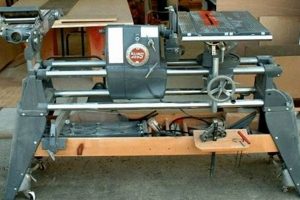
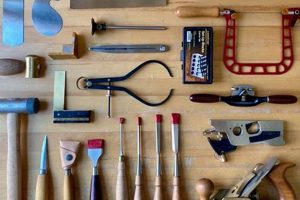
Acquiring implements for crafting items from timber without incurring financial cost represents a significant advantage for artisans, hobbyists, and educational institutions. This process can involve various strategies, including leveraging community resources, participating in promotional opportunities, and engaging in strategic networking. An example would be securing a used lathe through a tool lending library or winning a set of chisels in a manufacturer’s giveaway.
The ability to equip a workshop or undertake a project without a capital outlay expands access to the craft and reduces financial barriers for individuals and organizations with limited budgets. Historically, apprenticeships often involved the provision of tools as part of the training process; contemporary approaches extend this principle to broader audiences. Reducing initial investment allows resources to be allocated to materials and project-specific needs.
The subsequent discussion will explore several avenues through which individuals and organizations can obtain implements for woodworking, emphasizing resourcefulness and strategic engagement. These opportunities range from collaborative endeavors to proactive requests and innovative utilization of existing networks.
Strategies for Acquiring Woodworking Implements at No Cost
The following strategies offer methods for obtaining instruments necessary for timber-related crafts without financial expenditure. Diligence and networking skills are often essential for successfully implementing these approaches.
Tip 1: Leverage Community Resources: Public libraries and tool lending libraries often maintain collections of instruments available for loan. Investigate local offerings and membership requirements. An example includes borrowing a power drill from a library for a home repair project.
Tip 2: Monitor Online Marketplaces: Platforms such as Craigslist and Facebook Marketplace frequently feature individuals discarding or gifting used items, including implements for crafting. Regularly review postings and respond promptly to relevant listings.
Tip 3: Engage with Educational Institutions: Technical schools and community colleges may have surplus implements they are willing to donate or sell at a reduced price. Contact departmental administrators to inquire about availability.
Tip 4: Network with Professionals: Connect with experienced artisans and contractors in the field. Professionals may possess surplus instruments or be aware of opportunities to acquire them. Attending industry events and joining relevant organizations can facilitate these connections.
Tip 5: Participate in Contests and Giveaways: Manufacturers and retailers occasionally sponsor promotional events offering implements as prizes. Actively participate in these contests and giveaways to increase the likelihood of securing equipment.
Tip 6: Explore Refurbishment Opportunities: Salvage discarded or damaged instruments and restore them to operational condition. This approach requires mechanical aptitude and access to replacement parts, but can yield significant savings.
Tip 7: Utilize Vocational Rehabilitation Programs: Certain programs offer equipment and support to individuals seeking to develop skills for employment. Investigate eligibility requirements and application processes.
Adopting these strategies, either individually or in combination, can significantly reduce the financial burden associated with equipping a workshop. Persistence and adaptability are crucial for maximizing the potential to obtain necessary implements without direct purchase.
The following sections will address alternative methods for securing woodworking instruments, including trade-based exchanges and collaborative project partnerships.
1. Networking

The act of cultivating professional relationships plays a pivotal role in securing woodworking instruments without incurring costs. The connections formed within the woodworking community can unlock opportunities inaccessible through conventional retail channels. These opportunities manifest in various forms, from direct donations to shared resource awareness.
- Information Dissemination
Established networks serve as conduits for information regarding surplus equipment, upcoming contests, and potential donation opportunities. Individuals within a network are more likely to be informed about avenues for acquiring implements that might otherwise remain unnoticed. For instance, a professional woodworker retiring from the trade might preferentially offer equipment to a known colleague or mentee before advertising it publicly.
- Direct Equipment Access
Personal connections can facilitate direct access to tools and equipment. Woodworkers may be willing to loan, donate, or sell at a reduced price to those they know and trust. A scenario could involve a construction company upgrading its power tool inventory and subsequently donating the older, functional models to a local woodworking club, facilitated by a personal relationship between the company’s owner and a club member.
- Skill Exchange and Bartering
Networking can lead to collaborative relationships where woodworking skills are exchanged for access to implements. A skilled artisan might offer their expertise in sharpening blades or repairing machinery in exchange for temporary use of specialized equipment. Such arrangements benefit both parties involved and reduce the need for outright purchase.
- Mentorship and Guidance
Experienced woodworkers often provide mentorship, guiding newcomers on cost-effective ways to equip their workshops. This guidance can include recommendations for reliable brands, advice on identifying good deals on used equipment, and introductions to individuals who might be willing to donate or loan tools. Mentors can also help avoid costly mistakes by advising against the purchase of unnecessary or low-quality equipment.
These facets collectively demonstrate the significant impact of networking on the ability to acquire woodworking tools without direct payment. The cultivation of professional relationships fosters information exchange, facilitates access to equipment, enables skill-based bartering, and provides valuable mentorship, all of which contribute to a more resourceful and cost-effective approach to the craft.
2. Community Resources

Community-based assets offer pathways to obtaining implements for woodworking without incurring financial obligations. These resources, often established to support local artisans and promote skill development, provide access to equipment that might otherwise be inaccessible. Understanding the scope and nature of these resources is crucial for those seeking implements for crafting projects at no cost.
- Tool Lending Libraries
Tool lending libraries function as repositories of instruments available for short-term loan to members. These libraries maintain inventories ranging from basic hand tools to specialized power equipment. An individual undertaking a small woodworking project might borrow a circular saw from a tool lending library, thereby avoiding the expense of purchasing the instrument outright. Membership fees may apply, but these are generally significantly lower than the cost of acquiring the tools themselves.
- Makerspaces and Hackerspaces
Makerspaces and hackerspaces provide shared workshop environments equipped with a range of implements. Membership grants access to these facilities, including woodworking tools, for personal projects. These spaces foster collaboration and knowledge sharing, offering opportunities to learn from experienced members and potentially gain access to specialized equipment through informal arrangements. A member might collaborate with another to utilize a large-scale CNC router, splitting the material costs but avoiding the capital expenditure on the machine itself.
- Vocational Training Centers
Vocational training centers offer woodworking courses that typically include access to a fully equipped workshop. While enrollment in a course involves tuition fees, it also provides supervised access to a comprehensive array of implements. This model is suitable for individuals seeking structured instruction and access to equipment simultaneously. A student in a cabinetmaking program would have access to jointers, planers, and other specialized tools as part of their curriculum.
- Community Workshops and Studios
Some communities maintain shared workshops or studios dedicated to woodworking. These facilities operate on a membership or pay-per-use basis, providing access to equipment and workspace. Community workshops often host introductory classes or workshops that include tool usage instruction. This can serve as a low-cost introduction to the craft and access to essential implements without a long-term financial commitment. A local woodworking guild might operate a community workshop where members can rent time on a lathe or use a wide-belt sander.
These community resources represent viable alternatives to individual tool ownership, offering accessible means of engaging in woodworking projects. The benefits extend beyond cost savings, fostering community engagement and skill development. Strategic utilization of these resources can significantly lower the barriers to entry for aspiring woodworkers and support existing artisans in undertaking projects without the burden of extensive capital investment.
3. Online Platforms
Online platforms serve as a significant conduit for acquiring woodworking instruments without direct financial expenditure. The decentralized nature and broad reach of these platforms facilitate connections between individuals seeking to divest of tools and those in need, creating opportunities for mutually beneficial exchanges. This dynamic is driven by several factors, including relocation, downsizing, and the discontinuation of woodworking as a hobby or profession, resulting in the availability of implements at no cost or reduced prices. For example, individuals can utilize platforms such as Craigslist or Facebook Marketplace to locate listings offering free woodworking tools from individuals seeking to clear out their workshops.
Furthermore, specialized online forums and social media groups dedicated to woodworking often feature sections for tool exchanges and giveaways. Participants within these communities may donate surplus instruments to fellow members, fostering a culture of resource sharing. Manufacturers and retailers also utilize online platforms to conduct promotional giveaways of woodworking tools, requiring user participation through contests or social media engagement. Successfully navigating these platforms requires vigilance, prompt communication, and an understanding of the specific rules and guidelines governing each community. A proactive approach involving consistent monitoring and active participation increases the likelihood of discovering available opportunities.
In summation, online platforms present a diverse landscape of opportunities for obtaining woodworking instruments without financial outlay. The effective utilization of these resources necessitates a strategic approach, encompassing proactive monitoring, active community engagement, and adherence to platform-specific guidelines. While the availability of free tools is not guaranteed, the potential for acquisition through online channels warrants consideration as a viable strategy for equipping a woodworking workshop.
4. Educational Institutions

Educational institutions, particularly those with vocational programs, represent a potential source for acquiring woodworking tools without direct purchase. These establishments, due to curriculum changes, program closures, or equipment upgrades, may possess surplus implements available for donation or discounted sale. Navigating these opportunities requires understanding the institutional structure and resource allocation processes.
- Surplus Equipment Disposal
Educational institutions periodically retire or upgrade equipment, resulting in surplus woodworking tools. These tools, while potentially outdated, may remain functional and suitable for basic projects. Institutions often have established procedures for disposing of surplus assets, which may include auctions, direct sales to students or alumni, or donations to non-profit organizations. Contacting departmental heads or vocational program administrators can provide information on upcoming equipment disposals. A technical college upgrading its CNC machinery might offer its older lathes and milling machines to local community organizations.
- Program Closures and Restructuring
Program closures or restructuring initiatives can lead to the availability of entire workshops of woodworking tools. When a vocational program is discontinued, the associated equipment may be offered for sale or donation. Investigating institutions facing budgetary constraints or declining enrollment in woodworking programs can reveal opportunities to acquire tools at reduced costs or without charge. A high school discontinuing its woodworking program might donate its tools to a nearby after-school program.
- Student Projects and Donations
Students enrolled in woodworking programs often produce projects that require the use of various tools. Upon completion of these projects, students may choose to donate the tools they used to the institution or to local organizations. Furthermore, instructors may encourage students to seek donations of tools from local businesses or individuals, thereby increasing the available resources within the program and potentially leading to future opportunities for tool acquisition. A student completing a cabinetmaking course might donate a set of chisels to the program as a thank-you gesture.
- Partnerships and Collaborative Agreements
Educational institutions sometimes enter into partnerships or collaborative agreements with local businesses or community organizations. These partnerships may involve the sharing of resources, including woodworking tools. By establishing relationships with these institutions, individuals or organizations may gain access to tools through collaborative projects or shared workshop facilities. A community college might partner with a local construction company, providing access to its woodworking shop in exchange for internships for its students.
Educational institutions offer a range of possibilities for securing woodworking tools without the burden of purchase. Leveraging institutional surplus programs, program restructuring initiatives, student projects, and collaborative partnerships can provide access to necessary implements. Building relationships with educators and administrators within vocational programs can unlock these opportunities, supporting the development of woodworking skills and fostering community engagement.
5. Refurbishment
Refurbishment constitutes a viable pathway within the broader strategy of obtaining implements for woodworking without incurring expenditure. The direct link between these concepts lies in the transformation of discarded or non-functional instruments into usable tools. Neglected or damaged tools, often available at minimal or no cost, can be restored to operational condition through targeted repair and maintenance, effectively yielding a functional instrument without a new purchase. This process necessitates a basic understanding of tool mechanics and a willingness to invest time and effort in the restoration process. A rusty hand plane found at a flea market, for instance, can be cleaned, sharpened, and adjusted to perform as intended, providing a woodworking tool at a fraction of the cost of a new equivalent.
The importance of refurbishment as a component of acquiring implements lies in its potential to expand access to a broader range of tools and reduce reliance on commercial markets. Older tools, frequently constructed with higher-quality materials than contemporary alternatives, can be revitalized to outperform newer, less robust models. The acquisition of a vintage bandsaw, for example, might require the replacement of a worn belt and the adjustment of blade guides, but the resulting machine could offer superior cutting performance and longevity compared to a modern entry-level bandsaw. Furthermore, the act of refurbishment imparts a deeper understanding of tool mechanics and maintenance, fostering self-sufficiency and reducing the long-term cost of ownership through preventative maintenance and repair.
The practice of tool refurbishment presents challenges, including the sourcing of replacement parts and the potential for irreparable damage to the instrument. However, the benefits, including cost savings, access to higher-quality tools, and enhanced understanding of tool mechanics, justify its consideration as a strategic component in acquiring implements for woodworking without direct expenditure. Successful implementation of refurbishment strategies requires a combination of technical aptitude, resourcefulness in sourcing parts, and a commitment to the restoration process. The outcome, however, is the possession of functional woodworking tools obtained without financial outlay.
6. Contests/Giveaways

Promotional contests and giveaways represent a potential, albeit probabilistic, avenue for acquiring implements for woodworking without financial investment. These marketing initiatives, often sponsored by manufacturers, retailers, and woodworking publications, offer participants the opportunity to win tools and equipment through various engagement mechanisms. Their relevance stems from the direct possibility of obtaining woodworking instruments at no cost, transforming potential entrants into beneficiaries of marketing promotions.
- Manufacturer-Sponsored Contests
Tool manufacturers frequently conduct contests to promote brand awareness and product adoption. These contests may involve submitting project photos, writing product reviews, or participating in social media campaigns. The prizes typically consist of the manufacturer’s tools or equipment. Winning such a contest directly provides implements without purchase. For example, a manufacturer might offer a new model of a table saw as the grand prize, representing a significant acquisition for the winner’s workshop.
- Retailer-Driven Promotions
Retailers in the woodworking sector may collaborate with manufacturers or conduct independent giveaways to attract customers and drive sales. These promotions can range from raffles with tool sets as prizes to social media contests requiring participants to share content or tag friends. The benefit lies in the opportunity to obtain implements simply by participating in promotional activities. A retailer might give away a set of hand planes to a randomly selected entrant in a storewide sales promotion.
- Woodworking Publication Giveaways
Magazines and online publications focused on woodworking often partner with tool companies to offer giveaways to their readership. These giveaways typically require subscribing to the publication, completing a survey, or answering a woodworking-related quiz. The prizes are often specialized tools or workshop accessories. An example is a woodworking magazine offering a high-end router as a prize for correctly answering a series of woodworking technique questions.
- Social Media Engagement Incentives
Manufacturers and retailers increasingly leverage social media platforms to conduct contests and giveaways. These initiatives may involve liking posts, sharing content, tagging friends, or creating original content related to woodworking. The prizes range from individual tools to complete workshop setups. A tool company might offer a cordless drill to a randomly selected participant who shares a photo of their woodworking project using the company’s tools.
In summary, contests and giveaways present a feasible, though statistically uncertain, means of securing woodworking tools without direct expenditure. Participation in manufacturer-sponsored contests, retailer-driven promotions, woodworking publication giveaways, and social media engagement incentives offers opportunities to obtain implements. While success is not guaranteed, the potential for acquisition warrants consideration as a supplementary strategy for equipping a woodworking workshop.
7. Bartering/Trading
Bartering and trading represent a direct exchange of goods or services for woodworking tools, circumventing the need for monetary transactions. This approach offers a viable alternative for acquiring essential implements without direct financial expenditure. The effectiveness of bartering and trading hinges on the value assigned to the offered goods or services and the perceived worth of the woodworking tools sought. Success requires a clear understanding of market values and the ability to negotiate equitable exchanges. For example, a skilled woodworker might offer to build custom shelves for an individual possessing a surplus lathe, exchanging labor and materials for the tool.
The importance of bartering and trading as a component of acquiring instruments lies in its potential to leverage existing skills or resources. An individual proficient in web design could offer website development services to a woodworking supply company in exchange for a set of chisels or a discount on power tools. Similarly, a person with expertise in tool repair might offer to service and maintain another’s equipment in exchange for access to or ownership of specific tools. This reciprocal relationship benefits both parties, allowing for the acquisition of needed implements without the constraints of a limited budget. This method can also foster community connections and collaboration.
While bartering and trading present a viable avenue for obtaining woodworking tools, challenges exist. Identifying individuals with both the desired tools and a need for offered goods or services can require significant effort. Evaluating the fair market value of both the tools and the offered goods/services is crucial to ensuring an equitable exchange. Despite these challenges, the potential for acquiring essential woodworking implements without monetary investment makes bartering and trading a valuable strategy for resource acquisition. This method reinforces resourcefulness and promotes mutually beneficial relationships within the woodworking community.
Frequently Asked Questions
The following questions address common inquiries regarding the acquisition of woodworking instruments without direct financial investment. The responses aim to provide clarity and guidance on effective strategies for obtaining necessary implements.
Question 1: Is it truly possible to obtain woodworking tools without any cost?
While entirely cost-free acquisition is not always guaranteed, it is achievable through a combination of strategies, including leveraging community resources, networking, participating in contests, and refurbishing discarded tools. Success depends on resourcefulness and persistence.
Question 2: What are the most reliable methods for securing woodworking tools at no cost?
Reliable methods include borrowing from tool lending libraries, monitoring online marketplaces for free listings, networking with experienced artisans for potential donations, and participating in contests sponsored by manufacturers and retailers.
Question 3: How much time commitment is required to find tools without purchase?
The time commitment varies depending on the chosen strategy. Monitoring online platforms and networking require ongoing effort, while contests demand concentrated periods of participation. Refurbishment involves significant time investment in restoration.
Question 4: What are the potential drawbacks of acquiring tools without cost?
Potential drawbacks include limited selection, the condition of the tools, and the time required for refurbishment. Free tools may require repairs or lack the features of newer models. There are also some tools that you have to be responsible for.
Question 5: How does one assess the quality and functionality of tools acquired for free?
Thorough inspection for damage, rust, and missing parts is crucial. Testing the tool’s functionality and consulting with experienced woodworkers can provide further assessment. A basic understanding of tool mechanics is advantageous.
Question 6: Are there ethical considerations associated with obtaining woodworking tools at no cost?
Yes. Ensure the tools are legitimately offered for free and not obtained through unethical means. Respect the terms and conditions of contests and giveaways. Transparency and honesty are essential.
Acquiring woodworking tools without incurring costs requires strategic planning, diligent effort, and adherence to ethical standards. While challenges exist, the potential rewards justify the pursuit of these alternative acquisition methods.
The subsequent section will present a conclusion summarizing the key insights and providing actionable recommendations for aspiring woodworkers seeking to equip their workshops without substantial investment.
Conclusion
The preceding discourse has explored various methodologies for “how to get free woodworking tools,” encompassing community resources, online platforms, educational institutions, refurbishment practices, competitive engagements, and bartering systems. The success of acquiring implements without direct expenditure hinges on strategic planning, proactive engagement, and a clear understanding of the resources and networks available within the woodworking community.
The acquisition of tools for timber crafting, absent financial outlay, remains a challenging, albeit attainable, objective. Diligence in resource investigation, ethical consideration in acquisition practices, and a commitment to skill development are essential. Aspiring woodworkers are encouraged to leverage these strategies to foster their craft and contribute to the ongoing traditions of woodworking, while minimizing the financial barriers to entry.