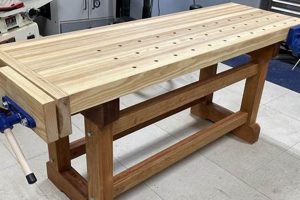
The physical dimensions of a woodworking surface significantly affect the efficiency and quality of the work produced. These measurements encompass length, width, and height, all crucial in accommodating various project types and the user’s physical needs. For instance, a surface too small might restrict larger assemblies, while one that is too large could introduce unnecessary reach and movement. The selection of dimensions directly influences the workholding capacity and overall comfort during extended periods of use.
Proper surface dimensions contribute to enhanced workflow, reduced strain, and improved accuracy. Historically, woodworkers often customized their work surfaces to match specific tasks or body types. Tailoring the size allows for efficient material handling, stable support for tools and workpieces, and optimized posture, ultimately leading to better results and minimized physical fatigue. Understanding the factors influencing dimension choices is vital for any woodworker seeking to maximize productivity and enjoyment in their craft.
This article will explore the key considerations when determining optimal surface measurements. Discussions will include assessing individual workspace constraints, project size expectations, and ergonomic requirements to provide a comprehensive guide to selecting dimensions that suit a variety of woodworking applications.
Dimensions for Optimal Woodworking
Selecting appropriate work surface dimensions is crucial for maximizing efficiency and minimizing physical strain during woodworking tasks. The following recommendations provide a foundation for informed decision-making.
Tip 1: Prioritize Ergonomics. The work surface height should allow for a comfortable working posture. A common guideline suggests that the height should allow the user to work with slightly bent elbows when performing detailed tasks.
Tip 2: Consider Project Scale. Larger projects demand a correspondingly larger work surface. Accurately assess the typical scale of anticipated projects when determining length and width requirements.
Tip 3: Account for Workholding. The dimensions must accommodate various workholding devices, such as vises and clamps. Ensure sufficient space is available for their placement and operation without obstructing workflow.
Tip 4: Optimize Reach. Avoid excessive reach by maintaining a reasonable work surface width. A depth that allows easy access to the far edge without significant stretching is optimal.
Tip 5: Incorporate Storage. Integrating storage solutions beneath or around the work surface requires careful consideration of overall dimensions. Plan for accessibility and organization of tools and materials.
Tip 6: Evaluate Workspace Constraints. The available space within the workshop will inevitably influence dimension choices. Prioritize essential features while adapting to spatial limitations.
Tip 7: Choose a Stable Base. The base supporting the work surface must be robust enough to withstand the weight of the surface, tools, and workpieces. Ensure adequate stability to prevent movement or vibration during use.
Implementing these suggestions can contribute to a more comfortable, efficient, and productive woodworking experience. Thoughtful consideration of surface dimensions is an investment in both the quality of the work and the well-being of the woodworker.
The subsequent section will delve into specific dimension recommendations based on common woodworking applications and skill levels.
1. Bench Height

Bench height is a foundational element in determining an effective woodworking surface. It establishes the user’s physical relationship to the workbench, directly impacting posture, leverage, and overall work efficiency. The selection of an appropriate height transcends simple preference; it is integral to minimizing strain and optimizing control during woodworking tasks.
- Ergonomic Considerations
Ergonomics dictates that bench height should align with the user’s body dimensions to minimize unnecessary reaching or bending. A bench that is too low necessitates excessive bending, leading to back strain, while a bench that is too high compromises leverage and control. A commonly cited rule of thumb suggests that the bench height should correspond to the user’s wrist height when standing with arms at their sides. However, this is a starting point; individual preferences and typical tasks performed should further refine this dimension.
- Task Specific Adjustments
Different woodworking operations benefit from varying bench heights. Fine detail work may be more comfortable at a slightly higher bench, allowing for closer proximity and enhanced visibility. Conversely, tasks requiring significant force, such as planing, may be more effectively executed at a lower bench, promoting greater leverage and stability. Adjustable height benches offer a versatile solution, accommodating a wider range of tasks and user preferences.
- Impact on Workholding
Bench height interacts directly with workholding strategies. The height of the bench affects the angle and ease with which workpieces can be secured in vises or with clamps. A poorly chosen bench height can render even the most robust workholding systems ineffective. The optimal height allows for comfortable and efficient tightening and manipulation of workpieces within the chosen workholding apparatus.
- Material Thickness Considerations
The typical thickness of materials being worked should also influence bench height selection. If a woodworker frequently works with thick stock, a slightly lower bench may be preferred to maintain a comfortable working height relative to the top surface of the workpiece. Conversely, thinner materials may necessitate a slightly higher bench to prevent excessive bending.
The interrelationship between these factors underscores the critical role of bench height in determining ideal woodworking surface measurements. An appropriately sized bench height, determined through careful consideration of ergonomic principles, task requirements, workholding methods, and material thicknesses, promotes both efficiency and physical well-being, ultimately contributing to a more rewarding woodworking experience.
2. Surface Area

Surface area, a primary determinant of ideal woodworking bench size, dictates the physical space available for project execution. Insufficient surface area restricts the ability to manage large components, perform complex assemblies, or efficiently stage tools and materials. The consequences manifest as reduced productivity, increased risk of errors due to cramped conditions, and compromised work quality. For example, a cabinetmaker assembling a large cabinet door requires ample, unobstructed space to align, clamp, and secure the components. A smaller surface would necessitate frequent repositioning, potentially disrupting alignment and increasing the risk of damage.
Conversely, excessive surface area can introduce ergonomic inefficiencies. Overly large surfaces may require the woodworker to extend their reach uncomfortably, leading to fatigue and reduced control. This is particularly pertinent during tasks requiring precision or repetitive movements. The ideal surface area balances the need for accommodating large projects with the ergonomic requirement of maintaining a manageable reach zone. Practical application involves assessing the typical project size range and selecting a bench that comfortably handles the largest expected piece while ensuring all areas of the surface remain easily accessible.
Ultimately, surface area is a foundational dimension of an optimal woodworking bench. Balancing the need for accommodation with ergonomic considerations is crucial for selecting a size that enhances both productivity and the quality of the finished product. Neglecting this balance results in either restricted project capabilities or increased physical strain, both of which detract from the woodworking experience.
3. Front-to-back depth

Front-to-back depth is a critical dimension influencing the overall utility of a woodworking surface. Inadequate depth restricts the ability to secure larger workpieces effectively. For example, when edge-jointing long boards, insufficient depth prevents proper clamping, resulting in inaccurate joints. Conversely, excessive depth necessitates reaching, thereby increasing strain and reducing control during detailed tasks. Therefore, appropriate front-to-back depth is integrally linked to an optimized woodworking experience.
Selecting the optimal depth demands consideration of typical project types. Smaller, intricate projects benefit from shallower depths, facilitating easy access and precise tool manipulation. Larger projects involving significant surface area necessitate greater depth to support workholding and prevent the workpiece from overhanging the edge. Practical considerations include the reach required to access tools and materials positioned at the back of the bench and the space needed for vises or other work-holding devices mounted along the front edge.
In summary, the front-to-back dimension is a non-negotiable element of an ideal woodworking surface, directly affecting workflow and project capabilities. The primary challenge lies in striking a balance between workpiece support and ergonomic accessibility. Failure to adequately address this aspect diminishes the utility of the entire bench, regardless of other advantageous features.
4. Apron Thickness

Apron thickness is a significant factor influencing the structural integrity and overall effectiveness of a woodworking bench. The apron, typically constructed from solid wood and situated beneath the work surface, connects the legs and provides crucial support. The dimension of this apron directly affects the bench’s resistance to racking and deflection under load, two properties directly related to work quality and user safety. Insufficient apron thickness compromises the bench’s stability, leading to vibrations and movement during woodworking operations, thereby reducing precision and increasing the risk of errors. Conversely, excessive apron thickness adds unnecessary weight and material cost without providing significant structural advantage beyond a certain point.
The ideal apron thickness is determined by several factors, including the bench’s overall size, the type of wood used for construction, and the anticipated load. Larger benches, intended for heavy-duty use, necessitate thicker aprons to maintain rigidity across the expanded surface area. Softer woods require thicker aprons than hardwoods to achieve comparable structural performance. For example, a bench designed for heavy planing operations requires a significantly thicker apron than a smaller bench intended primarily for light assembly work. Proper apron thickness optimizes the balance between strength, weight, and material usage, contributing to a woodworking bench that provides a stable and dependable platform for a wide range of tasks.
In conclusion, apron thickness constitutes a critical element of an ideal woodworking bench. Its direct impact on structural stability and work surface rigidity highlights the need for careful consideration during design and construction. Correctly sized aprons enhance the bench’s ability to withstand forces generated during woodworking tasks, providing a solid foundation for precision and safety. Choosing the appropriate dimension improves the functionality of the entire setup, linking apron thickness to an enhanced and more efficient woodworking experience.
5. Leg Spacing

Leg spacing, a fundamental aspect of woodworking bench design, directly influences stability and usable workspace. The distance between the legs dictates the distribution of weight and resistance to racking forces, critical factors determining the bench’s suitability for various woodworking tasks. Insufficient leg spacing compromises stability, leading to unwanted movement during demanding operations such as planing or hammering, potentially affecting precision and safety. Conversely, excessive leg spacing, while potentially increasing stability, can reduce the usable space beneath the bench, hindering access to storage or limiting the ability to comfortably work while seated. This dimension must be carefully considered as an integral component of optimal woodworking bench dimensions.
The optimal leg spacing is contingent upon the overall size and intended use of the bench. Larger benches, designed to support heavier loads and accommodate larger workpieces, necessitate wider leg spacing to ensure adequate stability. A cabinetmaker’s bench, typically larger and subject to substantial forces during assembly and joinery, requires significantly greater leg separation than a smaller bench used primarily for light carving or model making. Additionally, the presence of under-bench storage or integrated tool cabinets influences leg spacing requirements. Sufficient clearance must be provided to allow for easy access to stored items without compromising the structural integrity of the bench. A practical example is the inclusion of a cabinet beneath the bench; the leg spacing must accommodate the cabinet’s width while maintaining a robust stance.
In conclusion, leg spacing is a vital element of an effective woodworking bench. Its proper determination involves balancing stability considerations with the ergonomic requirements of the user and the intended use of the bench. Inadequate leg spacing detracts from the overall utility of the bench, undermining its stability and limiting its potential applications. Appropriate leg spacing, therefore, ensures a stable and versatile platform for a broad range of woodworking activities, contributing directly to the creation of well-crafted projects.
6. Vise placement

Vise placement is an integral consideration in determining woodworking surface dimensions, directly affecting workholding capacity and overall efficiency. Proper positioning of the vise optimizes leverage, accessibility, and the ability to secure workpieces of various sizes and shapes. Incorrect placement compromises these benefits, hindering workflow and increasing the risk of damage to the workpiece or the bench itself.
- Front Vise Location and Bench Length
The location of the front vise relative to the length of the bench influences the capacity for edge-jointing long boards or performing other tasks requiring the workpiece to extend beyond the vise jaws. A front vise positioned too close to the end of the bench may limit the maximum length of board that can be effectively secured. Conversely, excessive distance from the end reduces the ability to support shorter workpieces. Appropriate bench length should accommodate the typical range of workpiece lengths encountered by the woodworker.
- Tail Vise Integration and Bench Width
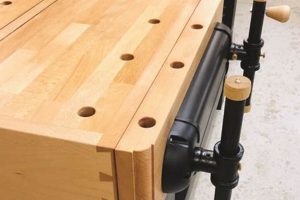
The integration of a tail vise, often used in conjunction with bench dogs, requires sufficient bench width to accommodate a range of workpiece widths. The distance between the tail vise and the opposite edge of the bench determines the maximum width of board that can be effectively clamped. Insufficient width limits the versatility of the tail vise system. Optimal bench width balances the need for workholding capacity with ergonomic considerations related to reach and accessibility.
- Vise Orientation and Apron Thickness
The orientation of the vise jaws relative to the bench apron influences the type of work that can be effectively performed. A flush-mounted vise, where the top of the vise jaw is level with the bench surface, allows for planing thin stock without interference. The apron thickness must be sufficient to support the weight and forces exerted on the vise during use. Inadequate apron thickness may result in racking or damage to the bench. Selecting appropriate apron thickness is crucial for ensuring the long-term stability and functionality of the vise installation.
- Vise Jaw Size and Bench Height
The size of the vise jaws influences the height at which the vise is mounted relative to the bench surface. Larger jaws require a slightly lower mounting position to maintain a comfortable working height for the user. A vise mounted too high may necessitate awkward posture and reduced leverage. Selecting an appropriate bench height in conjunction with the chosen vise size ensures optimal ergonomics and workholding efficiency. The goal is to maintain a natural working position that minimizes strain and maximizes control.
These factors underscore the interconnectedness of vise placement and overall bench dimensions. The dimensions are not independent but, rather, interdependent components of a unified woodworking system. Failure to consider vise placement during the bench design process compromises the workholding capabilities and detracts from the overall usability. Integrating vise considerations from the outset results in a cohesive and efficient woodworking surface, tailored to the specific needs and preferences of the user.
7. Tool storage
Tool storage solutions integrated within or adjacent to a woodworking bench significantly impact the determination of its optimal size. Efficient organization of tools and accessories directly influences workflow, minimizes clutter, and reduces the time spent searching for necessary implements. Consequently, accommodating adequate tool storage is a crucial consideration when establishing appropriate woodworking surface dimensions.
- Under-Bench Cabinet Dimensions
The incorporation of cabinets beneath the bench necessitates careful planning of leg spacing and overall bench height. Cabinet dimensions must allow for sufficient storage capacity without compromising legroom or stability. For example, a cabinet designed to house larger tools, such as hand planes or saws, requires greater depth and height, influencing the minimum acceptable distance between the bench legs and potentially raising the overall bench height to maintain ergonomic access. Failure to account for cabinet dimensions results in a cramped and inefficient workspace.
- Drawer Configuration and Bench Width
Drawer configurations along the front or sides of the bench impact the optimal bench width. Wider benches accommodate deeper drawers, allowing for more organized storage of smaller tools and accessories. However, excessive bench width can compromise reach and accessibility, necessitating careful consideration of drawer depth and placement. A practical example is a row of shallow drawers designed to hold chisels and marking tools; these drawers require sufficient width to accommodate the tools while maintaining a manageable reach for the user.
- Tool Well Integration and Surface Area
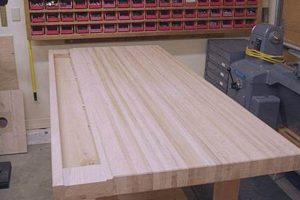
Tool wells, recessed areas within the work surface, provide immediate access to frequently used tools. The incorporation of tool wells requires a reduction in the overall surface area available for project execution. The dimensions of the tool well, including its depth, width, and length, must be carefully considered to minimize disruption to workflow and maintain sufficient space for larger projects. For instance, a tool well designed to hold carving tools necessitates a smaller, more compact design compared to a well intended to accommodate larger hand planes or saws.
- Hanging Tool Racks and Bench Height/Length
Hanging tool racks positioned above the bench offer an alternative storage solution that minimizes footprint on the work surface. The height and length of the bench influence the placement and capacity of overhead tool racks. A taller bench allows for higher placement of the rack, providing increased clearance for the user. However, excessive height can compromise accessibility. Similarly, longer benches accommodate longer tool racks, increasing storage capacity. Proper planning of bench dimensions ensures the overhead tool rack is both accessible and does not impede workflow.
In summary, tool storage considerations are intrinsically linked to woodworking surface dimensions. The decision to integrate cabinets, drawers, tool wells, or hanging racks necessitates careful planning to optimize storage capacity, maintain ergonomic accessibility, and avoid compromising the structural integrity or usability of the bench. Adequately addressing these factors ensures a well-organized and efficient woodworking workspace.
Frequently Asked Questions
The following questions address common concerns and misconceptions regarding the optimal dimensions for a woodworking bench.
Question 1: What is the primary factor determining appropriate woodworking bench height?
The user’s height and typical working posture are the primary determinants. The goal is to minimize bending and reaching, thereby reducing strain and promoting efficient work. A common guideline suggests bench height should correspond to wrist height while standing upright.
Question 2: How does project size influence ideal woodworking bench surface area?
The typical scale of projects undertaken directly impacts required surface area. Larger projects necessitate a larger surface to accommodate components and facilitate assembly. However, excessive surface area can introduce ergonomic inefficiencies, requiring excessive reaching.
Question 3: What considerations dictate optimal front-to-back depth of a woodworking bench?
Front-to-back depth balances the need for workpiece support with ergonomic accessibility. Sufficient depth is required to adequately support larger workpieces, while excessive depth can compromise reach and necessitate awkward postures. The woodworker should easily access the far edge of the surface.
Question 4: Why is apron thickness a relevant factor in woodworking bench construction?
Apron thickness directly impacts the structural integrity of the bench. A sufficiently thick apron provides resistance to racking and deflection, ensuring a stable and reliable work surface. Insufficient thickness compromises stability, potentially affecting work quality and safety.
Question 5: How does leg spacing affect the overall functionality of a woodworking bench?
Leg spacing is crucial for maintaining stability and maximizing usable space. Adequate leg separation is required to distribute weight evenly and prevent unwanted movement during woodworking operations. However, excessive spacing can reduce under-bench storage or limit seated work.
Question 6: What role does vise placement play in determining woodworking bench dimensions?
Vise placement is integral to workholding capacity and efficiency. Proper positioning optimizes leverage and accessibility for securing workpieces. Bench length and width must accommodate vise placement while considering the range of workpiece sizes commonly used.
Careful consideration of these factors contributes to a woodworking bench that promotes efficiency, accuracy, and user well-being.
The next section will provide a comprehensive overview of material selection considerations for constructing a woodworking bench.
Concluding Remarks
The preceding discussion has examined the multifaceted nature of ideal woodworking bench size. A holistic approach, considering ergonomic factors, project scale, workholding requirements, and storage integration, is paramount. Deviations from a well-considered design can compromise efficiency, accuracy, and the long-term physical well-being of the woodworker.
Selection of appropriate dimensions warrants careful planning and evaluation. Investing time in this initial phase ultimately yields a more productive and enjoyable woodworking experience. The ongoing pursuit of optimized work surfaces will undoubtedly continue to shape the craft in years to come.

![Top-Rated Best Portable Woodworking Bench [2024 Guide] | Step-by-Step Guides, Tools & Inspiration to Build Beautiful Wooden Decor on a Budget](https://woodfromhome.com/wp-content/uploads/2026/05/th-181-300x200.jpg "Top-Rated Best Portable Woodworking Bench [2024 Guide] Step-by-Step Guides, Tools & Inspiration to Build Beautiful Wooden Decor on a Budget")