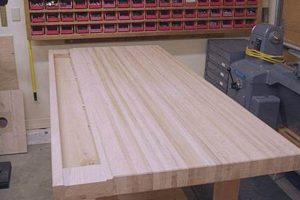
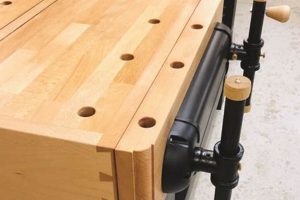
The optimal elevation of a workbench significantly impacts the efficiency and comfort of woodworking tasks. It is the distance from the floor to the work surface that allows for efficient leverage and minimizes strain on the body. For instance, a bench too low necessitates excessive bending, while one too high restricts the user’s ability to apply sufficient downward force during operations like planing or sawing.
Proper workbench elevation is crucial for preventing back pain, shoulder discomfort, and fatigue. Ergonomically sound dimensions contribute to greater accuracy and control over tools, leading to improved project quality. Historically, workbenches were often customized to the specific user and their typical tasks, reflecting an understanding of the importance of personalized fit.
Determining the appropriate workbench elevation necessitates consideration of several factors, including the individual’s height, the typical woodworking activities to be performed, and the preferred working posture. A systematic approach to identifying the ideal dimensions ensures a comfortable and productive woodworking experience.
Determining the Optimal Workbench Elevation
Selecting the proper elevation for a woodworking bench requires careful consideration of individual needs and work habits. The following tips provide a framework for establishing a workbench height that maximizes comfort and efficiency.
Tip 1: Conduct the Elbow Test: Stand upright with arms bent at a 90-degree angle. The workbench surface should ideally be at or slightly below elbow height. This allows for a comfortable stance during detailed work and prevents excessive reaching.
Tip 2: Account for Primary Tasks: If planing is a frequent activity, a lower workbench can be beneficial, enabling the user to apply more downward force. For tasks requiring finer motor skills, a slightly higher surface may be preferable for enhanced visibility.
Tip 3: Consider Stance and Posture: Observe typical working posture. A slight forward lean is acceptable, but excessive bending or slouching indicates the need for adjustment. Experiment with different stances to identify the most sustainable position.
Tip 4: Use Adjustable Legs or Shims: Implementing adjustable legs provides flexibility to fine-tune the workbench elevation. Shims can also be used to make minor adjustments if the bench height is slightly off.
Tip 5: Factor in Footwear: Always consider the type of footwear typically worn in the workshop. Shoe height can impact overall body position and influence the perceived comfort of the workbench elevation.
Tip 6: Prototype with a Temporary Setup: Before committing to a permanent height, create a temporary workbench setup using adjustable supports. This allows for experimentation with different elevations to determine the ideal configuration.
Implementing these guidelines will result in a workbench elevation that promotes ergonomic well-being and enhances woodworking productivity. A properly sized workbench reduces physical strain and improves the overall working experience.
By tailoring the workbench to specific needs, woodworkers can create a more efficient and enjoyable work environment. The following sections will delve into the specific methods for adjusting workbench height and adapting it to varying task requirements.
1. User Height

User height is a primary determinant in establishing a comfortable and efficient workbench elevation. It serves as the baseline measurement from which subsequent adjustments are made to accommodate specific tasks and working preferences.
- Standing Reach and Posture
A user’s stature directly impacts the ability to comfortably reach and manipulate materials on the workbench. A bench too high will require elevated shoulders and strained reach, while a bench too low necessitates excessive bending, both of which can lead to musculoskeletal discomfort. Ideal posture involves a neutral spine and relaxed shoulders.
- Elbow Height as a Guide
Elbow height, derived from overall user height, provides a more precise reference point for workbench surface elevation. With arms bent at a 90-degree angle, the workbench should ideally align with or fall slightly below the elbow. This allows for comfortable leverage during hand tool operations. Discrepancies between individual height and arm length necessitate careful adjustments.
- Leaning and Force Application
The user’s ability to apply downward force effectively is influenced by bench height relative to user height. Tasks like planing require leaning into the workpiece, and a bench that is too high hinders this motion, reducing the force that can be applied. Conversely, excessive bending over a low bench also reduces force application and causes fatigue.
- Consideration for Footwear
It is important to consider the footwear the user will typically wear while working. Variations in sole thickness can subtly alter the effective user height, impacting the ideal workbench elevation. Consistent footwear choice is crucial for maintaining a comfortable and ergonomic working environment.
Therefore, user height is not simply a starting point but a continuous reference throughout the workbench elevation determination process. A workbench tailored to the individual’s stature promotes efficiency, reduces physical strain, and enhances the overall woodworking experience. Failure to adequately consider these height-related factors can compromise both comfort and productivity.
2. Task Specificity

The type of woodworking activities performed significantly influences the optimal workbench elevation. Different tasks demand distinct postures and leverage requirements, necessitating adjustments to the workbench height to maximize efficiency and minimize physical strain.
- Planing and Heavy Stock Removal
Planing, particularly with hand planes, requires substantial downward force and a stable stance. A lower workbench elevation is generally preferred for these activities. This allows the user to lean into the workpiece, utilizing body weight to generate force. The lower stance enhances stability and control during aggressive stock removal.
- Joinery and Fine Detail Work
Tasks such as dovetailing, carving, and intricate assembly necessitate a higher workbench elevation. This brings the workpiece closer to eye level, improving visibility and precision. The upright posture reduces strain on the back and neck, allowing for sustained focus during detailed operations.
- Assembly and Finishing
Assembly operations, often involving larger components, may benefit from a workbench elevation that accommodates comfortable reach and manipulation. Finishing tasks, such as sanding and applying coatings, may require frequent changes in position. An intermediate bench height that balances reach and visibility can be advantageous.
- Power Tool Operations
The use of power tools, such as routers or sanders, introduces additional considerations. The height of the workbench should allow for safe and controlled operation of the tool, while also providing adequate support for the workpiece. The user’s stance should be stable and balanced to prevent accidents.
The ideal approach involves identifying the primary tasks performed on the workbench and adjusting the elevation accordingly. A versatile solution is the incorporation of adjustable-height legs, allowing for quick and easy modifications to suit varying task requirements. A proper consideration for the specifics of each task results in a more ergonomic and productive woodworking environment.
3. Elbow Height

Elbow height serves as a crucial, readily accessible anthropometric measurement for approximating the ideal workbench elevation. Its relationship to overall stature makes it a practical and reliable guide in determining the vertical distance from the floor to the workbench surface, promoting ergonomic well-being during woodworking tasks.
- Primary Ergonomic Reference
Elbow height offers a direct correlation to the user’s natural reach and working posture. A workbench surface at or slightly below elbow height promotes a neutral spine, relaxed shoulders, and reduced strain on the back and neck. This minimizes the risk of musculoskeletal disorders associated with prolonged or repetitive woodworking activities.
- Leverage and Force Application
The elbow height benchmark facilitates efficient force application during hand tool operations. A workbench at the correct elevation allows the user to effectively transfer body weight and generate leverage without excessive bending or reaching. This is particularly important for tasks such as planing, sawing, and chiseling, where sustained force is required.
- Adaptability to Task Variations
While elbow height provides a foundational reference, adjustments may be necessary to accommodate specific task requirements. For detailed work requiring fine motor skills and close visual inspection, a slightly higher workbench may be preferable, even if it deviates slightly from the elbow height guideline. Conversely, tasks involving heavy stock removal may benefit from a lower elevation.
- Practical Measurement Technique
Determining elbow height involves a simple measurement process. The user stands upright with the arms bent at a 90-degree angle. The distance from the floor to the elbow provides a practical approximation for the initial workbench elevation. This measurement can be refined based on individual preferences and specific task considerations.
In conclusion, elbow height provides a valuable and easily obtainable starting point for establishing the optimal workbench elevation. While it is essential to consider other factors, such as task specificity and personal preferences, elbow height remains a reliable benchmark for promoting ergonomic comfort and maximizing efficiency in the woodworking workspace. Its direct link to posture and leverage makes it an indispensable tool in creating a workbench tailored to the individual woodworker.
4. Working Posture

Maintaining a proper working posture is integral to maximizing the benefits derived from a correctly elevated woodworking bench. The bench’s height dictates the user’s stance, influencing spinal alignment, shoulder positioning, and overall physical strain during extended periods of work. Ignoring the interplay between bench height and posture can negate the ergonomic advantages of an otherwise well-designed workspace.
- Spinal Alignment
The workbench elevation directly impacts the curvature of the spine. A bench that is too low forces excessive bending at the waist, leading to lower back pain and fatigue. Conversely, a bench that is too high causes hyperextension and strain in the upper back and neck. The ideal bench height promotes a neutral spinal alignment, minimizing stress on the vertebral column and supporting muscles.
- Shoulder Positioning
Improper bench height can compromise shoulder mechanics. An elevated bench forces the shoulders to be raised, increasing tension in the trapezius and rotator cuff muscles. A low bench necessitates hunching, restricting shoulder movement and contributing to discomfort. A suitable bench elevation allows for relaxed, natural shoulder positioning, facilitating efficient and pain-free arm movement.
- Reach and Accessibility
The relationship between the bench’s height and the user’s reach influences the accessibility of tools and materials. An incorrectly sized bench requires excessive reaching, straining muscles and reducing precision. A well-proportioned bench places essential items within easy reach, minimizing unnecessary movement and promoting a more fluid and efficient workflow.
- Wrist and Elbow Strain
Incorrect posture, induced by an improperly elevated bench, can contribute to wrist and elbow problems. Awkward angles and strained movements increase the risk of carpal tunnel syndrome, tendonitis, and other repetitive strain injuries. Proper bench height supports a natural wrist and elbow position, reducing stress and preventing these debilitating conditions.
The connection between working posture and workbench elevation underscores the importance of personalization. A standardized bench height is unlikely to accommodate the diverse physical characteristics and working preferences of all woodworkers. A commitment to adjusting or customizing the workbench height ensures that the workspace supports optimal posture, reduces physical strain, and promotes a more sustainable and enjoyable woodworking experience.
5. Material Thickness

The thickness of the material being worked directly influences the effective height of the work surface and, consequently, the optimal workbench elevation. This factor requires careful consideration to maintain ergonomic comfort and operational efficiency.
- Impact on Working Height
Material placed on the workbench surface elevates the working plane. Thicker stock increases this elevation, effectively reducing the distance between the worker and the workpiece. Conversely, thin materials have a negligible impact. When consistently working with materials of substantial thickness, a workbench designed slightly lower is advisable to compensate for this added height.
- Adjusting for Varying Stock
Woodworkers frequently work with materials of diverse thicknesses. To accommodate this variability, solutions include adjustable-height workbenches or the use of auxiliary supports and jigs. These methods allow for modifying the working surface elevation to suit the specific material being used, ensuring a comfortable and ergonomically sound posture regardless of the stock’s dimensions.
- Influence on Hand Tool Operations
The thickness of the material significantly impacts hand tool operations. When planing, for instance, thick stock necessitates greater force application. A workbench height that accounts for the added elevation ensures sufficient leverage and reduces the risk of strain. Similarly, when performing delicate joinery on thin materials, a height that provides clear visibility and stability is crucial.
- Integration with Jigs and Fixtures
Jigs and fixtures are often employed to secure and support materials during woodworking tasks. These devices contribute to the overall height of the working surface. When designing a workbench, it is prudent to factor in the anticipated use of jigs and fixtures, ensuring that their presence does not compromise the ergonomic benefits of the established bench elevation. Consider integrating features into the bench that allow jigs to sit flush or at a consistent height relative to the primary work surface.
Effective workbench design incorporates consideration of material thickness as a key determinant of the optimal working height. A failure to account for this variable can lead to discomfort, reduced efficiency, and increased risk of injury. Adapting the workbench, whether through adjustable legs or supplementary tools, ensures the woodworker can maintain a comfortable and productive stance irrespective of the material’s dimensions.
6. Adjustability Options
The capacity to modify workbench elevation is intrinsically linked to achieving the dimension that promotes optimal ergonomic well-being and enhances woodworking performance. A static workbench height often proves insufficient, given the diverse range of tasks, material thicknesses, and individual user characteristics encountered in woodworking practice.
- Adjustable Legs: A Foundational Element
Adjustable legs provide the most direct means of altering workbench elevation. These systems typically employ threaded inserts, telescoping mechanisms, or pin-and-hole arrangements to allow incremental height adjustments. Examples include threaded leveling feet that offer fine-tuning capability and telescoping legs with locking pins for broader adjustments. Implementing adjustable legs provides the flexibility to adapt the workbench to various tasks and users, ensuring that the surface aligns with optimal ergonomic principles.
- Shimming and Spacers: Incremental Refinement
Shims and spacers offer a more granular approach to height adjustment. These thin pieces of material, typically wood or metal, are inserted beneath the workbench legs to incrementally raise the surface. Shimming is suitable for addressing minor height discrepancies or for fine-tuning the elevation to accommodate specific operations. The application of shims provides a cost-effective and readily implementable solution for achieving a precise workbench height.
- Mobile Bases with Height Adjustment
Mobile bases, often equipped with locking casters, provide portability in addition to height adjustability. Certain mobile base models incorporate mechanisms for raising or lowering the workbench, allowing for easy relocation and ergonomic customization. This combination is particularly advantageous in workshops with limited space or where the bench must be moved to accommodate different tasks or projects.
- Integrated Lift Mechanisms: Precision and Control
Advanced workbench designs may incorporate integrated lift mechanisms, such as hydraulic or pneumatic systems. These systems provide precise and controlled height adjustments, often with a wide range of travel. Integrated lift mechanisms offer the ultimate in flexibility and ergonomic customization, allowing the user to quickly and effortlessly adapt the workbench to changing needs and preferences. The use of such mechanisms represents a significant investment but provides long-term benefits in terms of comfort and efficiency.
The availability of adjustability options significantly enhances the capacity to tailor the workbench to individual requirements and specific tasks. A workbench equipped with effective adjustability features promotes ergonomic comfort, reduces physical strain, and improves overall woodworking productivity. The selection of appropriate adjustment mechanisms depends on budget constraints, desired range of adjustment, and the frequency with which height modifications are anticipated.
7. Personal Preference
Subjective factors play a decisive role in determining optimal workbench elevation. While anthropometric measurements and task-specific requirements provide a quantitative framework, individual preferences significantly influence the perceived comfort and usability of the workbench.
- Preferred Working Style
Individual working styles often dictate height preferences. Some woodworkers favor a more upright posture, preferring a slightly higher bench that brings the workpiece closer to eye level. Others prefer a more reclined stance, opting for a lower bench that facilitates leaning and the application of greater force. The preferred working style, cultivated through experience, significantly impacts the ideal workbench height.
- Habitual Tool Usage
Established patterns of tool usage influence the perception of ergonomic comfort. A woodworker accustomed to using hand tools with a specific bench height may find even minor deviations disruptive. Habitual movements and established muscle memory contribute to a subjective sense of “rightness” that is difficult to quantify but essential for optimal performance. Adapting to a different bench height, even if theoretically more ergonomic, can require significant retraining and adjustment.
- Tolerance for Physical Strain
Individual tolerance for physical strain varies considerably. Some woodworkers can comfortably endure prolonged periods of work at suboptimal bench heights, while others experience discomfort and fatigue relatively quickly. Acknowledging personal limitations and sensitivities is crucial in selecting a bench height that minimizes strain and promotes sustainable work practices. Factors such as age, physical condition, and pre-existing injuries all influence this tolerance.
- Sensory Preferences
Sensory perceptions, such as tactile feedback and visual clarity, can subtly influence height preferences. Some woodworkers prefer a lower bench that provides a more grounded and stable tactile experience. Others may prioritize a higher bench that enhances visual clarity and allows for closer inspection of the workpiece. These sensory preferences, although difficult to articulate, contribute to the overall subjective assessment of the workbench’s suitability.
Integrating subjective preferences with objective measurements is essential for achieving a truly personalized and functional woodworking workspace. While adhering to ergonomic principles is paramount, acknowledging and accommodating individual preferences ensures that the workbench is not only physically comfortable but also conducive to a satisfying and productive woodworking experience.
Frequently Asked Questions
This section addresses common inquiries regarding the determination and implementation of the optimal workbench height for woodworking applications. The information provided aims to clarify misconceptions and offer practical guidance.
Question 1: Is there a universally accepted workbench height?
A single “best” dimension does not exist. The optimal workbench height is contingent upon individual anthropometrics, common tasks, and established working habits. Generic recommendations should be treated as starting points, not definitive solutions.
Question 2: How does planing influence workbench height selection?
Planing often benefits from a lower workbench. This allows the operator to lean into the workpiece, utilizing body weight to generate the necessary force. Overly high surfaces can hinder leverage and increase strain during this activity.
Question 3: What role does elbow height play in determining workbench dimensions?
Elbow height is a commonly used benchmark. Standing upright with arms bent at 90 degrees, the workbench surface should ideally align with or fall slightly below the elbow. This promotes a neutral spine and reduces shoulder strain.
Question 4: Can the thickness of the workpiece affect the ideal workbench height?
Yes. Thicker materials effectively raise the working surface, potentially requiring a slightly lower workbench to compensate. Failure to account for material thickness can compromise ergonomic comfort.
Question 5: Is adjustability a critical feature in a woodworking bench?
Adjustability is highly desirable. It allows for fine-tuning the workbench height to accommodate diverse tasks, varying material thicknesses, and evolving ergonomic preferences. A static workbench often proves inadequate over time.
Question 6: How should personal preferences factor into workbench height selection?
Subjective factors, such as preferred working style and tolerance for physical strain, are significant. A workbench that feels ergonomically sound is often more conducive to productivity than one that adheres strictly to theoretical recommendations.
Determining the suitable workbench height necessitates a holistic approach, considering both objective measurements and individual preferences. Prioritizing ergonomic principles contributes to a more sustainable and enjoyable woodworking practice.
The next section will explore practical methods for adjusting workbench height and adapting it to specific task requirements.
Determining What Is the Best Height for a Woodworking Bench
The preceding exploration underscores the multifaceted nature of establishing optimal workbench elevation. A synthesis of anthropometric measurements, task-specific considerations, and individual preferences is essential. Elbow height serves as a reliable starting point, while adjustability features enable fine-tuning to accommodate varying needs. Overreliance on standardized recommendations is discouraged; personalized customization remains paramount.
The pursuit of an ergonomically sound woodworking environment necessitates continuous assessment and refinement. Implementing the principles outlined contributes to enhanced comfort, reduced physical strain, and improved productivity. The long-term benefits of a properly elevated workbench extend beyond immediate gains, fostering a more sustainable and rewarding woodworking practice.
![Build A Roman Woodworking Bench [DIY Guide] | Step-by-Step Guides, Tools & Inspiration to Build Beautiful Wooden Decor on a Budget](https://woodfromhome.com/wp-content/uploads/2026/05/th-207-300x200.jpg "Build A Roman Woodworking Bench [DIY Guide] Step-by-Step Guides, Tools & Inspiration to Build Beautiful Wooden Decor on a Budget")