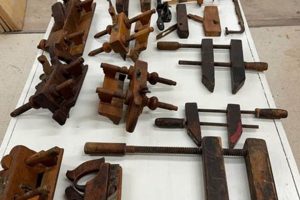
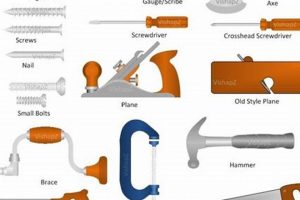
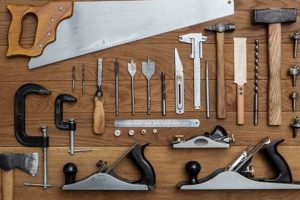
Appropriate implements for young artisans engaging in woodcraft typically involve scaled-down versions of standard carpentry devices. These may encompass items such as small hammers, hand saws with safety features, wood rasps, clamps, and measuring tools, all designed with smaller grips and often incorporating safety mechanisms to reduce the risk of injury. An example is a miniature coping saw equipped with a blade guard.
The provision of age-appropriate instruments for woodworking yields numerous advantages. It fosters the development of fine motor skills, spatial reasoning, and problem-solving abilities. Furthermore, it introduces foundational principles of engineering and design. Historically, learning woodworking skills from a young age has been a method of transmitting practical knowledge and encouraging creativity, leading to potential vocational pathways later in life.
The subsequent sections will delve into specific considerations when selecting implements for youthful carpenters, focusing on safety features, age appropriateness, and the educational value that can be derived from engaging in this constructive activity.
Guidance for Selecting Woodworking Equipment for Youngsters
Optimal selection of woodworking equipment for children necessitates careful consideration of multiple factors. Prioritizing safety and developmental appropriateness is paramount to ensuring a positive and educational experience.
Tip 1: Emphasize Safety Features: Seek tools equipped with safety mechanisms such as blade guards, rounded edges, and non-slip grips. A vice to secure workpieces is essential for controlled cuts.
Tip 2: Choose Age-Appropriate Sizes: Opt for tools scaled down to fit smaller hands. This improves control and reduces strain, minimizing the risk of accidents.
Tip 3: Prioritize Hand Tools: Starting with hand tools like saws, hammers, and rasps is advisable. These provide a better understanding of fundamental woodworking techniques before introducing power tools (under strict supervision only, if applicable).
Tip 4: Supervise Closely: Constant adult supervision is mandatory, especially for younger children or those new to woodworking. Guidance and instruction are crucial for safe tool usage.
Tip 5: Provide Clear Instructions: Demonstrate proper tool usage and safety procedures explicitly. Reinforce these instructions regularly to ensure comprehension and adherence.
Tip 6: Invest in Quality Materials: Durable and well-made equipment lasts longer and is generally safer to use. Avoid flimsy or poorly constructed tools that may break or malfunction.
Tip 7: Teach Proper Maintenance: Instruct children on how to clean and store their tools after each use. This promotes responsibility and extends the lifespan of the equipment.
By adhering to these guidelines, adults can facilitate a safe and enriching woodworking experience for children, fostering creativity, problem-solving skills, and a lifelong appreciation for craftsmanship.
The following section will explore age-appropriate project ideas suitable for beginning woodworkers.
1. Safety Mechanisms

The incorporation of safety mechanisms into carpentry tools designed for children is not merely an option, but a fundamental requirement. The purpose is to minimize the inherent risks associated with sharp edges, moving parts, and the potential for misuse, thereby creating a safer environment for skill development.
- Blade Guards on Saws
Blade guards are protective coverings that shield the user from direct contact with the saw blade during operation and storage. Examples include retractable guards that automatically cover the blade when not in use, and fixed guards that limit exposure. The presence of a blade guard significantly reduces the risk of accidental cuts and lacerations, making saws substantially safer for young users.
- Rounded Edges and Non-Slip Grips
Sharp edges on tool handles or bodies can cause discomfort and increase the likelihood of slippage, leading to potential injury. Rounded edges and ergonomic, non-slip grips improve control and reduce hand fatigue, enhancing safety and precision. This is especially critical for children, who may have less hand strength and dexterity than adults.
- Clamping Systems for Secure Workholding
A secure clamping system is essential for preventing workpieces from shifting or moving during cutting or shaping. Vices and clamps designed for small hands ensure that the workpiece remains stable, reducing the risk of the tool slipping or the child losing control. This is a fundamental safety precaution, as uncontrolled movement can easily lead to accidents.
- Safety Hammers with Soft Faces
Hammers with soft faces, such as those made of rubber or plastic, reduce the risk of splintering wood or causing injury from glancing blows. These hammers provide sufficient force for woodworking tasks while minimizing the potential for damage or harm, making them a safer alternative to traditional steel hammers for novice woodworkers.
These safety mechanisms, when properly integrated into the design of carpentry tools, significantly enhance the safety and accessibility of woodworking for children. By minimizing the potential for injury, these features enable young individuals to explore their creativity and develop valuable skills in a secure and supportive environment. The selection of tools with appropriate safety features is paramount for any responsible adult introducing woodworking to a child.
2. Appropriate Sizing

The concept of appropriate sizing is fundamental to the effective and safe utilization of implements by younger individuals engaged in woodcraft. The dimensions and weight of the instruments directly influence a child’s ability to maintain control, exert sufficient force, and perform tasks with accuracy. Implements that are too large or heavy necessitate excessive physical exertion, leading to fatigue, reduced precision, and an elevated risk of accidents. Conversely, tools of suitable size allow for greater maneuverability, enhanced control, and a more positive learning experience. As a concrete example, a standard-sized hand saw can be unwieldy and difficult for a child to manipulate, potentially resulting in inaccurate cuts or even injury. A smaller, lighter saw designed for smaller hands allows for a more controlled cutting motion.
The selection of woodworking tools based on appropriate sizing extends beyond mere ergonomics. It also impacts the development of fundamental skills. When children can comfortably and confidently handle tools, they are more likely to focus on the task at hand and master the necessary techniques. This, in turn, fosters a sense of accomplishment and encourages continued exploration of woodworking. Furthermore, properly sized tools promote better posture and reduce the likelihood of strain-related injuries, especially during extended periods of work. The practical application of this understanding is evident in the availability of scaled-down versions of common woodworking tools specifically marketed for children, incorporating features like smaller grips and lighter materials.
In summary, the critical importance of appropriate sizing cannot be overstated when considering implements intended for youthful woodworkers. It directly impacts safety, skill development, and the overall enjoyment of the craft. While challenges may arise in finding a perfect fit for every child, prioritizing size and weight considerations when selecting tools is essential. This contributes to a safer, more effective, and ultimately more rewarding woodworking experience, allowing them to explore the craft effectively.
3. Durable Materials

The selection of durable materials in implements intended for youthful woodworkers constitutes a critical safety and pedagogical consideration. Carpentry tools subjected to frequent use by children undergo considerable stress, demanding robust construction to withstand potential misuse and maintain functional integrity. The utilization of substandard materials introduces the risk of premature failure, leading to sharp edges, splintering, or complete breakage, thereby posing significant safety hazards. In contrast, tools crafted from durable materials such as hardened steel, impact-resistant polymers, or sustainably sourced hardwoods offer enhanced resilience and longevity. For instance, a hammer with a head manufactured from high-carbon steel is demonstrably less prone to deformation or detachment compared to one constructed from a weaker alloy.
The implementation of durable materials extends beyond mere safety concerns; it directly influences the educational value derived from woodworking activities. Robust tools perform consistently and reliably, enabling young users to develop fundamental skills and techniques without frustration caused by equipment malfunction. A hand saw constructed from high-quality steel, for example, will maintain its sharpness for a longer period, facilitating clean and accurate cuts. This promotes a sense of accomplishment and encourages continued engagement with the craft. Furthermore, durable materials contribute to the overall sustainability of the implements. Tools built to withstand prolonged use require less frequent replacement, reducing waste and promoting a more environmentally conscious approach to woodworking education.
In conclusion, durable materials are an indispensable component of safe and effective implements for young carpenters. Their utilization mitigates safety risks, enhances the learning experience, and promotes environmental responsibility. While the initial cost may be higher compared to tools constructed from less robust materials, the long-term benefits in terms of safety, durability, and educational value justify the investment. Choosing tools that use Durable Materials ensures that the implements are suitable for kids and will deliver the value of woodworking.
4. Ease of Use

The correlation between ease of use and the efficacy of carpentry implements designed for children is substantial. Simplified operation promotes accessibility and facilitates the acquisition of fundamental woodworking skills. A complicated tool, conversely, presents an impediment to learning, potentially causing frustration and discouraging continued engagement. A hand saw, for example, designed with an ergonomic grip and a blade specifically engineered to cut softwood effectively enhances ease of use, enabling a child to produce cleaner, straighter cuts with less physical exertion. The absence of these design considerations necessitates increased effort and skill, thereby diminishing the likelihood of a positive learning experience.
The practical significance of prioritizing ease of use in implements for young woodworkers extends beyond immediate usability. Simplified tools allow children to concentrate on the core principles of woodworking, such as measuring, marking, and cutting, without being overwhelmed by intricate operating procedures. This focused approach fosters a deeper understanding of the craft and enhances skill development. Furthermore, easy-to-use equipment reduces the potential for errors and accidents, promoting a safer and more rewarding learning environment. For instance, a simple push drill, requires minimal force, can be used instead of an electric drill when making small pilot holes, enhancing safety and ease of operation.
In conclusion, the element of ease of use plays a decisive role in determining the success of carpentry tools designed for younger individuals. By prioritizing simplified operation and intuitive design, manufacturers and educators can cultivate a more accessible, engaging, and ultimately safer woodworking experience, which encourages creativity and skill acquisition. The challenge lies in striking a balance between safety features and functional simplification, ensuring that implements remain effective while being readily understandable and manageable for young users.
5. Project Suitability

Project suitability, in the context of carpentry implements for children, refers to the alignment between a given woodworking project and the child’s developmental stage, skill level, and available tools. The careful matching of projects to these factors is paramount for safety, engagement, and the fostering of a positive learning experience.
- Complexity of Design
Project complexity must align with the child’s existing skill set. Overly intricate designs, requiring advanced techniques and fine motor control, can lead to frustration, errors, and potential injury. Simpler projects, such as constructing a basic birdhouse or a small wooden toy, offer opportunities to practice fundamental skills without overwhelming the child. An example would be replacing a complex dovetail joint with a simpler butt joint reinforced with screws.
- Material Requirements
The selection of materials directly impacts project suitability. Softwoods like pine or balsa are generally easier to work with than hardwoods, requiring less force and minimizing the risk of tool slippage. Additionally, the size and thickness of the wood should be manageable for the child, avoiding excessive strain. Using pre-cut pieces of wood can further simplify the construction process and reduce the need for complex cutting operations. A birdhouse made from a single sheet of plywood is another example.
- Tool Compatibility
Projects should be selected with the available inventory of carpentry instruments in mind. Attempting a project that requires tools beyond the child’s current set necessitates either improvisation, which can be unsafe, or the premature introduction of more advanced implements before the child is ready. Matching the project to the tools at hand also reinforces the value of understanding each tool’s capabilities and limitations. A simple example is only doing projects that can be cut with hand tools, not a power saw.
- Duration and Scope
The length of time required to complete a project is a key consideration. Projects that are too lengthy or involve numerous steps can lead to boredom and loss of focus, particularly for younger children. Shorter, more manageable projects, with clear and achievable goals, are more likely to sustain interest and provide a sense of accomplishment. Breaking larger projects down into smaller, discrete tasks can also improve engagement. Small wooden vehicles are quick and simple to complete for younger children.
In conclusion, project suitability is a critical determinant of success when introducing carpentry to children. By carefully considering the complexity of the design, material requirements, tool compatibility, and the duration of the project, adults can ensure that the experience is safe, engaging, and conducive to skill development. Prioritizing appropriate projects is essential for fostering a lifelong appreciation for woodworking.
6. Instruction Quality

The effective and safe utilization of carpentry implements by young individuals is inextricably linked to the quality of instruction provided. Superior implements, when coupled with inadequate instruction, may prove ineffective or even hazardous. High-quality instruction, conversely, empowers young woodworkers to maximize the potential of even basic tools while adhering to safety protocols. The cause-and-effect relationship is clear: poor instruction leads to improper tool usage, increased risk of injury, and diminished learning outcomes, whereas sound instruction fosters safe practices, skill development, and a positive woodworking experience. Examples include a child struggling to use a hand saw effectively due to a lack of guidance on proper stance and cutting technique, resulting in uneven cuts and fatigue, versus a child receiving clear instruction on these elements, leading to smoother, more controlled cuts.
Instruction quality manifests in several critical areas. Firstly, it encompasses clear and concise demonstrations of proper tool handling, emphasizing safety precautions at every stage. This involves visual aids, hands-on practice, and ongoing reinforcement of safety rules. Secondly, effective instruction includes age-appropriate explanations of fundamental woodworking concepts, such as grain direction, wood types, and joint construction. Simplifying complex concepts through analogy and practical examples enhances comprehension. Thirdly, high-quality instruction promotes problem-solving skills by encouraging children to analyze challenges and develop creative solutions. This involves guiding them through the design process, from initial concept to final assembly, while allowing them to make informed decisions and learn from their mistakes. For example, a child learning how to use a wood rasp under expert supervision would receive clear directions, hands on examples, and would see the effect of the use of wood rasp in wood project.
In summary, instruction quality constitutes an essential component of a comprehensive approach to “kids woodworking tools.” The provision of safe, effective, and engaging woodworking experiences hinges on well-trained instructors, clear guidelines, and a focus on fostering both technical skills and critical thinking. Challenges remain in ensuring consistent access to high-quality woodworking education, particularly in resource-constrained environments. However, recognizing the pivotal role of instruction is crucial for maximizing the benefits of woodworking activities and minimizing the associated risks.
7. Storage Solutions

The effective organization and preservation of carpentry implements for young artisans necessitates careful consideration of storage solutions. Proper storage not only safeguards tools from damage and corrosion but also promotes a safe and efficient workspace, minimizing hazards and facilitating accessibility.
- Tool Organizers: Maintaining Accessibility and Order
Tool organizers, such as pegboards, toolboxes, and rolling carts, provide designated locations for each implement, promoting order and preventing loss or misplacement. A pegboard mounted on a workshop wall allows for the visible display of saws, hammers, and chisels, facilitating quick retrieval and inventory checks. This structured approach minimizes clutter and reduces the risk of accidents associated with searching for tools in a disorganized environment. Children can learn from an early age to organize these tools, to better protect them.
- Material Storage: Protecting Wood and Supplies
Separate storage for wood stock, fasteners, and finishing supplies prevents damage to materials and contamination of the workspace. Lumber racks or shelves keep wood organized and off the floor, preventing warping and infestation. Storage containers protect screws, nails, and other fasteners from moisture and rust. This systematic approach not only preserves materials but also reduces waste and promotes efficient project planning. The materials that are used for wooden projects need good care to last and be ready when needed.
- Safety Equipment Storage: Ensuring Quick Access in Emergencies
Designated storage for safety glasses, dust masks, and first-aid supplies ensures quick access in case of accidents. A wall-mounted cabinet or clearly labeled container keeps these essential items readily available. Placing safety equipment near the work area reinforces the importance of safety protocols and encourages consistent use. These tools could be a life-saver in case of any accident.
- Portable Storage Options: Supporting Mobility and Organization
Portable toolboxes and rolling carts allow for easy transport of tools and materials to different locations within the workshop or to external project sites. These mobile storage solutions enhance flexibility and efficiency, enabling young woodworkers to work on projects in various settings while maintaining organization. A rolling cart, equipped with essential implements, can be moved from the workbench to a assembly area or even to a garage for more space. These portable storage options will make the moving and organizing of tools easier.
These facets collectively underscore the significance of adequate storage in cultivating a safe, efficient, and organized woodworking environment for children. By implementing appropriate storage solutions, adults can instill a sense of responsibility and promote best practices in tool care and workspace management, all while making the tools organized.
Frequently Asked Questions
This section addresses common inquiries regarding the selection, utilization, and maintenance of implements designed for young individuals engaging in woodworking activities.
Question 1: At what age is it generally appropriate to introduce children to woodworking implements?
The introduction of woodworking implements depends primarily on the child’s individual maturity level, motor skill development, and ability to comprehend and follow safety instructions. While some children may be ready for basic tools as early as age six, others may require more time to develop the necessary skills and attention span. Constant adult supervision and age-appropriate tools are essential.
Question 2: What are the fundamental safety precautions that must be observed when children are using implements?
Key safety precautions include the mandatory use of safety glasses and dust masks, adherence to strict tool handling procedures, constant adult supervision, secure workholding using clamps or vices, and the avoidance of distractions. Regular reinforcement of safety rules and immediate correction of unsafe practices are crucial.
Question 3: What types of wood are most suitable for beginner woodworking projects involving children?
Softwoods, such as pine or balsa, are generally preferred for beginner projects due to their lower density and ease of cutting. These woods require less force to work with, reducing fatigue and minimizing the risk of tool slippage. Hardwoods, such as oak or maple, require more advanced skills and stronger implements.
Question 4: How should woodworking implements for children be properly maintained and stored?
Proper maintenance involves regular cleaning to remove sawdust and debris, sharpening of blades as needed, and lubrication of moving parts. Storage should be in a dry, organized location, away from moisture and potential damage. Sharp implements should be stored with blade guards or in designated containers.
Question 5: What are some examples of age-appropriate woodworking projects for children?
Age-appropriate projects may include building simple birdhouses, constructing small wooden toys, creating decorative items such as picture frames or coasters, or assembling pre-cut wooden kits. The complexity of the project should align with the child’s skill level and attention span.
Question 6: Are power implements safe for children to use?
The use of power implements by children requires extreme caution and should only occur under the direct supervision of a trained adult. Power tools pose significant safety risks and require a high degree of skill and responsibility to operate safely. Hand tools are generally preferred for younger children or beginners.
In summary, the safe and effective introduction of implements to young woodworkers necessitates careful consideration of age appropriateness, safety protocols, material selection, tool maintenance, project suitability, and the potential risks associated with power tools.
The following section will delve into resources for purchasing implements and educational materials.
Kids Woodworking Tools
This examination of “kids woodworking tools” has emphasized the crucial balance between providing opportunities for creative expression and ensuring the safety of young artisans. Considerations of age appropriateness, the inclusion of robust safety mechanisms, the importance of durable materials, simplified usability, suitable projects, effective instruction, and organized storage solutions are all vital components of a successful and enriching woodworking experience.
The provision of carefully selected and properly utilized “kids woodworking tools” represents an investment in the future, fostering creativity, problem-solving skills, and a lifelong appreciation for craftsmanship. Continued vigilance in prioritizing safety and providing quality instruction will pave the way for a new generation of skilled and responsible woodworkers, ensuring that this valuable craft endures and thrives.