



Devices designed to secure miter joints during adhesive drying and mechanical fastening processes are essential for producing accurate and robust angled connections in fabrication with wood. These tools apply pressure to the joined pieces, maintaining alignment and ensuring a tight bond. For example, when constructing a picture frame or a multi-sided box, such devices are employed to hold the corner joints firmly in place until the adhesive cures.
The utilization of these clamping solutions offers several advantages. Accurate angles are maintained, leading to structurally sound and aesthetically pleasing results. These devices minimize the risk of joint movement during the curing process, reducing the potential for gaps or misalignments. Historically, craftspeople relied on improvised methods, but specialized versions have increased precision and efficiency in contemporary woodworking.
The following sections will examine the various types of these specialized tools available, explore best practices for their application, and provide guidance on selecting the appropriate devices for specific project requirements. Considerations for jig construction and alternative clamping techniques will also be addressed.
Optimizing Miter Joint Assembly
Achieving precise and durable miter joints necessitates careful technique and appropriate equipment. The following guidance focuses on maximizing the effectiveness of specialized clamping solutions during the assembly process.
Tip 1: Proper Surface Preparation: Prior to adhesive application and clamping, ensure all mating surfaces are clean and free of debris. Contaminants can impede adhesive bonding, resulting in weakened joints. Sanding to a uniform texture promotes optimal adhesion.
Tip 2: Accurate Angle Verification: Employ a precision square or angle gauge to confirm that mitered edges are cut to the exact specified angle. Minor deviations can accumulate, leading to noticeable gaps in the final assembly. Adjust cuts as necessary before applying adhesive.
Tip 3: Controlled Adhesive Application: Apply adhesive evenly across the entire mating surface. Avoid excessive adhesive, which can squeeze out and complicate the clamping process. Conversely, insufficient adhesive can result in a weak bond. Consider using a small brush or applicator for precise control.
Tip 4: Appropriate Clamping Pressure: Apply firm, consistent pressure to the joint during the adhesive curing process. Overtightening can distort the material or force out excessive adhesive. The goal is to maintain intimate contact between the surfaces without causing damage.
Tip 5: Alignment Verification During Clamping: Continuously monitor the alignment of the miter joint while tightening the clamp. Minor adjustments may be necessary to ensure a flush and seamless connection. Use visual inspection and tactile feedback to identify and correct any misalignments.
Tip 6: Adhesive Cleanup: Remove any excess adhesive that squeezes out from the joint before it fully cures. A sharp chisel or scraper can be used to carefully remove the excess without damaging the surrounding wood. Damp cloths can be used to clean up water-based adhesives.
Tip 7: Adequate Curing Time: Allow the adhesive to cure completely according to the manufacturer’s instructions before removing the clamp. Premature removal can compromise the strength of the joint and lead to movement or separation.
Proper application of these clamping techniques, coupled with attention to detail, will result in high-quality miter joints that are both aesthetically pleasing and structurally sound. The investment in appropriate equipment and diligent technique yields lasting results.
The subsequent sections will detail specific clamping devices and their optimal application, further refining the miter joint construction process.
1. Joint Angle Accuracy
Joint angle accuracy is a foundational element in achieving successful miter joints, and its attainment is significantly influenced by the tools and techniques employed, most notably the utilization of specialized clamping devices. Deviation from the specified angle, even by a small fraction of a degree, can result in visible gaps or misalignments along the mitered seam. These imperfections compromise both the structural integrity and the aesthetic appeal of the finished piece. The primary function of clamping devices is to maintain the precise angular relationship between the joined components while the adhesive cures or mechanical fasteners are applied. Without accurate initial angles, however, even the most sophisticated clamping system cannot compensate for the inherent error.
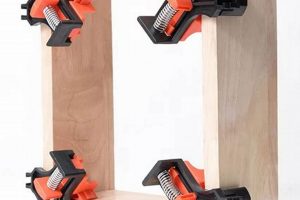
For instance, when constructing a six-sided box, each mitered edge must be cut at precisely 30 degrees to ensure that the resulting assembly forms a closed, gap-free shape. Imprecise cuts, combined with inadequate clamping, will inevitably lead to a distorted and structurally weakened box. Clamping devices, therefore, serve not only to hold the joint together but also to enforce the accurate angular relationship established during the initial cutting phase. Furthermore, the type of device used can influence the final result. Corner clamps, for example, are specifically designed to maintain a 90-degree corner angle, while band clamps are better suited for securing irregularly shaped mitered assemblies. The appropriate device choice should reflect the specific angular requirements of the project.
In summary, joint angle accuracy is inextricably linked to the effectiveness of these specialized clamping solutions. While clamping devices provide the necessary force to hold the joint during assembly, they cannot correct for initial inaccuracies in the angle of the mitered cuts. Therefore, meticulous attention to cutting accuracy, combined with the selection and proper application of appropriate clamping devices, is paramount to achieving high-quality miter joints in woodworking projects. The persistent challenge lies in maintaining both cutting precision and clamping force throughout the assembly process, requiring a combination of skill and appropriate tooling.
2. Consistent Clamping Pressure
Consistent clamping pressure represents a critical factor influencing the success of miter joints during woodworking processes. Clamping devices are engineered to apply and maintain a uniform compressive force across the joined surfaces, facilitating optimal adhesive bonding and preventing joint movement during the curing phase. Inadequate or uneven pressure can result in weak bonds, gaps, or misalignments, leading to structural compromise and aesthetic deficiencies. Clamps distribute force evenly, thus promoting uniform adhesive contact and preventing stress concentrations that could lead to joint failure. For instance, a picture frame clamped with uneven pressure might exhibit gaps at the corners or experience warping over time. Achieving consistent pressure necessitates appropriate device selection, proper adjustment, and careful monitoring during the clamping process.
The practical implications of consistent pressure extend to various woodworking projects. When assembling cabinet frames, for example, consistent clamping ensures that all joints are tightly fitted, resulting in a square and structurally sound frame. Conversely, inconsistent pressure can lead to a distorted frame, impacting door alignment and overall cabinet functionality. The choice of devicewhether band clamp, corner clamp, or specialized miter clampdirectly influences the consistency of pressure application. Band clamps, when properly tensioned, exert a uniform force around the entire joint circumference. Corner clamps, designed for 90-degree angles, provide focused pressure at the corners. Specialized miter clamps are engineered to maintain consistent pressure along the mitered surfaces. The success of each approach hinges on appropriate usage and regular monitoring. Furthermore, auxiliary measures, such as the use of cauls or shims, might be necessary to distribute pressure evenly across irregular or non-planar surfaces.
In conclusion, consistent clamping pressure forms an indispensable element of miter joint construction. Appropriate device selection, combined with meticulous attention to pressure distribution, ensures strong, accurate, and durable joints. Deviations from consistent pressure can result in structural weaknesses and aesthetic flaws, underscoring the need for careful implementation of appropriate clamping techniques. Understanding the dynamics of pressure application and the capabilities of different clamping devices enables woodworkers to achieve consistently high-quality miter joints, mitigating the risks associated with inadequate or uneven clamping force.
3. Material Surface Preparation

Material surface preparation exerts a direct influence on the efficacy of joinery involving angled intersections, subsequently impacting the performance of specialized clamping devices designed for such applications. Contaminants, surface irregularities, or residual coatings impede adhesive bonding, diminishing joint strength and integrity. The primary function of clamping devices is to maintain intimate contact between mating surfaces during adhesive curing or mechanical fastening processes; however, these devices cannot compensate for inadequately prepared surfaces. A poorly prepared surface introduces an intervening layer that weakens the adhesive bond, regardless of the applied clamping force. The interaction between clamping devices and surface preparation is, therefore, a synergistic relationship; optimal results are contingent upon both elements being properly executed. For example, if a miter joint is assembled with adhesive on a surface covered in dust or oil, the clamping device will only press the contaminated surfaces together, resulting in a compromised joint. The resulting joint may exhibit premature failure under stress or dimensional instability due to compromised adhesive adhesion.
Furthermore, the type of material and adhesive employed necessitate specific surface preparation techniques. Certain wood species, characterized by high oil content, require degreasing prior to adhesive application to ensure proper bonding. Similarly, the selection of appropriate abrasives for sanding is crucial to avoid creating a polished surface, which can also hinder adhesive adhesion. The application of a primer or surface treatment may be necessary to enhance adhesion when working with certain composite materials or when using specific types of adhesives. These surface preparation techniques are performed before applying the these specialized clamping tools. Consequently, the understanding and execution of these preparatory steps directly influence the ultimate strength and durability of the miter joint. Clamping devices provide the mechanical pressure; surface preparation ensures that the adhesive can effectively utilize that pressure to create a robust bond.
In summary, material surface preparation is an indispensable precursor to successful angled joinery and the effective utilization of specialized clamping devices. While clamping devices provide the necessary mechanical force to hold the joint together, the quality of the adhesive bond, and therefore the overall strength of the joint, is fundamentally dependent on the cleanliness, texture, and compatibility of the mating surfaces. Neglecting this essential step will compromise the integrity of the joint, regardless of the sophistication or effectiveness of the clamping system employed. Prioritizing material surface preparation is, therefore, a critical investment in the longevity and structural soundness of any woodworking project involving mitered connections.
4. Appropriate Adhesive Selection

Adhesive selection constitutes a critical determinant in the structural integrity and longevity of miter joints, particularly when utilized in conjunction with specialized clamping devices. The adhesive’s properties must complement the material characteristics and intended application to ensure a durable and aesthetically pleasing outcome. Clamping devices provide the necessary mechanical force to maintain joint alignment and promote intimate contact during the curing process; however, the adhesive ultimately bears the responsibility for bonding the joint permanently.
- Wood Species Compatibility
Different wood species exhibit varying levels of porosity, oil content, and acidity, all of which influence adhesive bonding. For instance, oily woods like teak or rosewood may require specific adhesives formulated to penetrate and bond effectively despite the presence of natural oils. Conversely, porous woods like pine may absorb excessive amounts of adhesive, necessitating the use of gap-filling formulations. The selection of an incompatible adhesive can lead to weak bonds, joint separation, and ultimately, structural failure.
- Joint End-Use Conditions
The environmental conditions to which the miter joint will be exposed dictate the required adhesive properties. Exterior applications necessitate water-resistant adhesives capable of withstanding moisture, temperature fluctuations, and ultraviolet radiation. Interior applications may allow for a wider range of adhesive options, but factors such as humidity and potential exposure to cleaning agents must still be considered. An inappropriate adhesive choice can result in joint degradation, delamination, or the growth of mold and mildew within the joint.
- Curing Time and Method
Adhesives vary significantly in their curing times, ranging from rapid-set formulations to those requiring several hours or even days to achieve full strength. The chosen curing time must align with the available clamping time and the project’s overall timeline. Additionally, some adhesives require specific curing conditions, such as elevated temperatures or exposure to ultraviolet light. Failure to adhere to the recommended curing time and method can compromise the adhesive’s strength and lead to joint failure. These processes also require appropriate devices for securing miter joints during woodworking .
- Gap-Filling Properties
Miter joints, even when precisely cut, may exhibit minor gaps or imperfections. Adhesives with gap-filling properties are formulated to bridge these gaps and maintain a strong bond despite imperfect surface contact. However, excessive reliance on gap-filling adhesives is not a substitute for accurate cutting and fitting. Choosing an adhesive with inadequate gap-filling capabilities can result in weak spots within the joint and a reduced overall strength.
In conclusion, the appropriate device for securing miter joints during woodworking is contingent upon a thorough understanding of material properties, end-use conditions, adhesive characteristics, and the relationship between these factors. Neglecting adhesive selection can undermine the effectiveness of these devices and compromise the integrity of the miter joint, regardless of the clamping pressure applied or the precision of the cuts. Careful consideration of these parameters is, therefore, essential for achieving durable and aesthetically pleasing miter joints in any woodworking project.
5. Clamping Device Selection

The selection of an appropriate clamping device directly influences the accuracy and strength of miter joints in woodworking applications. The diverse range of available clamping solutions necessitates a careful evaluation of project-specific requirements to ensure optimal joint integrity. Improper selection can lead to misaligned joints, compromised bond strength, and ultimately, project failure.
- Joint Geometry
The complexity and configuration of the miter joint significantly impact clamping device selection. Simple 45-degree miter joints may be adequately addressed with basic corner clamps, while more intricate compound miter joints require specialized clamping systems capable of accommodating complex angles and maintaining precise alignment. For example, constructing a multi-sided frame necessitates band clamps or strap clamps that can apply uniform pressure around the entire circumference, securing all joints simultaneously. Failure to account for joint geometry can result in uneven pressure distribution and joint misalignment.
- Material Properties
The type of wood being used influences clamping force requirements and the potential for surface damage. Softwoods, such as pine, are more susceptible to compression and require careful adjustment of clamping pressure to avoid indentation. Hardwoods, such as oak, necessitate greater clamping force to achieve adequate adhesive contact. The selection of clamping devices with adjustable pressure settings allows for accommodation of varying material densities and prevents damage to the workpiece. The device used for securing miter joints during woodworking process, must also complement with material we choose.
- Adhesive Type
The curing characteristics of the adhesive employed dictate the required clamping duration and pressure. Fast-setting adhesives may require only brief clamping periods, while slower-curing adhesives necessitate prolonged clamping to ensure adequate bond formation. Furthermore, certain adhesives, such as epoxy, may require higher clamping pressure to achieve optimal bond strength. The clamping device must be capable of maintaining consistent pressure throughout the adhesive’s curing cycle. Choosing a suitable adhesive influences the selection of clamping tools.
- Project Scale
The size and weight of the project influence the clamping device’s capacity and stability. Small-scale projects, such as picture frames, can be adequately secured with lightweight corner clamps or miter vises. Large-scale projects, such as cabinet doors or furniture components, necessitate more robust clamping systems with greater clamping force and wider jaw capacities. Furthermore, the project’s overall dimensions may require the use of multiple clamps to distribute pressure evenly across the joint surface. Project size affects what kind of tool we use for securing miter joints during woodworking.
These facets, encompassing joint geometry, material properties, adhesive type, and project scale, collectively determine the appropriate clamping device for achieving strong and accurate miter joints. Inadequate consideration of these factors can lead to compromised joint integrity and project failure, underscoring the importance of informed device selection in woodworking applications. The proper tool ensures structural stability during the angled intersections.
Frequently Asked Questions
This section addresses common inquiries regarding specialized tools for securing miter joints during woodworking, offering clarity on their application and benefits.
Question 1: What constitutes a miter clamp and its primary function?
A miter clamp is a specialized tool designed to hold mitered pieces of wood securely together while adhesive dries or mechanical fasteners are applied. Its primary function is to maintain precise alignment of the joint, ensuring a strong and aesthetically pleasing bond.
Question 2: Are these tools necessary for all miter joint projects?
While not strictly necessary, they significantly improve the accuracy and strength of miter joints, particularly in projects where precision is paramount. They minimize joint movement during the curing process, leading to more consistent results.
Question 3: What are the common types of available?
Common types include corner clamps, band clamps, strap clamps, and specialized miter vises. Each type is suited for specific joint configurations and project sizes.
Question 4: How does one select the appropriate one for a given project?
Selection depends on factors such as joint geometry, material properties, adhesive type, and project scale. The device should provide adequate clamping pressure without damaging the wood and maintain accurate alignment throughout the curing process.
Question 5: Can a standard clamp be substituted for a specialized version?
Standard clamps can be used in some cases, but specialized designs offer greater precision and control, minimizing the risk of misalignment or damage. Standard clamps may not provide the necessary support and pressure distribution for complex miter joints.
Question 6: How can ensure proper alignment during the clamping process?
Prior to clamping, verify accurate angle cuts. During clamping, continuously monitor joint alignment and make necessary adjustments. Employ precision squares and angle gauges to ensure accuracy.
The effective application of these specialized securing implements requires careful consideration of project-specific parameters, ensuring optimal results and durable miter joints.
The subsequent section will delve into alternative techniques for achieving secure miter joints in woodworking.
Conclusion
The preceding exploration of the use of specialized devices for securing miter joints during woodworking has underscored their critical role in achieving precise and durable angled connections. Their proper application, guided by an understanding of joint geometry, material properties, and adhesive characteristics, is essential for minimizing joint movement and maximizing bond strength. In the absence of these specialized tools, the integrity of mitered assemblies is significantly compromised.
Continued refinement of clamping technologies and techniques will undoubtedly further enhance the efficiency and accuracy of miter joint construction. The informed selection and skillful application of these devices, therefore, represent a foundational element of quality woodworking practice, ensuring the longevity and aesthetic appeal of finished pieces. Professionals and hobbyists alike should dedicate themselves to learning this key discipline.
![Top-Rated: Best Quick Clamps for Woodworking Projects [2024] | Step-by-Step Guides, Tools & Inspiration to Build Beautiful Wooden Decor on a Budget](https://woodfromhome.com/wp-content/uploads/2026/04/th-264-300x200.jpg "Top-Rated: Best Quick Clamps for Woodworking Projects [2024] Step-by-Step Guides, Tools & Inspiration to Build Beautiful Wooden Decor on a Budget")