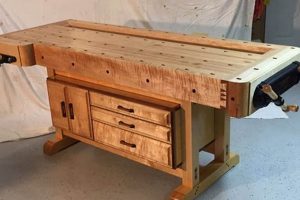
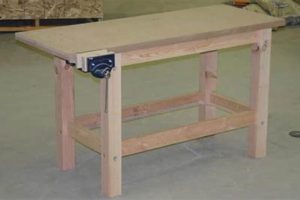
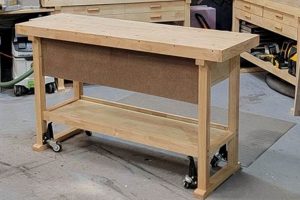
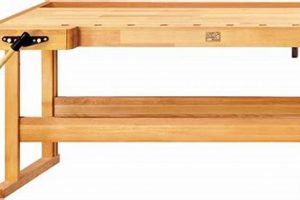
A detailed schematic serving as a blueprint for constructing a dedicated workbench is crucial for woodworking endeavors. These documents delineate dimensions, materials required, and assembly instructions for a stable and functional work surface. For instance, a specific set of instructions might detail the construction of a traditional Roubo-style bench, outlining precise measurements for the top, legs, and apron.
The availability of comprehensive instructions is paramount to achieving successful project outcomes and fostering a safe and efficient workshop. A properly constructed bench provides a stable platform for a multitude of tasks, from joinery and assembly to finishing and repair. Historically, specialized work surfaces have been essential to the craft, enabling precision and control crucial for quality craftsmanship and longevity of woodworking projects.
The following article will examine various design considerations, explore popular styles, and offer insights into material selection relevant to building a suitable workstation for a range of woodworking activities. Furthermore, the article will address methods for customizing designs to accommodate individual needs and space limitations.
Essential Guidance for Workbench Construction
The following guidance emphasizes critical considerations for successful workbench construction, focusing on stability, functionality, and long-term usability.
Tip 1: Solid Foundation: Prioritize dense, stable wood for the workbench frame. Hardwoods such as maple or beech resist warping and provide a rigid base crucial for accurate work.
Tip 2: Flat and True Surface: Ensure the workbench top is precisely flattened using hand planes or a powered surfacing tool. A level surface is essential for accurate layout and assembly.
Tip 3: Effective Clamping Solutions: Integrate a robust clamping system, including vises, dog holes, and holdfasts. Variety in clamping options accommodates diverse project requirements.
Tip 4: Optimize Workbench Height: Determine the appropriate workbench height based on typical tasks performed. Incorrect height can lead to fatigue and ergonomic issues. Elbow height is a common starting point for adjustment.
Tip 5: Consider Integrated Storage: Incorporate drawers or shelves into the workbench design to organize frequently used tools. Integrated storage enhances efficiency and workspace management.
Tip 6: Reinforce Joinery: Employ robust joinery techniques, such as mortise and tenon or dovetail joints, to ensure the workbench’s structural integrity. Well-executed joinery resists racking and maintains stability over time.
Tip 7: Apply a Durable Finish: Protect the workbench surface with a durable finish, such as a penetrating oil or varnish. A protective coating minimizes moisture absorption and prevents damage from spills.
Adherence to these principles will result in a durable and functional workbench, capable of serving as the cornerstone of a productive woodworking shop.
The following section will delve into specific styles and construction techniques, providing detailed instructions for building a workbench tailored to individual needs.
1. Dimensions

Dimensional specifications are fundamental to any viable blueprint for a woodworking bench. Proper consideration of measurements ensures the resulting structure is functional, ergonomically sound, and appropriately sized for the intended workspace. Failure to adhere to prescribed dimensions can lead to instability, reduced work efficiency, and potential physical strain for the user.
- Overall Length and Width
The overall dimensions of the bench determine its capacity for accommodating various projects. A larger surface area provides ample space for larger assemblies, while a smaller bench may be more suitable for limited spaces or specific, smaller-scale work. For example, a bench intended for furniture making will necessitate greater length and width compared to one designed for smaller tasks like carving or model building.
- Workbench Height
The height of the bench is a critical ergonomic factor. An inappropriately low bench height can cause back strain, while a height that is too high can lead to shoulder and arm fatigue. The ideal bench height typically corresponds to the user’s elbow height when standing, allowing for comfortable and efficient work.
- Thickness of the Workbench Top
The thickness of the workbench top contributes directly to its mass and rigidity. A thicker top provides greater stability, reducing vibration and movement during demanding tasks such as planing or hammering. Increased thickness also provides more material for attaching vises and other accessories, ensuring a secure and durable connection. Variations in top thickness are often determined by the intended use and the availability of materials.
- Leg Dimensions and Spacing
The dimensions and spacing of the bench legs are crucial for structural stability. Thicker legs and wider spacing provide a more solid base, preventing racking and movement under load. Properly sized and spaced legs, combined with appropriate joinery, ensure the bench remains stable even when subjected to significant forces.
Therefore, diligent attention to these dimensional aspects is paramount when selecting or creating a blueprint for a woodworking bench. Precise adherence to specifications ensures a stable, ergonomically sound, and functionally efficient workspace tailored to the individual woodworker’s needs and the demands of their craft.
2. Material Selection

Material selection constitutes a critical phase in the execution of woodworking surface blueprints. The choice of materials directly influences the structural integrity, durability, and overall performance of the finished workstation. Inadequate consideration of material properties can lead to premature failure, reduced work efficiency, and increased maintenance requirements. For example, utilizing softwood for the benchtop of a heavy-duty workbench, when the blueprint calls for hardwood, may result in excessive denting, warping, and an unstable work surface, hindering precise woodworking operations.
The relationship between material choice and specific blueprints often involves a trade-off between cost, availability, and desired performance characteristics. While hardwoods such as maple, beech, or oak offer superior strength and resistance to wear, they also command a higher price point and may present challenges in terms of sourcing. Conversely, softwoods like pine or fir may be more economical and readily available but require careful selection to ensure sufficient density and stability for the intended application. The blueprint should, therefore, guide the selection process, specifying minimum density and grain orientation requirements to ensure the chosen material meets the necessary performance criteria.
Ultimately, informed decision-making regarding material procurement, guided by comprehensive plans, is paramount to constructing a woodworking bench that provides a stable, reliable, and long-lasting foundation for a range of woodworking endeavors. The selection process must account for the expected loads, environmental conditions, and the types of tasks the bench will be used for. A thoughtfully chosen material palette will contribute significantly to the bench’s overall utility and longevity.
3. Joinery Techniques

The structural integrity of a woodworking bench, as defined by its schematic, is intrinsically linked to the joinery employed. Precise and robust joinery serves as the primary mechanism for transferring loads and resisting racking forces. Variations in joinery directly influence the bench’s long-term stability and its ability to withstand the rigors of woodworking operations. For example, a design incorporating mortise and tenon joints with reinforcing wedges at critical stress points demonstrates a higher capacity for load bearing and resistance to deformation compared to a design relying solely on screw fasteners. A workbench intended for heavy tasks, such as hand planing of large boards, necessitates stronger joinery to maintain its structural integrity over time.
Blueprints typically specify the types of joinery appropriate for different sections of the bench. Areas subjected to high stress, such as the leg-to-apron connection, often require more robust joints like dovetails or through mortise and tenons. Less critical areas may utilize simpler joints, such as butt joints reinforced with screws and glue. The selection of specific techniques should reflect a balance between structural requirements, the skill level of the builder, and the aesthetic considerations outlined in the design. A well-executed joint not only enhances structural strength but also contributes to the overall aesthetic appeal of the bench.
In summation, joinery is not merely a construction detail; it is a fundamental element dictating the performance and longevity of a woodworking bench. Careful consideration of joinery selection, guided by design specifications, is essential to building a stable, reliable, and aesthetically pleasing workstation. Choosing inappropriate joinery techniques undermines the bench’s structural integrity, leading to premature failure and compromising its overall utility. Understanding the relationship between joinery and design is paramount to successfully executing any blueprint for a woodworking bench.
4. Clamping Solutions

Effective workpiece immobilization is a paramount requirement for precision woodworking. Therefore, clamping solutions are integral considerations in the design and construction of any woodworking bench. These solutions directly impact the ability to perform accurate cuts, secure assemblies, and apply finishes effectively.
- Vise Integration
Vises represent a core element of benchtop clamping. Front vises, tail vises, and shoulder vises provide versatile clamping options for securing stock horizontally or vertically. Blueprint specifications detail the optimal placement, size, and mounting methods for vises, ensuring compatibility with the bench’s structure and the user’s typical work patterns. A poorly integrated vise negates its intended utility and can compromise the bench’s structural integrity.
- Dog Hole Systems
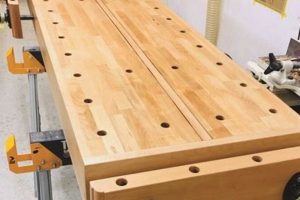
Dog holes, typically arranged in a grid pattern across the benchtop, facilitate the use of bench dogs and clamping accessories. The placement and diameter of dog holes are crucial considerations within the blueprint. Precise alignment of dog holes with vise jaws or other clamping fixtures enables secure and repeatable clamping setups. Inaccurate dog hole placement diminishes the effectiveness of the clamping system and can lead to misalignment during assembly.
- Holdfast Compatibility
Holdfasts provide a rapid and versatile clamping method, particularly useful for securing workpieces to the benchtop for tasks such as planing or carving. Bench designs should accommodate the use of holdfasts by specifying appropriate material thickness and dog hole placement. Inadequate material thickness or poorly positioned dog holes can compromise the holdfast’s gripping power and potentially damage the benchtop.
- Custom Clamping Fixtures
Depending on the specific woodworking tasks anticipated, the bench blueprint may incorporate designs for custom clamping fixtures. These fixtures can be tailored to accommodate unique shapes or assemblies. The integration of custom clamping solutions requires careful consideration of material selection, joinery techniques, and clamping force distribution to ensure secure and non-marring workpiece immobilization.
In conclusion, the efficacy of a woodworking bench is inextricably linked to the thoughtful integration of clamping solutions. The design must anticipate the diverse clamping needs of the woodworker and provide a robust and versatile system for securing workpieces. A well-designed clamping system maximizes precision, efficiency, and safety during woodworking operations.
5. Surface Finish

The application of a surface finish represents a crucial final stage in the realization of woodworking surface schematics. This process extends beyond mere aesthetic enhancement; it directly influences the durability, maintainability, and overall lifespan of the finished bench. The specifications outlined in the blueprint must, therefore, incorporate details regarding the appropriate type of finish, application methods, and any necessary pre-treatment procedures. The absence of a suitable finish, or the selection of an incompatible product, can lead to premature degradation of the bench surface, rendering it susceptible to moisture damage, abrasion, and chemical staining. For instance, a bench utilized in a school workshop, frequently exposed to spills and heavy use, would necessitate a more robust and chemically resistant finish compared to a bench intended for light hobby use in a controlled environment. Specific schematics call out requirements to prevent moisture absorption and maintain a flat, stable surface.
The choice of surface finish is not arbitrary and requires careful consideration of several factors, including the type of wood used, the intended purpose of the bench, and the desired level of protection. Penetrating oil finishes, such as linseed oil or tung oil, offer a natural appearance and enhance the tactile qualities of the wood, but they provide limited protection against moisture and abrasion. Film-forming finishes, such as varnish or polyurethane, offer a more durable and water-resistant barrier, but they may alter the wood’s natural appearance and require more skill to apply properly. Epoxy resins are occasionally used for high-wear applications or to create a completely impervious surface. Ultimately, the specifications detailed in the blueprint should clearly articulate the rationale behind the selected finish, outlining its benefits in terms of protection, aesthetics, and ease of maintenance, with careful consideration of its long-term impact on the woodworking bench.
In summary, surface finishing is an indispensable component of woodworking surface blueprints. The selection and application of the correct finish directly impact the bench’s performance, durability, and long-term value. Challenges in this area often stem from a lack of understanding regarding the properties of different finishes or improper application techniques. Therefore, adherence to the specifications outlined in the blueprint, coupled with careful attention to detail, is essential to achieving a professional and long-lasting result, ensuring the longevity and usability of the completed workbench, which ultimately serves as the foundation for precise and skilled woodworking.
6. Customization

The integration of personalized modifications into surface schematics enhances functionality and optimizes workflow for individual woodworkers. The inherent variability in body dimensions, preferred working methods, and workshop space necessitates adaptable designs. The impact of customized features extends to improved ergonomics, increased efficiency, and ultimately, superior project outcomes. As an example, a woodworker specializing in intricate marquetry may integrate specialized tool storage solutions into their blueprint, while a craftsman focused on large-scale furniture construction could reinforce the bench frame and expand the work surface area. Disregarding customization leads to suboptimal use of the structure and potential physical strain on the user.
Practical applications of tailored surface blueprints are manifold. A woodworker with limited mobility might adjust the bench height and incorporate accessible storage solutions, promoting sustained and comfortable engagement with the craft. Similarly, artisans working with specific materials, such as luthiers crafting stringed instruments, may integrate specialized clamping jigs and support structures directly into the bench design, ensuring stability and precision during delicate assembly procedures. Effective customization addresses specific needs, as demonstrated by the integration of vacuum clamping systems for veneer work or the inclusion of downdraft ventilation systems for sanding operations. The diversity in customization reflects the unique demands and preferences within the woodworking community.
In summary, customization of surface blueprints is a crucial element in optimizing the functionality and usability of a woodworking bench. Challenges arise in balancing personalized features with structural integrity and cost-effectiveness. However, the benefits of a tailored design, in terms of improved ergonomics, efficiency, and project quality, outweigh these challenges. Understanding the principles of customization, and their application to surface layouts, empowers woodworkers to create workspaces that fully support their craft, leading to enhanced productivity and creative expression.
Frequently Asked Questions Regarding Woodworking Bench Schematics
The following section addresses frequently asked questions concerning plans for building a woodworking bench. The aim is to provide clarity and address common misconceptions, offering guidance for successful construction.
Question 1: What level of woodworking experience is necessary to utilize a surface design effectively?
The requisite experience varies depending on the complexity of the design. Simpler schematics, employing basic joinery and straightforward construction methods, are suitable for beginners. However, more intricate designs, incorporating advanced joinery and specialized features, demand a higher level of skill and familiarity with woodworking tools and techniques.
Question 2: What tools are essential for constructing a woodworking bench based on a detailed plan?
Essential tools typically include a table saw, a miter saw, a jointer, a planer, a router, a drill press, hand planes, chisels, measuring tools (e.g., tape measure, square, level), and various clamps. The specific tools required will depend on the complexity of the design and the chosen joinery methods.
Question 3: Where can reliable schematics for a woodworking bench be obtained?
Reputable sources for designs include woodworking magazines, online woodworking communities, dedicated woodworking websites, and books specializing in workbench construction. It is crucial to assess the credibility of the source and to review user feedback before committing to a specific design.
Question 4: How important is it to adhere strictly to the dimensions specified in a surface plan?
Dimensional accuracy is paramount to the structural integrity and functionality of the finished bench. Deviations from the specified dimensions can compromise stability, reduce work surface area, and affect the performance of integrated features such as vises and dog holes. Minor adjustments may be permissible, but substantial deviations should be avoided.
Question 5: What type of wood is most suitable for building a durable and stable woodworking bench?
Hardwoods, such as maple, beech, oak, and ash, are generally preferred for workbench construction due to their density, strength, and resistance to wear. Softwoods, such as pine or fir, may be used for less critical components, but should not be used for the main structure of a heavy-duty bench.
Question 6: How can a surface layout be customized to accommodate specific woodworking needs and preferences?
Customization options include adjusting the bench height, adding drawers or shelves for tool storage, integrating specialized clamping systems, modifying the work surface area, and incorporating features such as a built-in router table or a downdraft sanding station. The extent of customization should be balanced against the structural integrity of the bench and the complexity of the construction process.
Accurate execution, solid material choices, and appropriate techniques are key to a successful workbench build. Prioritize a well-vetted plan and understand the structural implications of modifications.
This article will conclude with additional resources and considerations for enhancing woodworking skills and knowledge.
Conclusion
This article has explored the critical aspects of woodworkers bench plans, emphasizing the necessity of detailed schematics for constructing a functional and enduring workstation. Key considerations include dimensional accuracy, material selection, joinery techniques, clamping solutions, surface finishing, and customization options. Each element contributes to the overall performance and longevity of the bench, impacting woodworking precision and efficiency.
The construction of a workbench, guided by rigorous designs, represents a significant investment in the craft. Diligent adherence to established procedures and thoughtful adaptation to individual needs ensures a valuable resource for years to come. Further research into specialized techniques and emerging materials will continue to refine the art of workbench construction, benefiting woodworkers of all skill levels.