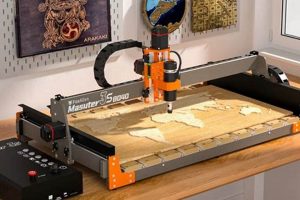
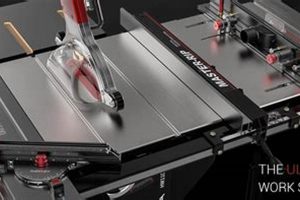
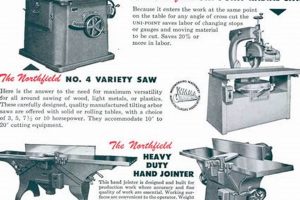
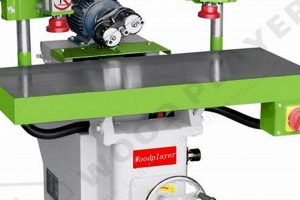
A combination woodworking tool integrates several distinct functions into a single unit. For example, one apparatus may combine a table saw, jointer, planer, and shaper, allowing operators to perform various woodworking tasks without switching between dedicated machines. This integration caters to workshops with limited space and budgets.
These versatile systems offer benefits such as reduced equipment costs, minimized floor space requirements, and streamlined workflows. Historically, these types of machines emerged as a practical solution for smaller workshops and hobbyists, evolving over time to incorporate advanced features and improved precision. Their utility extends from basic cutting and shaping to more complex joinery and surface preparation.
Subsequent sections will delve into the specific capabilities offered, comparing different models and manufacturers, outlining essential safety considerations, and providing guidance on selecting the appropriate tool for various applications. Furthermore, maintenance procedures and troubleshooting tips will be discussed to ensure longevity and optimal performance.
Tips for Optimizing Combination Woodworking Tool Usage
The following guidelines provide actionable advice for maximizing the utility and lifespan of integrated woodworking systems. Adherence to these points can improve both work quality and operational safety.
Tip 1: Thoroughly Understand Operational Modes: Before initiating any task, meticulously review the operational manuals for each function. Incorrect setup or operation can lead to inaccurate cuts, damage to the material, or potential injury.
Tip 2: Prioritize Precision Setup: Precise alignment of the various components, such as the fence, blades, and tables, is paramount. Utilize precision measuring tools and jigs to ensure accurate cuts and consistent results across all functions.
Tip 3: Optimize Dust Collection: Effective dust collection is not merely a matter of cleanliness; it is critical for operator health and machine longevity. Connect a high-efficiency dust collector and ensure all dust ports are properly connected before operation.
Tip 4: Implement Regular Maintenance: Consistent maintenance, including blade sharpening, belt tensioning, and lubrication of moving parts, is vital for optimal performance and extended lifespan. Establish a routine maintenance schedule based on usage frequency and operating environment.
Tip 5: Employ Correct Material Feed Rates: Avoid forcing materials through the machine. Employ a consistent and appropriate feed rate for each operation to prevent motor strain, blade binding, and potential kickback. Slower, controlled feeds often yield superior results.
Tip 6: Utilize Appropriate Safety Equipment: Always wear appropriate personal protective equipment, including eye protection, hearing protection, and respiratory protection. Understand the specific safety requirements for each function before operation.
Tip 7: Conduct Routine Safety Checks: Prior to each use, meticulously inspect all safety mechanisms, including blade guards, anti-kickback pawls, and emergency stop switches. Ensure all mechanisms are functioning correctly.
These recommendations emphasize proactive measures to enhance efficiency, accuracy, and safety when utilizing integrated woodworking tools. Consistent application of these principles contributes to improved project outcomes and prolonged equipment life.
The subsequent section will explore advanced techniques and project applications that leverage the full capabilities of such systems, further solidifying their value in diverse woodworking environments.
1. Functionality

The functionality of a combination woodworking tool is a primary determinant of its overall value. The core concept of these systems revolves around integrating multiple discrete woodworking operations into a single machine platform. The range and quality of these integrated functions directly impact the breadth of projects that can be completed without requiring additional, specialized equipment. A machine with limited functionality may only perform basic sawing and planing, restricting its utility. Conversely, a model incorporating features like a shaper, mortiser, or tenoner greatly expands its capabilities, allowing for more complex joinery and intricate designs.
A direct cause-and-effect relationship exists between the number and sophistication of the integrated functions and the versatility of the equipment. For example, a system lacking a jointer limits the ability to accurately flatten and square stock, directly impacting the quality of subsequent operations such as edge gluing or creating precise joinery. Therefore, carefully evaluating the specific woodworking tasks a user intends to perform is crucial to ensure the selected machine provides the necessary functionality. This extends beyond merely the presence of a particular function to its quality, precision, and ease of setup and adjustment. A poorly designed or implemented function, even if present, diminishes the overall value of the combination tool.
In summary, functionality is a critical component of combination woodworking machines. Its presence, quality, and ease of use directly influence the machine’s versatility, project scope, and overall value. The selection process should prioritize a thorough assessment of the user’s needs and a detailed evaluation of the machine’s integrated functions to ensure it adequately addresses the intended woodworking applications. Neglecting this fundamental aspect can result in a tool that is ultimately inadequate for the desired tasks, negating the benefits of combining multiple functions into a single unit.
2. Space Efficiency

The integration of multiple woodworking functions into a single machine directly addresses the challenge of limited workspace. In workshops where square footage is a constraint, the footprint of individual, dedicated machines becomes a significant impediment. Combination woodworking tools mitigate this issue by consolidating functions such as sawing, planing, jointing, and shaping into one unit. This consolidation allows for a substantial reduction in the overall area required to perform these operations, effectively increasing the usable space within the workshop. The cause-and-effect relationship is clear: smaller workshops benefit disproportionately from the space-saving design of combination machines.
The practical significance of this space efficiency extends beyond mere convenience. It enables hobbyists and small businesses to operate in environments that would otherwise be unsuitable for comprehensive woodworking. For example, a one-car garage transformed into a functional woodworking shop relies heavily on the efficient use of space afforded by a combination machine. Similarly, small vocational schools can accommodate a wider range of equipment and students within limited training facilities. Furthermore, the reduced footprint minimizes the distance required to move materials between operations, contributing to a more streamlined and efficient workflow. This is particularly important when working with large or heavy workpieces.
In conclusion, space efficiency is a critical component of combination woodworking tools, providing tangible benefits in environments where workspace is limited. This advantage extends beyond spatial considerations, impacting workflow efficiency and accessibility for smaller businesses and hobbyists. The careful consideration of machine dimensions and the range of integrated functions allows users to optimize their available space and maximize the productivity of their woodworking operations. While other factors such as cost and functionality are important, space efficiency remains a key driver in the adoption of combination woodworking tools, particularly in space-constrained environments.
3. Cost-Effectiveness

The economic advantages associated with integrated woodworking systems represent a significant factor in their adoption, particularly for individuals and smaller enterprises. The cost-effectiveness stems not only from the initial purchase price but also from a reduction in ancillary expenses associated with owning and maintaining multiple dedicated machines.
- Reduced Capital Expenditure
The primary cost benefit arises from acquiring a single unit instead of several individual machines. The cumulative cost of purchasing a table saw, jointer, planer, and shaper separately will almost invariably exceed the price of a single combination machine offering equivalent functionality. This initial capital saving is a considerable incentive, especially for start-up businesses or hobbyists with constrained budgets.
- Decreased Maintenance Costs
Maintaining multiple machines requires a greater investment in time and resources. Each dedicated machine necessitates its own set of replacement parts, specialized tools, and regular maintenance procedures. A combination machine, by consolidating these functions, reduces the overall maintenance burden, leading to lower operating costs over the lifespan of the equipment. For example, fewer motors and drive systems translate to fewer potential points of failure.
- Lower Space Requirements
While space efficiency is a distinct advantage, it also contributes to cost-effectiveness. Reduced space requirements can translate into lower rental or mortgage costs, particularly for businesses operating in urban areas where real estate prices are elevated. Furthermore, the need for less floor space can impact property taxes and utility bills, indirectly contributing to overall cost savings.
- Minimized Tooling Investment
Though a combination machine needs specialized tooling depending on the integrated functions, the number of tool purchases is minimized. An example is the fence of table saw can also use as a jointer.
The multifaceted cost benefits, encompassing initial investment, maintenance, operational space, and tooling expenses, underscore the economic appeal of integrated woodworking systems. These advantages are particularly pronounced for workshops with limited resources, making combination machines a viable and often preferable alternative to acquiring and maintaining individual pieces of equipment. The long-term economic implications should be carefully considered alongside functional requirements when evaluating different woodworking solutions.
4. Precision Control

Precision control, in the context of combination woodworking tools, refers to the ability to consistently achieve accurate and repeatable results across various operations. This characteristic is paramount for producing high-quality finished products and minimizing material waste. The inherent complexity of integrating multiple functions into a single machine platform necessitates advanced design and manufacturing techniques to ensure accuracy is not compromised.
- Accuracy of Cutting Angles
Achieving precise miter and bevel cuts is essential for many woodworking projects. A well-designed combination machine will incorporate mechanisms to ensure the accurate and repeatable setting of cutting angles. For example, calibrated scales and locking mechanisms allow for precise adjustments, minimizing the potential for error. In cabinetmaking, accurate angles are critical for seamless joinery and aesthetically pleasing results.
- Parallelism and Flatness of Surfaces
For operations such as jointing and planing, maintaining parallelism and flatness is paramount. The machine’s table and fence must be precisely aligned and remain stable during operation to ensure consistent material removal. Deviation from flatness can result in uneven surfaces and compromised joinery. For instance, improperly flattened boards may lead to gaps or misalignment in subsequent assembly stages.
- Depth of Cut Control
The ability to precisely control the depth of cut is crucial for achieving desired dimensions and creating accurate joinery. Combination machines often incorporate fine-adjustment mechanisms that allow for incremental changes in cutting depth. This precision is essential for tasks such as cutting dados or rabbets, where even slight variations can compromise the integrity of the joint. A micrometer adjustment system on a planer, for instance, allows for removing stock in extremely small increments.
- Repeatability of Settings
Consistently reproducing accurate cuts or setups is a hallmark of precision control. A well-designed machine will feature robust locking mechanisms and clear, easy-to-read scales that allow operators to quickly and accurately return to previously established settings. This is particularly important for batch production or projects requiring multiple identical components. An example would be using a digital readout on a table saw fence to reproduce precise rip cuts consistently.
These aspects of precision control are fundamental to the effective utilization of combination woodworking tools. The ability to consistently achieve accurate and repeatable results is what transforms a collection of functions into a truly versatile and valuable asset for any woodworking shop. Manufacturers who prioritize precision in the design and construction of these machines empower users to produce higher-quality work with greater efficiency.
5. Safety Mechanisms

Safety mechanisms are critically important on combination woodworking tools due to their inherent complexity and the potential for a wider range of operational hazards compared to single-purpose machines. The integration of multiple functions into a single platform necessitates careful consideration of safety features to protect the operator from potential injury. The following list outlines key safety mechanisms and their relevance to the safe operation of these versatile machines.
- Blade Guards and Shields
Blade guards and shields are physical barriers designed to prevent accidental contact with rotating blades during sawing, shaping, or jointing operations. These guards are typically adjustable to accommodate different workpiece thicknesses and should be properly positioned before commencing any cutting task. For instance, a properly installed blade guard on a table saw function integrated into a combination machine significantly reduces the risk of hand or finger injuries during rip cuts. The absence or improper use of blade guards can have severe consequences.
- Anti-Kickback Pawls and Splitters
Kickback, a dangerous phenomenon where a workpiece is violently ejected from the machine, is a significant risk associated with sawing operations. Anti-kickback pawls and splitters are designed to prevent kickback by gripping the workpiece and preventing it from being thrown back towards the operator. These mechanisms are particularly critical on combination machines incorporating a table saw function. Regular inspection and proper adjustment of anti-kickback devices are essential for maintaining operator safety. An example is when ripping hardwoods, the splitter ensures the cut remains open, preventing the wood from pinching the blade and causing a kickback event.
- Emergency Stop Switches
Emergency stop switches provide a means to quickly halt the machine’s operation in the event of an emergency. These switches are typically large, easily accessible, and brightly colored to facilitate rapid activation. The placement of emergency stop switches should be strategically considered to ensure they can be reached from various operating positions. The presence of functional emergency stop switches is a fundamental safety requirement for any woodworking machine, and especially crucial where multiple functions are consolidated. An example is when a user detects unusual vibration or an impending loss of control, the emergency stop can prevent further damage or injury.
- Interlock Systems
Interlock systems are designed to prevent the simultaneous operation of conflicting functions or to disable the machine if safety guards are not properly in place. These systems enhance safety by reducing the likelihood of unintentional or unsafe operating conditions. For instance, an interlock system might prevent the planer function from being activated if the jointer guard is not properly positioned. While not always present on older or less expensive models, interlock systems represent an important safety feature on combination woodworking tools. An example is a machine where the dust collection system must be connected and active before the shaper function can be engaged, preventing the operator from being exposed to excessive dust and debris.
The implementation and proper utilization of these safety mechanisms are paramount for mitigating the risks associated with combination woodworking tools. Operators must thoroughly understand the function and operation of each safety device and ensure that all safety mechanisms are in place and functioning correctly before commencing any woodworking task. Regular inspection and maintenance of safety systems are also essential for ensuring their continued effectiveness. Prioritizing safety is crucial when operating these versatile but potentially hazardous machines.
6. Maintenance Demands
The multifaceted nature of combination woodworking tools directly translates to elevated maintenance demands compared to single-function machines. A combination tool integrates the mechanical components and operational complexities of several individual machines, resulting in a correspondingly increased requirement for preventative maintenance and potential repairs. The neglect of regular maintenance on these machines can lead to diminished performance, decreased accuracy, increased risk of mechanical failure, and potential safety hazards.
The intricate interdependence of the integrated functions also contributes to the importance of consistent maintenance. For instance, a worn or misaligned belt on the planer function can indirectly impact the performance of the jointer, as both may share a common drive system or structural support. Similarly, inadequate lubrication of the table saw mechanism can affect the accuracy of miter cuts performed on the same machine. Routine maintenance tasks typically involve cleaning, lubrication, blade sharpening or replacement, belt tensioning, and the inspection and adjustment of critical components. The frequency of these tasks varies depending on usage intensity and environmental conditions, but adherence to a regular maintenance schedule is paramount for ensuring optimal performance and longevity. Ignoring these requirements can result in significant downtime, costly repairs, and potentially dangerous operating conditions. For example, failure to regularly sharpen planer blades can lead to excessive motor strain, resulting in premature motor failure and increased electricity consumption.
In summary, the maintenance demands of combination woodworking tools constitute a critical factor in their long-term viability and economic value. The increased complexity and interdependence of functions necessitate a proactive approach to maintenance to ensure sustained performance, accuracy, and safety. While the initial cost savings and space efficiency of combination machines may be appealing, potential owners must carefully consider the ongoing maintenance requirements to fully assess the overall cost of ownership and the long-term suitability of these versatile machines. A commitment to regular maintenance is essential for realizing the full potential and mitigating the risks associated with combination woodworking tools.
Frequently Asked Questions About Multipurpose Woodworking Machines
This section addresses common inquiries and misconceptions regarding combination woodworking tools, providing concise and informative answers based on established woodworking principles and practical considerations.
Question 1: What is the typical lifespan of a combination woodworking machine?
The lifespan is contingent upon several factors, including the quality of materials and construction, the frequency and intensity of use, and the diligence of the operator in performing regular maintenance. A well-maintained machine from a reputable manufacturer can provide decades of service. However, neglecting maintenance or subjecting the machine to excessive loads can significantly shorten its operational life.
Question 2: Are combination woodworking machines suitable for professional use?
The suitability for professional use depends on the specific demands of the application. While some high-end models are designed to withstand the rigors of professional woodworking environments, other models are better suited for hobbyist or light commercial use. Factors to consider include the machine’s power rating, duty cycle, and the precision and repeatability of its various functions.
Question 3: What are the most common points of failure in combination woodworking machines?
Common points of failure include motor burnout, bearing wear, belt slippage or breakage, and misalignment of critical components such as tables and fences. These failures are often attributable to inadequate maintenance, overloading the machine, or subjecting it to harsh operating conditions. Regular inspection and preventative maintenance are crucial for minimizing the risk of these failures.
Question 4: Can a combination woodworking machine achieve the same level of precision as dedicated machines?
While some high-quality combination machines can approach the precision of dedicated machines, achieving comparable accuracy often requires meticulous setup and calibration. The inherent complexity of integrating multiple functions into a single platform can introduce potential sources of error. Operators should be prepared to invest time in fine-tuning the machine to achieve optimal results.
Question 5: What are the key considerations when selecting a combination woodworking machine?
Key considerations include the intended applications, the available workspace, the budget, and the machine’s power rating, functionality, precision, and safety features. Thoroughly evaluating these factors before making a purchase is essential for selecting a machine that meets the specific needs and requirements of the user.
Question 6: How does the cost of maintenance compare between combination woodworking machines and dedicated machines?
In theory, the maintenance cost should be lower for a combination machine due to having fewer independent units. However, the complexity of integration may increase costs. The parts and service may be more specialized to the combination machine versus general table saws, planers, or jointers.
The information provided in this FAQ section serves as a general guide and should not be considered a substitute for professional advice. Always consult the manufacturer’s instructions and safety guidelines before operating any woodworking machinery.
The subsequent section will delve into specific case studies illustrating the practical applications and benefits of combination woodworking machines in various woodworking scenarios.
Conclusion
The preceding discussion has explored the multifaceted nature of the multipurpose woodworking machine, encompassing functionality, space efficiency, cost-effectiveness, precision control, safety mechanisms, and maintenance demands. These elements collectively define the utility and value proposition of such integrated systems within the broader landscape of woodworking equipment. A thorough understanding of these attributes is essential for making informed purchasing decisions and maximizing the performance and longevity of these versatile tools. Careful consideration of each factor, aligned with specific woodworking needs and priorities, will ultimately determine the suitability and effectiveness of a multipurpose woodworking machine for any given application.
As technology advances and manufacturing processes evolve, the capabilities and sophistication of multipurpose woodworking machines are expected to continue expanding. Woodworkers must remain cognizant of these developments, actively seeking out tools and techniques that enhance efficiency, precision, and safety. The effective integration of a well-chosen and properly maintained multipurpose woodworking machine into a workshop can significantly enhance productivity and broaden the scope of potential woodworking projects, contributing to both professional success and personal fulfillment.