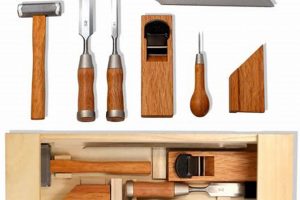
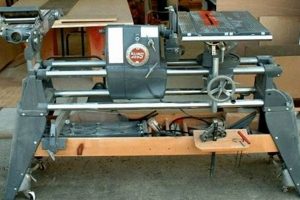
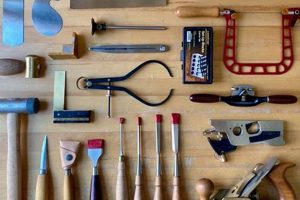
Traditional implements employed in shaping wood predate widespread electrification. These hand-operated devices, encompassing items such as hand planes, chisels, saws, and marking gauges, relied on human power for their function. Their use represents a direct, tactile approach to manipulating wood, contrasting with modern, automated processes.
The enduring significance of these implements lies in the precision and control they offer. Skilled artisans can achieve intricate details and nuanced finishes unattainable with power tools. Furthermore, utilizing these tools connects practitioners to a rich historical lineage of craftsmanship, fostering an appreciation for the inherent qualities of the material.
Subsequent sections will delve into the specific types of these implements, examining their construction, application, and ongoing relevance in both professional woodworking and hobbyist pursuits. Emphasis will be placed on techniques for their maintenance and proper usage, ensuring their continued utility for generations.
Guidance on Traditional Wood Shaping Implements
The following recommendations pertain to the acquisition, preservation, and effective application of hand-operated implements for woodworking. Adherence to these principles will enhance the longevity and performance of these tools, while promoting safety and precision in the craft.
Tip 1: Acquisition Based on Need: Prioritize the acquisition of fundamental tools before expanding the collection. A well-tuned smoothing plane, a versatile chisel set, and a reliable saw are essential starting points.
Tip 2: Prioritize Quality: Invest in tools crafted from high-carbon steel with hardened and tempered blades. Superior materials ensure enduring sharpness and structural integrity.
Tip 3: Proper Sharpening is Paramount: Maintain the cutting edges with a consistent sharpening routine. Use a honing guide to ensure consistent bevel angles, and progressively finer sharpening stones.
Tip 4: Handle Maintenance is Critical: Periodically inspect wooden handles for cracks or looseness. Secure loose handles with epoxy or replacement wedges, and refinish weathered handles with linseed oil.
Tip 5: Utilize Proper Techniques: Employ correct body positioning and tool handling techniques to maximize efficiency and minimize fatigue. Seek guidance from experienced practitioners or instructional resources.
Tip 6: Storage Practices are Important: Store these implements in a dry environment to prevent rust and corrosion. Consider using tool rolls or dedicated storage cabinets to protect blades and edges.
Tip 7: Rust Prevention Strategies: Apply a thin coat of oil or wax to exposed metal surfaces to prevent oxidation. Regularly inspect for rust and remove it promptly using fine steel wool or abrasive compounds.
Consistent application of these guidelines ensures the long-term performance and safety of manually operated woodworking implements. Mastery of these fundamentals will empower practitioners to achieve refined results.
The subsequent segment will explore the historical evolution of specific tool designs and their impact on woodworking practices.
1. Hand planes

Hand planes represent a cornerstone of traditional woodworking, predating and significantly influencing power tool design. They serve as a quintessential example of the ingenuity and functionality found within pre-electric shaping instruments. Their application remains highly valued for achieving precise and controlled material removal.
- Surface Preparation and Smoothing
Hand planes excel at creating flat, smooth surfaces on wood. Smoothing planes, block planes, and jack planes are specifically designed for tasks ranging from refining rough-sawn lumber to achieving glass-like finishes. Their adjustability allows for precise control over the depth of cut, essential for minimizing imperfections.
- Jointing and Edge Preparation
Jointing planes, characterized by their extended length, are employed to flatten and straighten the edges of boards prior to joining. Creating accurately squared edges is vital for strong and aesthetically pleasing joinery. The length of the sole serves as a reference surface, ensuring accuracy over long distances.
- Shaping and Profiling
Specialized planes, such as molding planes and rabbet planes, enable the creation of decorative profiles and precise rebates or rabbets. These planes often feature custom-shaped blades that produce intricate details. Their use demonstrates the versatility of hand tools in achieving complex designs.
- Material Composition and Design Variations
Traditional hand planes consist of a cast iron or wooden body, a steel blade (iron), and a mechanism for adjusting the blade’s depth and angle. Variations in body material, blade angle, and overall design reflect specific applications and regional preferences. Understanding these variations enhances the user’s ability to select the optimal tool for a given task.
The enduring relevance of hand planes underscores the value of traditional woodworking techniques. While power tools offer speed and efficiency, hand planes provide a level of control and finesse often unmatched by their mechanized counterparts. Their continued use ensures the preservation of craftsmanship and a tangible connection to the history of woodworking.
2. Chisels

The spectrum of chisel designs represents a significant facet of pre-electric shaping implements. Each type is meticulously crafted for specific functions within woodworking, reflecting the demands of detailed carving and structural joinery.
- Mortise Chisels: Strength and Leverage
Mortise chisels are distinguished by their thick, robust blades, designed to withstand the forceful impacts required to create mortises the recessed openings in wood that receive tenons. Examples include the heavy-duty mortise chisels used in timber framing and the lighter versions employed in furniture construction. The chisel’s ability to remove substantial material quickly and accurately is crucial for creating strong and durable joints.
- Bench Chisels: Versatile Generalists
Bench chisels, characterized by their moderate blade thickness and length, serve as all-purpose tools for a wide range of tasks. These chisels excel at paring wood, shaping details, and cleaning up joinery. The versatility of bench chisels makes them a staple in any pre-electric woodworking arsenal, suitable for both rough work and delicate refinements.
- Paring Chisels: Precision and Control
Paring chisels feature long, thin blades designed for precise trimming and smoothing of wood. Their flexibility allows for delicate control, enabling the creation of flush surfaces and accurate angles. Examples include the use of paring chisels in creating dovetail joints and refining inlay work. These chisels are essential for achieving high levels of accuracy and finesse.
- Carving Chisels: Artistic Expression
Carving chisels encompass a wide array of shapes and sizes, each tailored for specific carving techniques. From gouges for creating curved surfaces to skew chisels for intricate details, these specialized tools enable the creation of complex three-dimensional forms. The variety of carving chisels reflects the diverse artistic possibilities inherent in traditional woodworking.
The extensive selection of chisels underscores the specialized nature of pre-electric woodworking. Mastery of these tools requires a deep understanding of their individual capabilities and limitations, enabling the artisan to achieve optimal results in a diverse range of projects. Selection requires skill for perfect cut result.
3. Saws

The categorization of saws within pre-electric woodworking reflects a high degree of specialization, each design adapted to specific cutting tasks. The efficiency and precision of woodworking processes depended heavily on the appropriate selection and skillful application of these tools.
- Handsaws: Versatile Ripping and Crosscutting
Handsaws, including rip saws and crosscut saws, were fundamental for dimensioning lumber. Rip saws, with their aggressively angled teeth, efficiently cut along the grain. Crosscut saws, featuring knife-like teeth, severed wood fibers cleanly across the grain. The choice between these types determined the quality and speed of material preparation, directly impacting subsequent woodworking operations.
- Backsaws: Precision and Fine Joinery
Backsaws, characterized by a rigid steel spine reinforcing a thin blade, provided exceptional control for fine joinery. Dovetail saws, tenon saws, and carcass saws, all variations of the backsaw, were crucial for creating tight-fitting joints in furniture construction. The backsaw’s accuracy ensured the structural integrity and aesthetic appeal of the finished product.
- Frame Saws: Curved Cuts and Veneer Work
Frame saws, composed of a thin blade tensioned within a wooden frame, facilitated the creation of curved cuts and the sawing of thin veneers. Bow saws and turning saws, examples of frame saws, allowed for intricate shapes and delicate operations unattainable with rigid-bladed saws. Their flexibility expanded the range of possibilities for pre-electric woodworking projects.
- Specialty Saws: Specific Tasks and Materials
Specialty saws, such as coping saws and veneer saws, addressed specific needs within woodworking. Coping saws, with their thin, easily maneuvered blades, were essential for fitting complex shapes in molding and trim. Veneer saws, designed for delicate cuts in thin sheets of wood, prevented splintering and ensured clean edges. These specialized tools streamlined particular tasks and enhanced the overall quality of woodworking.
The diversity of saw designs highlights the comprehensive nature of pre-electric shaping implements. Selecting the appropriate saw for a given task was critical for achieving efficient and accurate results. Mastery of these tools demanded a deep understanding of wood properties, cutting techniques, and the specific requirements of each woodworking project.
4. Sharpening techniques

The efficacy of pre-electric shaping implements hinges directly upon the application of proper sharpening techniques. Dull cutting edges on hand planes, chisels, and saws render these tools ineffective, requiring excessive force and leading to inaccurate results. The relationship is causal: the sharpness of the tool directly dictates the quality of the cut and the efficiency of the work. For instance, a dull hand plane will tear wood fibers rather than cleanly shaving them, resulting in a rough surface that demands further refinement. Similarly, a dull chisel will crush rather than sever fibers, leading to imprecise joinery and potential damage to the workpiece.
Sharpening encompasses a series of processes designed to restore and maintain optimal cutting edges. These processes typically involve grinding, honing, and stropping, each contributing to the refinement of the blade. Grinding establishes the initial bevel angle, removing significant amounts of material to correct damage or reshape the edge. Honing employs progressively finer abrasive stones to refine the bevel, eliminating scratches and creating a keen edge. Stropping, the final step, aligns the microscopic teeth on the cutting edge, maximizing sharpness and extending the tool’s working life. Historically, these techniques relied on natural sharpening stones, such as Arkansas stones or water stones, each possessing unique abrasive qualities and requiring specialized knowledge to utilize effectively.
Ultimately, the understanding and skillful execution of these techniques represent a cornerstone of traditional woodworking practice. The capacity to maintain sharp cutting edges ensures efficient workflow, reduces the risk of errors, and ultimately contributes to the creation of high-quality, precisely crafted objects. Moreover, the act of sharpening connects the woodworker to the tool, fostering a deeper appreciation for its design and functionality. The challenges associated with sharpening achieving consistent bevel angles, selecting appropriate abrasives, and developing the necessary hand skills underscore the level of expertise demanded of the traditional woodworker.
5. Wood Grain

The orientation and characteristics of wood grain are integral considerations when utilizing traditional shaping implements. Wood grain refers to the longitudinal arrangement of wood fibers, dictating its strength, workability, and aesthetic qualities. A critical understanding of grain direction is essential for achieving clean cuts and preventing tear-out, particularly with hand planes and chisels. Working “against the grain,” meaning cutting in a direction that opposes the natural fiber alignment, often results in splintering and uneven surfaces. Conversely, working “with the grain” ensures smoother cuts and reduces the likelihood of damage to the wood.
Practical applications of this knowledge are evident in various woodworking techniques. When planing a surface, a skilled artisan assesses the grain direction to determine the optimal angle of attack. By carefully observing the wood and adjusting the plane accordingly, the risk of tear-out can be minimized. Similarly, when using chisels to create mortises or pare joints, understanding the grain direction allows for precise material removal and prevents splitting. The selection of appropriate sawing techniques also relies heavily on grain orientation. Ripping saws, designed to cut along the grain, and crosscut saws, intended for transverse cuts, exemplify the specialization driven by the need to effectively manage grain characteristics. For instance, creating a smooth finish using a hand plane demands an acute awareness of grain undulations; failing to recognize subtle changes can lead to an uneven result.
In summary, the relationship between wood grain and manual woodworking implements is one of interdependence. The wood’s inherent structure dictates the proper application of the tools, and the tools, in turn, must be wielded with a knowledge of these properties to achieve desired outcomes. While modern power tools offer increased speed and efficiency, the tactile nature of hand tools necessitates a deeper understanding of the material itself. Challenges arise when working with figured woods or woods with interlocked grain, demanding even greater skill and attention to detail. This understanding remains vital for preserving the craft and appreciating the inherent beauty and variability of wood.
Frequently Asked Questions
The following section addresses common inquiries concerning the use, maintenance, and acquisition of woodworking implements predating widespread electrification.
Question 1: What constitutes a suitable initial investment in manually operated woodworking implements for a novice?
A judicious starting point involves acquiring a smoothing plane, a set of bench chisels (ranging in size from 1/4 inch to 1 inch), a crosscut saw, and a rip saw. Investment should be made in quality tools.
Question 2: What sharpening tools and techniques are paramount for maintaining the cutting edges of such implements?
A consistent honing regimen employing progressively finer abrasive stones, typically water stones or oil stones, is essential. A honing guide ensures consistent bevel angles. Periodic stropping further refines the edge.
Question 3: How does one mitigate the risk of rust and corrosion on these implements?
Apply a thin coat of oil, such as camellia oil or mineral oil, to exposed metal surfaces. Store implements in a dry environment, away from humidity. Regularly inspect for rust and address immediately.
Question 4: What considerations are relevant when selecting hand planes for specific woodworking tasks?
Smoothing planes are optimal for achieving refined surfaces; jointing planes excel at flattening and straightening edges. Block planes are well-suited for end-grain work and chamfering.
Question 5: What are the key differences between rip saws and crosscut saws, and how does one determine the appropriate selection?
Rip saws are designed for cutting along the grain, featuring aggressive teeth. Crosscut saws are designed for severing wood fibers across the grain, utilizing knife-like teeth.
Question 6: What safety precautions should be observed when utilizing these implements?
Secure the workpiece firmly. Maintain sharp cutting edges to minimize the force required. Employ proper body positioning and tool handling techniques. Wear appropriate eye protection.
Mastery of pre-electric shaping implements demands a commitment to understanding their mechanics, proper maintenance, and safe usage. Investment in quality tools and consistent application of established techniques will yield refined results.
The succeeding section will explore the enduring value of these tools in the modern woodworking landscape.
Conclusion
The preceding sections have detailed the characteristics, application, and maintenance of implements predating widespread electrification in woodworking. From hand planes to saws and chisels, each instrument possesses distinct attributes tailored to specific shaping tasks. A thorough comprehension of wood grain and rigorous sharpening techniques are essential for achieving precise results with these manual devices.
The study of traditional woodworking instruments underscores their enduring value beyond mere historical interest. While modern machinery offers efficiency, an appreciation for these time-tested implements fosters a deeper connection with craftsmanship and sustainable practices. Continued exploration and application of these methods ensure the preservation of essential skills and the production of durable, aesthetically refined woodworking projects.