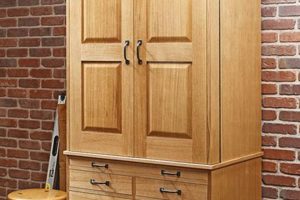
Objects crafted following principles of minimalist woodworking emphasize functionality, simplicity, and efficient use of materials. These endeavors prioritize clean lines, uncluttered design, and a focus on the inherent beauty of the wood itself. A basic example includes a small side table constructed from a few carefully selected pieces, joined using traditional techniques, and finished with a clear, protective coating.
The value lies in promoting mindful consumption and skillful craftsmanship. By limiting the complexity and quantity of resources, these activities encourage resourcefulness and environmental consciousness. Historically, such endeavors represent a response to mass-produced, often disposable, items, offering a durable and aesthetically pleasing alternative.
The ensuing discussion will explore specific examples, construction techniques, and material considerations applicable to this approach to woodworking.
Tips
The following recommendations facilitate success in constructing objects characterized by simple design and efficient resource use.
Tip 1: Prioritize Functionality. Begin by clearly defining the intended purpose. Design elements should directly contribute to the object’s utility, avoiding unnecessary ornamentation. For example, a minimalist shelf should be sized and configured to hold specific items without exceeding material requirements.
Tip 2: Select Materials Judiciously. Choose high-quality wood species that exhibit inherent beauty and structural integrity. Opt for locally sourced materials whenever feasible to reduce environmental impact. Consider reclaimed lumber as an alternative.
Tip 3: Employ Precise Joinery. Accurate and strong joinery is essential for the longevity and stability of the finished piece. Mortise and tenon, dovetail, or other traditional methods are preferable to reliance on fasteners alone.
Tip 4: Minimize Finishing. Emphasize the natural grain and color of the wood. If a finish is necessary, select a non-toxic, low-VOC product applied in thin, even coats. Consider a simple oil finish for protection and enhanced aesthetic appeal.
Tip 5: Emphasize Clean Lines. Strive for simplicity in form and detail. Avoid excessive curves or decorative elements that detract from the overall design. Focus on creating visually pleasing proportions and balanced compositions.
Tip 6: Plan Dimensions Carefully. Accurately measure and cut all components to minimize waste and ensure proper fit. Precise execution is crucial for achieving a professional-looking result.
Tip 7: Embrace Negative Space. Utilize open areas within the design to create visual interest and a sense of lightness. This approach allows the wood itself to become a prominent feature.
Adherence to these guidelines promotes the creation of functional, aesthetically pleasing, and sustainable wooden objects, embodying the core principles of efficiency and simplicity.
The subsequent section will address specific tool requirements and techniques commonly employed in this approach to woodworking.
1. Functionality

Functionality constitutes a foundational principle in minimalist woodworking, directly dictating design choices and construction methods. The intended use of the final object takes precedence, guiding the selection of materials, joinery techniques, and overall form. Every element must serve a purpose, eliminating purely decorative or superfluous components.
- Purpose-Driven Design
This facet emphasizes that each aspect of a project must directly contribute to its intended function. For instance, a minimalist desk prioritizes a stable work surface and adequate legroom over elaborate ornamentation. The desk’s dimensions are determined by the user’s needs, and any drawers or shelves are included solely for storage purposes. This design approach ensures that the object remains focused on its primary role.
- Efficient Use of Space
Minimalist woodworking often addresses space limitations. A well-designed wall-mounted shelf, for example, can provide storage without occupying valuable floor space. Similarly, a compact workbench can offer a dedicated work area in a small shop or apartment. The goal is to maximize utility within a confined environment, reflecting a conscious effort to optimize resource allocation.
- Durability and Longevity
A functional object must withstand the rigors of daily use. Minimalist woodworking prioritizes robust joinery and durable materials to ensure that the finished piece endures over time. A solid wood chair, constructed with mortise and tenon joints, offers superior strength and stability compared to a mass-produced alternative with weaker construction. This emphasis on durability reduces the need for frequent replacements, promoting sustainability.
- Ease of Use and Maintenance
The functional aspect extends to the user experience. A well-designed minimalist object should be intuitive to use and easy to maintain. A simple wooden cutting board, for example, is straightforward to clean and sanitize. Similarly, a minimalist storage cabinet might feature easily accessible shelves and doors. Simplicity in design translates to ease of use and reduced maintenance requirements.
In summary, functionality acts as the guiding principle, influencing every stage of design and construction. The end product reflects a deliberate effort to create objects that are not only aesthetically pleasing but also highly practical, durable, and easy to use, embodying the core tenets of minimalist woodworking.
2. Simplicity

Simplicity constitutes a cornerstone of minimalist woodworking, influencing both the aesthetic and functional aspects of a project. It’s not merely an absence of complexity but a deliberate choice to distill a design to its essential elements, fostering efficiency and visual clarity.
- Uncluttered Design
Minimalist woodworking rejects ornamentation in favor of clean lines and geometric forms. For instance, a basic coffee table might consist of a rectangular top supported by four straight legs, devoid of carvings or decorative inlays. This reduction to essential shapes allows the inherent beauty of the wood to take precedence.
- Efficient Material Use
Simplicity often translates to a reduced material footprint. A minimalist chair design might prioritize structural integrity with the least amount of lumber necessary, avoiding unnecessary curves or bulky components. This efficiency minimizes waste and promotes sustainable practices.
- Straightforward Construction
Simplified designs often lend themselves to simpler construction techniques. A basic bookshelf can be assembled using straightforward joinery methods such as butt joints or rabbets, minimizing the need for complex jigs or specialized tools. This accessibility makes minimalist woodworking approachable for both novice and experienced craftspeople.
- Focus on Function
Simplicity directs attention to the intended purpose of the object. A minimalist cutting board prioritizes a smooth, durable surface for food preparation, devoid of superfluous features that might detract from its utility. This emphasis on function ensures that the object remains practical and effective in its intended role.
These facets, combined, demonstrate how simplicity in minimalist woodworking fosters clarity, efficiency, and a focus on functionality. The resulting pieces embody a sense of understated elegance, showcasing the inherent beauty of the materials and the skillful execution of fundamental woodworking techniques.
3. Material Efficiency

Material efficiency represents a critical design consideration within the scope of minimalist woodworking. It compels practitioners to minimize waste, optimize resource utilization, and prioritize sustainable practices throughout the project lifecycle.
- Dimensional Planning and Nesting
Careful layout and arrangement of component parts on raw stock minimizes offcuts. Utilizing software for digital nesting optimizes material usage. For example, when crafting a set of minimalist shelves, aligning the shelf pieces to share common edges reduces overall waste. This approach is also applicable for small items like boxes or drawers, where multiple components can be cut from a single larger piece of lumber.
- Joinery Optimization
Selecting joinery methods that require minimal material removal directly impacts efficiency. Employing techniques like mortise and tenon or dovetail joints, while strong, necessitate precise cutting and removal of material. Alternative joinery methods, such as bridle joints or mitered corners reinforced with splines, may offer comparable strength with reduced waste. A minimalist coffee table, for instance, can employ bridle joints for leg attachment, minimizing wood loss compared to traditional mortise and tenon.
- Reclaimed and Repurposed Materials
Incorporating reclaimed lumber or repurposing existing materials provides an avenue for material efficiency. Utilizing salvaged wood from deconstructed buildings or furniture reduces the demand for newly harvested resources. An example includes constructing a minimalist bench using reclaimed barn wood, preserving its character while minimizing environmental impact. This strategy diverts materials from landfills and promotes a circular economy.
- Component Simplification
Reducing the number of components and simplifying their forms contributes to material efficiency. A minimalist stool design might consist of only three or four pieces, minimizing the complexity and material requirements. For instance, replacing curved or sculpted elements with straight lines and flat surfaces reduces waste associated with shaping and carving processes. A minimalist frame can be made to reduce wood size and wood waste.
These elements of material efficiency, when integrated into the design and execution of minimalist woodworking projects, result in reduced resource consumption, minimized waste generation, and a more sustainable approach to craftsmanship. These efforts reduce costs and contribute to environmentally responsible practice.
4. Clean Lines
The concept of clean lines is intrinsically linked to minimalist woodworking projects. The emphasis on simplicity and functionality necessitates the reduction of visual clutter, making clean lines a defining characteristic. The presence of clean lines directly contributes to the aesthetic appeal and understated elegance that defines minimalist designs. Conversely, the absence of clean lines detracts from the intended simplicity, introducing visual noise and undermining the core principles of the craft.
The application of clean lines is evident in various examples. A minimalist coffee table, for instance, may feature a rectangular top and straight, unadorned legs. The absence of curves or decorative elements allows the eye to flow uninterrupted, emphasizing the natural grain and texture of the wood. Similarly, a minimalist shelving unit may consist of simple, rectangular shelves supported by clean, vertical supports. The precise execution of these lines is crucial, as even minor imperfections can disrupt the visual harmony of the piece. The practical application of this understanding allows for a greater focus on the inherent beauty of the wood and quality of the construction.
In conclusion, the presence of clean lines is not merely an aesthetic choice but a fundamental element of minimalist woodworking projects. Their execution requires precision and a deep understanding of design principles. While achieving perfect lines can present challenges, particularly for novice woodworkers, the resulting visual clarity and elegance are essential for realizing the core principles of minimalist design. This element also links to the broader theme of sustainability by removing the need for extra, decorative aspects that would have used more materials, and thus supports a more sustainable approach.
5. Precise Joinery

Precise joinery constitutes a cornerstone of structural integrity and aesthetic refinement in minimalist woodworking. The inherent simplicity of these projects places a heightened emphasis on the quality and accuracy of the connections between individual components, directly influencing the longevity and visual appeal of the finished piece.
- Structural Stability
Accurate joinery is essential for ensuring the stability and durability of minimalist furniture. Strong, well-fitted joints distribute stress evenly, preventing premature failure or loosening of connections over time. Examples include dovetail joints in drawers, mortise and tenon joints in table legs, and rabbet joints in cabinet construction. A poorly executed joint compromises the structural integrity of the entire piece, regardless of the quality of the materials used.
- Aesthetic Refinement
In minimalist woodworking, where visual clutter is minimized, the quality of the joinery becomes a prominent design element. Clean, tight-fitting joints demonstrate attention to detail and elevate the overall aesthetic appeal of the piece. Gaps, misalignments, or poorly executed joinery detract from the intended simplicity and reveal a lack of craftsmanship. For example, a flawlessly executed miter joint on a picture frame creates a seamless transition between the adjacent pieces, enhancing its visual appeal.
- Material Efficiency
Precise joinery contributes to material efficiency by minimizing waste and reducing the need for corrective measures. Accurate cuts and tight-fitting joints reduce gaps that require filling or shimming, thereby conserving material. Careful planning and execution of joinery minimize the risk of errors, which can lead to material waste and rework. By using a mortise and tenon jig, one reduces errors which leads to less wood needed.
- Long-Term Durability
The longevity of minimalist furniture is directly proportional to the quality of its joinery. Well-executed joints resist the stresses of daily use and environmental changes, extending the lifespan of the piece. Strong, durable joints prevent racking, warping, and other forms of structural degradation that can render furniture unusable over time. For example, a bed frame constructed with robust mortise and tenon joints can withstand years of use without weakening or failing. Over all precise joinery is a core component to structural design.
In conclusion, the mastery of precise joinery is indispensable for the successful execution of minimalist woodworking projects. It directly influences the structural integrity, aesthetic appeal, material efficiency, and long-term durability of the finished piece, underscoring its importance in achieving the desired simplicity, functionality, and longevity that define this approach to woodworking.
6. Durable Design

Durable design forms a crucial objective within minimalist woodworking endeavors. The emphasis on simplicity and efficient use of materials necessitates that the finished product withstand the rigors of intended use over an extended period. The following details outline essential aspects of achieving durability within this context.
- Material Selection for Longevity
The choice of materials directly impacts the lifespan of a wooden object. Hardwoods such as oak, maple, and walnut offer superior resistance to wear and tear compared to softwoods like pine or fir. Selecting appropriate wood species and ensuring proper drying techniques are essential for minimizing warping, cracking, and other forms of material degradation. An example would be constructing a minimalist dining table from kiln-dried maple to ensure stability and resistance to scratches from daily use.
- Structural Integrity through Joinery
The methods used to join individual components play a pivotal role in the overall strength and stability of the structure. Robust joinery techniques, such as mortise and tenon, dovetail, or half-lap joints, provide superior resistance to stress and strain compared to weaker connections like butt joints or simple screws. Applying these techniques in constructing a minimalist chair guarantees resistance to loosening and breakage over time.
- Protective Finishes and Maintenance
The application of protective finishes safeguards the wood surface against moisture, scratches, and UV damage, extending its lifespan. Selecting appropriate finishes, such as varnish, lacquer, or oil-based coatings, and applying them correctly are crucial. Regular maintenance, including cleaning and occasional refinishing, further enhances the durability of the piece. For instance, applying a durable varnish to a minimalist desk protects the wood from spills and scratches, prolonging its lifespan and maintaining its aesthetic appeal.
- Design Considerations for Load and Stress
Designing a wooden object to withstand anticipated loads and stresses is essential for long-term durability. Understanding the principles of structural mechanics and applying them to the design process ensures that the piece can withstand the forces exerted upon it during normal use. For example, reinforcing the legs of a minimalist bookshelf with additional supports or using thicker material can prevent sagging or collapse under heavy loads.
These elements, meticulously integrated into the design and construction process, contribute to the creation of durable minimalist wooden objects. A commitment to quality materials, robust joinery, protective finishes, and sound structural design principles ensures that the finished product will endure for generations, embodying the ethos of sustainable craftsmanship.
7. Aesthetic Harmony

Aesthetic harmony serves as a critical, albeit often tacit, objective within minimalist woodworking projects. It is the overarching principle governing the successful integration of functionality, simplicity, and material efficiency. Projects failing to achieve aesthetic harmony, despite adhering to other tenets of minimalist woodworking, may appear disjointed, unbalanced, or visually unappealing, thereby undermining their intended purpose. The pursuit of aesthetic harmony demands a holistic approach, encompassing considerations of proportion, balance, material selection, and finish.
The importance of aesthetic harmony is demonstrably evident through examination of various minimalist woodworking designs. Consider, for example, a simple wooden stool. Functionally, it must provide a stable and comfortable seating surface. Material efficiency dictates the minimization of lumber usage. Clean lines contribute to visual simplicity. However, if the proportions of the legs are disproportionate to the seat, or if the chosen wood species clashes with the surrounding environment, the stool will lack aesthetic harmony. Similarly, a desk constructed from meticulously joined wood but marred by an inconsistent or poorly applied finish will appear visually jarring. Real-world examples of successful minimalist designs invariably exhibit a careful balance between functional requirements and visual appeal, attesting to the significance of aesthetic harmony.
Achieving aesthetic harmony in minimalist woodworking presents unique challenges. The inherent simplicity of these projects leaves little room for error or visual distraction. Discrepancies in proportion, material selection, or finish become readily apparent. Overcoming these challenges requires a keen eye for detail, a thorough understanding of design principles, and a commitment to meticulous craftsmanship. The achievement of aesthetic harmony elevates a minimalist woodworking project from a mere functional object to a work of art, embodying the essence of understated elegance. This also allows for the pieces produced to last for the ages.
Frequently Asked Questions
This section addresses common inquiries regarding the creation and principles behind projects prioritizing simplicity, functionality, and efficient resource utilization.
Question 1: What defines a project falling under the umbrella of efficient and simple woodworking?
Answer: Such a project emphasizes essential functionality, clean lines, and minimal ornamentation, prioritizing efficient use of materials and straightforward construction techniques.
Question 2: Is specialized equipment necessary to embark on endeavors focused on efficiency and simplicity?
Answer: While advanced machinery can enhance precision and speed, most projects can be completed with fundamental woodworking tools, including saws, chisels, planes, and measuring instruments.
Question 3: How does one determine the appropriate wood species for a project emphasizing simplicity and efficiency?
Answer: Material selection should consider the intended use, desired aesthetic, and structural requirements. Hardwoods offer durability, while softwoods are often more cost-effective. Locally sourced or reclaimed lumber aligns with sustainable practices.
Question 4: What joinery methods are most suitable for achieving both strength and simplicity?
Answer: Mortise and tenon, dovetail, and rabbet joints offer robust connections while remaining relatively straightforward to execute. The selection depends on the specific application and desired aesthetic.
Question 5: How does one minimize material waste when undertaking a project focused on resource efficiency?
Answer: Careful planning, precise measurements, and efficient nesting of components on the raw stock are crucial. Reclaimed lumber and responsible sourcing further contribute to waste reduction.
Question 6: Are there specific finishing techniques recommended to preserve the minimalist aesthetic?
Answer: Emphasis should be placed on finishes that enhance the natural grain and color of the wood without adding excessive sheen or artificial coloring. Oil-based finishes, clear varnishes, and simple wax coatings are suitable choices.
The principles outlined in these answers promote mindful creation, reduced environmental impact, and lasting functionality within the realm of woodworking.
The concluding section will provide resources and further reading for those seeking to deepen their understanding of projects emphasizing efficiency and simplicity.
Conclusion
The preceding discussion has illuminated key facets of projects from the minimalist woodworker, encompassing design principles, construction techniques, and material considerations. Emphasis has been placed on functionality, simplicity, material efficiency, clean lines, precise joinery, durable design, and aesthetic harmony as defining characteristics. The practical application of these elements contributes to the creation of enduring, aesthetically pleasing, and environmentally conscious objects.
Continued exploration and refinement of these principles are encouraged to further advance the craft and promote sustainable practices within the woodworking community. The legacy of this approach lies in its capacity to create meaningful objects while minimizing environmental impact and celebrating the inherent beauty of natural materials. The pursuit is valuable and contributes to the development of woodworking.