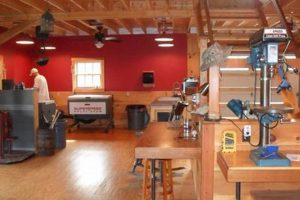
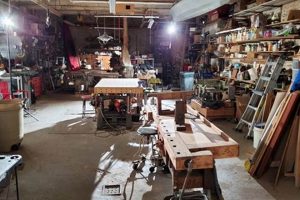
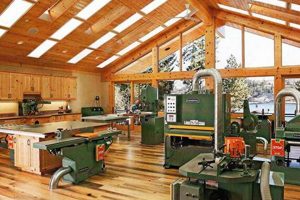
The arrangement of tools, equipment, and workspaces within a standard-sized, one-vehicle garage to facilitate woodworking activities. This arrangement prioritizes efficient space utilization, safety, and workflow, allowing for the execution of projects ranging from small crafts to larger furniture construction. A viable setup considers factors such as tool storage, dust collection, power outlet placement, and designated areas for assembly, finishing, and material storage.
Effective space management is crucial, transforming otherwise underutilized areas into functional workshops. This approach reduces reliance on external workshop spaces, offering convenience and cost savings. Historically, woodworkers have adapted available spaces to suit their needs, and the modern adaptation within a limited-area garage continues this tradition, reflecting resourcefulness and ingenuity. The rise of do-it-yourself culture and limited living spaces emphasizes the need for thoughtfully designed areas.
The subsequent sections will delve into specific strategies for maximizing space, selecting appropriate tools and equipment, ensuring safety, and establishing a workflow within confined environments. Efficient storage solutions, dust management techniques, and considerations for electrical needs will be explored. These practical aspects are paramount for creating a productive and safe area.
Layout Tips for a Functional Woodworking Area
Optimizing the configuration of tools and workspaces within a limited one-car garage footprint is essential for efficiency and safety. Thoughtful planning maximizes available space and enhances the woodworking experience. The following guidelines provide a framework for creating a productive environment.
Tip 1: Prioritize Vertical Storage: Utilize wall-mounted shelving, pegboards, and cabinets to store tools and materials. This approach minimizes floor clutter and keeps essential items within easy reach.
Tip 2: Implement a Mobile Workstation: A workbench on wheels provides flexibility, allowing it to be positioned where needed and stored away when not in use. Select a robust design with locking casters for stability during use.
Tip 3: Optimize Lighting: Adequate illumination is paramount for precision work and safety. Supplement overhead lighting with task-specific lamps that can be positioned directly over the work surface.
Tip 4: Establish a Dust Collection System: Woodworking generates significant dust, which poses a health hazard and reduces visibility. Invest in a dust collector and connect it to power tools. Consider an air filtration system to remove airborne particles.
Tip 5: Designate Zones: Divide the space into distinct areas for cutting, assembly, finishing, and storage. This segregation improves workflow and minimizes cross-contamination.
Tip 6: Maximize Natural Light: If possible, position the primary work area near a window to take advantage of natural light. This reduces eye strain and improves color accuracy.
Tip 7: Careful Tool Selection: Due to the space constraints, consider multi-function tools or compact versions of essential equipment.
Tip 8: Plan for Material Handling: Raw lumber and project components require space. Invest in efficient lumber racks and devise a system for managing work in progress.
By implementing these strategies, one can create a functional and safe area within a restricted space. Proper organization and thoughtful planning are key to maximizing productivity and ensuring a positive woodworking experience.
The subsequent sections will discuss specific tool selection based on the garage size limitation, safety protocols, and a detailed workflow strategy.
1. Space Optimization

Space optimization is fundamentally linked to the successful execution of a woodworking endeavor within a single-car garage. The limited square footage necessitates a strategic approach to tool placement, material storage, and workspace arrangement. Inadequate optimization directly impedes workflow, compromises safety, and restricts the scope of possible projects. A cluttered area can increase the risk of accidents and reduces the ability to maneuver materials effectively. For example, neglecting vertical storage can quickly consume floor space, hindering movement and reducing usable workspace.
Effective space optimization involves several key strategies. First, adopting a modular system for tool storage and arrangement allows for adaptability as needs evolve. Second, maximizing vertical space with shelves, cabinets, and hanging racks frees up valuable floor area. Third, integrating multi-functional tools can reduce the overall footprint of equipment required. A real-world application involves the use of a fold-away workbench, which provides a substantial work surface when needed but can be collapsed to reclaim space when not in use. Another illustration is the implementation of a lumber rack mounted to the ceiling, keeping bulky materials out of the way.
In conclusion, the principles of space optimization are not merely aesthetic considerations within a limited garage environment, but core drivers of productivity and safety. Challenges in optimizing space often involve balancing storage needs with the requirements of maneuverability and workflow. By prioritizing strategies that maximize vertical space, and embracing modular systems, woodworkers can transform what would otherwise be a constricting area into a functional and rewarding workspace. Overlooking space optimization undermines the viability of woodworking within such a limited enclosure.
2. Tool Accessibility

Tool accessibility within a single-car garage woodworking shop layout directly impacts workflow efficiency and safety. A thoughtfully designed layout prioritizes easy access to frequently used tools while ensuring less frequently needed equipment remains readily available. Inaccessible tools lead to wasted time, increased risk of accidents as individuals reach for equipment in precarious positions, and ultimately, a reduction in project completion rates. The physical limitations of a single-car garage necessitate careful consideration of tool storage methods and spatial arrangement to mitigate these challenges. For instance, a common mistake is storing often-used hand tools in drawers beneath infrequently used power tools, requiring unnecessary movement and disruption of the workspace.
Effective tool accessibility strategies involve several key components. First, a well-organized storage system, such as pegboards for hand tools and dedicated shelves for power tools, is essential. Second, the strategic placement of tools based on frequency of use is crucial. Tools required for nearly every project, such as measuring tapes and squares, should be located within immediate reach of the primary work surface. Conversely, specialized tools used less often can be stored in more remote locations. Third, clear labeling and visual cues facilitate quick identification and retrieval of necessary items. An example would be a dedicated charging station for cordless tools, ensuring they are always readily available and charged for immediate use. Another example is organizing blades and bits for power tools in labeled containers near their corresponding machines.
In summary, tool accessibility is not merely a matter of convenience, but a fundamental aspect of a functional and safe woodworking area. The confines of a single-car garage demand a deliberate approach to tool storage and layout, emphasizing both organization and strategic placement. Overlooking accessibility compromises productivity and increases the risk of workplace incidents. By prioritizing a well-designed system that considers tool frequency and promotes ease of retrieval, woodworkers can maximize the efficiency and safety of their garage workshop.
3. Dust Management

Effective dust management is an indispensable component of a functional and safe single-car garage woodworking shop layout. The act of woodworking generates substantial amounts of fine particulate matter, posing significant health risks, impairing visibility, and contributing to equipment malfunctions. The confined space of a single-car garage exacerbates these issues, concentrating airborne dust and necessitating a dedicated strategy for its control. Failure to address dust effectively can lead to respiratory problems, skin irritation, and eye discomfort for the woodworker, while also increasing the risk of fire due to dust accumulation. A poorly managed environment directly undermines the long-term viability and safety of the workshop. For example, the accumulation of fine dust on power tool motors can impede cooling, leading to premature failure, and the buildup on surfaces creates a slip hazard.
Implementing a robust dust management system within the layout involves multiple considerations. First, a dedicated dust collector connected to power tools is paramount. This system captures dust at the source, preventing it from becoming airborne. Second, an ambient air filtration system supplements the dust collector by removing fine particles that escape initial capture. Third, strategic placement of equipment considers airflow, positioning tools to minimize dust dispersion. An example includes locating the dust collector centrally to minimize the length of hoses to each tool. Another consideration is the use of enclosed or partially enclosed sanding stations to contain dust generated during manual sanding operations. Furthermore, regular cleaning with a HEPA-filtered vacuum helps to remove settled dust from surfaces, preventing its re-suspension into the air.
In conclusion, integrating comprehensive dust management into the planning of a single-car garage woodworking shop is not merely an optional consideration, but a necessity for ensuring a healthy, safe, and productive environment. Neglecting dust management compromises air quality and increases the risks of both health problems and equipment damage. By prioritizing dust collection at the source, implementing air filtration, and adopting regular cleaning practices, woodworkers can mitigate the risks associated with airborne particulate matter and establish a sustainable and enjoyable workspace within the limitations of a single-car garage. Challenges in effective dust management often arise from the limited space and budget constraints, but the long-term benefits of prioritizing this aspect far outweigh the initial investment.
4. Workflow Efficiency

Workflow efficiency is a critical determinant of productivity within the constraints of a single-car garage woodworking shop. The limited space demands meticulous planning to optimize movement, minimize material handling, and streamline the project execution process. Inefficient workflow leads to wasted time, increased physical strain, and a reduction in the overall enjoyment and feasibility of woodworking activities within the confined environment.
- Spatial Arrangement of Workstations
The organization of workstations for tasks such as cutting, assembly, and finishing directly impacts workflow. A logical arrangement, following the natural progression of a woodworking project, minimizes unnecessary steps and reduces the risk of cross-contamination. For example, locating the lumber storage near the cutting station and positioning the assembly area adjacent to the finishing station reduces material handling. Conversely, a disorganized layout forces frequent backtracking and increases the potential for damage to workpieces. Spatial planning affects the sequence of operation.
- Tool Placement and Accessibility
The strategic placement of tools, both hand tools and power tools, significantly influences workflow efficiency. Frequently used tools must be readily accessible, minimizing search time and enabling quick transitions between tasks. Wall-mounted storage solutions, such as pegboards and shadow boards, allow for easy identification and retrieval of essential tools. Power tools, when not in use, should be stored in a manner that does not obstruct movement or impede access to other equipment. Inefficient storage of important devices will limit the amount of projects completed on time.
- Material Flow and Handling
Efficient material flow is essential for maintaining a smooth workflow. Raw lumber, work-in-progress components, and finished projects require designated areas within the garage. Optimizing the pathway for material movement minimizes congestion and reduces the risk of damage to workpieces. Roller stands and mobile carts can facilitate the transportation of large or heavy items. Vertical lumber racks, when properly designed, maximize storage space while ensuring easy access to materials. These elements will improve the amount of work completed.
- Waste Management and Cleanup
Effective waste management is integral to maintaining a productive and safe woodworking environment. A designated area for sawdust collection, scrap lumber, and finishing materials prevents the accumulation of clutter and reduces the risk of accidents. A central dust collection system connected to power tools minimizes airborne particulate matter and facilitates efficient cleanup. Regular cleaning of the workspace prevents the buildup of dust and debris, maintaining a safe and organized environment. A tidy space will improve the process overall.
These interconnected facets of workflow efficiency are crucial for maximizing productivity within a single-car garage woodworking shop. A carefully planned layout that prioritizes spatial arrangement, tool accessibility, material flow, and waste management enables woodworkers to optimize their time and resources, transforming a potentially restrictive space into a functional and rewarding environment. Addressing these elements holistically is paramount for realizing the full potential of a limited workspace.
5. Safety Protocols
A direct correlation exists between safety protocols and single car garage woodworking shop layout. The confined space necessitates strict adherence to safety measures to mitigate potential hazards associated with woodworking activities. Suboptimal layouts often contribute to accidents and injuries. For instance, inadequate space around machinery increases the risk of accidental contact, while poor lighting compromises visibility and elevates the potential for miscuts or slips. Furthermore, neglecting proper ventilation can lead to the accumulation of harmful dust particles and volatile organic compounds from finishes. Strict implementation of safety protocols mitigates these risks and promotes a secure working environment. Proper space will improve productivity.
Effective integration of safety protocols into the layout involves several key elements. First, designated clear zones around machinery, providing ample room for operation and material handling, are crucial. Second, appropriate lighting levels, ensuring adequate illumination of work surfaces and potential hazards, are essential. Third, a functional dust collection system, coupled with adequate ventilation, minimizes exposure to airborne contaminants. The implementation of a first-aid kit and readily accessible fire extinguisher, along with the establishment of emergency procedures, constitutes another vital aspect. The layout should also account for safe storage of flammable materials, such as finishes and solvents, in approved containers and designated areas. Proper safety equipment use with proper guidance is key for a productive and safe environment.
In summary, safety protocols are not merely ancillary considerations within a single-car garage woodworking shop layout, but fundamental components that directly influence the well-being of the woodworker and the overall viability of the workspace. Overlooking safety in the layout design compromises the operational integrity of the shop. By prioritizing safety through thoughtful planning, adherence to best practices, and consistent enforcement of safety rules, woodworkers can create a secure and productive environment, transforming a potentially hazardous space into a fulfilling creative outlet. Effective execution of safety protocols creates an effective and positive working environment.
Frequently Asked Questions
This section addresses common inquiries regarding the design and implementation of a woodworking area within a limited single-car garage space. The focus is on providing clear, informative answers to assist in creating a functional and safe workspace.
Question 1: What is the minimum garage size suitable for woodworking?
While dimensions vary, a standard single-car garage typically measures approximately 10 feet wide by 20 feet deep. This area presents significant spatial challenges but can be made viable with careful planning and efficient space utilization techniques.
Question 2: How can vertical space be effectively utilized in a small workshop?
Vertical space utilization is crucial. Wall-mounted shelving, pegboards, and overhead storage racks provide valuable storage without consuming floor space. These solutions keep tools and materials organized and readily accessible.
Question 3: What are the essential power tools for a small woodworking space?
A table saw, miter saw, and planer are generally considered essential. However, space constraints may necessitate selecting compact or multi-functional versions of these tools.
Question 4: How should dust collection be managed in a confined woodworking environment?
A dedicated dust collector connected to power tools is highly recommended. An ambient air filtration system further improves air quality by removing fine particulate matter. Regular cleaning is essential to prevent dust accumulation.
Question 5: What safety precautions should be prioritized in a small garage workshop?
Eye and ear protection, dust masks, and appropriate clothing are essential. Clear, designated workspaces around machinery minimize the risk of accidents. A well-stocked first-aid kit and a fire extinguisher should be readily available.
Question 6: How can workflow be optimized in a limited woodworking area?
A logical arrangement of workstations, considering the natural progression of woodworking projects, minimizes unnecessary movement. Efficient material storage and a clear pathway for material flow contribute to a smoother workflow.
In summary, establishing a functional and safe area within a single-car garage requires meticulous planning, efficient space utilization, and adherence to safety protocols. Careful consideration of these aspects enables woodworkers to overcome spatial limitations and create a productive environment.
The following section will explore specific tool selection recommendations tailored for a compact workshop.
Single Car Garage Woodworking Shop Layout
The preceding exploration has detailed essential considerations for establishing a functional and safe woodworking environment within the spatial constraints of a single-car garage. Key aspects addressed include space optimization, tool accessibility, dust management, workflow efficiency, and safety protocols. Effective implementation of strategies within each of these domains is paramount for maximizing productivity and mitigating inherent risks associated with woodworking in a limited area.
The viability of a productive woodworking shop hinges on meticulous planning and adherence to safety principles. This endeavor necessitates ongoing evaluation of established layouts and the adaptation of strategies to accommodate evolving project requirements. Further research into efficient tools, dust collection advancements, and space-saving techniques is encouraged to optimize the functionality and sustainability of the single car garage woodworking shop layout.