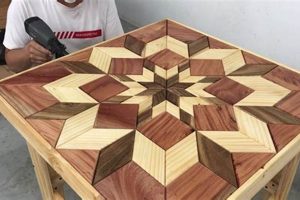
Projects involving wood that are limited in size, scope, and material requirements represent an accessible entry point for individuals interested in craftsmanship. These projects typically focus on items such as small boxes, decorative objects, or functional household accessories. A basic example is a handcrafted wooden coaster set or a miniature birdhouse.
The significance of these endeavors lies in their ability to provide tangible results relatively quickly, fostering a sense of accomplishment and encouraging the development of fundamental woodworking skills. Historically, simpler projects like these have served as apprenticeships for aspiring carpenters and cabinetmakers, allowing them to learn techniques without significant material investment or risk.
The subsequent sections will delve into specific project types, tool recommendations, and wood selection considerations, all tailored to facilitate the successful execution of compact, manageable wooden creations.
Tips for Compact Wood Projects
The following guidelines are intended to maximize efficiency and improve the quality of outcome when undertaking small-scale wooden crafts.
Tip 1: Precise Measurement is Paramount: Accurate measurements are crucial in smaller projects where even minor errors become readily apparent. Employ precision measuring tools such as digital calipers or a finely graduated ruler to ensure accuracy.
Tip 2: Employ Appropriately Sized Tools: Using large power tools on diminutive workpieces can be hazardous and produce subpar results. Select smaller hand tools or mini power tools designed for detail work.
Tip 3: Prioritize Joint Strength: While the overall size is limited, structurally sound joints are still essential. Consider using techniques like dovetails or mortise-and-tenon joints, even in a scaled-down format, for enhanced durability.
Tip 4: Wood Selection Matters: Choose hardwoods or fine-grained softwoods that exhibit minimal warping or splitting tendencies. Experiment with exotic woods for enhanced aesthetic appeal.
Tip 5: Sanding and Finishing are Key: The final appearance of the project heavily relies on meticulous sanding and finishing. Use progressively finer grits of sandpaper and apply multiple thin coats of finish for a smooth, professional result.
Tip 6: Consider the Project’s Function: The intended purpose dictates the design and construction methods. A purely decorative piece requires less structural integrity than one designed for practical use.
Tip 7: Practice on Scrap Wood: Before commencing the final piece, practice joinery and finishing techniques on scrap wood of similar species and thickness. This reduces the likelihood of errors on the primary project.
Adhering to these tips enhances precision, longevity, and visual appeal in the construction of compact wooden items. Such an approach directly translates to increased satisfaction and refined skill proficiency.
The upcoming section will explore sources for designs and inspiration to further stimulate creativity and project variety.
1. Material Selection

Material selection is a critical determinant of both the aesthetic quality and the structural integrity of compact wooden projects. The limited scale magnifies the impact of material properties, necessitating a deliberate and informed approach to selection.
- Wood Species: Hardwood vs. Softwood
The choice between hardwood and softwood directly influences the project’s durability and aesthetic character. Hardwoods, such as maple or cherry, offer greater density and resistance to wear, making them suitable for projects requiring longevity. Conversely, softwoods like pine or cedar are often easier to work with and can provide a rustic aesthetic, although they are less resistant to damage. The intended application and desired aesthetic dictate the optimal choice. For instance, a small decorative box may benefit from the rich grain patterns of hardwood, while a simple birdhouse may be adequately constructed from softwood.
- Grain Pattern and Figure
The grain pattern and figure of wood significantly impact the visual appeal of the finished product. Straight-grained wood is generally easier to work with and provides a clean, uniform appearance. Conversely, figured woods, such as burl or curly maple, offer unique and visually striking patterns. In compact projects, these patterns become a focal point, demanding careful consideration of orientation and placement to maximize their impact. For example, the swirling grain of a burl wood might be showcased on the lid of a small box, creating a visually arresting feature.
- Dimensional Stability
Dimensional stability refers to a wood’s resistance to changes in size and shape due to variations in moisture content. In small-scale projects, even minor dimensional changes can lead to warping, cracking, or joint failure. Species with low shrinkage rates, such as mahogany or walnut, are preferred for projects where dimensional stability is paramount. Proper acclimatization of the wood to the project’s environment is also essential to minimize movement. This is especially crucial in projects designed for environments with fluctuating humidity levels.
- Workability and Machinability
The ease with which a wood can be worked and machined is a significant factor, particularly for those with limited experience or access to advanced tools. Softer woods are generally easier to cut, shape, and sand, making them suitable for intricate designs. However, they may be more prone to tear-out or splintering. Harder woods require sharper tools and more effort but offer greater precision and a cleaner finish. The choice depends on the project’s complexity and the available tooling.
These considerations highlight the intertwined relationship between material selection and the successful execution of projects. Careful assessment of wood species, grain pattern, dimensional stability, and workability directly contributes to the final outcome, reinforcing the need for informed decision-making in selecting the appropriate materials. The specific demands of the project dictate the relative importance of each facet.
2. Joint Construction

Joint construction, the process of securely uniting two or more pieces of wood, constitutes a critical element in projects. The restricted dimensions necessitate precise and robust joinery techniques to compensate for the reduced surface area available for adhesive bonding or mechanical fastening. The integrity of a project is directly contingent upon the strength and stability of its joints.
Incorrect joint selection or execution can precipitate catastrophic failures, particularly in items subjected to stress or load. For example, a poorly constructed dovetail joint in a small drawer can result in premature separation, rendering the drawer unusable. Conversely, employing a robust mortise-and-tenon joint in a miniature table significantly enhances its load-bearing capacity and overall lifespan. The choice of joint, therefore, must align with the anticipated stresses and the material characteristics of the wood employed. Traditional joinery methods, like dovetails, mortise-and-tenon, or lap joints, often prove superior in small-scale applications due to their mechanical strength and resistance to shear forces. Furthermore, meticulous execution, including precise fitting and proper adhesive application, amplifies the effectiveness of any chosen joint.
In conclusion, joint construction is integral to projects. The selection and skillful implementation of appropriate joinery techniques directly impact the durability and functionality. While the dimensions might be limited, the demand for precision and structural integrity remains paramount. Ignoring this aspect increases the risk of premature failure and diminished lifespan. Prioritizing well-executed joinery translates directly to a higher quality, more durable, and more valuable finished product.
3. Finishing Techniques

Finishing techniques significantly enhance the aesthetic appeal and protective qualities of compact wooden projects. Given the inherently limited scale, surface imperfections are more readily apparent, necessitating careful attention to preparation and application of finishing materials. The choice of finish influences the project’s visual character, durability, and resistance to environmental factors.
- Sanding and Surface Preparation
Sanding and surface preparation are foundational to any successful finishing endeavor. The removal of imperfections, such as scratches, blemishes, or mill marks, ensures a smooth and uniform substrate for subsequent finishing layers. Progressing through increasingly finer grits of sandpaper, typically from 120 to 320 or higher, creates a polished surface conducive to optimal finish adhesion and a refined appearance. In smaller projects, meticulous sanding is even more critical, as minor flaws become disproportionately noticeable. Dust removal via tack cloths or compressed air is also essential before applying any finish.
- Staining and Dyeing
Staining and dyeing are employed to alter the color of the wood, enhancing its natural grain patterns or achieving a specific aesthetic effect. Stains penetrate the wood fibers, imparting color without obscuring the underlying grain. Dyes, conversely, offer a more uniform and vibrant coloration. The selection of staining or dyeing agents depends on the desired color, the wood species, and the project’s intended style. For small projects, careful application techniques, such as wiping or brushing, are crucial to avoid uneven coloration or blotching. Testing the stain or dye on a scrap piece of wood is recommended to ensure the desired effect.
- Topcoat Application: Varnish, Lacquer, and Polyurethane
Topcoats, such as varnish, lacquer, and polyurethane, provide a protective layer that safeguards the wood against moisture, scratches, and UV damage. Varnish offers excellent durability and a traditional aesthetic, while lacquer provides a fast-drying and smooth finish. Polyurethane is particularly resistant to abrasion and chemicals, making it suitable for projects that will experience heavy use. In compact woodworking, thin and even coats are essential to avoid drips, runs, or brush marks. Multiple coats, with light sanding between each, are typically required to achieve a durable and visually appealing finish. Spray application is often preferred for intricate or detailed surfaces.
- Oil and Wax Finishes
Oil and wax finishes offer a natural and tactile alternative to film-forming topcoats. Oils, such as linseed or tung oil, penetrate the wood fibers, enhancing the grain and providing a subtle sheen. Wax provides a protective layer that imparts a soft luster and enhances the wood’s tactile qualities. Oil and wax finishes are relatively easy to apply and maintain, but they offer less protection against moisture and abrasion compared to varnish or polyurethane. They are often preferred for projects where a natural look and feel are desired, such as wooden toys or decorative objects.
In summary, meticulous attention to finishing techniques is paramount in small-scale woodworking. Proper sanding, careful staining or dyeing, and the appropriate selection and application of topcoats or oil/wax finishes directly influence the visual appeal, durability, and longevity of the finished product. A well-executed finish elevates a simple project to a professional level, showcasing the craftsmanship and attention to detail inherent in the work.
4. Tool Appropriateness

The selection of suitable tools is paramount when undertaking projects. The limited scale of these projects necessitates tools that offer precision, control, and maneuverability, as the margin for error is significantly reduced compared to larger-scale woodworking endeavors. Utilizing tools designed for larger workpieces can lead to inaccuracies, material waste, and potentially hazardous situations.
- Hand Tools vs. Power Tools
The choice between hand tools and power tools hinges on factors such as project complexity, material properties, and the desired level of control. Hand tools, such as chisels, hand planes, and small saws, offer exceptional precision and tactile feedback, enabling intricate detailing and delicate shaping. Power tools, such as miniature rotary tools or small-scale sanders, can expedite certain tasks and provide greater power for working with hardwoods. The optimal approach often involves a combination of both, leveraging the strengths of each to achieve the desired outcome. For example, a small block plane might be used for fine-tuning the fit of a joint, while a rotary tool with a sanding drum could be employed for shaping curved edges.
- Scale of Tools
Employing tools of appropriate scale is essential for maintaining control and accuracy. Overly large tools are unwieldy and can easily lead to overcutting or damage to delicate workpieces. Smaller, specialized tools, such as micro chisels or precision carving knives, provide the necessary dexterity for intricate detailing and reaching confined spaces. A full-sized hand plane, for instance, would be impractical for smoothing the surface of a small box lid, whereas a miniature block plane would offer far greater control and precision.
- Tool Maintenance and Sharpness
Sharp and well-maintained tools are critical for achieving clean cuts, smooth surfaces, and safe operation. Dull tools require excessive force, increasing the risk of slippage and inaccurate results. Regular sharpening of blades and maintenance of moving parts ensure optimal performance and extend the lifespan of the tools. This is especially important for small hand tools, where even minor imperfections in the cutting edge can significantly impact the outcome.
- Specialized Tools for Specific Tasks
Certain projects may necessitate specialized tools designed for specific tasks, such as carving tools for creating decorative elements or miniature clamps for securing delicate assemblies. Investing in these specialized tools can significantly improve the quality and efficiency of the work. For example, a set of carving gouges allows for the creation of intricate patterns on small wooden surfaces, while miniature clamps ensure precise alignment during glue-ups.
In conclusion, the selection of appropriate tools is a fundamental aspect of successful completion. The characteristics of these projects demand precision, control, and maneuverability, necessitating the careful consideration of tool scale, type, and maintenance. Prioritizing tool appropriateness translates directly to improved accuracy, reduced material waste, and enhanced safety, ultimately contributing to the creation of high-quality and aesthetically pleasing miniature wooden objects.
5. Design Complexity
The design complexity inherent in woodworking projects, particularly those categorized as “small woodworking ideas”, significantly influences the execution process, required skill level, and ultimate aesthetic outcome. Understanding the relationship between design intricacy and project scale is essential for successful implementation.
- Number of Components
The quantity of individual components within a project directly correlates with its overall complexity. A small box with a simple hinged lid represents a relatively low component count, while a miniature replica of a complex piece of furniture, such as a Chippendale chair, involves a significantly greater number of individual parts. Each additional component introduces potential points of error in measurement, cutting, and assembly, thereby increasing the overall challenge. In “small woodworking ideas,” managing the interactions and interdependencies of numerous small parts demands meticulous planning and execution.
- Intricacy of Joinery
The types of joints employed in a project contribute substantially to its complexity. Simple butt joints or lap joints represent relatively straightforward joinery techniques. Conversely, complex joints, such as dovetails, mortise-and-tenon joints, or intricate inlay work, demand a higher level of skill and precision. While robust joinery is essential for structural integrity, especially in small projects, the selection of overly complex joints can escalate the difficulty and time investment disproportionately. A balance must be struck between structural requirements and practical execution capabilities.
- Curvature and Contouring
The incorporation of curved or contoured elements introduces a significant degree of complexity to woodworking projects. Straight lines and right angles are comparatively simple to execute, while curves require specialized tools, such as spokeshaves or rasps, and a more refined skill set for shaping and blending. The presence of compound curves, which bend in multiple planes, further amplifies the challenge. In projects, incorporating even subtle curves demands careful planning, precise layout, and skillful execution. Examples might include a curved drawer front or a contoured handle.
- Surface Decoration and Detailing
The inclusion of decorative elements, such as carving, inlay, or intricate surface textures, increases the overall complexity of a project. Simple geometric patterns are less demanding than complex figurative carvings or delicate marquetry work. The level of detail required dictates the tools and techniques employed, as well as the time investment. Small-scale projects often benefit from careful consideration of surface decoration, as even minor details can significantly enhance the visual appeal. However, over-embellishment can detract from the overall design and increase the risk of errors.
The interplay between these facets underscores the importance of carefully considering design complexity in the context of projects. The selection of a design that aligns with the available skill set, tooling, and time constraints is crucial for achieving a successful and satisfying outcome. While ambitious designs can be rewarding, a simpler, well-executed project often proves more satisfying than a complex project that is poorly implemented.
6. Dimensional Accuracy

Dimensional accuracy is paramount in projects. The limited scale amplifies the impact of even minor discrepancies, making precision essential for functionality, aesthetics, and structural integrity. Achieving and maintaining dimensional accuracy requires meticulous planning, careful execution, and a thorough understanding of material properties.
- Impact on Joinery
Accurate dimensions are crucial for tight-fitting joints. Inaccurate measurements can result in gaps, weak bonds, and structural instability. The precision required for joinery techniques like dovetails or mortise-and-tenon is magnified when dealing with smaller components, where even a fraction of a millimeter deviation can compromise the joint’s integrity. Example: A small box with a poorly fitted dovetail joint will exhibit visible gaps and reduced structural strength, undermining the overall quality.
- Influence on Functionality
Dimensional accuracy directly affects the functionality of a project. Components that are not accurately sized or shaped may prevent mechanisms from operating smoothly or render the item unusable. Example: A miniature drawer that is too large or too small will bind in its opening or rattle loosely, hindering its intended function.
- Aesthetic Implications
Inaccuracies in dimensions can detract from the overall aesthetic appeal of a project. Misaligned components, uneven surfaces, or asymmetrical features are readily noticeable and can diminish the perceived quality of the craftsmanship. A visually appealing finished product relies on consistent dimensions and precise execution. Example: A small picture frame with uneven miters will appear unprofessional and detract from the artwork it contains.
- Material Considerations
Different wood species exhibit varying degrees of dimensional stability. Understanding these properties is essential for maintaining accuracy throughout the construction process. Wood expands and contracts with changes in humidity, and these movements must be accounted for in the initial design and construction. Example: If a project incorporates multiple wood species with significantly different expansion rates, differential movement can lead to warping, cracking, or joint failure over time.
Dimensional accuracy is integral to the success of projects. The emphasis on precision stems from the increased visibility of errors and the potential impact on both functionality and aesthetics. Skilled craftsmanship and meticulous attention to detail are essential for achieving the dimensional accuracy necessary to create high-quality, visually appealing small wooden objects.
7. Functionality
In the realm of projects, functionality assumes a position of paramount importance, dictating the object’s purpose, utility, and overall value. It establishes a direct correlation between the effort invested in crafting the item and its practical application within a given context. The success of a project hinges on the degree to which it fulfills its intended function. For instance, a small wooden box designed for storing jewelry must provide secure closure, adequate interior space, and protection for delicate items. Failure to meet these functional requirements diminishes the box’s value, regardless of its aesthetic appeal.
The considerations dictate design choices, material selection, and construction methods. A spice rack intended for wall mounting must possess sufficient structural integrity to support the weight of the spices. Similarly, a wooden phone stand must provide a stable and secure platform for the device, preventing it from tipping over. In each case, the functional requirements directly influence the design and construction process. Prioritizing functionality during the design phase ensures that the final product is both aesthetically pleasing and practically useful. Furthermore, focusing on function often leads to innovative solutions and improved designs, as constraints force a more thoughtful and deliberate approach.
Therefore, an understanding of functionality is crucial for anyone engaging in woodworking. By carefully considering the intended use of each project, craftsmen can ensure that their creations are not only visually appealing but also serve a practical purpose. This fusion of form and function enhances the value and longevity of the projects, transforming them from mere decorative objects into useful and enduring pieces. The understanding translates to increased satisfaction and a more purposeful engagement with the craft.
Frequently Asked Questions
The following addresses common inquiries and clarifies pertinent aspects related to small-scale woodworking projects.
Question 1: What constitutes a woodworking project suitable for beginners?
Projects with a minimal number of components, straight cuts, and simple joinery techniques are generally appropriate for individuals new to the craft. Examples include small boxes, picture frames, or basic shelves.
Question 2: Which wood species are recommended for beginners?
Softwoods, such as pine or poplar, are often recommended due to their relative softness and ease of workability. However, proper technique is still necessary to avoid splintering or tear-out.
Question 3: What essential tools are required to start?
A basic toolkit typically includes a saw (hand saw or coping saw), a measuring tape, a square, sandpaper, wood glue, clamps, and a finishing product.
Question 4: How can one minimize wood waste in small-scale projects?
Careful planning, precise measurements, and efficient nesting of parts on the wood board can significantly reduce waste. Utilizing scrap wood for practice is also advisable.
Question 5: What safety precautions should be observed when working with wood?
Eye protection, dust masks, and ear protection are essential. Securely clamp workpieces and always use sharp tools. Understand the operating procedures of power tools before use.
Question 6: How can one achieve a professional finish on a small project?
Thorough sanding, proper surface preparation, and multiple thin coats of a quality finish product, applied according to the manufacturer’s instructions, are crucial.
Effective planning and execution mitigate many challenges in woodworking. This section aims to equip one with enough information to perform woodworking projects.
Subsequent discussions will explore sourcing designs and project plans to inspire creativity and variety.
Conclusion
This exploration of small woodworking ideas has illuminated the diverse factors influencing their successful execution. From meticulous material selection and robust joint construction to the appropriate application of finishing techniques and the judicious use of tools, each element plays a crucial role in the creation of aesthetically pleasing and functionally sound objects. The consideration of design complexity and the attainment of dimensional accuracy are also paramount to achieving high-quality results.
The enduring appeal lies in their accessibility and potential for creative expression. Continued dedication to honing fundamental skills and embracing innovative approaches ensures the continued evolution of this craft and its capacity to enrich the lives of both practitioners and appreciators alike. The future of “small woodworking ideas” remains bright, fueled by ingenuity and the inherent satisfaction of crafting tangible objects from a versatile natural material.