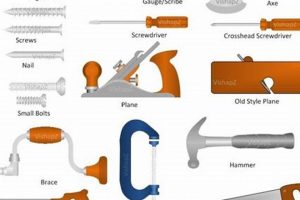
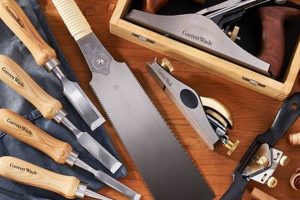
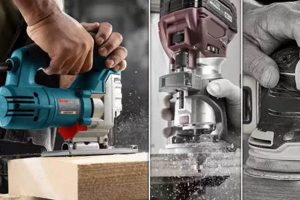
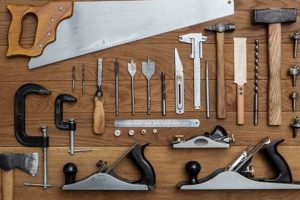
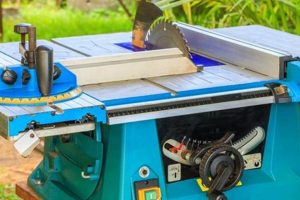
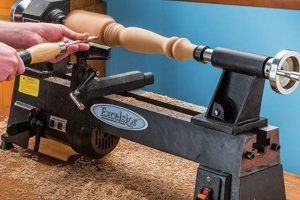
The initial implements acquired for engaging in the craft of shaping wood represent a fundamental investment. These items, typically encompassing measuring devices, hand saws, chisels, and a sharpening stone, establish the foundation for executing basic woodworking tasks. An example includes a beginner purchasing a combination square, a dovetail saw, and a set of chisels to undertake a small box-making project.
Possessing the appropriate introductory implements is crucial for developing proficiency and ensuring safety in woodworking. They enable accurate cuts, precise joinery, and the safe manipulation of timber. Historically, the availability and quality of these implements have significantly impacted the development and sophistication of woodworking techniques across various cultures and eras.
Subsequent discussions will explore specific categories of equipment, including hand tools versus power tools, considerations for selecting quality implements, and strategies for maintaining them to ensure longevity and optimal performance in woodworking projects.
Essential Guidance for Equipping a Woodworking Workshop
Strategic selection of implements during initial procurement is paramount to establishing a productive and safe woodworking environment. Careful consideration should be given to the following aspects.
Tip 1: Prioritize Quality over Quantity: Purchasing fewer, higher-quality hand tools generally yields superior results and long-term cost-effectiveness compared to acquiring a larger set of inexpensive items. A well-made chisel will hold an edge longer and provide greater control than a cheaper alternative.
Tip 2: Begin with Essential Measuring and Marking Tools: Accurate layouts are fundamental to successful woodworking. A combination square, measuring tape, marking gauge, and sharp pencil are crucial for precise material preparation and joinery.
Tip 3: Invest in a Versatile Hand Saw: A quality hand saw, such as a dovetail saw or a general-purpose crosscut saw, enables controlled and precise cuts, particularly in situations where power tools are impractical or undesirable. Practice proper sawing techniques to maximize its effectiveness.
Tip 4: Select a Basic Set of Chisels: A set of three to five chisels in varying widths allows for a range of tasks, including paring, mortising, and shaping. Ensure the chisels are made of high-carbon steel and maintain a keen edge through regular sharpening.
Tip 5: Acquire a Reliable Sharpening System: Sharp tools are safer and more efficient. A sharpening system comprising a flattening stone, sharpening stones of varying grits, and honing compound is essential for maintaining the cutting edges of chisels and plane irons.
Tip 6: Consider Ergonomics and Comfort: Choose tools that feel comfortable in the hand and promote proper posture to minimize fatigue and prevent injuries. Handle shape, weight, and balance are important factors to consider.
Tip 7: Research and Select Appropriate Safety Equipment: Eye protection, hearing protection, and dust masks are indispensable for safeguarding against potential hazards in the woodworking environment. Ensure all safety equipment meets relevant safety standards.
Following these guidelines facilitates the establishment of a functional and well-equipped woodworking workspace, promoting accuracy, safety, and efficiency in subsequent projects.
The following sections will delve into advanced tool selection and techniques to further enhance woodworking capabilities.
1. Quality Over Quantity

The principle of “Quality Over Quantity” is particularly salient when acquiring initial implements for shaping wood. While the allure of a comprehensive set of inexpensive tools may seem appealing to novice woodworkers, the long-term consequences of such an approach often outweigh the initial cost savings. Inferior tools tend to dull quickly, require frequent adjustments, and lack the precision necessary for accurate work. This can lead to frustration, increased project completion times, and, ultimately, a diminished interest in the craft. For instance, a low-quality hand plane may chatter and tear the wood fibers rather than producing a smooth, even surface, regardless of the user’s skill. Conversely, a well-made hand plane, even if acquired individually, will retain its sharpness, allow for finer adjustments, and deliver superior results.
The investment in higher-quality instruments translates directly into improved woodworking outcomes and a more rewarding experience. Consider the purchase of chisels. A set of inexpensive chisels may require extensive and frequent sharpening, and even then, might not hold an edge effectively. This constant maintenance consumes valuable time and can be discouraging for beginners. A quality chisel, crafted from high-carbon steel, will retain its edge longer, allowing for more efficient and accurate paring and mortising. Furthermore, superior tools often exhibit better ergonomics, reducing fatigue and enhancing control, which is crucial for safety and precision.
In conclusion, while budgetary constraints are a legitimate concern, prioritizing “Quality Over Quantity” when assembling a collection of starting woodworking hand tools is an investment in long-term skill development and enjoyment. Acquiring a few essential, well-made implements provides a solid foundation for mastering fundamental woodworking techniques and promotes a more positive and productive learning experience. This ultimately minimizes waste, maximizes efficiency, and fosters a deeper appreciation for the craft.
2. Essential Measuring Instruments
The accurate dimensioning and layout of materials constitute a foundational element in woodworking. Consequently, the inclusion of “Essential Measuring Instruments” within a collection of “starting tools for woodworking” is not merely advisable, but rather a prerequisite for achieving predictable and satisfactory results. The absence of precise measuring devices invariably leads to inaccuracies in cutting, shaping, and joinery, undermining the structural integrity and aesthetic appeal of finished projects. For example, an imprecise measurement taken with a substandard ruler can result in a cabinet door that is either too large or too small for its intended opening, necessitating rework or outright rejection of the component.
The practical significance of incorporating reliable measuring instruments extends beyond basic dimensional control. A combination square, for instance, enables the user to establish perpendicularity with a high degree of certainty, crucial for ensuring square corners in frames, boxes, and other structures. Similarly, a marking gauge facilitates the creation of consistent parallel lines, essential for tasks such as mortise and tenon layout. The ability to accurately transfer dimensions from plans to the workpiece, and to replicate those dimensions across multiple components, is directly dependent on the quality and functionality of the measuring tools employed. This level of precision is particularly critical when working with hardwoods or constructing complex joinery, where even minor deviations can compromise the overall fit and stability of the assembly.
In summary, “Essential Measuring Instruments” represent a critical subset of the broader category of “starting tools for woodworking.” Their role is not limited to mere measurement; they serve as indispensable aids in ensuring accuracy, repeatability, and overall quality in woodworking projects. Neglecting the selection of appropriate and reliable measuring tools at the outset can lead to significant challenges and ultimately detract from the enjoyment and success of the woodworking endeavor.
3. Versatile Hand Saws
The inclusion of adaptable hand saws within a basic set of woodworking implements addresses the fundamental need for controlled material removal. Their presence facilitates a range of cutting operations often impractical or less precise with power tools, particularly in initial woodworking endeavors.
- Crosscut Capability
A versatile hand saw adept at crosscutting, that is, sawing perpendicular to the wood grain, provides the means to efficiently dimension stock. This is exemplified by trimming boards to length for a frame or cutting segments for a small tabletop. The ability to execute clean crosscuts is essential for achieving accurate dimensions, a cornerstone of woodworking.
- Rip Cutting Functionality
Equally important is the capacity to rip cut, aligning the saw’s action parallel to the wood grain. Ripping allows for the creation of narrower boards from wider stock or the adjustment of board width to meet specific project requirements. Without this ripping capability, material utilization is limited, and project scope becomes unnecessarily constrained.
- Joinery Applications
Beyond basic dimensioning, adaptable hand saws are instrumental in crafting various joinery elements. A dovetail saw, a specialized type of hand saw, enables the creation of precise dovetail joints, known for their strength and aesthetic appeal. Similarly, a gent’s saw can facilitate the cutting of tenons or other small-scale joinery components. The ability to create strong, well-fitting joints is paramount for constructing durable and aesthetically pleasing woodworking projects.
- Power Tool Supplementation
Even in workshops equipped with power tools, adaptable hand saws retain relevance as supplementary implements. They excel in situations demanding nuanced control, such as trimming protruding joinery elements flush or making intricate cuts that power tools cannot readily accomplish. The hand saw’s tactile feedback and precise control contribute to refined outcomes.
The multifaceted nature of adaptable hand saws underscores their value as fundamental implements. They serve not only as basic cutting devices but also as tools for precise joinery and supplementary operations, thereby expanding the capabilities of the beginning woodworker.
4. Sharpening Proficiency

The efficacy of woodworking implements is inextricably linked to the maintenance of their cutting edges. Attaining “Sharpening Proficiency” is not a supplementary skill, but rather a critical determinant of success when utilizing “starting tools for woodworking”. Dull tools compromise safety, reduce control, and diminish the quality of finished work.
- Enhanced Safety and Control
Sharp implements require less force to execute cuts, minimizing the likelihood of slippage and subsequent injury. A dull chisel, for example, may necessitate excessive pressure, increasing the risk of losing control and cutting oneself. Conversely, a keen edge allows for deliberate and precise material removal, promoting safer and more controlled woodworking operations.
- Improved Cut Quality and Efficiency
Sharp blades sever wood fibers cleanly, yielding smooth surfaces and precise dimensions. A dull saw, in contrast, tears the wood, leaving a rough, splintered edge and demanding more effort to achieve the desired cut. Sharpening proficiency directly impacts the speed and quality of woodworking tasks, reducing waste and improving overall efficiency.
- Extended Tool Longevity
Proper sharpening techniques preserve the geometry and integrity of cutting edges, prolonging the lifespan of woodworking tools. Aggressive or improper sharpening can damage the blade, requiring more frequent replacements or extensive repairs. Skillful maintenance ensures that “starting tools for woodworking” remain functional and effective over an extended period, maximizing their value and minimizing long-term costs.
- Cost-Effectiveness
The ability to sharpen tools oneself eliminates the need for frequent professional sharpening services or premature tool replacement. Sharpening supplies, such as stones and honing compounds, represent a relatively small initial investment that yields significant long-term savings. “Sharpening Proficiency” transforms “starting tools for woodworking” into a sustainable and cost-effective resource, promoting self-sufficiency and minimizing reliance on external services.
In conclusion, “Sharpening Proficiency” is not a mere adjunct to “starting tools for woodworking,” but rather an intrinsic component that directly influences safety, efficiency, quality, tool longevity, and cost-effectiveness. Developing and maintaining this skill is essential for any aspiring woodworker seeking to achieve consistent and satisfying results.
5. Safety and Protection

The realm of “Safety and Protection” constitutes an indispensable element when considering “starting tools for woodworking.” The potential for injury necessitates a proactive approach to risk mitigation, ensuring that the acquisition and utilization of implements are accompanied by appropriate protective measures.
- Eye Protection Imperative
Woodworking inherently generates particulate matter, including dust, shavings, and fragments that pose a direct threat to ocular health. The implementation of approved safety glasses or face shields is paramount to shielding the eyes from potential impacts and irritants. Failure to employ adequate eye protection can result in corneal abrasions, embedded foreign bodies, or, in severe cases, permanent vision impairment. The selection of appropriate eye protection should align with the specific tasks undertaken, with consideration given to impact resistance and peripheral vision.
- Respiratory Safeguards
The inhalation of wood dust, particularly from certain exotic species, can trigger or exacerbate respiratory ailments, including allergic reactions, asthma, and even long-term pulmonary complications. The consistent use of a properly fitted dust mask or respirator is crucial for filtering airborne particles and minimizing respiratory exposure. The choice of respiratory protection should be guided by the type and concentration of dust generated, with consideration given to NIOSH-approved ratings and filtration efficiency.
- Auditory Preservation Measures
The operation of power tools, such as routers, sanders, and planers, often generates noise levels that exceed safe auditory thresholds, leading to gradual or sudden hearing loss. The utilization of earplugs or earmuffs is essential for attenuating noise and protecting auditory function. The selection of auditory protection should correspond to the noise levels encountered, with consideration given to Noise Reduction Ratings (NRR) and comfort for prolonged use.
- Hand and Limb Protection
The handling of sharp tools and the manipulation of timber can present risks of cuts, abrasions, and crushing injuries to the hands and limbs. The employment of appropriate gloves, aprons, and safety footwear is recommended for providing physical barriers against potential hazards. The selection of protective apparel should align with the specific tasks undertaken, with consideration given to cut resistance, puncture resistance, and ergonomic design.
These facets of “Safety and Protection,” when integrated with the responsible application of “starting tools for woodworking,” collectively contribute to the establishment of a secure and sustainable woodworking environment. The adherence to established safety protocols and the conscientious use of personal protective equipment are fundamental obligations for all practitioners of this craft.
Frequently Asked Questions
This section addresses common inquiries regarding the initial set of implements required to engage in the craft of woodworking. It aims to provide clarity on crucial aspects, thereby enabling informed decisions concerning tool selection and utilization.
Question 1: What constitutes a minimal, yet functional, set of implements for basic woodworking tasks?
A foundational set typically encompasses a combination square, a measuring tape, a marking gauge, a hand saw (crosscut or dovetail), a set of three to five chisels of varying widths, a sharpening stone (or sharpening system), and appropriate safety eyewear.
Question 2: Is it preferable to acquire individual, higher-quality implements or a comprehensive set of lower-priced tools?
Prioritizing quality over quantity is generally advisable. Higher-quality tools tend to offer superior performance, durability, and precision, ultimately yielding better results and a more satisfying woodworking experience.
Question 3: What are the essential safety measures that should be observed when utilizing basic implements?
Eye protection is paramount to safeguard against flying debris. Respiratory protection, such as a dust mask, is crucial to minimize inhalation of wood dust. Proper clamping and work-holding techniques prevent slippage and enhance control. Sharp tools, maintained regularly, are safer than dull tools.
Question 4: How frequently should chisels and plane irons be sharpened?
The frequency of sharpening depends on the type of wood being worked, the duration of use, and the quality of the steel. As a general guideline, edges should be honed whenever a decrease in cutting performance is observed. Regular honing, even after short periods of use, preserves the edge and extends the intervals between more extensive sharpening sessions.
Question 5: What considerations should guide the selection of a hand saw?
Factors to consider include the saw’s tooth configuration (crosscut, rip, or universal), tooth pitch (teeth per inch or TPI), blade length, handle ergonomics, and overall quality of construction. The intended application should dictate the specific type of saw selected.
Question 6: What are the key aspects of effective tool maintenance?
Tool maintenance encompasses regular cleaning to remove dust and debris, proper storage to prevent rust and damage, and consistent sharpening to maintain cutting edges. Lubrication of moving parts, such as threads on clamps, ensures smooth operation. Periodic inspection for signs of wear or damage allows for timely repairs or replacements.
These responses highlight the importance of careful selection, responsible utilization, and consistent maintenance when acquiring the essential implements for shaping wood. By adhering to these principles, woodworkers can establish a solid foundation for skill development and project success.
Subsequent discussions will address advanced implements and techniques, further expanding the capabilities of the dedicated woodworker.
Conclusion
The preceding discourse has elucidated the critical role of initial implements in the craft of shaping wood. Essential considerations encompass quality, safety, precision, and consistent maintenance. The acquisition of appropriate tools, coupled with the development of fundamental skills, forms the basis for successful woodworking endeavors.
Competent selection and utilization of starting tools for woodworking are not merely preliminary steps; they represent a foundational investment in the pursuit of craftsmanship. Adherence to the principles outlined herein will cultivate expertise and facilitate the realization of enduring woodworking projects. Further, continuous learning and refinement of technique will allow for expanded capabilities and increasingly complex projects.