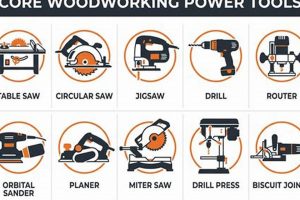
The phrase refers to the activity of creating, modifying, or utilizing storage containers specifically designed for organizing and transporting implements used in carpentry and related crafts. These containers are often constructed from wood but may also incorporate other materials such as metal or plastic. An example is a handcrafted, divided carrier used to keep chisels, hand planes, and measuring devices readily accessible during project execution.
Proper implementation offers numerous advantages. It facilitates efficient workflow by providing a designated location for each instrument, minimizing search time and promoting safety. Furthermore, it safeguards valuable equipment from damage during storage and transit. Historically, specialized containers for woodworking tools have been essential for artisans and craftsmen who need to work at different locations.
This discussion will delve into various aspects of container construction, including material selection, design considerations, and optimization strategies for efficient tool organization within a dedicated storage system.
Tips for Optimized Woodworking Implement Storage
Effective implement management enhances workflow and minimizes potential damage to delicate instruments. The following recommendations will aid in establishing a secure and accessible setup for woodworking tools.
Tip 1: Prioritize Durable Material Selection: Employ hardwoods such as oak or maple for box construction to ensure longevity. Consider incorporating reinforced corners to withstand repeated handling and transport.
Tip 2: Implement Strategic Compartmentalization: Designate specific areas for each tool type. Utilize dividers and custom-fitted inserts to prevent shifting and potential damage during movement. For example, a tiered system can separate frequently used tools from less frequently accessed items.
Tip 3: Optimize for Portability: Ergonomic handles and balanced weight distribution are crucial for ease of transportation. Conduct load tests to ensure the structure can safely support the weight of the contents.
Tip 4: Incorporate Secure Latching Mechanisms: Reliable latches prevent unintentional opening during transport, minimizing the risk of tool loss or injury. Metal clasps with locking mechanisms offer increased security.
Tip 5: Consider Integrated Sharpening Stations: Incorporating a designated area for sharpening stones within the box promotes regular tool maintenance, extending the life of cutting edges and improving performance.
Tip 6: Inventory Documentation: Maintain a detailed inventory of the contents. This facilitates quick identification of missing tools and aids in maintaining organizational standards.
Effective instrument containment directly contributes to enhanced project efficiency and tool longevity. By implementing these guidelines, one can optimize a woodworking tool storage setup for consistent performance.
The following sections will explore specific design blueprints and considerations for advanced tool storage systems.
1. Material Durability

Material durability is a foundational element in the realm of implement containment for carpentry and related trades. It dictates the longevity, protective capabilities, and overall value of the storage solution. The selection of appropriate materials directly influences the container’s ability to withstand the rigors of transport, environmental exposure, and the physical strain imposed by the weight and shape of the tools contained within. Inadequate material selection invariably leads to premature failure, resulting in potential damage to valuable tools and increased replacement costs. For instance, using softwood plywood for a heavily loaded container will likely result in warping, cracking, and eventual structural collapse, while a hardwood such as maple or oak, properly joined, will provide years of reliable service.
The link between material durability and effective implement containment manifests in several practical ways. A robust container constructed from durable materials provides superior impact resistance, protecting delicate measuring instruments and sharp cutting edges from damage. It also offers improved resistance to moisture and temperature fluctuations, preventing rust and corrosion. Moreover, durable materials often exhibit enhanced resistance to wear and tear, maintaining structural integrity even with frequent handling and transport. Consider the difference between a plastic container, prone to cracking and breaking under stress, and a well-constructed metal container, which, although susceptible to rust, generally provides much more resistance to physical damage. A carpenter or woodworker who invests in a durable container reduces the risk of tool damage and extends the service life of their investment. This translates into cost savings, improved workflow efficiency, and increased professional reliability.
In summary, material durability is not merely a desirable attribute but a critical requirement for implement containment within the woodworking domain. It safeguards the tools, contributes to operational efficiency, and ultimately reflects the craftsman’s commitment to quality and professionalism. Choosing appropriate, durable materials is a fundamental decision that significantly impacts the long-term value and performance of any storage system.
2. Compartment Organization

Compartment organization within the context of implement containment represents a systematic approach to arranging and securing tools for efficient access and protection. Its effective implementation is integral to maximizing the usability and preserving the condition of valuable woodworking tools.
- Spatial Efficiency
Spatial efficiency involves maximizing the available volume within the container while minimizing wasted space. This is achieved through strategically designed compartments that conform to the shapes and sizes of specific tools. A well-organized container prevents tools from shifting during transport, mitigating potential damage and facilitating quick retrieval. An example is the utilization of fitted foam inserts or custom-molded trays to securely hold chisels, preventing contact and maintaining their sharp edges.
- Categorization and Accessibility
Categorization involves grouping tools based on function or frequency of use. This allows for rapid identification and access during project execution. Separating measuring tools from cutting tools, for instance, minimizes the risk of accidental damage and streamlines the workflow. Clear labeling of compartments further enhances accessibility, particularly in containers with multiple layers or complex layouts.
- Preventative Damage Control
The organizational structure itself serves as a primary defense against tool damage. Individual compartments prevent tools from rubbing against each other, reducing the likelihood of scratches, dents, and chipped edges. Secure retention mechanisms, such as elastic straps or magnetic holders, prevent tools from dislodging during transport, further minimizing the risk of impact-related damage.
- Workflow Optimization
Efficient compartment organization directly impacts workflow efficiency. A clearly organized container reduces search time, allowing the user to quickly locate the required tool without disrupting the project’s momentum. This structured approach promotes a more methodical and deliberate work process, minimizing errors and maximizing productivity. A carpenter who consistently uses a well-organized container will invariably complete tasks more quickly and accurately than one who relies on a haphazard storage method.
These facets demonstrate the critical role of compartment organization in optimizing the effectiveness of implement containment. By focusing on spatial efficiency, categorization, damage prevention, and workflow optimization, a craftsman can transform a simple container into a highly functional and valuable asset. The principles of efficient compartment organization are central to effective woodworking and ensure the longevity and performance of essential tools.
3. Portability Ergonomics

Portability ergonomics addresses the interaction between a worker and the physical demands of transporting tools and equipment. In the context of tool storage containers, it focuses on minimizing strain and maximizing efficiency during movement, impacting long-term health and on-the-job productivity.
- Weight Distribution
Optimal weight distribution minimizes stress on specific muscle groups. Centering the weight mass and keeping it close to the body’s center of gravity reduces the torque experienced by the back and shoulders. An improperly balanced container forces the user to compensate, leading to muscle fatigue and potential injury. Consider a container where heavy tools are placed evenly to prevent listing to one side. Proper weight distribution is essential to ensuring a safer and more comfortable carry and thus, an efficient work operation.
- Handle Design
Handle design influences grip strength and comfort during lifting and carrying. Ergonomic handles distribute pressure evenly across the hand, reducing strain on joints and tendons. Features such as padding, contoured shapes, and appropriate diameter contribute to a secure and comfortable grip. A narrow or poorly shaped handle concentrates pressure, leading to discomfort and potential nerve damage. The proper handles should allow for a firm grasp without excessive squeezing, and will promote safety when transporting the tools needed.
- Lifting Mechanics
Container design can encourage or discourage proper lifting techniques. Handles positioned at an appropriate height and orientation promote lifting with the legs and maintaining a straight back. An awkwardly designed container forces the user to bend at the waist or twist the torso, increasing the risk of back injury. A container that is too low to the ground or too far away from the body will be a physical problem for some to use. The right design should enable the user to engage proper lifting posture, protecting the spine and minimizing strain.
- Overall Size and Form Factor
The overall size and shape of the container impacts maneuverability and access in confined spaces. A container that is too large or unwieldy can be difficult to navigate through doorways or narrow corridors. A compact, streamlined design facilitates easier transport and reduces the risk of collisions. Size and shape must allow the worker to navigate the workspace effectively, preventing accidents and improving efficiency.
Therefore, integrating portability ergonomics into the design and utilization of tool storage containers mitigates physical strain, promoting long-term worker well-being and enhancing productivity. The aspects described above contribute to a container that is not only functional but also supports the physical health and efficiency of the user.
4. Secure Latching

Secure latching is a critical, yet often understated, component of any well-designed implement container used in carpentry. The primary function of a latching mechanism is to maintain the integrity of the enclosure, preventing unintentional opening during transit or storage. Failure of a latching system can result in tool spillage, damage to the implements themselves, and potential injury to individuals in the immediate vicinity. The connection between secure latching and the efficacy of a woodworking tool containment system is thus one of direct cause and effect; unreliable latches render the entire system vulnerable, negating the benefits of careful tool organization and protection.
The importance of secure latching extends beyond the immediate risk of tool loss. Consider a carpenter transporting sharp chisels in a container with a faulty latch. An unexpected opening during transport could lead to these tools becoming projectiles, posing a serious safety hazard. Similarly, sensitive measuring instruments, such as levels or squares, can be easily damaged if they are allowed to shift freely within an unsecured container. Moreover, in professional settings, the use of unreliable containers reflects poorly on the craftsman’s attention to detail and professionalism. Secure latches, therefore, function not only as a physical barrier but also as a symbol of responsible tool management.
Effective latching systems should exhibit several key characteristics, including robustness, ease of operation, and reliability under various environmental conditions. Materials used in the latch’s construction should be resistant to corrosion and physical wear, ensuring long-term functionality. The latching mechanism itself should be designed to withstand significant force, preventing accidental disengagement due to bumps or jostling. Ultimately, secure latching contributes directly to the safety, efficiency, and professionalism associated with woodworking practice. Recognizing its significance is essential for anyone seeking to optimize their tool storage solutions.
5. Maintenance Integration

Maintenance integration, within the context of specialized containers designed for carpentry implements, refers to the incorporation of features and dedicated spaces that facilitate the regular upkeep and preservation of the contained tools. This is not merely an additive feature but a core design principle that directly impacts tool longevity, operational efficiency, and the overall cost-effectiveness of woodworking practices. The presence of integrated maintenance provisions inherently supports proactive tool care, preventing the gradual degradation that results from neglect or improper storage. An example is a container featuring a built-in sharpening station, complete with designated slots for sharpening stones and honing guides, thereby promoting consistent edge maintenance and preventing the dulling of blades.
The absence of maintenance integration necessitates separate, often inconvenient, maintenance procedures. This separation can lead to procrastination or inconsistent care, resulting in diminished tool performance and increased likelihood of damage. In contrast, an integrated system streamlines the maintenance process, making it a more accessible and readily performed task. For instance, a dedicated cleaning brush and lubricant storage within the container encourages regular removal of sawdust and preventative rust control. Furthermore, built-in measurement aids, such as small rulers or protractors, enable immediate assessment of blade angles and alignment, facilitating timely adjustments. These seemingly small additions cumulatively contribute to substantial improvements in tool maintenance habits and overall tool condition.
In summary, maintenance integration represents a proactive and efficient approach to tool care, transforming a standard implement container into a comprehensive resource for both storage and upkeep. By embedding maintenance provisions within the container’s design, practitioners are more likely to engage in consistent care routines, ultimately extending the lifespan of their tools, enhancing project precision, and fostering a culture of responsible tool management within the woodworking domain. The concept, though often overlooked, is fundamental to optimizing the return on investment in quality carpentry implements.
Frequently Asked Questions About Tool Box Woodworking
This section addresses common inquiries related to the construction, utilization, and optimization of storage containers designed specifically for woodworking implements.
Question 1: What is the primary function of specialized containers for woodworking tools?
The primary function extends beyond simple storage. It encompasses the secure organization, protection, and efficient transport of implements, ensuring readily accessibility and minimizing potential damage.
Question 2: What materials are best suited for constructing a robust tool box for woodworking?
Hardwoods such as oak, maple, or birch are generally favored due to their superior strength, durability, and resistance to wear and tear. Plywood can also be utilized, but should be of high quality and sufficient thickness.
Question 3: How does compartment organization contribute to the effectiveness of a woodworking implement container?
Strategic compartmentalization prevents tool contact, minimizes the risk of damage, and facilitates quick identification and retrieval. Custom-fitted inserts and dividers are often employed for optimal organization.
Question 4: What ergonomic considerations are paramount when designing for portability?
Weight distribution, handle design, and overall container dimensions are crucial. Handles should be comfortable and allow for a secure grip, while weight should be evenly distributed to minimize strain during transport.
Question 5: Why is a secure latching mechanism essential for a woodworking tool container?
Reliable latches prevent unintentional opening during transport, mitigating the risk of tool spillage, damage, and potential injury. Metal clasps with locking features offer enhanced security.
Question 6: What are the benefits of integrating maintenance features into a woodworking tool box?
Integrated sharpening stations, cleaning supply storage, and measurement aids promote regular tool upkeep, extending the lifespan of the implements and ensuring consistent performance.
In summary, selecting durable materials, implementing strategic organization, prioritizing ergonomic design, ensuring secure latching, and integrating maintenance features are all critical factors in maximizing the value and effectiveness of woodworking tool storage containers.
The subsequent section will provide advanced design concepts and blueprints for specialized tool storage solutions.
Conclusion
This exposition has detailed the multifaceted nature of specialized containers for carpentry implements. Aspects ranging from material durability and compartment organization to portability ergonomics, secure latching, and maintenance integration were examined. The analysis emphasizes the direct correlation between informed design and heightened tool preservation, operational efficiency, and craftsman safety.
Ultimately, the implementation of “tool box woodworking” principles represents a commitment to professional rigor and resource stewardship. Continuous refinement of storage solutions, informed by practical experience and evolving tool technologies, remains paramount. The judicious application of these concepts ensures the enduring performance of essential woodworking instruments and the continued advancement of the craft.