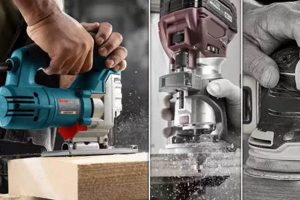
Implements employed in the shaping, cutting, and joining of wood are essential for a broad range of activities, from intricate carving to the construction of large-scale structures. Examples include saws for cutting, chisels for shaping, planes for smoothing, and measuring devices for accuracy.
These instruments enable precision, efficiency, and artistry in creating wooden objects. Their evolution reflects technological advancements, from basic hand-powered devices to sophisticated power-driven machinery, impacting industries ranging from furniture manufacturing to home construction. The selection and skillful employment of appropriate equipment is fundamental to achieving desired outcomes in any wood-based project.
The subsequent sections will delve into specific categories of these implements, examining their applications, maintenance requirements, and advancements in design that enhance their functionality and user experience. Understanding these aspects is crucial for both novice and experienced woodworkers seeking to optimize their craft.
Essential Usage Considerations
Optimal performance and longevity of implements designed for manipulating wood depend on adherence to specific guidelines and maintenance protocols.
Tip 1: Sharpening is Paramount: Maintain cutting edges with consistent honing. Dull blades necessitate excessive force, compromising precision and increasing the risk of material damage or personal injury. Use appropriate sharpening stones and angles for each specific implement.
Tip 2: Proper Storage Prevents Damage: Store implements in a dry environment to prevent rust and corrosion. Consider using tool rolls, cabinets, or dedicated storage systems to protect edges and prevent accidental damage from impact.
Tip 3: Selection Based on Task: Employ the appropriate tool for the intended task. Attempting to force a tool beyond its designed capabilities can result in damage to the tool, the workpiece, or potential injury to the user.
Tip 4: Safety Equipment is Non-Negotiable: Always wear appropriate safety gear, including eye protection, hearing protection, and respiratory protection, as needed. Dust and debris generated during woodworking can pose significant health risks.
Tip 5: Calibration and Adjustment are Essential: Regularly calibrate measuring implements to ensure accuracy. Adjust power tools according to the manufacturer’s specifications to maintain optimal performance and safety.
Tip 6: Cleanliness Extends Lifespan: After each use, clean debris and residue from implements. This prevents buildup that can hinder performance and accelerate wear and tear. Apply a thin coat of oil to metal surfaces to prevent rust.
Tip 7: Understand Material Properties: Different wood species possess varying densities and grain patterns. Adjust cutting techniques and implement selection based on the specific characteristics of the wood being worked.
Adherence to these guidelines promotes safe operation, minimizes damage, and ensures the longevity and reliability of instruments used to work with wood.
The following sections will explore specific tool categories and provide more in-depth information on their selection, usage, and maintenance.
1. Precision

The accuracy achieved in woodworking is directly proportional to the quality and appropriate application of instruments utilized. Precision in measurement, cutting, and joinery is not merely a desirable attribute, but a foundational requirement for structural integrity and aesthetic appeal. Deviations from intended dimensions, resulting from the use of substandard or improperly maintained equipment, can lead to weakened joints, misaligned components, and an overall compromise of the finished product. For example, a poorly calibrated miter saw results in inaccurate angle cuts, rendering the construction of a picture frame, or any similar project demanding exact angles, impossible to execute satisfactorily.
The importance of precision extends beyond dimensional accuracy to encompass the refinement of surface finishes and the execution of intricate detailing. Hand planes, when properly sharpened and adjusted, allow for the creation of surfaces that are both smooth and precisely shaped. Chisels, used with controlled force and guided by accurate layout lines, enable the carving of intricate designs and the precise fitting of joinery. In cabinetmaking, the accurate mortise and tenon joints, crucial for the structural integrity of the frame, exemplify the crucial role of precision implements. The alternative, imprecise cuts and ill-fitting joints, compromise the final product.
In essence, the relationship between accuracy and implements used to work with wood is symbiotic. The quality of implements determines the degree of accuracy attainable, and the pursuit of accuracy demands the selection and maintenance of high-quality implements. Neglecting this relationship introduces a cascade of potential problems, ultimately diminishing the structural soundness and aesthetic value of the finished work. The ability to consistently achieve accuracy is a hallmark of skilled craftsmanship and directly reflects a commitment to the use of well-maintained and precisely engineered implements.
2. Durability

The lifespan and reliability of implements used for woodworking are directly linked to their inherent durability. The capacity of these devices to withstand repeated use, resist wear and tear, and maintain performance under demanding conditions determines their long-term value and suitability for professional or amateur use. A tool lacking in robustness may fail prematurely, leading to increased replacement costs, project delays, and potential safety hazards. The durability of a saw blade, for example, dictates its ability to maintain sharpness over extended periods of use, reducing the need for frequent resharpening and ensuring consistent cutting performance. Similarly, the hardness and impact resistance of a chisel determine its ability to withstand repeated blows without chipping or deforming, preserving its cutting edge and dimensional accuracy.
Material selection and manufacturing processes are critical determinants of instrument durability. High-carbon steel, hardened and tempered to specific tolerances, provides a balance of strength, wear resistance, and ductility suitable for many cutting edges. Cast iron, used in the construction of plane bodies and machine frames, offers exceptional rigidity and vibration dampening, contributing to accuracy and stability. The presence of design features, such as reinforced handles, protected mechanisms, and corrosion-resistant coatings, further enhances the ability of these devices to withstand the stresses of regular use. Furthermore, the presence of durable materials in woodworking tools extends their lifespan and effectiveness for intricate projects. A durable clamp, for instance, holds wood pieces firmly together during gluing, and the joint will be stronger and last longer if the clamp is strong and durable.
In summation, the correlation between long-term tool value and durability is critical in woodworking. Instruments characterized by robust construction, high-quality materials, and thoughtful design features offer a distinct advantage, providing reliable performance, reducing maintenance requirements, and contributing to the successful completion of woodworking projects. Understanding the factors influencing tool durability enables informed purchasing decisions and promotes the effective use and preservation of these essential implements, leading to sustainable practices and the creation of quality woodworking products. The initial investment in durable equipment translates into long-term cost savings and a heightened degree of confidence in the reliability and longevity of these essential implements.
3. Ergonomics

The integration of ergonomic principles into the design of implements used for working with wood directly influences user comfort, efficiency, and long-term physical well-being. The physical demands of woodworking tasks necessitate careful consideration of handle design, tool weight, and overall usability to minimize strain and prevent musculoskeletal disorders.
- Handle Design and Grip
Handle design profoundly affects grip strength and hand fatigue. Handles shaped to fit the natural contours of the hand, constructed from materials with appropriate texture and compliance, reduce the force required to maintain a secure grip. For example, a chisel with an oversized, mushroom-shaped handle allows for a more powerful and controlled strike, while a plane with a contoured handle reduces wrist strain during prolonged use. Poorly designed handles necessitate excessive gripping force, leading to fatigue and increasing the risk of repetitive strain injuries, like carpal tunnel syndrome.
- Tool Weight and Balance
The weight and balance distribution of implements impact the user’s ability to maintain control and precision. Excessively heavy instruments require greater exertion, accelerating fatigue and reducing accuracy. Conversely, tools that are too light may lack the inertia necessary for certain tasks. Proper balance, where the center of gravity is located close to the hand, minimizes the need for compensatory movements and enhances control. Consider a hand saw with a balanced blade and handle; the design allows the user to apply consistent pressure and maintain a straight cut without excessive strain.
- Vibration Dampening
Power tools, such as sanders and routers, generate significant vibration that can contribute to hand-arm vibration syndrome (HAVS), a debilitating condition affecting nerves, blood vessels, and joints. Ergonomic designs incorporate vibration-dampening materials and mechanisms to reduce the transmission of vibrations to the user’s hands and arms. For instance, orbital sanders with rubberized grips and internal dampening systems minimize vibration exposure, mitigating the risk of HAVS. Instruments lacking effective vibration dampening increase the potential for long-term health issues.
- Posture and Reach
Ergonomics in woodworking extends beyond the tool itself to include the overall working environment and posture. The height of the workbench, the arrangement of implements, and the positioning of the workpiece influence the user’s posture and reach. Workbenches that are too low or too high require the user to stoop or reach excessively, leading to back and shoulder pain. Proper workspace design ensures that implements are readily accessible and that the workpiece is positioned to minimize strain. A well-organized workspace promotes efficient workflow and reduces the risk of musculoskeletal discomfort.
The integration of ergonomic principles into the design and utilization of implements used to work with wood is not merely a matter of comfort; it is a critical factor in maintaining user health, promoting efficiency, and ensuring the long-term sustainability of woodworking as a craft or profession. Ignoring ergonomic considerations can result in physical discomfort, reduced productivity, and increased risk of injury, ultimately undermining the satisfaction and longevity of the woodworking experience.
4. Maintenance

The longevity, accuracy, and safety of implements used in woodworking are intrinsically linked to consistent and appropriate maintenance procedures. Neglecting maintenance leads to diminished performance, increased risk of malfunction, and a shortened lifespan for these tools, ultimately impacting the quality and efficiency of woodworking projects.
- Sharpening Cutting Edges
Maintaining sharp cutting edges on tools such as chisels, planes, and saws is paramount. Dull edges necessitate increased force, compromising accuracy and elevating the risk of material damage or personal injury. Regular sharpening, using appropriate stones and angles for each tool type, is essential for optimal performance. Neglecting sharpening results in ragged cuts, splintering, and increased physical exertion.
- Lubrication and Rust Prevention
Metal components of these implements are susceptible to rust and corrosion, particularly in humid environments. Periodic lubrication with appropriate oils or protective coatings prevents corrosion and ensures smooth operation of moving parts. Failure to lubricate can lead to seized mechanisms, reduced accuracy, and accelerated wear. Examples include lubricating the threads of hand screws, applying oil to plane soles, and protecting saw blades from moisture.
- Cleaning and Debris Removal
Wood dust, resin, and other debris accumulate on these instruments, hindering their performance and potentially causing damage. Regular cleaning, using brushes, solvents, and compressed air, removes these contaminants and maintains functionality. Neglecting cleaning can lead to clogged mechanisms, reduced cutting efficiency, and premature wear. A clean plane sole, for example, glides more smoothly across the wood surface, producing a superior finish.
- Calibration and Adjustment
Precise measuring tools and power tools require periodic calibration and adjustment to ensure accuracy. Misaligned fences, inaccurate scales, and loose components compromise the accuracy of cuts and measurements. Regular calibration, using precision instruments and manufacturer specifications, is essential for maintaining consistent results. Failure to calibrate can lead to dimensional errors, structural weaknesses, and aesthetic imperfections.
These maintenance practices, when consistently implemented, contribute significantly to the performance, longevity, and safety of woodworking implements. By adhering to these procedures, woodworkers can maximize their investment in equipment, minimize downtime, and ensure the consistent production of high-quality work. A well-maintained tool is not only safer and more accurate but also provides a more enjoyable and fulfilling woodworking experience.
5. Versatility
The adaptability of instruments employed in woodworking directly influences the range of projects that can be undertaken and the efficiency with which they are executed. A limited toolset restricts possibilities, while a more adaptable collection empowers the woodworker to address diverse challenges and explore complex designs.
- Multi-Functionality of Hand Tools
Certain hand tools possess inherent versatility, capable of performing multiple tasks with minor adjustments or modifications. A spokeshave, for example, can shape both concave and convex surfaces by altering the blade depth and angle. A combination square serves as a measuring device, a marking gauge, and a depth gauge, streamlining layout processes. This multi-functionality reduces the number of individual implements required, optimizing workspace and minimizing investment. In the absence of specialized equipment, a skilled woodworker can adapt these adaptable hand tools to achieve surprisingly complex results.
- Interchangeable Components in Power Tools
Many power tools are designed with interchangeable components, expanding their functionality beyond a single, dedicated purpose. A drill press, for instance, can be equipped with sanding drums, routing bits, or mortising attachments, transforming it into a versatile workstation. A multi-tool, with its oscillating head and array of blades, can cut, sand, and scrape in confined spaces, addressing a wide range of tasks that would otherwise require multiple specialized implements. The availability of interchangeable components enhances the utility of power tools, making them valuable investments for both amateur and professional woodworkers.
- Adaptability Through Jigs and Fixtures
The versatility of woodworking implements can be significantly enhanced through the use of jigs and fixtures. These auxiliary devices provide guidance, support, and stability, enabling tools to perform tasks beyond their inherent capabilities. A router jig, for example, can guide a router to cut precise dados or grooves, while a tenoning jig facilitates the creation of accurate tenons on a table saw. Jigs and fixtures expand the possibilities for specialized operations, allowing standard instruments to achieve results comparable to dedicated machinery. Their customizability allows addressing unusual or non-standard tasks.
- Material Compatibility and Range of Applications
Versatile tools exhibit compatibility with a broad range of wood species and other materials commonly used in woodworking, such as plywood, MDF, and plastics. A saw blade designed for general-purpose cutting can handle both hardwoods and softwoods with reasonable efficiency, while a router bit with carbide cutters can shape a variety of materials without excessive wear. The ability to work with diverse materials expands the scope of potential projects, enabling the creation of multifaceted designs and complex constructions. Incompatibility restricts choices and necessitates specialized tools, limiting the overall versatility of the woodworking process.
The capacity of implements used in woodworking to adapt to diverse tasks, materials, and techniques defines their overall utility and value. Versatile tools empower woodworkers to explore new possibilities, overcome challenges, and create a wider range of projects with greater efficiency and precision. Investing in versatile equipment and mastering adaptable techniques expands the scope of woodworking endeavors and contributes to a more rewarding and sustainable craft.
6. Materiality
The composition of implements used in woodworking, referred to as their materiality, is a critical factor determining performance, durability, and suitability for specific tasks. The materials from which tools are constructed dictate their ability to withstand stress, maintain sharpness, resist corrosion, and provide the necessary tactile feedback for precise control. Materiality, therefore, represents a fundamental consideration in the selection and application of these implements.
- Steel Composition in Cutting Edges
The type and treatment of steel used in cutting edges, such as those found in chisels, planes, and saws, directly influence sharpness retention and resistance to wear. High-carbon steels, often alloyed with elements like chromium and vanadium, offer superior hardness and edge-holding capabilities compared to lower-carbon alternatives. The tempering process further refines the steel’s properties, balancing hardness with toughness to prevent brittleness. A well-chosen and properly treated steel cutting edge enables precise cuts and reduces the frequency of resharpening, contributing to efficiency and accuracy.
- Handle Materials and Ergonomics
The materials used in the construction of handles, such as wood, polymers, or composites, impact grip comfort, vibration dampening, and overall control. Hardwoods like ash or maple provide durability and tactile feedback, while polymers offer enhanced grip and resistance to moisture. Composite materials can combine these qualities, offering a balance of strength, comfort, and longevity. A well-designed handle, constructed from appropriate materials, reduces fatigue and enhances control, allowing for more precise and efficient woodworking.
- Body Materials and Stability
The materials used in the bodies of implements like planes, squares, and measuring devices influence their stability, accuracy, and resistance to deformation. Cast iron, often used in plane bodies, provides exceptional rigidity and vibration dampening, contributing to smooth and accurate cuts. Aluminum alloys offer a lighter-weight alternative, while precision-machined steel ensures dimensional accuracy in measuring devices. The selection of appropriate body materials ensures that implements maintain their shape and accuracy under load, contributing to consistent and reliable performance.
- Abrasive Composition in Sharpening Stones
The composition of sharpening stones, whether natural or synthetic, determines their ability to abrade and refine cutting edges. Natural stones, such as Arkansas stones or Japanese water stones, offer varying levels of abrasiveness and produce distinct finishes. Synthetic stones, composed of materials like aluminum oxide or silicon carbide, provide consistent performance and are available in a wider range of grits. The selection of appropriate sharpening stones, based on their abrasive composition, is crucial for maintaining the sharpness and performance of cutting edges, enabling precise and efficient woodworking.
In conclusion, the materiality of instruments used to work with wood is a pivotal factor in determining their effectiveness and longevity. The selection of appropriate materials, based on their inherent properties and suitability for specific applications, is essential for achieving optimal performance, ensuring user comfort, and maximizing the value of these essential implements. A thorough understanding of materiality enables informed purchasing decisions and promotes the responsible use and maintenance of tools in any woodworking endeavor.
Frequently Asked Questions about Woodworking Tools
This section addresses common inquiries and clarifies misunderstandings regarding implements used for woodworking, aiming to provide comprehensive information for both novice and experienced practitioners.
Question 1: What constitutes a basic set of woodworking tools for a beginner?
A fundamental collection typically includes a hand saw, a set of chisels, a smoothing plane, a combination square, a marking gauge, a measuring tape, and a selection of sandpaper. These instruments facilitate essential tasks such as cutting, shaping, measuring, and finishing wood.
Question 2: How frequently should woodworking tools be sharpened?
The frequency of sharpening depends on usage and the type of wood being worked. Regular honing with a fine stone is recommended after each use. Sharpening with coarser stones should occur when the cutting edge becomes noticeably dull or damaged.
Question 3: What are the primary safety considerations when using power woodworking tools?
Essential safety practices include wearing appropriate eye and ear protection, using dust collection systems to mitigate respiratory hazards, ensuring proper guarding is in place, and maintaining a safe distance between hands and moving parts.
Question 4: What is the difference between a block plane and a smoothing plane?
A block plane is typically smaller than a smoothing plane and designed for end-grain work and chamfering edges. A smoothing plane is larger and intended for refining the surface of wood, removing imperfections, and achieving a smooth finish.
Question 5: How does one prevent rust on woodworking tools?
Rust prevention methods include storing instruments in a dry environment, applying a thin coat of oil or wax to metal surfaces, and using rust inhibitors in storage containers.
Question 6: What are the advantages of using hand tools versus power tools in woodworking?
Hand tools offer greater control, precision, and a quieter working environment. Power tools provide increased speed, efficiency, and the ability to handle larger-scale projects. The choice depends on the specific task, personal preference, and desired level of craftsmanship.
Key takeaways from these questions underscore the importance of possessing fundamental knowledge regarding selection, maintenance, safety, and application of instruments used for woodworking. Proficiency in these areas contributes to successful and enjoyable woodworking endeavors.
The subsequent section will delve into resources for further learning and skill development in woodworking.
Conclusion
This exploration of implements for woodworking has underscored the multifaceted nature of these instruments. From their materiality and ergonomics to their versatility and maintenance, the selection, care, and application of such equipment are paramount to achieving successful outcomes. The discussion has elucidated essential usage considerations, addressed common inquiries, and emphasized the symbiotic relationship between these instruments and skilled craftsmanship.
Continued advancement in design and materials promises to further refine implements for woodworking. Investing in quality equipment, coupled with a commitment to ongoing learning and skill development, will enhance both the precision and artistry achievable in this craft. Proficiency with implements used to work with wood will determine the caliber and endurance of future woodworking endeavors.