Fundamental implements are essential for any woodworking endeavor, whether it is a simple household repair or a complex furniture construction. These implements facilitate shaping, joining, and finishing wood with precision and control. Examples include tools for measuring and marking, sawing, shaping, joining, and surface preparation.
Possessing a collection of essential implements allows for efficient and accurate project execution. These tools contribute to a higher quality finished product and increased safety during the construction process. A well-equipped workshop provides a foundation for creative expression and the realization of woodworking aspirations. Historically, the availability and sophistication of these implements have directly influenced the scale and complexity of woodworking projects.
The following sections will elaborate on specific categories of these essential implements, detailing their functions and providing guidance on selecting appropriate options for various tasks and skill levels. This includes instruments for measuring and layout, cutting, shaping and smoothing, and fastening and joining.
Essential Implement Guidance
Acquiring a foundational set of implements is crucial for any woodworker. Prudent selection and proper maintenance contribute significantly to successful project outcomes. The following guidelines offer direction for choosing and utilizing vital instruments.
Tip 1: Prioritize Measuring and Marking Instruments: Accuracy begins with precise layout. Invest in a quality measuring tape, a combination square, and marking tools. These ensure accurate cuts and joinery. A slight deviation in measurement can compound throughout a project, leading to significant errors.
Tip 2: Select Saws Based on Project Needs: A handsaw, such as a rip saw or crosscut saw, offers control for detailed work. A backsaw, paired with a miter box, delivers precise angled cuts. Power saws, like circular saws or jigsaws, expedite larger tasks, but require caution and experience. Consider the types of projects anticipated when choosing a saw.
Tip 3: Acquire a Versatile Chisel Set: Chisels are indispensable for refining joinery, removing waste, and shaping details. A set with various widths provides flexibility. Maintain sharp edges to ensure clean cuts and prevent splitting the wood.
Tip 4: Invest in Effective Smoothing Tools: Hand planes, such as smoothing planes and block planes, create smooth, even surfaces. Sandpaper, in varying grits, is essential for final surface preparation. Proper technique with these tools enhances the quality of the finished piece.
Tip 5: Understand Fastening and Joining Methods: Screws, nails, and glue are common methods for assembling woodworking projects. Choose fasteners appropriate for the wood type and the load they will bear. Experiment with different joinery techniques, such as dovetails or mortise and tenon joints, to add strength and aesthetic appeal.
Tip 6: Emphasize Safety Equipment: Safety glasses, ear protection, and dust masks are essential for protecting oneself from injury and respiratory hazards. Use push sticks and feather boards when operating power tools to keep hands away from blades.
Tip 7: Maintain Implements Regularly: Sharp tools are safer and more efficient. Sharpening stones, honing guides, and lubrication are necessary for maintaining edges and preventing rust. Regular cleaning and proper storage extend the life of these vital items.
In summary, careful consideration of implement quality, selection based on project needs, and consistent maintenance contribute to woodworking success. Emphasizing safety throughout the process is paramount.
The next section will provide an overview of specific implements, categorized by function, to further clarify essential equipment requirements.
1. Measuring Implements
Accurate measurement is paramount in woodworking; therefore, appropriate measuring implements are indispensable to the craft. Precision in layout and dimensioning directly impacts the quality and structural integrity of a project. The selection and utilization of measuring implements represent a foundational aspect of establishing a functional woodworking workshop.
- The Measuring Tape: A Versatile Standard
The measuring tape serves as a primary tool for determining length and width. Its retractability and portability make it useful across various tasks, from initial material selection to final assembly. Inaccurate use can lead to cumulative errors, resulting in misaligned joinery or incorrectly sized components. Proper technique, including consistent hook placement and reading the scale accurately, is crucial.
- Combination Square: Ensuring Accuracy and Alignment
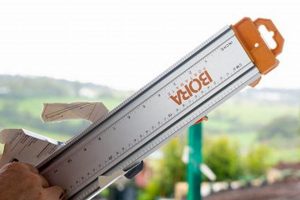
The combination square facilitates both linear measurement and the verification of squareness. It is composed of a rule and an adjustable head, enabling the user to mark consistent distances and ensure right angles. In woodworking, a combination square is essential for marking cut lines, checking the squareness of corners, and setting the depth of cutting tools. Its accuracy directly influences the precision of cuts and the overall structural integrity of assembled projects.
- Marking Gauge: Maintaining Consistent Parallel Lines
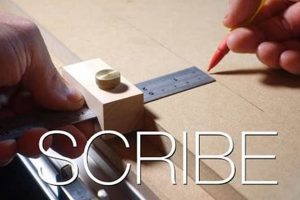
A marking gauge is designed to scribe parallel lines along the edge of a workpiece. Its primary function is to establish a consistent reference point for joinery, such as marking the depth of a mortise or the width of a tenon. Accurate use of a marking gauge requires a sharp cutting spur and consistent pressure to ensure a clean, uniform line. Deviations in marking can lead to ill-fitting joints and compromised structural strength.
- Protractor and Bevel Gauge: Determining and Transferring Angles
Woodworking often involves creating and replicating angles. A protractor or bevel gauge allows for the accurate measurement and transfer of angles. These tools are especially useful in projects involving complex joinery or irregular shapes. A bevel gauge can be set to a specific angle and then used to transfer that angle to another workpiece. Proper use ensures accurate angular cuts and consistent results.
The accurate employment of measuring implements is indispensable for achieving precision in woodworking. These tools, when used correctly, facilitate the creation of accurately dimensioned components, properly aligned joinery, and structurally sound finished products. Their significance should not be underestimated when considering the establishment of a well-equipped woodworking facility.
2. Cutting Implements
Cutting implements represent a critical category within the spectrum of basic woodworking instruments. The ability to precisely sever and shape wood is fundamental to the craft; consequently, a selection of appropriate cutting instruments is indispensable for any woodworking endeavor. The effectiveness of the final product hinges significantly upon the quality and suitability of the cutting implements employed.
The relationship between cutting implements and overall woodworking success is directly causal. Inadequate or inappropriate cutting instruments lead to inaccurate cuts, compromised joinery, and aesthetically deficient results. Conversely, the use of sharp, well-maintained, and project-appropriate implements facilitates clean, precise cuts that contribute to the structural integrity and visual appeal of the finished piece. For instance, using a dull saw can result in splintering and uneven cuts, while a well-sharpened chisel allows for the creation of clean, precise joints. The selection of cutting implements depends on project type. For example, a fine-toothed saw is appropriate for delicate work, while a robust saw is necessary for thicker materials. The investment in high-quality implements directly impacts efficiency, safety, and the final product’s quality.
In summary, cutting implements are integral components of the essential woodworking toolkit. The choice and condition of these implements exert a profound influence on the outcome of any woodworking project. Prioritizing quality, selecting appropriate implements for specific tasks, and ensuring proper maintenance practices are crucial for achieving superior woodworking results. Neglecting this aspect can result in project failure and compromised safety; therefore, understanding the role of these implements remains a vital consideration for woodworkers of all skill levels.
3. Shaping implements
Shaping implements are essential instruments within the core toolkit for woodworking, facilitating the transformation of raw lumber into refined forms. These implements enable the removal of material to create desired contours, profiles, and surface textures, contributing significantly to the aesthetic and functional qualities of the final product. Shaping implements are critical for achieving precision and detail in woodworking projects, and their mastery is a hallmark of skilled craftsmanship.
- Chisels: Refining and Detailing Wood
Chisels serve as fundamental shaping implements, allowing for the precise removal of wood fibers. From paring joints to carving intricate details, chisels provide control and accuracy. Beveled edge chisels are used for general shaping and fine detailing, while mortise chisels are designed for creating deep, square-sided mortises. A sharp chisel, when properly used, creates clean, crisp cuts, contributing to the overall quality of the finished piece. For example, a woodworker might use a chisel to refine the shoulders of a tenon joint or to create decorative fluting on a table leg.
- Planes: Smoothing and Truing Surfaces
Hand planes are employed to create smooth, flat, and true surfaces. Various types of planes exist, each suited for specific tasks. Smoothing planes are used for final surface preparation, while jack planes are used for initial rough shaping. Block planes are smaller and more versatile, suitable for end grain work and small adjustments. Proper plane usage requires a sharp blade and consistent technique to achieve even, consistent results. For example, a woodworker might use a smoothing plane to remove mill marks from a board or to flatten a tabletop.
- Spokeshaves: Shaping Curved Surfaces
Spokeshaves are specialized tools designed for shaping curved surfaces. They are commonly used in chairmaking, boatbuilding, and other applications where curved components are required. A spokeshave consists of a blade set between two handles, allowing the woodworker to control the cut along a curved profile. Proper use requires a steady hand and an understanding of grain direction to avoid tear-out. For example, a woodworker might use a spokeshave to shape the curved back of a Windsor chair or to create the rounded edges of a wooden spoon.
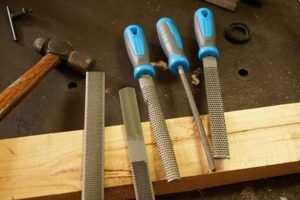
- Rasps and Files: Coarse Shaping and Refinement
Rasps and files are abrasive shaping implements used to remove material and refine shapes. Rasps are coarser than files, allowing for rapid material removal. Files are used for finer shaping and smoothing. Both rasps and files are available in various shapes and sizes, allowing for access to different areas and profiles. They are often used to shape complex curves or to refine areas that are difficult to reach with other tools. For example, a woodworker might use a rasp to shape the cabriole leg of a table or to refine the profile of a guitar neck.
The skillful use of shaping implements is a defining characteristic of accomplished woodworking. These tools enable the creation of refined forms, intricate details, and smooth surfaces, contributing significantly to the aesthetic and functional qualities of finished woodworking projects. Mastering the techniques associated with these implements is essential for any woodworker seeking to elevate the quality and precision of their work.
4. Joinery Implements

The creation of robust and aesthetically pleasing connections between wooden components relies upon a specific class of implements. These instruments, essential for assembly, demand precision and appropriate selection to ensure the structural integrity and longevity of woodworking projects. Their function is inextricably linked to the fundamental set of implements needed for woodworking.
- Hand Saws for Joinery: Precision Cuts for Tight Fits
Specialized hand saws, such as dovetail saws and tenon saws, enable the creation of intricate joinery. These saws feature fine teeth and rigid backs, facilitating precise cuts necessary for tight-fitting joints like dovetails and mortise-and-tenons. Their role is crucial in projects where mechanical strength and aesthetic appeal are paramount. A poorly executed dovetail joint, resulting from inaccurate sawing, can compromise the structural integrity of a piece of furniture.
- Chisels for Joint Refinement: Achieving Perfect Mating Surfaces
Chisels are indispensable for refining joinery surfaces and ensuring accurate fits. Beveled-edge chisels, in particular, allow for precise paring of wood to achieve flush surfaces and tight gaps. The careful use of chisels is critical for optimizing the glue surface area within a joint, thereby enhancing its strength. An example would be cleaning out the waste from a mortise to accept a tenon, ensuring a strong and seamless connection.
- Marking and Measuring Instruments for Joinery Layout: Accuracy as a Foundation
Precise layout is the cornerstone of sound joinery. Marking gauges, combination squares, and dividers are essential for accurately transferring dimensions and marking cut lines. Accuracy in layout minimizes errors during cutting and assembly, leading to stronger and more visually appealing joints. For instance, a precisely marked mortise ensures a snug fit with the corresponding tenon, maximizing the glue surface and the joint’s overall strength.
- Clamps for Joint Assembly: Applying Pressure for Strong Bonds
Clamps are essential for applying consistent pressure during glue-up, ensuring intimate contact between mating surfaces. Various types of clamps, including bar clamps, pipe clamps, and hand screws, are utilized depending on the size and shape of the joint. Adequate clamping pressure is crucial for achieving optimal glue adhesion and preventing joint failure. For instance, clamping a mortise and tenon joint while the glue cures ensures a strong and durable connection.
These joinery-specific implements are indispensable within the broader spectrum of woodworking tools. Their precise function in creating strong, durable, and aesthetically pleasing connections underscores their importance in any well-equipped woodworking shop. Successful woodworking necessitates a thorough understanding and skillful application of these implements.
5. Finishing Implements
The application of surface treatments is a critical phase in woodworking, necessitating specialized implements to achieve desired aesthetic qualities and protective properties. These implements, while employed at the culmination of a project, are integral to the comprehensive set of basic instruments required for woodworking.
- Sandpaper: Achieving Smooth Surfaces
Sandpaper, available in various grits, constitutes a fundamental finishing implement. It serves to remove imperfections, refine surfaces, and prepare wood for subsequent coatings. The selection of appropriate grit levels is crucial for achieving the desired smoothness without damaging the underlying material. Sandpaper is used, for example, to eliminate scratches and unevenness prior to applying varnish or paint, ensuring a uniform and visually appealing finish.
- Brushes and Applicators: Applying Coatings Evenly
Brushes, pads, and spray applicators facilitate the even distribution of finishes such as varnish, lacquer, paint, and stain. The type of applicator selected depends on the viscosity of the finish and the desired texture. High-quality brushes, for example, minimize brush strokes and ensure a smooth, professional-looking finish on furniture and cabinetry. Proper cleaning and maintenance of applicators are essential for preserving their effectiveness and preventing contamination of finishes.
- Sprayers: Achieving Uniform Coverage
Spray systems offer a method for applying finishes quickly and uniformly, particularly on large or intricately detailed surfaces. These systems require proper setup and calibration to ensure consistent atomization and prevent runs or drips. For example, a woodworker might use a spray system to apply a catalyzed lacquer to a large tabletop, achieving a durable and even finish with minimal effort. Safety precautions, including adequate ventilation and respiratory protection, are critical when using spray equipment.
- Polishing Compounds and Buffing Wheels: Enhancing Sheen and Protection
Polishing compounds, combined with buffing wheels or pads, enhance the sheen and protective qualities of finished surfaces. These compounds remove fine scratches and create a smooth, reflective surface. For example, a woodworker might use polishing compounds to achieve a high-gloss finish on a guitar body, enhancing its visual appeal and protecting it from scratches and wear. Proper technique and careful selection of polishing compounds are crucial for achieving the desired result without damaging the finish.
These finishing implements are essential components of the broader woodworking toolkit. Their skillful application enhances the aesthetic and protective characteristics of completed projects, underscoring their significance in the continuum of woodworking processes. Consideration of these implements during the initial planning stages ensures a cohesive and professional result.
6. Safety implements

The execution of woodworking projects is inherently linked to the utilization of implements capable of causing injury if mishandled. Therefore, safety implements form an inseparable component of the fundamental tools necessary for woodworking. The absence or improper use of these implements directly elevates the risk of accidents, ranging from minor cuts to severe lacerations or even permanent disability. Protective eyewear, for example, prevents projectiles from entering the eyes during sawing or sanding operations. Similarly, hearing protection mitigates the risk of noise-induced hearing loss associated with prolonged exposure to power tool operation.
The integration of safety protocols and the consistent application of safety implements are essential for minimizing workplace hazards within a woodworking environment. Dust masks or respirators are critical for preventing the inhalation of fine particles generated during sanding and sawing, thereby reducing the risk of respiratory illnesses. Push sticks and feather boards ensure safe operation of power tools by maintaining hand placement away from cutting edges. Proper illumination and ventilation further contribute to a safer working environment. Furthermore, first aid kits must be readily accessible to address injuries promptly.
In summary, the inclusion of safety implements within the basic woodworking toolkit is not merely an optional consideration but rather an indispensable requirement for responsible and safe woodworking practices. Neglecting safety undermines the integrity of the craft and exposes individuals to unnecessary harm. A comprehensive understanding of potential hazards, coupled with the consistent use of appropriate protective measures, is paramount for ensuring a secure and productive woodworking experience. The cost of safety implements is negligible compared to the potential cost of injury, both in terms of physical well-being and economic burden.
7. Maintenance implements
The long-term functionality and accuracy of woodworking implements are contingent upon regular maintenance. Therefore, implements designed for upkeep form an integral, though often overlooked, category within the overall scope of fundamental woodworking tools. Neglecting maintenance diminishes tool performance, reduces lifespan, and compromises safety.
- Sharpening Stones and Honing Guides: Maintaining Cutting Edges
Sharp cutting edges are crucial for efficient and safe woodworking. Sharpening stones, in various grits, and honing guides, which ensure consistent angles, are essential for maintaining the keenness of chisels, plane blades, and other edged tools. A dull blade requires more force, increasing the risk of slippage and injury. Regular sharpening not only improves performance but also extends the life of the tool by preventing excessive wear. For example, using a diamond stone to flatten the back of a chisel ensures accurate sharpening, while a honing guide maintains the correct bevel angle during honing.
- Lubricants: Reducing Friction and Preventing Corrosion
Lubricants, such as oil and wax, reduce friction on moving parts and prevent corrosion on metal surfaces. Applying oil to the threads of screws, the bearings of power tools, and the surfaces of planes reduces wear and ensures smooth operation. Wax applied to saws and plane soles minimizes friction and improves glide. Preventing corrosion extends the lifespan of tools and maintains their accuracy. An example is applying paste wax to a cast iron table saw top to prevent rust and reduce friction when sliding wood across it.
- Cleaning Supplies: Removing Debris and Protecting Surfaces
Cleaning supplies, including brushes, cloths, and solvents, are necessary for removing sawdust, pitch, and other debris from tools. Regular cleaning prevents buildup that can impede performance and accelerate wear. Solvents are used to remove stubborn residues, such as dried glue or finish. Keeping tools clean not only maintains their appearance but also ensures their proper functioning. For instance, using a stiff brush to remove sawdust from a saw blade prevents overheating and reduces the risk of binding.
- Rust Preventatives: Protecting Against Environmental Degradation
Rust preventatives, such as sprays and coatings, protect metal surfaces from corrosion caused by moisture and humidity. Applying rust preventative to tools that are not in regular use, or that are stored in humid environments, extends their lifespan and maintains their functionality. Corrosion can degrade the accuracy and effectiveness of tools, particularly measuring instruments and cutting edges. An example is applying a thin coat of corrosion inhibitor spray to hand planes after use to prevent rust formation.
These maintenance items, while distinct from the primary shaping and joining implements, are nonetheless indispensable components of the comprehensive set of tools required for successful woodworking. Their consistent use ensures the longevity, accuracy, and safety of all other woodworking implements, thereby optimizing the overall woodworking experience.
Frequently Asked Questions About Essential Woodworking Implements
This section addresses common inquiries regarding the selection and application of fundamental woodworking instruments. The information presented aims to clarify uncertainties and provide guidance for both novice and experienced woodworkers.
Question 1: What constitutes the absolute minimum set of implements for initiating basic woodworking projects?
The initial set must include a measuring tape, a combination square, a hand saw (crosscut or universal), a chisel, a smoothing plane, and safety glasses. This core selection enables basic cutting, shaping, and joining operations.
Question 2: Is it more prudent to acquire individual, high-quality implements or a comprehensive, but lower-quality set?
Investing in individual, high-quality implements generally proves more advantageous. Superior materials and construction contribute to enhanced performance, durability, and accuracy. These attributes directly impact the quality of finished projects and user safety.
Question 3: How frequently should woodworking implements be sharpened?
Sharpening frequency depends on the type of wood being worked and the intensity of use. As a general guideline, cutting implements should be sharpened whenever a noticeable decrease in performance is observed. Consistent maintenance prevents excessive dulling and ensures optimal cutting efficiency.
Question 4: What safety precautions are most crucial when utilizing woodworking implements?
Protecting the eyes with safety glasses is paramount. Additionally, appropriate respiratory protection, such as a dust mask or respirator, should be worn when generating airborne particles. Secure workpiece clamping and proper hand placement relative to cutting edges are also essential for preventing injuries.
Question 5: Is there a specific type of wood that is easiest to work with when learning basic woodworking techniques?
Softwoods, such as pine or poplar, are generally considered more amenable to beginners due to their lower density and ease of cutting. However, it is important to note that softwoods are also more prone to denting and scratching.
Question 6: What are the recommended storage practices for woodworking implements to prevent damage and corrosion?
Implements should be stored in a dry, climate-controlled environment to minimize the risk of rust and warping. Cutting edges should be protected with sheaths or blade guards. Regular cleaning and lubrication further contribute to the preservation of tool integrity.
In conclusion, careful selection, consistent maintenance, and diligent safety practices are crucial for maximizing the effectiveness and longevity of essential woodworking implements.
The subsequent section provides a glossary of terms related to woodworking implements, offering definitions and explanations for specialized vocabulary.
Conclusion
The preceding exploration of the fundamental instruments for woodworking underscores the critical role these items play in the successful execution of projects. From measurement and cutting to shaping, joining, and finishing, the selection, maintenance, and safe utilization of these tools directly influence the quality and longevity of the final product. A well-curated set of essential implements forms the bedrock of any woodworking endeavor, regardless of scale or complexity.
Proficiency in woodworking demands not only a familiarity with these instruments but also a dedication to continuous learning and refinement of technique. Understanding the capabilities and limitations of each tool, coupled with a commitment to safety, is essential for achieving both practical competence and artistic expression within this craft. The ongoing investment in knowledge and the careful cultivation of skills serve as the foundation for future innovation and enduring craftsmanship.