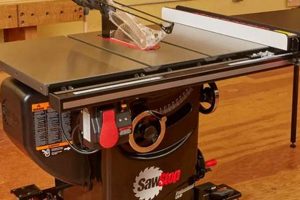
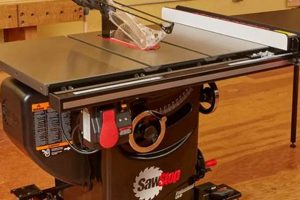
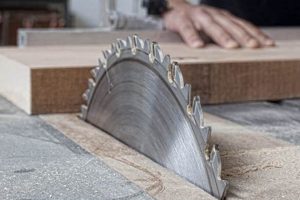
The selection of an appropriate sawing apparatus is a pivotal decision for any woodworking endeavor. A table saw, distinguished by its flat surface and rotating circular blade protruding through it, serves as a foundational tool for generating precise cuts in wood. Different models cater to varying needs, skill levels, and project complexities, impacting the final outcome of the woodworking project.
The judicious selection of a table saw directly influences the efficiency, accuracy, and safety of woodworking operations. A high-quality saw, properly maintained, can enhance productivity, reduce material waste, and minimize the risk of injury. Understanding the evolution of table saws, from simple hand-powered devices to sophisticated, electronically controlled machines, provides context for appreciating their contemporary capabilities.
The subsequent discussion will delve into the specific attributes that differentiate table saws, encompassing factors such as motor power, blade size, fence systems, safety features, and intended applications. Furthermore, it will address the crucial considerations for selecting a saw that aligns with individual woodworking requirements and budgetary constraints.
Table Saw Selection Guidance
Selecting an appropriate table saw requires careful consideration of multiple factors to ensure optimal performance and safety. The following guidance offers insights to facilitate this critical decision.
Tip 1: Evaluate Project Volume and Material Type: Assess the typical scale and nature of woodworking projects. High-volume operations or frequent use of hardwoods necessitate a saw with greater motor power and robust construction.
Tip 2: Consider Motor Power and Voltage: Adequate motor power is crucial for smooth, consistent cuts, particularly in thicker or denser materials. Select a saw with sufficient horsepower and voltage to meet project demands. A 1.5 to 2 HP motor on a 120V circuit may suffice for hobbyists, while professional shops often require 3+ HP on a 240V circuit.
Tip 3: Analyze Fence System Accuracy: A precise fence system is paramount for repeatable, accurate cuts. Look for a fence that locks securely and is easy to adjust, minimizing the risk of blade binding or inaccurate dimensions. T-square style fences generally offer superior accuracy compared to simple clamp-on designs.
Tip 4: Prioritize Safety Features: Safety is non-negotiable. Ensure the table saw is equipped with essential safety features such as blade guards, anti-kickback pawls, and riving knives. Verify these components are properly installed and maintained.
Tip 5: Assess Dust Collection Capability: Woodworking generates substantial dust. A table saw with an effective dust collection port helps maintain a cleaner, safer working environment. Consider models with enclosed bases and integrated dust collection systems.
Tip 6: Inspect Blade Quality and Size: Blade selection impacts cut quality and efficiency. Choose high-quality blades appropriate for the materials being cut. A 10-inch blade is common, but larger blades offer greater cutting depth.
Tip 7: Evaluate Table Size and Extension Wings: The size of the table influences the stability and support offered for larger workpieces. Extension wings can increase table surface area, providing additional support for longer boards.
By carefully considering these factors, individuals can make informed decisions when acquiring a table saw, aligning their selection with specific project needs and ensuring safety throughout the woodworking process.
The subsequent section will explore different categories of table saws, highlighting the advantages and disadvantages of each type to provide a comprehensive overview of the market.
1. Power
The motor’s power output, conventionally measured in horsepower (HP), is a critical determinant of a table saw’s effectiveness in woodworking applications. A saw with insufficient power struggles when processing dense hardwoods or executing deep cuts, leading to blade stalling, burning, and potentially hazardous kickback. Conversely, a table saw with ample power ensures smooth, consistent cuts, reducing strain on the motor and extending the tool’s lifespan. A cabinetmaker processing thick oak boards, for instance, requires a saw with a minimum of 3 HP, while a hobbyist primarily working with softwoods might find a 1.5 HP saw adequate. The selection of a table saw must consider the materials’ density and thickness typically encountered, prioritizing adequate power to ensure efficient and safe operation.
The practical significance of matching power to task extends beyond mere cutting ability. A more powerful saw allows for the use of specialized blades, such as those designed for ripping thick stock or cutting dadoes, which would strain a lower-powered machine. Furthermore, consistent cutting speed and reduced risk of stalling contribute to improved cut quality and dimensional accuracy, critical factors in achieving professional-grade results. For example, a furniture maker using a powerful saw can consistently produce clean, precise joints, crucial for the structural integrity and aesthetic appeal of their pieces. This capability translates directly into higher-quality products and increased productivity.
In summary, a table saw’s power rating is inextricably linked to its overall utility in woodworking. Insufficient power compromises safety, efficiency, and cut quality, while adequate power enables versatility and enhances productivity. Recognizing the correlation between material properties, cutting requirements, and motor power is essential for selecting the best table saw, ensuring it meets both current and future project demands. A carefully considered power specification represents a fundamental investment in woodworking capabilities.
2. Precision
Precision, in the context of table saws, directly relates to the accuracy and repeatability of cuts. Deviation from intended dimensions results in compromised joinery, structural instability, and aesthetic deficiencies. The “best table saw for woodworking” fundamentally must deliver consistent, precise results. Cutting a mortise and tenon joint, for instance, requires precise dimensions to ensure a strong, gap-free connection. Similarly, accurately sized components are essential for creating flush surfaces and square corners in furniture construction. Without precision, these fundamental woodworking tasks become significantly more challenging, time-consuming, and ultimately less successful.
The accuracy of a table saw is heavily influenced by several factors, most notably the fence system and the blade’s trueness. A robust, easily adjustable fence system enables accurate rip cuts and miter cuts, ensuring parallelism and squareness. The blade’s quality and its proper alignment relative to the table surface are also critical. A warped or misaligned blade produces inaccurate cuts and increases the risk of kickback. Furthermore, the operator’s skill in setting up and using the saw contributes significantly to the final precision. Even the best table saw cannot compensate for improper technique.
In summary, precision is an indispensable characteristic of any table saw aspiring to be considered “the best.” Its impact extends beyond individual cuts, influencing the overall quality and structural integrity of finished projects. The capacity to consistently achieve accurate dimensions allows for efficient joinery, tight-fitting components, and professional-grade results. The absence of precision leads to wasted materials, increased labor, and ultimately, a product that falls short of expectations. Therefore, evaluating a table saw’s ability to deliver precise cuts is paramount when determining its suitability for demanding woodworking applications.
3. Safety

Safety is an indispensable characteristic when evaluating a table saw. Injury from improper use is a significant risk. Consequently, the assessment of safety features is paramount in selecting a suitable tool. A “best table saw for woodworking” incorporates multiple safety mechanisms to mitigate potential hazards and reduce the likelihood of accidents. Blade guards, anti-kickback pawls, and riving knives are essential components that protect the operator and enhance the overall safety profile of the equipment. For example, the absence of a riving knife, a device that maintains separation between the cut wood pieces, drastically increases the potential for kickback, a dangerous event where the workpiece is forcefully ejected back towards the operator.
The integration of safety features serves not only to protect the user but also to promote safe work habits. A well-designed table saw encourages the implementation of proper cutting techniques and reduces the temptation to bypass safety protocols. For instance, an easily adjustable blade guard motivates its consistent use, while clear and accessible safety controls facilitate rapid response in emergency situations. Consider a scenario where a piece of wood begins to bind during a cut; a readily accessible emergency stop button allows the operator to quickly halt the saw’s operation, preventing a potentially hazardous situation from escalating. Furthermore, effective dust collection systems contribute to a safer working environment by minimizing airborne particulate matter, reducing the risk of respiratory irritation and improving visibility.
In summary, the connection between safety and the selection of a woodworking table saw is undeniable. Prioritizing safety features and understanding their practical implications is crucial for creating a secure and productive woodworking environment. The “best table saw for woodworking” is not solely defined by its cutting capacity or precision but also by its capacity to protect the operator from harm. A comprehensive safety assessment represents a responsible and essential step in the acquisition of any table saw, ensuring that woodworking activities can be pursued with confidence and minimized risk.
4. Capacity
Capacity, in the context of a table saw, dictates the range of projects and materials that can be effectively processed. The selection of an appropriate table saw necessitates a thorough assessment of its capacity to align with anticipated woodworking requirements. A mismatch between capacity and project demands results in compromised efficiency, diminished cut quality, and potential safety hazards.
- Maximum Depth of Cut
The maximum depth of cut defines the thickest material the saw can fully sever in a single pass. Insufficient depth necessitates multiple passes, increasing the risk of misalignment and reduced accuracy. A furniture maker working with thick hardwood slabs requires a saw with significant cutting depth, whereas a hobbyist primarily working with thinner stock can manage with a lesser capacity.
- Rip Capacity
Rip capacity refers to the maximum distance between the blade and the fence, determining the widest board that can be ripped along its length. Limited rip capacity restricts the creation of wide panels or tabletops. Cabinetmakers, for example, often need to rip wide sheets of plywood or solid wood, necessitating a saw with substantial rip capacity. Inadequate rip capacity often leads to unsafe workarounds and compromised project dimensions.
- Table Size and Extension Wings
Table size and the presence of extension wings significantly impact the stability and support provided for larger workpieces. A larger table surface area reduces the risk of tipping or wobbling, enhancing safety and accuracy. Longer boards require adequate support to maintain a consistent cutting line. Table saws with extension wings offer enhanced stability for handling large panels or long boards, particularly relevant for projects such as building bookcases or large cabinets.
- Arbor Size
The arbor size determines the compatibility with different blade diameters. A larger arbor accommodates a wider range of blade sizes, increasing versatility for specialized cuts. Using the incorrect blade size, particularly exceeding the saw’s capacity, presents a significant safety risk and can damage the equipment. The ability to use dado blades, for example, widens the range of possible joinery techniques, but requires a compatible arbor size and sufficient motor power.
Capacity, therefore, directly influences the versatility and practicality of a table saw. It is essential to evaluate the typical dimensions of materials to be processed and select a saw with adequate capacity across all relevant parameters. Choosing a saw with sufficient capacity contributes to safer, more efficient, and more accurate woodworking outcomes.
5. Durability
Durability is a defining characteristic influencing the long-term viability and cost-effectiveness of any power tool. In the context of table saws, a tool subjected to significant stress and repeated use, durability becomes paramount. The “best table saw for woodworking” is inherently one that withstands the rigors of frequent operation, maintains its precision over time, and minimizes the need for repairs or replacements. Inferior materials and construction lead to premature wear, misalignment, and ultimately, a reduction in cutting accuracy and safety. A poorly constructed fence system, for example, may lose its ability to maintain consistent parallelism, resulting in inaccurate cuts and potential material wastage. The cost of repairing or replacing such components quickly surpasses any initial savings from purchasing a less durable machine. Consider the instance of a professional cabinet shop; constant daily use demands a table saw capable of withstanding such intensive operation without degradation in performance.
The durability of a table saw is directly attributable to the quality of its components and the overall construction. A robust cast-iron table provides a stable, vibration-dampening platform that resists warping and deformation. A powerful, well-sealed motor minimizes the ingress of dust and debris, extending its lifespan. Precision-machined gears and bearings ensure smooth, consistent operation, reducing wear and tear on critical moving parts. The gauge and quality of steel used in the saw’s frame contribute significantly to its ability to withstand stress and maintain alignment. A homeowner undertaking occasional woodworking projects may find a lighter-duty saw adequate, but even in this scenario, prioritizing durability ensures a longer lifespan and reduced risk of failure. For example, a saw stored in a garage subject to temperature fluctuations and humidity requires a robust construction to prevent rust and corrosion.
In summary, durability is an inextricable element of the “best table saw for woodworking”. It transcends mere longevity, influencing the tool’s performance, accuracy, safety, and long-term economic value. The initial investment in a durable table saw is an investment in sustained productivity, reduced maintenance costs, and a safer working environment. Although less-durable options may present an appealing initial cost saving, the long-term repercussions of compromised construction invariably outweigh any short-term benefits. Therefore, a thorough assessment of material quality, construction techniques, and component robustness is essential when selecting a table saw intended for long-term use in demanding woodworking applications.
6. Dust Control

Effective dust control is an integral component of a woodworking table saw, directly influencing both operator health and overall shop environment. The process of sawing wood generates significant airborne particulate matter, composed of fine dust particles that pose several health risks. These particles, when inhaled, can cause respiratory irritation, allergic reactions, and, over extended periods, more serious conditions such as occupational asthma and certain types of cancer. A “best table saw for woodworking,” therefore, necessitates a robust dust collection system to mitigate these risks and ensure a safer working environment. The absence of adequate dust control results in a workspace contaminated with hazardous dust, impacting air quality and potentially affecting the health of individuals present. An example is a professional woodworking shop without adequate dust extraction; employees are continuously exposed to wood dust, leading to increased respiratory problems and potential long-term health consequences.
The implementation of effective dust control measures yields numerous practical benefits. Beyond mitigating health risks, it enhances visibility, contributing to more accurate cuts and a reduced risk of accidents. Dust accumulation on work surfaces and tools obscures markings and creates slippery conditions, increasing the likelihood of errors and injuries. A table saw equipped with a well-designed dust collection system, such as a shroud surrounding the blade and a powerful extraction port connected to a dust collector, effectively removes airborne particles at the source, maintaining a cleaner and safer workspace. Furthermore, reduced dust accumulation simplifies cleaning and maintenance, prolonging the lifespan of the equipment and reducing the risk of mechanical failures. A clear example is when a hobbyist, working in a small garage, utilizes a table saw with integrated dust collection. The garage remains cleaner and the woodworker’s respiratory health is protected.
In summary, dust control is inextricably linked to the concept of a “best table saw for woodworking.” It is not merely an optional accessory but a fundamental requirement for ensuring operator health, maintaining a safe working environment, and promoting accurate and efficient woodworking practices. Although the initial investment in a table saw with effective dust control might be higher, the long-term benefitsreduced health risks, improved visibility, enhanced safety, and prolonged equipment lifespanfar outweigh the costs. The ideal approach involves selecting a table saw with a thoughtfully designed dust collection system and supplementing it with a dedicated dust collector for optimal performance, thereby minimizing the hazards associated with airborne wood dust and creating a healthier, more productive woodworking environment.
Frequently Asked Questions
The following section addresses common inquiries concerning table saw selection, providing objective insights to inform purchasing decisions.
Question 1: What constitutes the most crucial factor in determining the “best table saw for woodworking”?
Safety is paramount. A table saw equipped with robust safety features, including a blade guard, anti-kickback pawls, and a riving knife, significantly minimizes the risk of injury.
Question 2: How does motor power influence the selection of a table saw?
Motor power, measured in horsepower (HP), dictates the saw’s capacity to handle denser materials and execute deeper cuts. Insufficient power results in compromised cut quality and increased risk of kickback.
Question 3: What role does the fence system play in table saw performance?
The fence system ensures accuracy and repeatability of cuts. A sturdy, easily adjustable fence is essential for maintaining consistent dimensions and minimizing the risk of misalignment.
Question 4: Why is dust control an important consideration when selecting a table saw?
Effective dust control mitigates health hazards associated with airborne wood dust, improving air quality and reducing the risk of respiratory irritation and more severe conditions.
Question 5: How does table size impact the functionality of a table saw?
Table size and the presence of extension wings influence the stability and support provided for larger workpieces. A larger table surface reduces the risk of tipping and enhances accuracy, particularly when working with long boards or wide panels.
Question 6: What is the significance of durability in a table saw?
Durability ensures the long-term viability and cost-effectiveness of the tool. A robust construction with high-quality components minimizes wear, reduces maintenance requirements, and maintains precision over time.
In summary, selecting a table saw necessitates a holistic assessment encompassing safety, power, precision, dust control, capacity, and durability. Prioritizing these factors ensures the acquisition of a tool that meets specific woodworking needs and promotes a safe and productive working environment.
The subsequent section will provide a concluding overview, synthesizing the key insights discussed and offering final recommendations for table saw selection.
Conclusion
This exploration has emphasized that determining what is the best table saw for woodworking is a multifaceted process, contingent upon a nuanced consideration of safety features, motor power, fence system accuracy, dust control effectiveness, capacity relative to project scale, and overall durability. No single model universally fulfills the requirements of all woodworkers; rather, the ideal selection aligns with individual project scope, material usage, and budget constraints.
The informed evaluation of these critical parameters is paramount to ensure a safe, productive, and ultimately successful woodworking endeavor. Prudent selection facilitates efficient material processing, precise joinery, and the creation of high-quality finished products. Diligent research and a comprehensive understanding of individual needs remain the definitive prerequisites for selecting an apparatus that will serve as a foundational element of any woodworking practice.