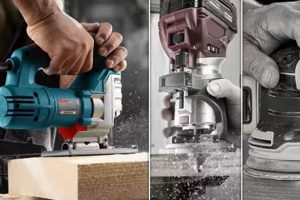
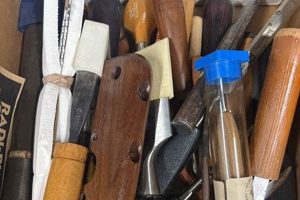
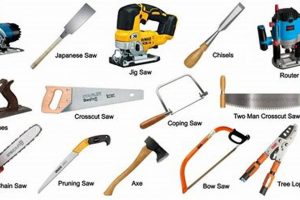
Understanding the instruments and their proper application is foundational to the craft of woodworking. This includes a broad spectrum of implements, ranging from hand-operated saws and chisels to power-driven routers and sanders. The crucial element is not merely possessing these implements, but acquiring the practical knowledge of their correct operation and maintenance for achieving desired results.
Proficiency in this area enables efficient and precise execution of woodworking projects. It promotes safety, minimizes material waste, and ultimately leads to superior craftsmanship. Historically, mastery of these skills was passed down through generations of artisans, representing a valuable accumulation of practical knowledge and experience. The benefits extend beyond purely functional considerations, fostering creativity and a deeper appreciation for the materials being worked with.
The subsequent sections will delve into specific categories of these implements, detailing their functions, appropriate uses, and essential safety precautions. Each tool will be examined in the context of various woodworking tasks, providing a practical guide for both novice and experienced woodworkers alike. This exploration will ensure a thorough understanding of equipment and methods.
Essential Guidance on Woodworking Equipment and its Operation
The following recommendations provide a framework for enhancing proficiency and safety when working with woodworking equipment. Adherence to these guidelines will promote accuracy, efficiency, and reduce the risk of injury.
Tip 1: Prioritize Safety Gear. Eye protection, hearing protection, and respiratory protection are indispensable when operating power tools. Sawdust and flying debris pose significant hazards, and prolonged exposure to noise can cause irreversible hearing damage.
Tip 2: Maintain Sharp Cutting Edges. Dull blades and chisels require more force, increasing the likelihood of slipping and causing injury. Regular sharpening is crucial for clean cuts and safer operation.
Tip 3: Secure Workpieces Effectively. Utilize clamps, vises, or other holding devices to ensure workpieces are stable during cutting, shaping, or drilling. Unsecured materials can shift unexpectedly, leading to inaccurate results or accidents.
Tip 4: Understand Grain Direction. Cutting against the grain can result in splintering and tear-out. Always analyze the grain pattern before making cuts to achieve smooth and professional results.
Tip 5: Adjust Speed and Feed Rate Appropriately. Different wood species and tool types require varying speeds and feed rates. Refer to manufacturer recommendations and experiment with scrap material to determine the optimal settings.
Tip 6: Regularly Inspect Equipment. Before each use, thoroughly inspect power cords, blades, and other components for damage or wear. Defective equipment should be repaired or replaced immediately.
Tip 7: Practice Proper Tool Handling Techniques. Maintain a firm grip and proper body positioning when operating tools. Avoid reaching or overextending, which can compromise control and balance.
Tip 8: Clean and Maintain Equipment After Use. Remove sawdust, debris, and lubricants after each session. Proper maintenance extends the lifespan of the equipment and ensures optimal performance.
By diligently applying these recommendations, woodworkers can optimize their efficiency, minimize risks, and elevate the quality of their craft. Consistent adherence to these practices will contribute to a safer and more rewarding woodworking experience.
The subsequent conclusion will reiterate the core principles discussed and provide additional resources for continued learning and skill development.
1. Tool Selection

Effective tool selection is paramount in woodworking. Choosing the correct instrument for a specific task is not merely a matter of convenience, but a critical factor influencing project quality, efficiency, and operator safety. An informed decision requires a deep understanding of various tools and their respective capabilities.
- Task Specificity
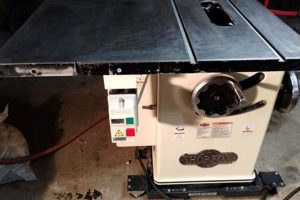
The nature of the woodworking task dictates the appropriate tool choice. Ripping a large panel of lumber demands a table saw, while shaping intricate curves calls for a bandsaw or coping saw. Using an unsuitable tool can lead to inaccurate results, material waste, and potential hazards.
- Material Properties
Different wood species exhibit varying hardness and grain patterns, influencing tool selection. Hardwoods require tools with sharper blades and more power than softwoods. For example, a hand plane designed for hardwoods might struggle with softwoods, resulting in tear-out and an uneven surface.
- Ergonomics and User Skill
The physical characteristics of a tool and the user’s skill level are crucial considerations. A heavier tool might be appropriate for experienced woodworkers, while a lighter, more manageable tool might be better suited for beginners. Furthermore, a tool with good ergonomics reduces fatigue and enhances precision.
- Budget and Long-Term Value
While cost is a factor, prioritizing long-term value is often more prudent. Investing in high-quality tools that offer durability and precision can save money in the long run by reducing the need for frequent replacements and minimizing material waste. Tool selection should balance initial investment with expected lifespan and performance.
The process of tool selection, therefore, necessitates a holistic approach, integrating task requirements, material properties, user capabilities, and financial considerations. A thorough understanding of these facets allows woodworkers to make informed choices, ultimately contributing to safer, more efficient, and higher-quality woodworking outcomes.
2. Safe Operation

Safe operation is an intrinsic element within the effective application of implements used in woodwork. The improper or negligent use of tools presents a spectrum of risks, ranging from minor injuries to severe, potentially life-altering accidents. Understanding the operational parameters and safety protocols associated with each tool is, therefore, not merely a recommendation, but a fundamental requirement for responsible woodworking practice.
The correlation between understanding operation and safety can be illustrated with examples. Failing to secure a workpiece before using a router can result in the piece being ejected with considerable force, causing injury or damage. Neglecting to wear appropriate eye protection during sanding exposes the user to the risk of corneal abrasions. Similarly, bypassing the safety guards on a table saw dramatically increases the likelihood of serious cuts. These instances underscore the cause-and-effect relationship between adherence to safety procedures and the prevention of adverse outcomes. Furthermore, understanding the materials, the equipment, and the processes will result in a safe operation.
The responsible operation of woodwork tools demands a commitment to continuous learning and adherence to safety guidelines established by manufacturers and regulatory bodies. This commitment extends beyond personal safety to encompass the well-being of those in the surrounding environment. Proper training, meticulous attention to detail, and a proactive approach to hazard identification are essential components of a safe and productive woodworking environment. By prioritizing the understanding of operational procedures and safety protocols, one mitigates risks, fosters responsible practices, and ensures a sustainable future for the craft.
3. Material Compatibility
The selection of tools in woodworking is inextricably linked to the materials being processed. The physical properties of various wood speciesdensity, hardness, grain structure, and moisture contentdictate which tools are most suitable for a given task. An incompatibility between tool and material can lead to inefficient operation, increased tool wear, substandard results, and potential hazards. For instance, using a dull chisel on a dense hardwood like maple will likely result in chipping, tearing, or even tool breakage, whereas the same chisel might perform adequately on a softwood like pine. Similarly, a high-speed steel drill bit designed for metalworking is ill-suited for drilling hardwoods, as it will generate excessive heat and dull quickly. Understanding the characteristics of the material is, therefore, a prerequisite for effective tool use.
Specific examples further illustrate this connection. When joining two pieces of wood with screws, selecting the correct screw type and size is crucial. Using screws that are too short may not provide sufficient holding power, while screws that are too long can protrude through the wood, compromising aesthetics and structural integrity. In the context of finishing, the choice of sandpaper grit is directly related to the desired surface smoothness and the wood species. Progressing from coarse grits to finer grits is essential for achieving a smooth finish, but the specific grit progression must be tailored to the wood’s density and grain. Applying a water-based stain to an oily wood like teak without proper surface preparation will likely result in uneven penetration and a blotchy finish. Therefore, tool selection should never be divorced from a thorough understanding of material properties and their interaction with those tools.
In conclusion, material compatibility is not merely a supplementary consideration in woodworking but an integral component of proficient tool utilization. Failing to account for the unique properties of different materials can negate the benefits of even the highest-quality tools and lead to undesirable outcomes. Recognizing this interdependence is essential for achieving precision, efficiency, and safety in all woodworking endeavors, linking directly to the comprehensive understanding of both woodworking tools and the correct methods for their application.
4. Precision Measurement

The efficacy of implements in woodworking is fundamentally reliant on accurate dimensioning. Without exacting measurements, the most sophisticated tool becomes an instrument of imprecision, yielding results that deviate from the intended design. The cause-and-effect relationship is straightforward: imprecise measurements inevitably lead to misaligned joints, structural instability, and compromised aesthetics. Therefore, mastery of tools is inseparable from a corresponding mastery of measurement techniques and instruments. Precision, in this context, is not merely a desirable attribute; it is a critical component of successful woodworking.
Consider the construction of a cabinet. If the dimensions of the individual components are off by even a fraction of an inch, the cumulative effect can be significant. Doors may not align properly, drawers may bind, and the overall structure may exhibit an unsightly warp or twist. Similarly, in furniture making, accurate measurements are essential for ensuring that legs are of equal length, that joints are tight and flush, and that the final piece conforms to the intended design. The tools used for measurement are varied, including rulers, squares, calipers, and marking gauges, each serving a specific purpose in achieving dimensional accuracy. Proper use of these instruments, coupled with a keen attention to detail, is paramount.
In summary, precision measurement is an indispensable skill for any woodworker. It underpins the effective application of every tool, from the simplest hand plane to the most complex power saw. While the challenges of achieving perfect accuracy are ever-present, a commitment to meticulous measurement and the proper use of measuring instruments is the key to producing high-quality, functional, and aesthetically pleasing woodworking projects. The emphasis on this element ensures understanding and application of tools for carpentry will be effective.
5. Proper Maintenance

The sustained functionality and precision of woodworking implements are directly contingent upon diligent upkeep. Disregarding routine maintenance precipitates a decline in performance, increases the risk of operational hazards, and shortens the lifespan of the tools. Consequently, the understanding and execution of proper maintenance protocols constitute an indispensable component of proficient tool utilization. The connection is causative: neglect results in diminished performance; conversely, proactive maintenance ensures optimal operation. A dull saw blade, for instance, requires significantly more force to achieve a cut, elevating the risk of kickback and compromising accuracy. Regular cleaning, lubrication, and sharpening, therefore, are not optional addenda but rather essential practices integrated into the application of “woodwork tools and how to use them.”
Specific examples underscore the practical significance of this understanding. A hand plane, if not properly cleaned and lubricated, may exhibit excessive friction, making smooth planing impossible. A power drill, if subjected to prolonged use without cleaning and lubrication of its chuck mechanism, may experience reduced clamping force, leading to slippage and inaccurate drilling. Similarly, the cutting edges of chisels and plane irons necessitate periodic honing and sharpening to maintain their optimal cutting performance. Without these interventions, the user is effectively working against the tool, expending unnecessary effort and compromising the quality of the finished product. Proper storage, which includes protecting tools from moisture and physical damage, is also vital in preventing rust, corrosion, and other forms of deterioration.
In summary, the link between appropriate maintenance and the effective application of implements is undeniable. Adherence to regular maintenance schedules, encompassing cleaning, lubrication, sharpening, and proper storage, ensures tools perform at their peak capabilities, enhances user safety, and extends the lifespan of valuable equipment. The absence of such practices compromises performance and efficiency, ultimately detracting from the quality of the woodworking process and its outcomes. This corelation reinforces the theme of woodwork tools and its importance.
6. Sharpening Techniques

The operational effectiveness of cutting tools in woodworking is inextricably linked to the sharpness of their cutting edges. Degradation of these edges, an inevitable consequence of tool usage, necessitates periodic restoration through established sharpening techniques. Consequently, the acquisition and consistent application of these techniques are not ancillary skills but are integral components within the proper operation and utilization of woodworking implements. Without sharp edges, tools become significantly less efficient, requiring increased force to perform the intended task. This increased force, in turn, elevates the risk of slippage, material damage, and operator injury. Sharpening, therefore, represents a fundamental dependency for the safe and accurate employment of many woodworking instruments.
Various sharpening methods exist, each suited to specific tool types and materials. Honing chisels and plane irons on a series of progressively finer water stones, for example, requires a steady hand and consistent angle to achieve a razor-sharp edge. Sharpening saw blades, on the other hand, often necessitates the use of specialized files and jigs to maintain the correct tooth geometry. Grinding, using a bench grinder, is frequently employed for reshaping or repairing damaged edges but requires careful attention to prevent overheating and tempering the steel. Regardless of the chosen method, the underlying principle remains constant: to create a precisely angled, exceptionally keen cutting edge capable of cleanly severing wood fibers. Ignoring sharpening practices ultimately negates the intended benefits of high-quality tools, rendering them less effective than their design anticipates.
In summary, sharpening techniques are not merely a supplementary skill in woodworking but an essential practice directly influencing tool performance, operator safety, and the overall quality of the finished product. Mastering these techniques, through practice and informed instruction, is indispensable for anyone seeking to achieve consistent and accurate results in their woodworking endeavors. The direct impact of edge sharpness on tool functionality mandates it as a primary element in the comprehensive understanding of “woodwork tools and how to use them”.
7. Jointing Methods
The selection and execution of joinery techniques represent a critical intersection between implements and the broader craft. The strength, stability, and aesthetic appeal of a woodworking project are often determined by the effectiveness of its joints. A thorough understanding of various joinery methods, and the instruments required for their creation, is therefore essential for any practitioner.
- Mortise and Tenon Joints
These joints, known for their strength and durability, involve inserting a projecting tenon into a precisely cut mortise. Creating these requires chisels, mortise machines, and marking tools for accurate dimensioning. The proper use of these implements ensures a tight fit and structural integrity, often employed in frame-and-panel construction.
- Dovetail Joints
Dovetail joints are interlocking connections prized for their resistance to pulling forces. Achieving precise dovetails requires meticulous layout, the use of dovetail saws, chisels, and sometimes specialized jigs. The skill lies in accurately cutting the pins and tails to ensure a seamless and robust connection, commonly found in drawer construction and cabinet carcases.
- Miter Joints
Miter joints create angled connections, typically at 45 degrees, to form corners. Accurate miter cuts require a miter saw, miter sled on a table saw, or a hand saw with a miter box. The success of a miter joint depends on the precision of the cut and the strength of the adhesive used for assembly, often used in picture frames and decorative moldings.
- Lap Joints
Lap joints are created by overlapping two pieces of wood and securing them together. These joints are relatively simple to execute, requiring saws, chisels, and measuring tools. The strength of a lap joint depends on the surface area of the glue joint and the method of fastening, commonly used in frame construction and table aprons.
The mastery of joinery techniques is a testament to the woodworker’s understanding of materials and implements. The selection of a jointing method, and the subsequent use of appropriate instruments, reflects a deliberate choice based on structural requirements, aesthetic considerations, and the inherent properties of the wood. This proficiency is essential for creating durable, functional, and visually appealing woodworking projects, highlighting the critical role of both tools and techniques.
Frequently Asked Questions About Woodwork Tools and Their Application
This section addresses common inquiries regarding the selection, operation, and maintenance of woodworking instruments. The answers provided offer guidance on promoting safety, efficiency, and precision in woodworking practices.
Question 1: What are the essential safety precautions one must observe when operating power saws?
Operating power saws demands strict adherence to safety protocols. These protocols include wearing appropriate eye and ear protection, ensuring that safety guards are in place and functional, securing the workpiece firmly, and maintaining a safe distance from the blade. Familiarization with the saw’s operating manual is also essential to comprehend its specific safety features and limitations.
Question 2: How frequently should cutting tools be sharpened to maintain optimal performance?
The frequency of sharpening cutting tools varies based on usage intensity and the hardness of the materials being processed. A general guideline suggests sharpening chisels and plane irons after several hours of use. However, any noticeable degradation in cutting performance should prompt immediate resharpening.
Question 3: What factors should be considered when selecting a woodworking tool for a specific task?
Several factors influence tool selection. These considerations include the nature of the task, the type of material being worked with, the desired level of precision, and the user’s skill level. Choosing a tool that is well-suited to the task at hand promotes efficiency and reduces the risk of errors.
Question 4: What is the proper method for cleaning and maintaining woodworking tools?
Maintaining tools requires regular cleaning to remove sawdust and debris. Metal parts should be lubricated to prevent rust and corrosion. Cutting edges should be protected from damage, and tools should be stored in a dry, organized manner. Following these practices extends the lifespan of the tools and ensures their reliable performance.
Question 5: What are the potential risks associated with using dull or improperly maintained tools?
Dull or poorly maintained tools pose several risks. These risks include increased effort required to perform tasks, reduced accuracy, potential for material damage, and a heightened likelihood of operator injury due to tool slippage or kickback.
Question 6: How does one select the appropriate sandpaper grit for different woodworking tasks?
Sandpaper grit selection depends on the desired level of surface refinement. Coarse grits are used for initial material removal and shaping, while finer grits are employed for smoothing and polishing. Progressing through a series of progressively finer grits is essential for achieving a smooth and uniform finish. The specific grit sequence depends on the wood species and the desired outcome.
Understanding these principles is crucial for safe and effective woodworking. It promotes responsible tool usage and facilitates the creation of high-quality projects.
The upcoming section will summarize the key points discussed and provide further guidance for woodworking advancement.
Conclusion
The preceding exploration has underscored the critical relationship between woodworking implements and their proper application. Mastery over these tools, encompassing their selection, operation, maintenance, and sharpening, is paramount for achieving accurate and safe outcomes. Skillful joinery techniques, guided by precise measurements and an understanding of material properties, further contribute to the creation of durable and aesthetically pleasing structures.
Continued dedication to refining these skills, coupled with a commitment to safety and responsible tool usage, is essential for advancing in the craft. Woodworking represents a continuous learning process, demanding both theoretical knowledge and practical experience. The pursuit of excellence in this domain offers not only the satisfaction of creating functional objects but also the reward of mastering a time-honored tradition.